


























1 / 6
0
Views
0
Downloads

0.0
0
Save
0 Likes
Share
Thermodynamics Worksheet 3: Advanced Problems
0 Views
0 Downloads
Paste this activity's link or code into your existing LMS (Google Classroom, Canvas, Teams, Schoology, Moodle, etc.).
Students can open and work on the activity right away, with no student login required.
You'll still be able to track student progress and results from your teacher account.
Information
Description
What It Is:
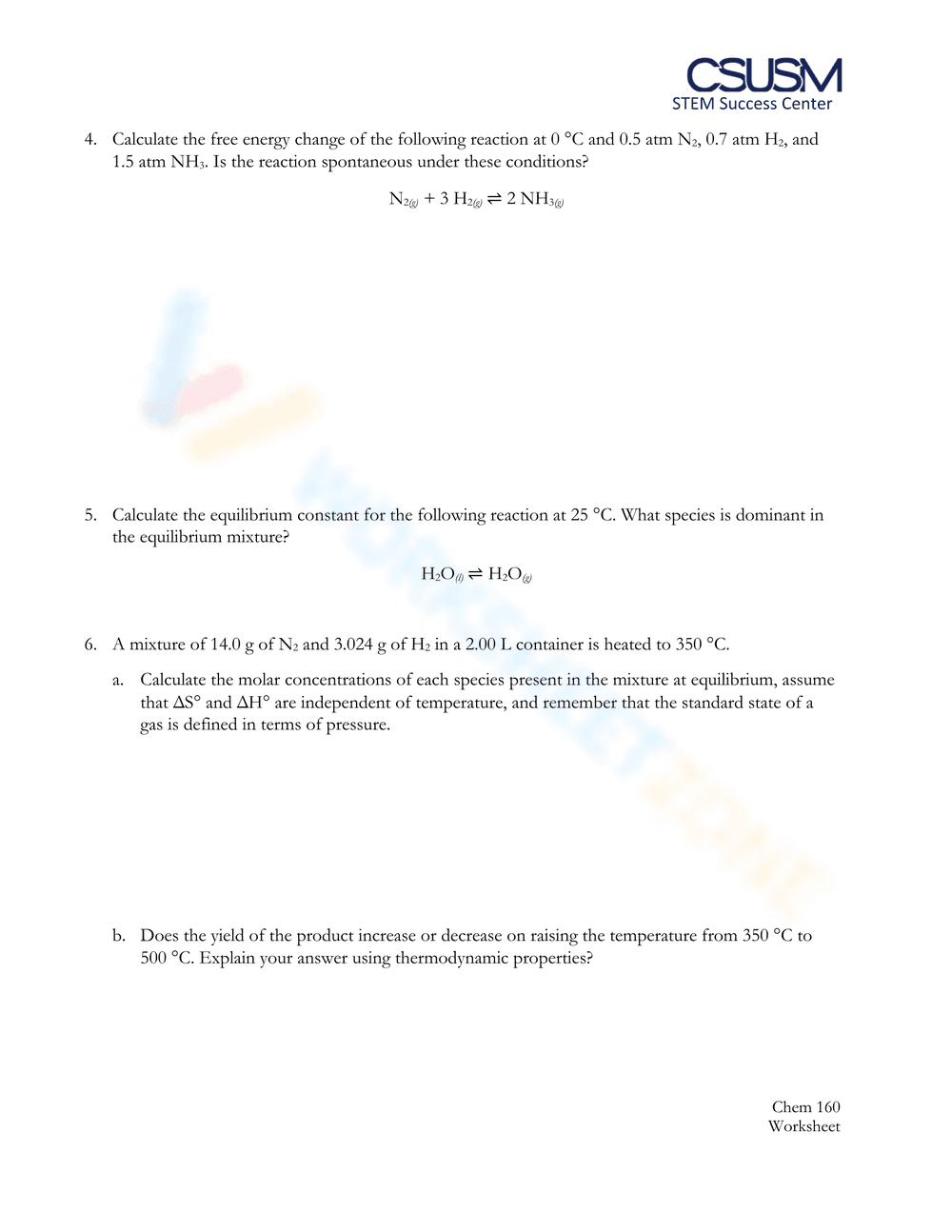
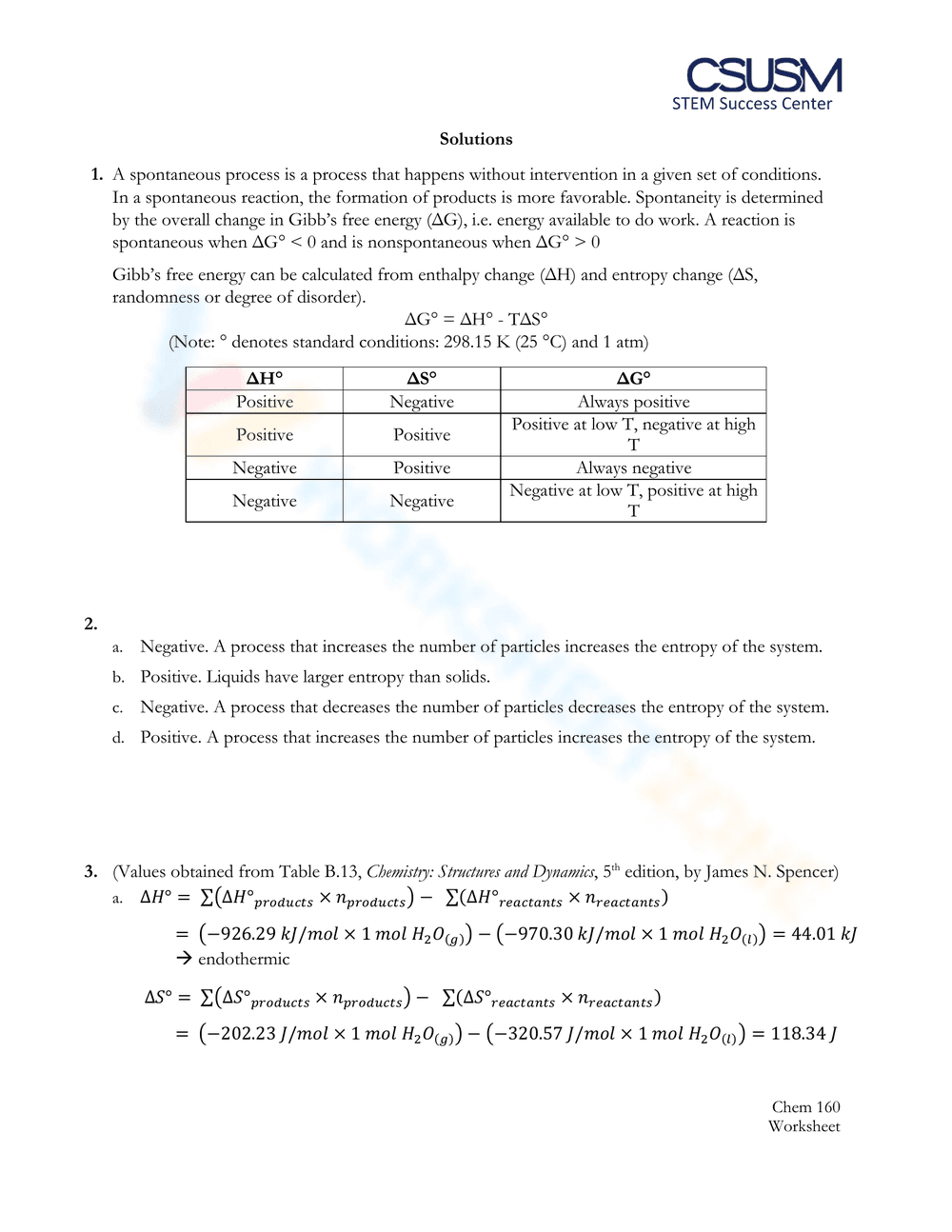
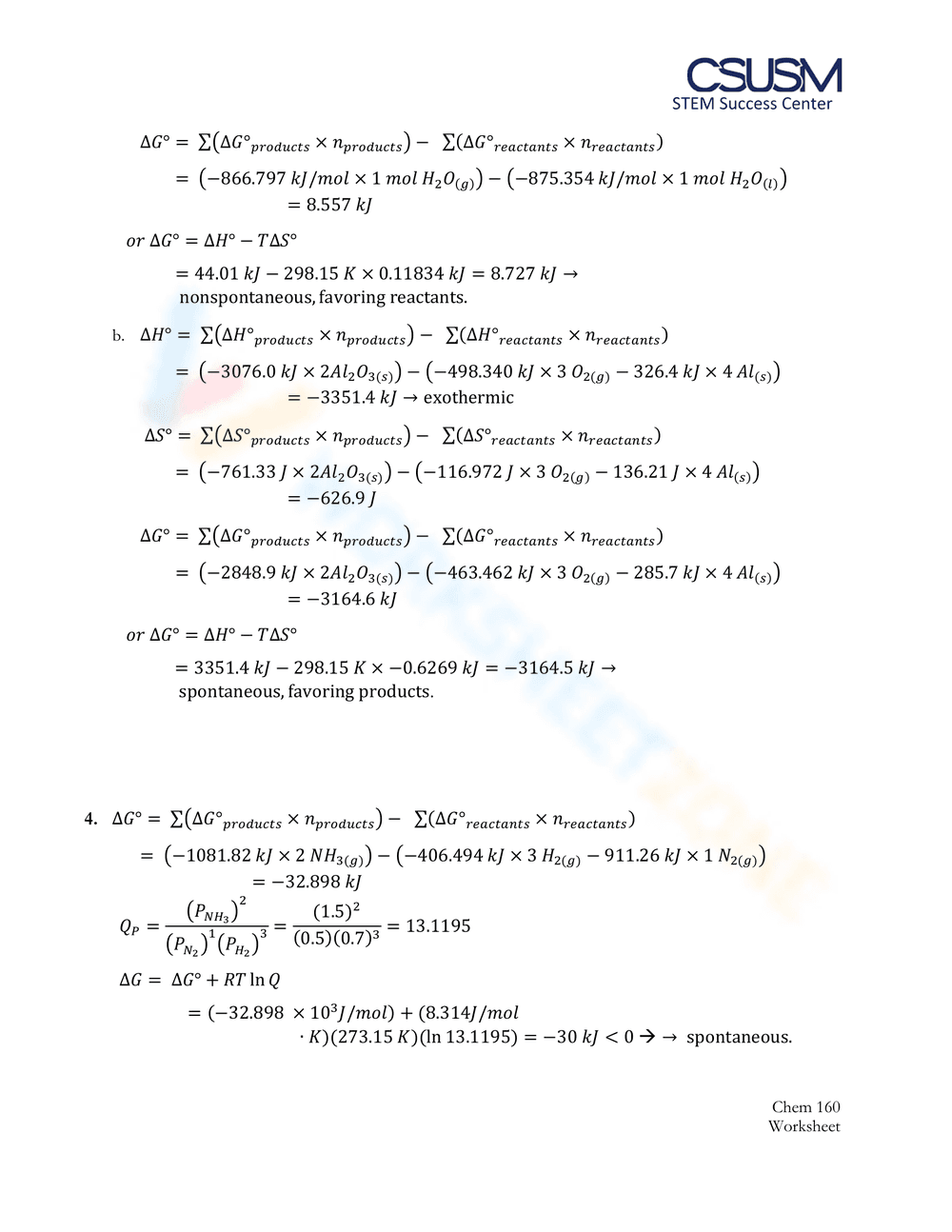
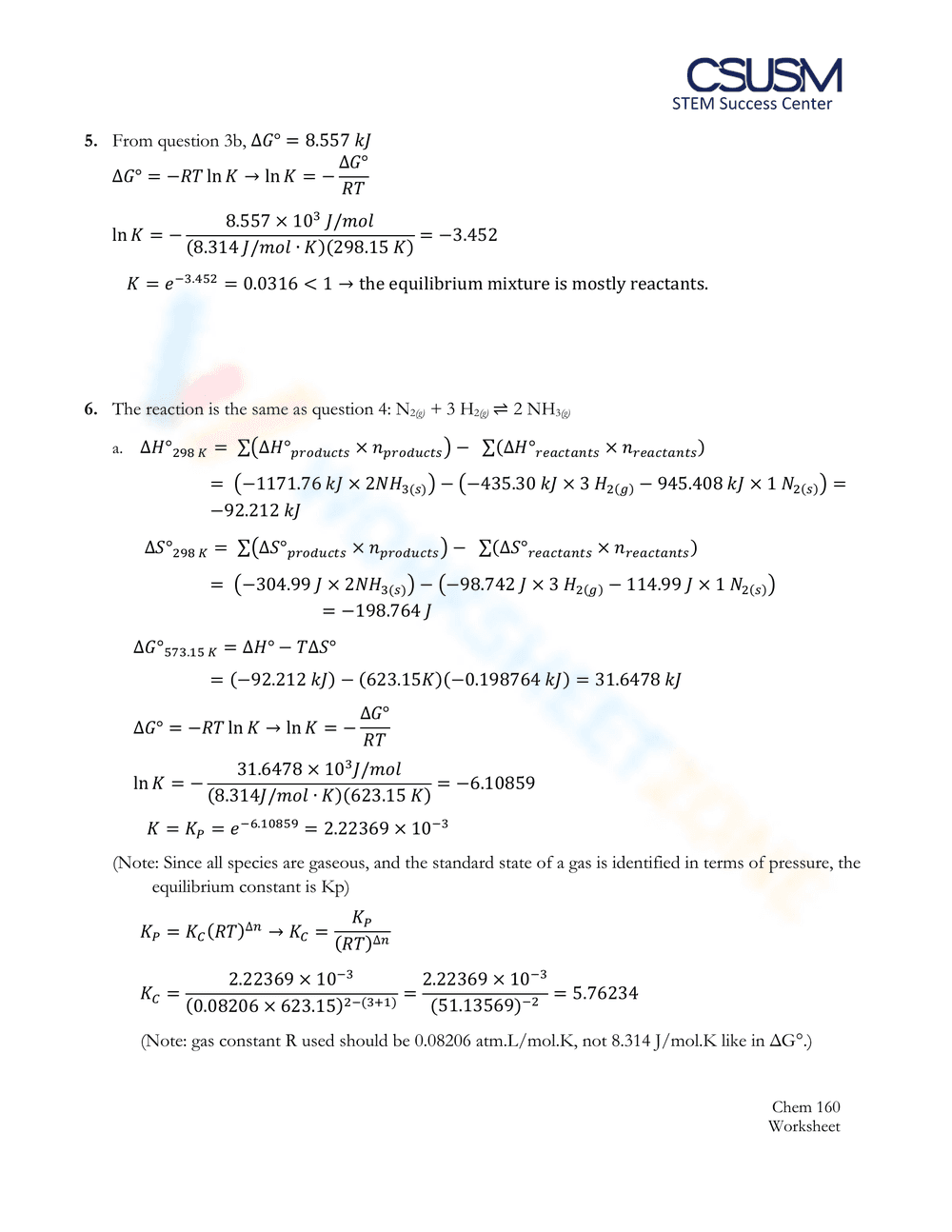
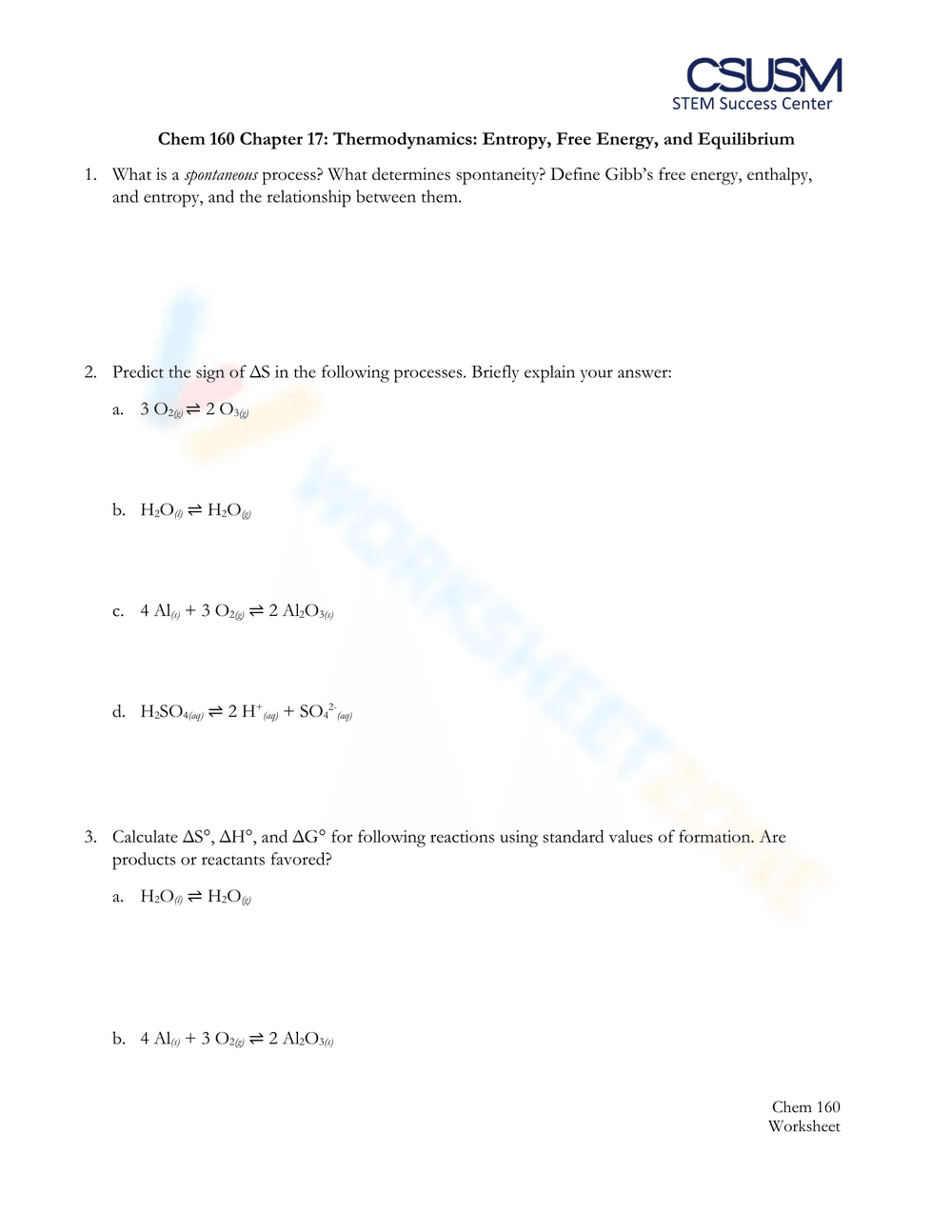
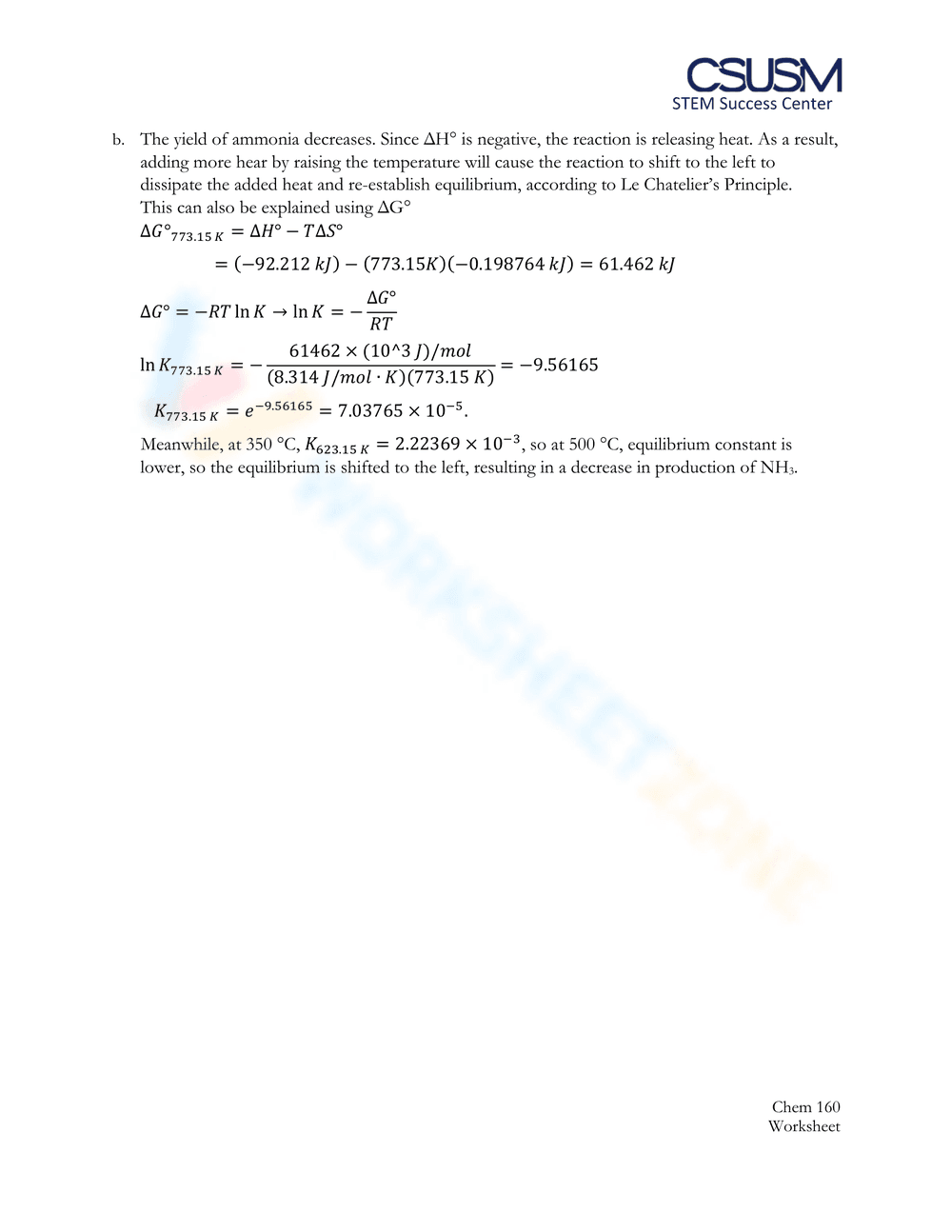
This is a chemistry worksheet focused on thermodynamics, entropy, free energy, and equilibrium. It includes questions asking students to define spontaneous processes and Gibbs free energy. The worksheet also requires predicting the sign of entropy change (ΔS) for various chemical reactions and calculating ΔS°, ΔH°, and ΔG° using standard values of formation. Example reactions include the conversion of ozone to oxygen, phase changes of water, and reactions involving aluminum oxide and sulfuric acid.
Grade Level Suitability:
This worksheet is suitable for college-level chemistry courses, specifically introductory physical chemistry or general chemistry II. The concepts of thermodynamics, entropy, and Gibbs free energy are typically introduced at this level. The calculations involving standard values of formation also require a solid understanding of stoichiometry and thermochemistry.
Why Use It:
This worksheet reinforces key concepts in thermodynamics, including spontaneity, entropy, and Gibbs free energy. It helps students develop problem-solving skills by applying these concepts to predict entropy changes and calculate thermodynamic properties for chemical reactions. It also encourages students to think critically about the relationship between these properties and the favorability of products versus reactants.
How to Use It:
Students should first review the definitions and relationships related to spontaneous processes, Gibbs free energy, enthalpy, and entropy. Then, they should analyze each reaction to predict the sign of ΔS, considering factors like changes in the number of moles of gas and phase transitions. Finally, they should use standard values of formation (likely provided in a textbook or table) to calculate ΔS°, ΔH°, and ΔG° for the given reactions, determining whether products or reactants are favored under standard conditions.
Target Users:
The target users are college students enrolled in introductory chemistry courses, particularly those covering thermodynamics. It is also suitable for students preparing for chemistry exams or seeking to deepen their understanding of thermodynamic principles.
This is a chemistry worksheet focused on thermodynamics, entropy, free energy, and equilibrium. It includes questions asking students to define spontaneous processes and Gibbs free energy. The worksheet also requires predicting the sign of entropy change (ΔS) for various chemical reactions and calculating ΔS°, ΔH°, and ΔG° using standard values of formation. Example reactions include the conversion of ozone to oxygen, phase changes of water, and reactions involving aluminum oxide and sulfuric acid.
Grade Level Suitability:
This worksheet is suitable for college-level chemistry courses, specifically introductory physical chemistry or general chemistry II. The concepts of thermodynamics, entropy, and Gibbs free energy are typically introduced at this level. The calculations involving standard values of formation also require a solid understanding of stoichiometry and thermochemistry.
Why Use It:
This worksheet reinforces key concepts in thermodynamics, including spontaneity, entropy, and Gibbs free energy. It helps students develop problem-solving skills by applying these concepts to predict entropy changes and calculate thermodynamic properties for chemical reactions. It also encourages students to think critically about the relationship between these properties and the favorability of products versus reactants.
How to Use It:
Students should first review the definitions and relationships related to spontaneous processes, Gibbs free energy, enthalpy, and entropy. Then, they should analyze each reaction to predict the sign of ΔS, considering factors like changes in the number of moles of gas and phase transitions. Finally, they should use standard values of formation (likely provided in a textbook or table) to calculate ΔS°, ΔH°, and ΔG° for the given reactions, determining whether products or reactants are favored under standard conditions.
Target Users:
The target users are college students enrolled in introductory chemistry courses, particularly those covering thermodynamics. It is also suitable for students preparing for chemistry exams or seeking to deepen their understanding of thermodynamic principles.


