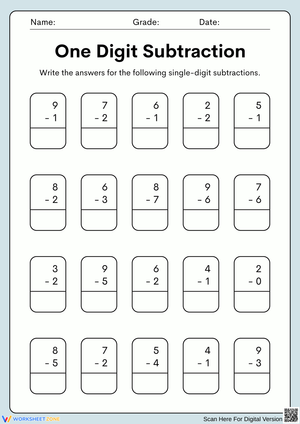
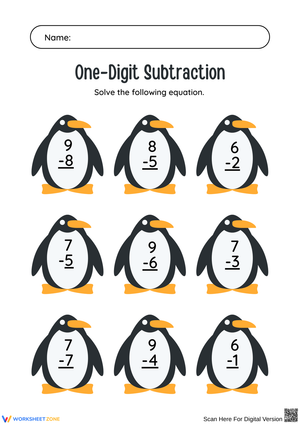
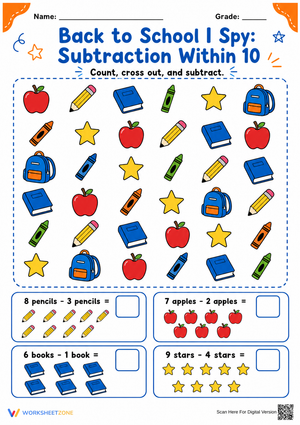
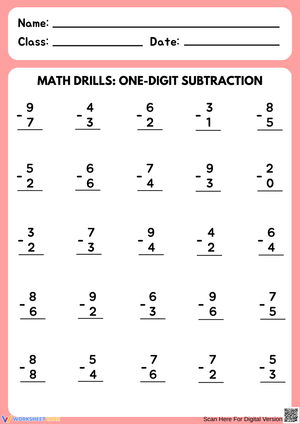
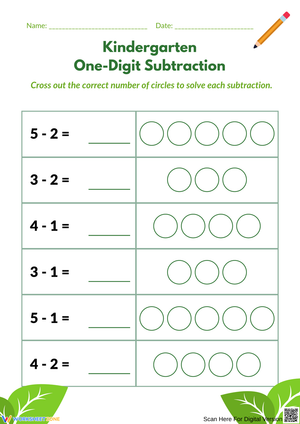
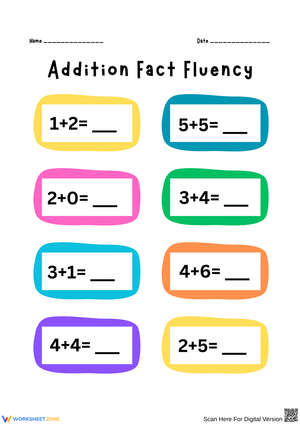
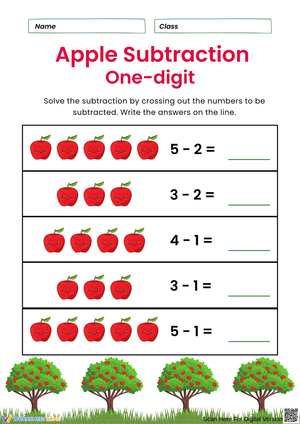
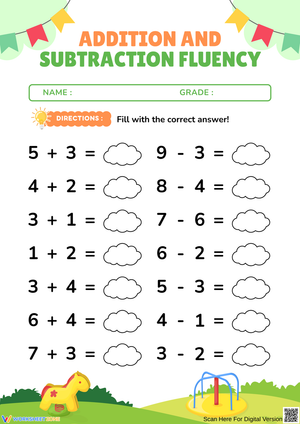
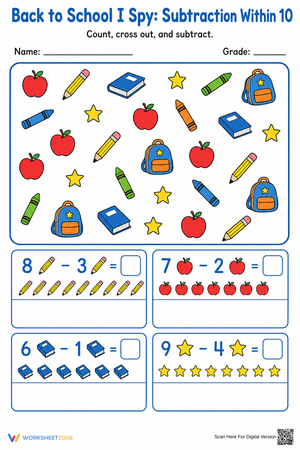
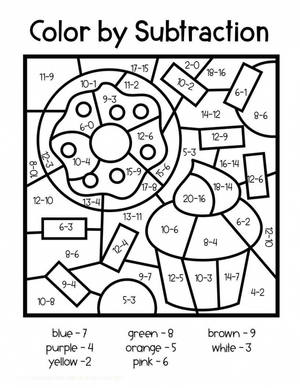
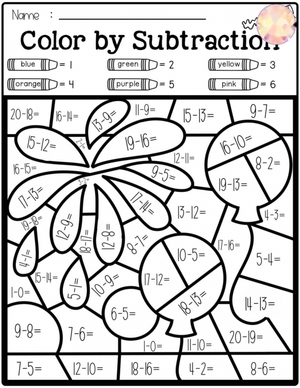
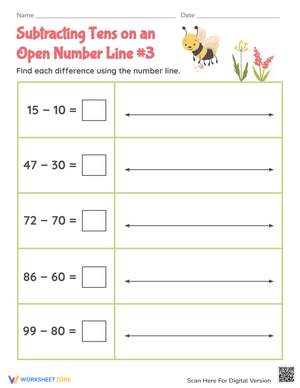
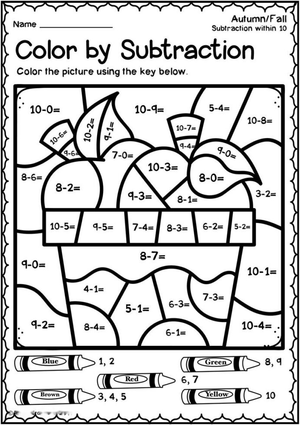
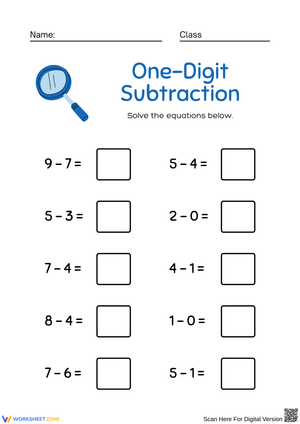
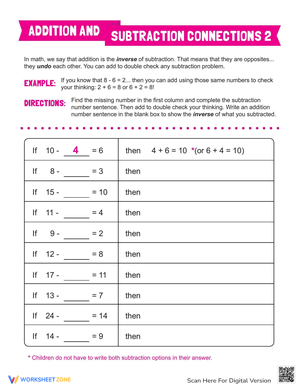
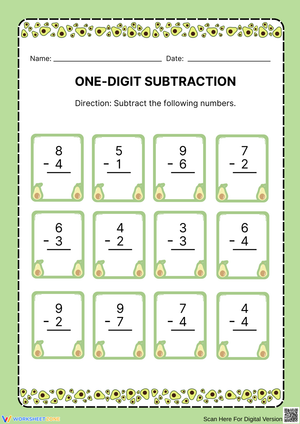
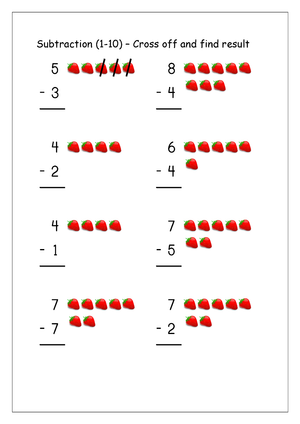
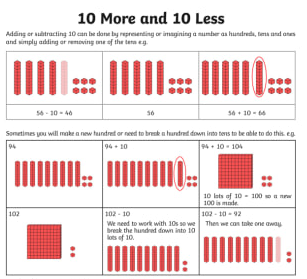
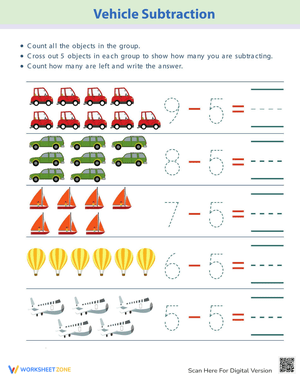
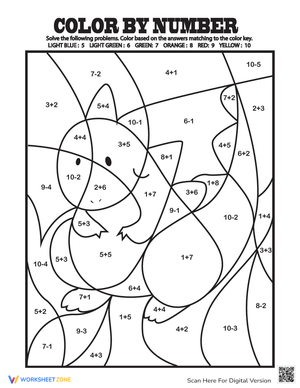
These subtraction facts worksheets give K–2 teachers targeted daily practice that moves students from finger-counting toward automatic recall within 20. Each worksheet focuses on a specific cluster of facts — subtracting 0 and 1, fact families, doubles, subtracting from ten — so students build confidence in one pattern before the practice advances. The set works as a warm-up, a math center activity, or a take-home sheet, and every worksheet comes ready to print and use without additional prep.
The Specific Skills Targeted
The set covers the full sequence of basic subtraction fluency, from the most transparent patterns to genuine mixed-recall challenge:
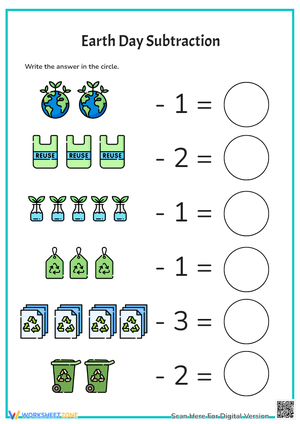
- Subtracting 0 and 1 from single-digit and two-digit minuends, the entry point where students recognize the rule rather than counting every time
- Subtracting a number from itself (6 − 6, 9 − 9), which any classroom manipulative can confirm in seconds
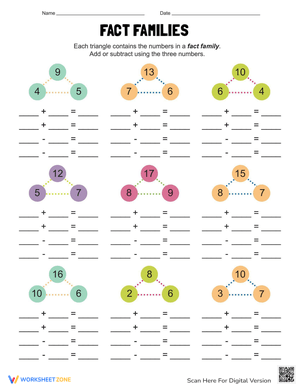
- Fact families built from three-number sets (3, 4, 7 and 6, 7, 13), writing all four equations so students see subtraction and addition as two sides of the same relationship
- Subtracting from ten, a critical bridge toward mental math and later multi-digit algorithms
- Doubles facts (14 − 7, 12 − 6) and near-doubles, where number structure carries more weight than memorization
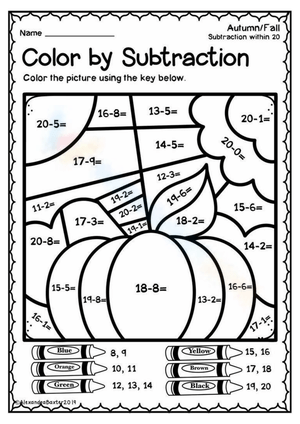
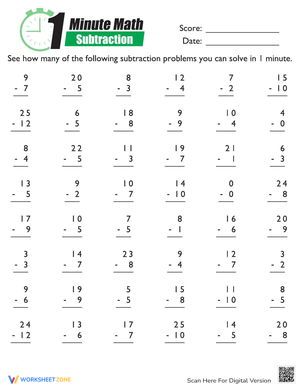
- Mixed practice within 20, the fluency endpoint before third-grade content demands the skill as background knowledge
Students underline minuends, mark differences, rewrite equations in reverse to identify the addition partner, and sort facts by family. The formats move from visual and concrete in the early worksheets to fully abstract in the mixed-practice sets.
Frequent Errors Worth Watching and Correcting
The most common mistake in early subtraction isn't careless — it's a systematic miscounting error. When a student counts backward to solve 13 − 5, she often starts her count at 13 rather than from 13, landing on 9 instead of 8. She's wrong every single time, not occasionally, and she can't self-correct because the procedure feels right to her. Naming the error explicitly — "you counted 13 as your first hop; start from 12" — resolves it faster than any re-teaching sequence.
A second pattern surfaces with inverse operations. A student who answers 6 + 7 = 13 without hesitation will stare at 13 − 7 as though the numbers are unrelated. The connection between addition and subtraction does not transfer automatically — it needs to be made explicit, practiced in both directions on the same worksheet, and revisited during think-alouds. The fact-family format requires students to write all four equations from a single three-number set, which is the most direct way to close that gap without extended re-teaching.
How to Work These Worksheets Into Your Weekly Lesson Plans
The most reliable placement is the first five minutes of the math block. Students pull out the day's worksheet while attendance is taken, complete as many problems as they can, and the class corrects it together in two minutes. That routine — brief, consistent, low-stakes — builds more fluency across a month than a 30-minute drill session done once a week. The key is daily repetition, not occasional intensity.
These subtraction facts worksheets fit naturally into math centers as well. While the teacher runs a small group, students at an independent station complete a fact-family worksheet and then flip it over to quiz a partner orally — extending the practice without adding a second printable. For intervention pullouts, selecting one targeted worksheet focused on a single cluster, like subtracting from 10, keeps the session narrow and productive rather than pulling students in multiple directions at once.
One routine that pays off quickly: have students track their own scores on a simple personal chart rather than measuring against the class. When a student sees she answered 14 problems correctly on Tuesday and 18 on Thursday, that four-problem gain is more motivating than any external comparison. Pair these subtraction facts worksheets with a one-column progress tracker, and students start asking for the next drill before you hand it out.
Standard Alignment
CCSS.MATH.CONTENT.2.OA.B.2 requires second graders to fluently add and subtract within 20 using mental strategies and to know from memory all sums of two one-digit numbers — subtraction fluency within 20 is the direct paired expectation. The standard lands at second grade because students have spent kindergarten and first grade building number sense through counting sequences, composing, and decomposing small numbers; automaticity is the next developmental step, not the starting point. First-grade teachers can use these worksheets to begin building toward 2.OA.B.2 before it becomes the official benchmark, giving students more distributed practice over a longer window.
Adjusting the Worksheets for a Range of Learners
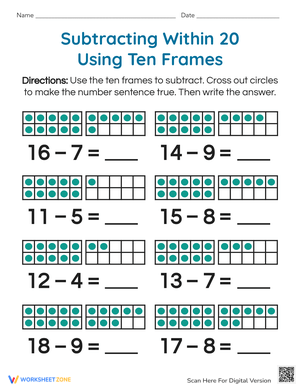
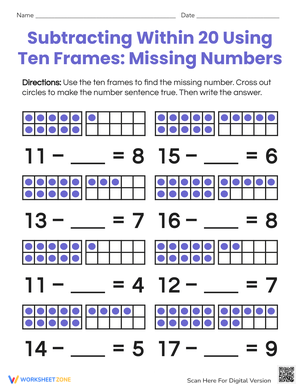
For students who are not yet ready to work abstractly, these subtraction facts worksheets work alongside physical counters or a printed ten-frame placed beside each problem. Students solve with the manipulative first, then record the written equation — the abstract practice still happens, but the cognitive load is distributed between the concrete and symbolic levels. This approach works especially well in the first week with any new fact family.
Students who have already hit fluency within 10 can skip the entry-level worksheets and move directly to the subtracting-from-10 and mixed-within-20 sets. For students who are ready for a genuine extension, ask them to write a short word problem to match each equation they solve. Generating a narrative for 15 − 8 requires the kind of flexible understanding that goes well beyond surface recall, and it surfaces the students who have truly internalized the meaning of subtraction rather than memorized the symbol sequence.
Frequently Asked Questions
What order should these worksheets follow in the sequence?
Start with subtracting 0 and 1, then subtracting a number from itself, then subtracting from 10. Follow with doubles facts and fact families as a group, and close with mixed practice within 20. This sequence moves from the most rule-governed patterns to the most demanding recall, building a series of early wins before the practice gets harder.
Should subtraction drills be timed or untimed?
Both have a place, but the order matters. Untimed practice belongs at the start of any new fact family — pressure interferes with the strategy-building that has to precede speed. Once a student shows consistent accuracy, brief timed sessions of 60 to 90 seconds add the retrieval pressure that converts accurate-but-slow into automatic. Keep timed work personal: the student races her own previous score, not her neighbor's.
How do these worksheets connect to addition practice students have already done?
The fact-family format makes the connection explicit. Every three-number set produces two addition equations and two subtraction equations on the same worksheet. When students write all four, they see that knowing 4 + 9 = 13 immediately resolves 13 − 9 and 13 − 4. Teachers who have already run addition fluency practice will notice students completing the subtraction side of a fact family without hesitation — the addition knowledge transfers once the relationship is made visible.
Are these worksheets appropriate for kindergarten students?
The early worksheets — subtracting 0, 1, and a number from itself within 10 — work well for kindergartners in the second half of the year, particularly when paired with number lines or ten-frame grids. The more abstract mixed-practice sets are better matched to first and second grade, where students can hold more numerical relationships in working memory and no longer need a visual model for every problem.













 Interactive Worksheet Maker
 Quiz Maker
 Word Search Maker
 Crossword Puzzle Maker
 Word Scramble Generator
 Sentence Scramble Generator
 Handwriting Worksheet Generator
 Name Tracing Generator
 Fill In The Blank Generator