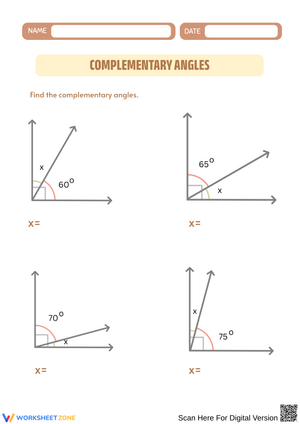
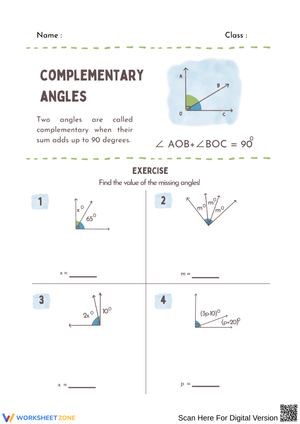
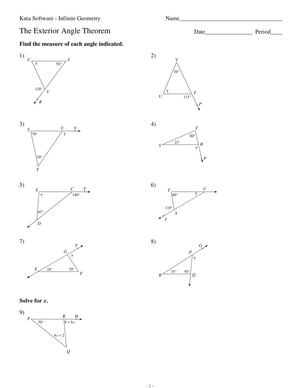
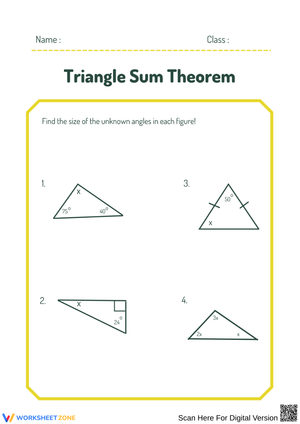
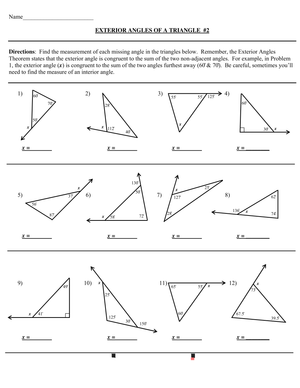
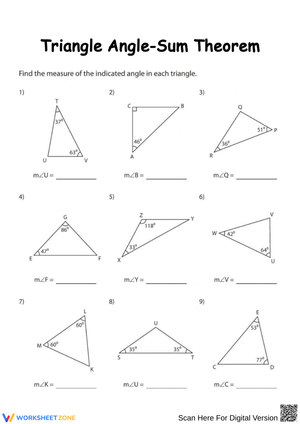
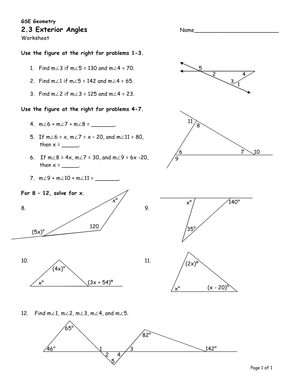
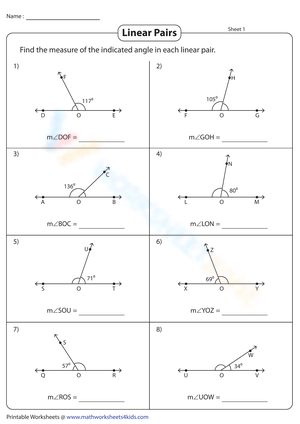
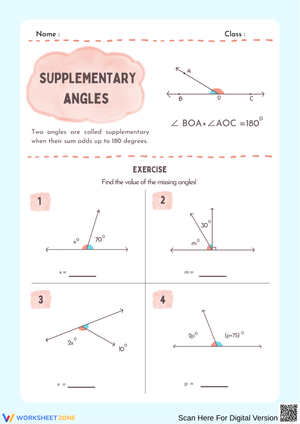
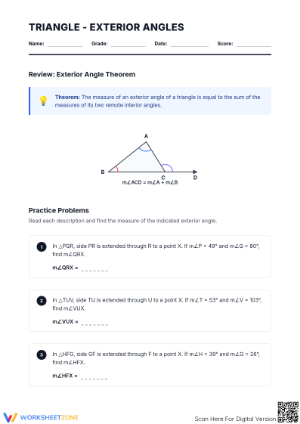
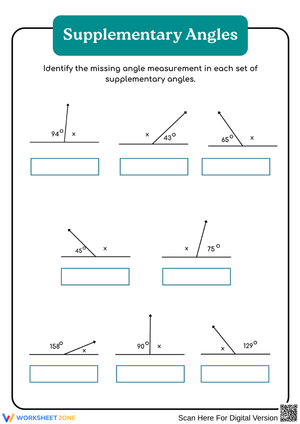
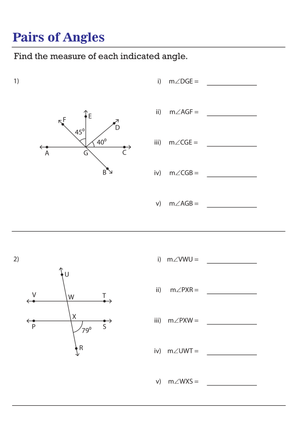
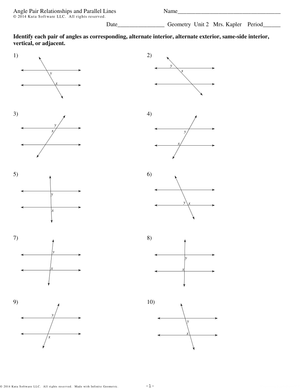
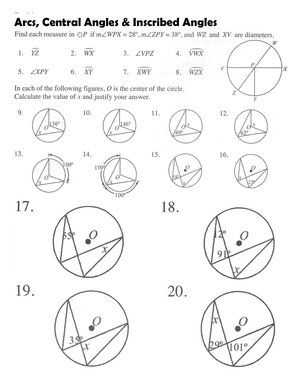
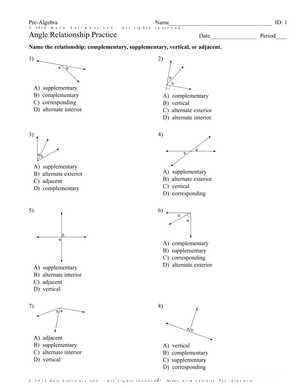
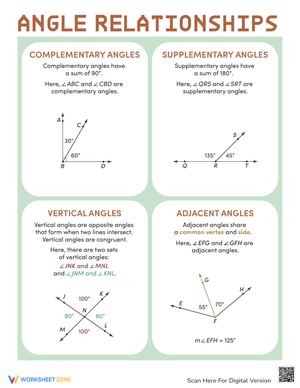
Angles worksheets give you a structured way to move students from noticing angles informally to naming, measuring, and drawing them with precision. This matters because angle work is not a stand-alone topic. It is the foundation for angle addition, triangle angle sums, and the coordinate geometry students will meet in middle school.
Under CCSS.Math.Content.4.G.A.1, fourth graders are expected to draw and identify points, lines, rays, and angles, including right, acute, and obtuse angles, within two-dimensional figures. Pairing that expectation with CCSS.Math.Content.4.MD.C.5, which requires students to understand an angle as a geometric shape formed by two rays sharing a common endpoint, gives you a clear two-part target for any angles worksheet set: conceptual understanding first, measurement skill second.
Sequencing an Angles Unit From Vocabulary to Protractor Practice
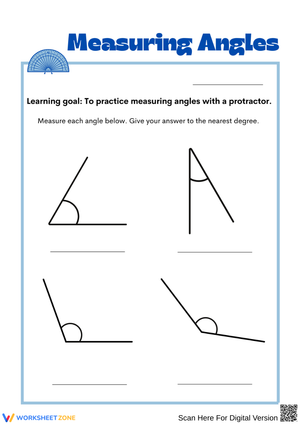
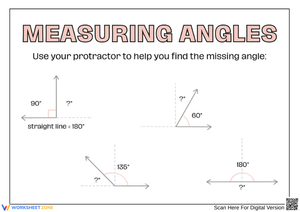
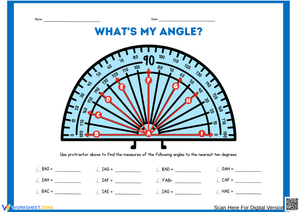
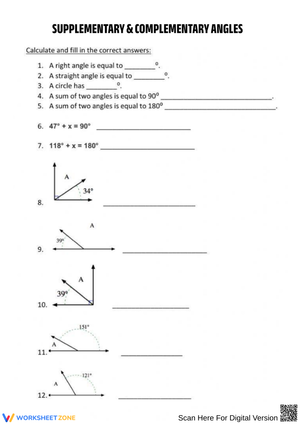
A well-sequenced unit does not jump straight to protractor work. Start with vocabulary and visual classification worksheets so students can sort angles by sight before they measure anything. An acute angle measures less than 90 degrees, a right angle is exactly 90 degrees, an obtuse angle falls between 90 and 180 degrees, and a straight angle measures exactly 180 degrees. Once students can classify confidently, move to worksheets that introduce the protractor as a measurement tool, then to worksheets that ask students to draw an angle to a given measure, and finally to missing-angle problems that require simple subtraction or addition.
This progression keeps struggling students from getting stuck on tool mechanics before they have the conceptual base to interpret what the protractor is telling them. It also gives you natural checkpoints for formative assessment along the way, since each stage produces a worksheet you can score quickly for a quick read on mastery.
Using Angle Worksheets for Small-Group Intervention
Angle classification confusion is one of the most common sticking points in a geometry unit, and it is highly predictable: students frequently mix up acute and obtuse angles because they are estimating rather than measuring. For small-group intervention, pull students who miss classification questions on a whole-class check and give them a worksheet built entirely around side-by-side comparison, where a clearly acute angle and a clearly obtuse angle sit next to each other. Ask students to explain their reasoning out loud before marking an answer. This surfaces the estimation habit and lets you correct it directly, rather than only marking the worksheet wrong and moving on.
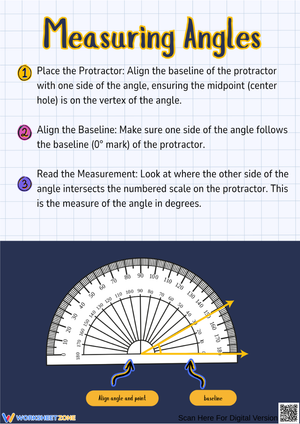
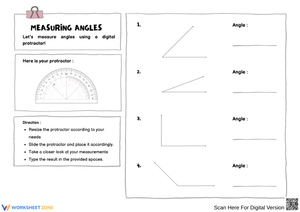
For students who have classification down but struggle with protractor alignment, a short intervention worksheet focused only on placing the protractor's center point on the angle's vertex, without any measurement reading required yet, isolates the exact skill gap. Keep these intervention sets short, five to eight items, so you can cycle through a group in one sitting.
Connecting Worksheets to Real Classroom Objects
Angle worksheets land better when students have already handled real angles before pencil ever touches paper. Clock hands are a reliable go-to: the hands at 3:00 form a right angle, and the hands at 6:00 form a straight angle, so students can check their own predictions against a classroom clock. Room corners give a built-in right-angle reference point, and pattern blocks let students physically build acute and obtuse angles before they classify printed ones. Spend five minutes on one of these hands-on checks before handing out a new worksheet, and you will see fewer classification errors on the page that follows.
Classroom Implementation
Plan your angles worksheets around a predictable weekly rhythm rather than assigning them at random. A useful structure looks like this:
- Monday: vocabulary and visual classification worksheet, introduced with a real-object warm-up
- Tuesday: guided protractor practice worksheet, completed with teacher modeling on the first two items
- Wednesday: independent protractor measurement worksheet, used as a formative check
- Thursday: small-group intervention worksheet for students who missed items on Wednesday
- Friday: mixed practice worksheet combining classification, measurement, and one missing-angle problem as an exit ticket
This rhythm gives you a built-in data point every week without adding a separate quiz, and it keeps angle vocabulary active well past the introductory lesson.
Angles as a Formative Checkpoint Before Standardized Testing
Because CCSS.4.G.A.1 and CCSS.4.MD.C.5 sit early in the geometry progression, angle worksheets make an efficient warm-up or exit-ticket bank in the weeks leading up to standardized testing. A two-minute warm-up with three classification items and one protractor reading keeps the skill fresh without eating into instructional time for newer content. If your data shows a group of students still confusing acute and obtuse angles close to test season, a short, targeted worksheet cycle is faster to run than reteaching the full unit.
Frequently Asked Questions
1. What grade level typically introduces angle classification and measurement in the US math curriculum?
Grade 4 is the primary standards-aligned entry point, with CCSS.Math.Content.4.G.A.1 and CCSS.Math.Content.4.MD.C.5 setting expectations for identifying angle types and understanding angle measurement.
2. What is the difference between acute, right, obtuse, and straight angles?
An acute angle measures less than 90 degrees, a right angle measures exactly 90 degrees, an obtuse angle measures between 90 and 180 degrees, and a straight angle measures exactly 180 degrees.
3. How can teachers use angle worksheets for small-group intervention or reteaching?
Pull students who struggle with a specific step, such as classification or protractor alignment, and give them a short worksheet isolating that one skill, then ask students to explain their reasoning aloud before checking answers.
4. What tools do students need to complete protractor-based angle worksheets?
Students need a standard protractor, a pencil, and ideally a ruler for drawing angles to a given measure, along with worksheets that clearly show the angle's vertex for alignment.
5. How do angle worksheets connect to later geometry topics like angle addition and triangle angle sums?
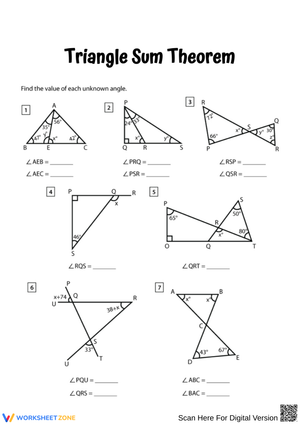
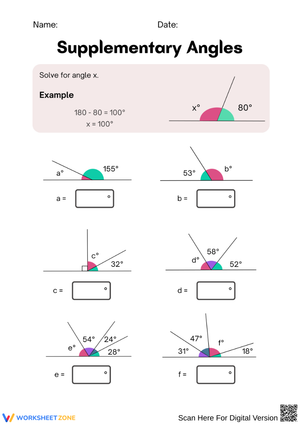
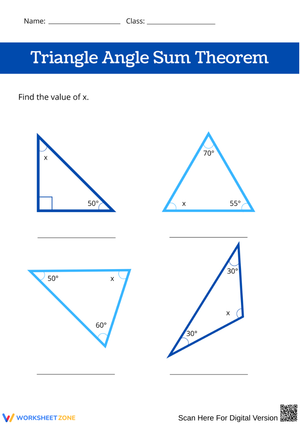
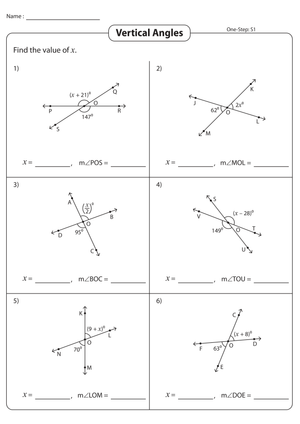
Once students can reliably classify and measure single angles, worksheets that combine multiple angles in one figure build directly toward angle addition and, later, the understanding that a triangle's interior angles sum to 180 degrees.













 Interactive Worksheet Maker
 Quiz Maker
 Word Search Maker
 Crossword Puzzle Maker
 Word Scramble Generator
 Sentence Scramble Generator
 Handwriting Worksheet Generator
 Name Tracing Generator
 Fill In The Blank Generator