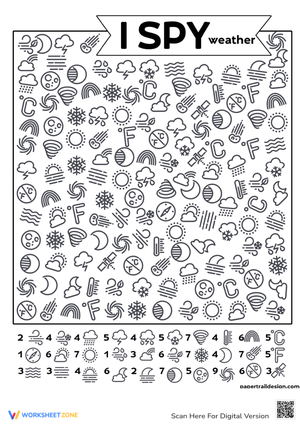
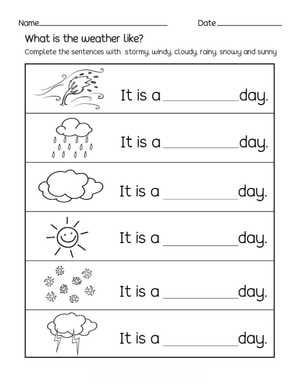
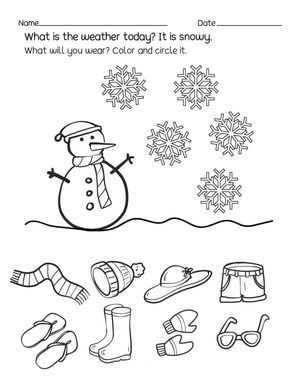
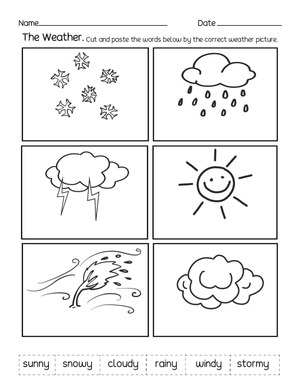
These weather worksheets for kindergarten give teachers a ready path from the morning sky check to real science skill-building — all in under ten minutes of instructional time. Each worksheet in the set targets a single observable weather condition with tasks that five-year-olds can complete independently after one round of modeling: picture-to-word matching, large-print word tracing, weather icon coloring, cut-and-paste clothing sorts, and simple sentence frames like Today is ___.
Skills These Worksheets Build
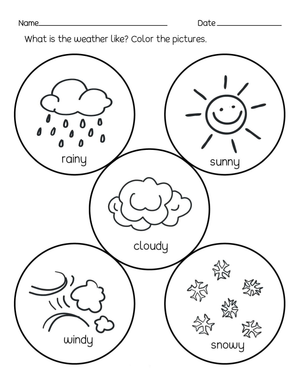
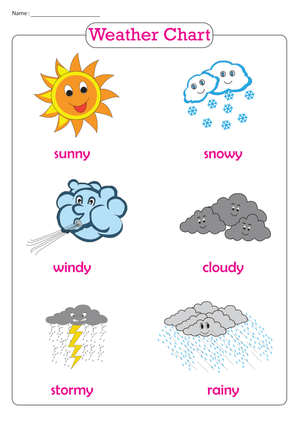
The set works through five conditions — sunny, rainy, cloudy, windy, and snowy — and addresses each one through multiple task types. That repetition is intentional. Young children need to encounter a word like windy in a matching context, a tracing context, and a sorting context before the vocabulary stabilizes. Single-exposure activities rarely hold at this age.
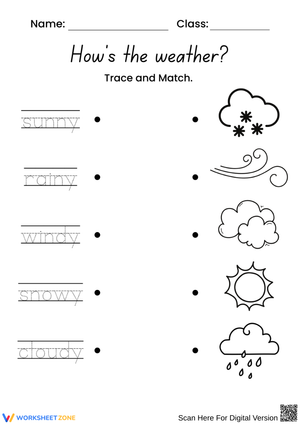
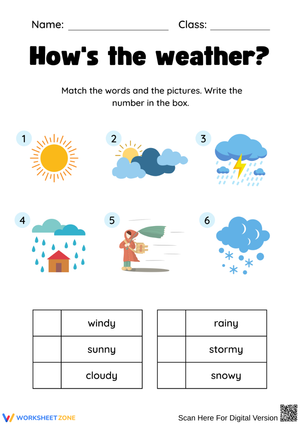
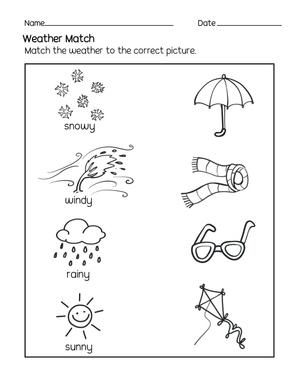
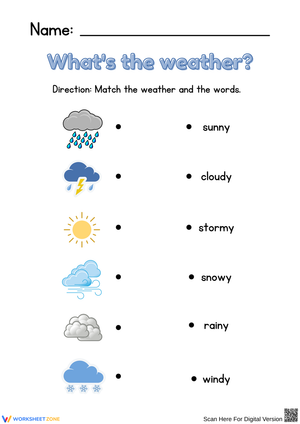
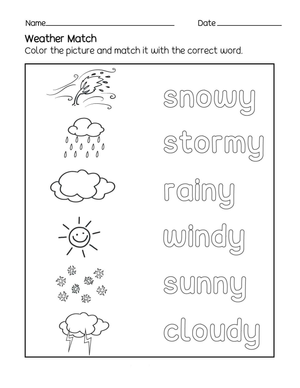
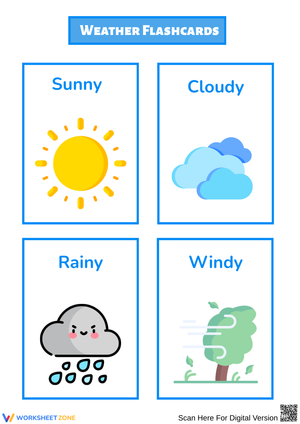
- Picture-to-word matching: Students draw a line from a weather image to its written label, building the direct link between visual cue and print.
- Word tracing: Large letter guides let students work on pencil control while reinforcing weather term spelling — two goals from one task.
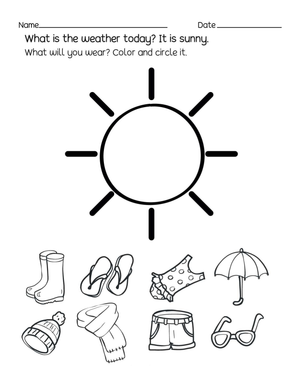
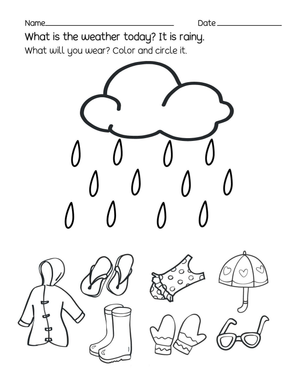
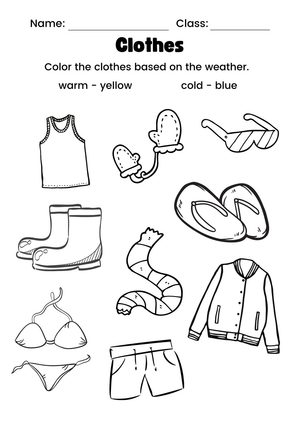
- Weather-to-clothing sorts: Students cut out clothing items and paste them beneath the correct weather picture, pulling in classification thinking alongside fine motor work.
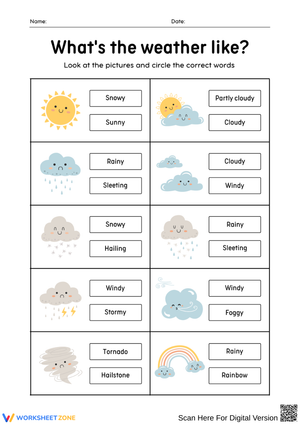
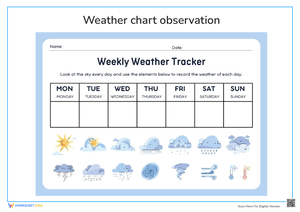
- Observation worksheets: Students look outside before answering, then circle or color the weather they actually see, keeping the task grounded in real-time noticing.
- Weekly weather graphs: Students color a square for each day's recorded weather, building early data skills alongside science vocabulary.
- Sentence-frame completion: With teacher support, students write or trace responses such as Today is cloudy. I will wear a ___.
Frequent Student Errors Worth Watching For
The cloudy-rainy confusion appears in nearly every class. Students see an overcast sky — grey, dim, no visible sun — and mark "rainy" because in their experience, a grey sky means rain is coming or was recently falling. An overcast but dry day genuinely puzzles them, and a matching worksheet that shows a grey cloud without raindrops will split a class right down the middle. Address this directly before students start: hold up a picture of a cloudy sky and ask whether it's raining. Let the disagreement surface and work through it together.
Wind is the hardest condition for kindergarteners to identify from a static image. Sunny, snowy, and rainy conditions all have clear, immediate visual markers. Wind doesn't appear — only its effects do. Students who move quickly through the other matching tasks will stall on the "windy" picture — bent trees, blowing leaves, a tilted umbrella — and guess. This isn't a reading gap; it's a conceptual one. Even stepping to an open door before the worksheet to feel moving air dramatically reduces the error rate.
On clothing-sort worksheets, students often paste based on what they wore most recently rather than what the weather picture requires. A student who wore rain boots yesterday will reach for the boot cutout and place it under the sunny-day picture because boots feel relevant right now. The sort becomes noticeably more accurate when you ask students to describe the weather in the picture before they pick up the scissors.
Lesson-Planning Ideas to Get the Most From These Worksheets
The most efficient use pattern is a two-minute anchor: students observe the sky, name what they see aloud, then complete one worksheet that records that observation. This works during arrival, morning meeting, or the opening minutes of a science block. It requires almost no daily prep once students learn the routine, and after two to three weeks they move through it without redirection.
For science centers, slide these weather worksheets for kindergarten into dry-erase sleeves. Students use expo markers, wipe clean, and rotate — one printed set covers the whole week. For substitute days, pull the observation and matching worksheets: the visual-heavy format means a sub who has never taught weather can run the routine without added explanation. For homework, choose the coloring or tracing worksheets over the cut-and-paste sorts, because families don't always have glue on hand and simpler formats come back completed.
Standard Alignment
These worksheets support NGSS K-ESS2-1, which asks kindergarteners to use and share observations of local weather conditions to describe patterns over time. In practical classroom terms, that standard plays out in exactly the kind of daily observation and recording this set builds toward. The weekly graph worksheets most directly address the pattern-recognition element — students can see at a glance which weather type appeared most often during a given month. The matching and vocabulary tracing worksheets build the language students need to describe what they've noticed. Most state standards use language close enough to K-ESS2-1 that alignment transfers with minimal adjustment.
Differentiating These Worksheets Across Learner Readiness Levels
Pre-readers and students still developing fine motor control get the most from coloring and circling worksheets, where no letter formation is required. These students participate in the same science content as everyone else without the added demand of handwriting. Emerging readers step naturally into the tracing worksheets, where the letter paths are provided but students still produce the weather word on their own.
For students ready to go further, the sentence-frame worksheets extend naturally: instead of tracing the given frame, they copy it independently and add a second original sentence. These weather worksheets for kindergarten also work well as early-finisher tasks without modification — a student who wraps up a matching worksheet in two minutes can turn it over and draw what the weather looks like from the classroom window, keeping science thinking active without requiring a separate assignment.
Frequently Asked Questions
What weather concepts should kindergarteners be able to identify?
Kindergarteners should reliably identify sunny, rainy, cloudy, windy, and snowy conditions through direct observation. The focus at this age is on observable, daily weather — not long-term climate patterns. Students should also practice connecting weather type to appropriate clothing and activities, which brings in reasoning alongside vocabulary.
How do these worksheets fit into a morning meeting routine?
Start with a quick class look outside — thirty seconds to one minute — and have students name what they see. Then move directly into a worksheet where students circle, trace, or color the matching weather picture. Over time, this sequence becomes a self-running routine. Students learn exactly what comes next and need fewer directions each day.
Which worksheet types work best for students who aren't yet reading?
Picture-based worksheets — matching, coloring, and cut-and-paste sorting — let non-readers show full science understanding without depending on word recognition. These weather worksheets for kindergarten include enough image-forward tasks that pre-readers can work through most of the set successfully while peers at different readiness levels work alongside them on the same topic.
How should I connect these worksheets to real outdoor observation?
Give students something to notice before they write anything down. Ask them to look at the clouds, watch whether the trees are moving, or decide what they would wear going outside right now. Even a brief thirty-second discussion before students pick up a pencil gives the worksheet more grounding in actual observation rather than memorized response.












 Interactive Worksheet Maker
 Quiz Maker
 Word Search Maker
 Crossword Puzzle Maker
 Word Scramble Generator
 Sentence Scramble Generator
 Handwriting Worksheet Generator
 Name Tracing Generator
 Fill In The Blank Generator