


























Views
Downloads

Letter V Worksheet: Printable Grade K Handwriting
Paste this activity's link or code into your existing LMS (Google Classroom, Canvas, Teams, Schoology, Moodle, etc.).
Students can open and work on the activity right away, with no student login required.
You'll still be able to track student progress and results from your teacher account.
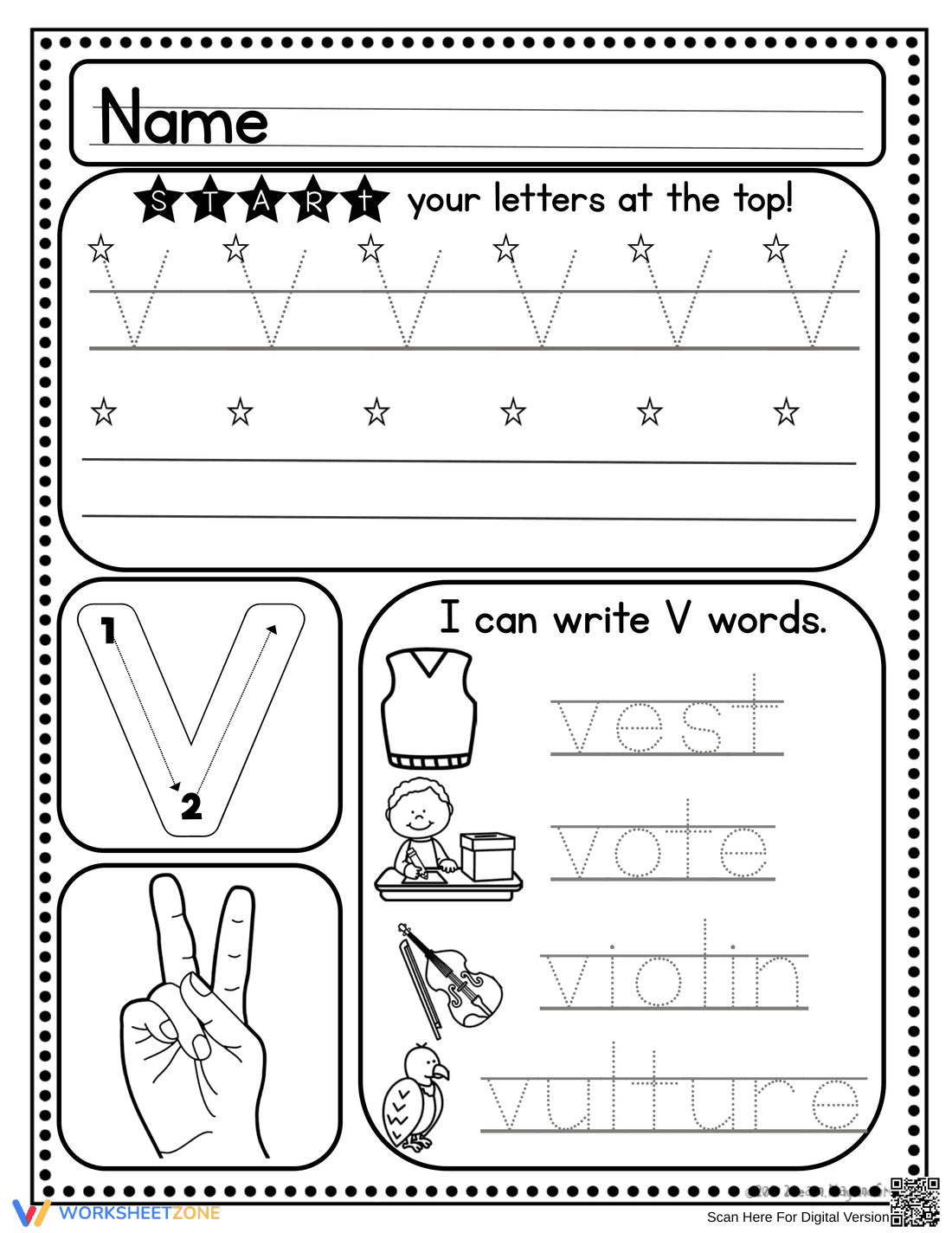
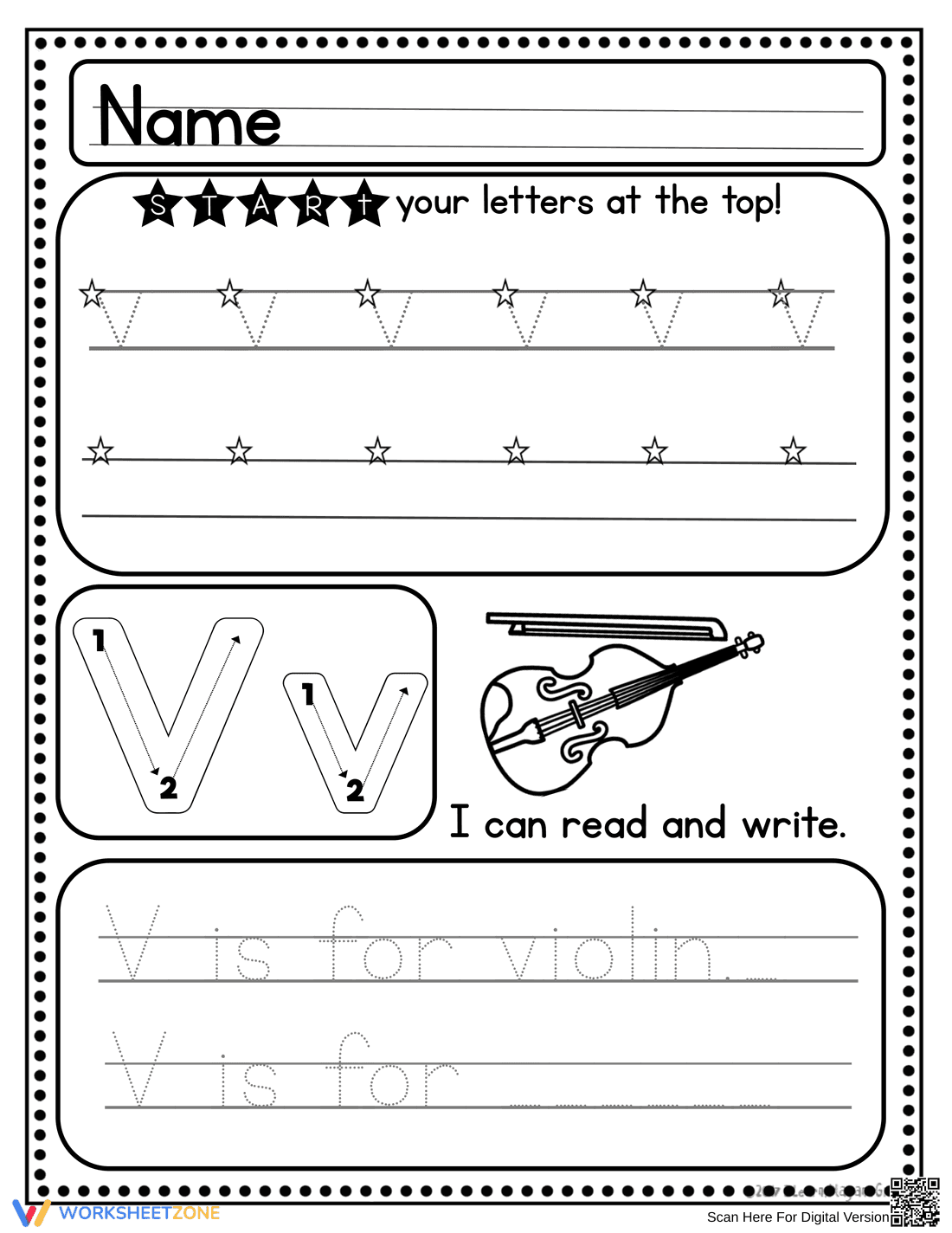
This printable Kindergarten handwriting worksheet helps students master the letter V through targeted formation and recognition practice. By combining visual models, guided tracing, and a letter-hunt activity, early learners develop the fine motor control and alphabetic knowledge required for fluent writing.
At a Glance
- Grade: K · Subject: English
- Standard:
CCSS.ELA-LITERACY.L.K.1.A— Print many upper- and lowercase letters.- Skill Focus: Letter V formation and recognition
- Format: 1 page · 3 task sections · No answer key · PDF
- Best For: Independent practice or morning work
- Time: 10–15 minutes
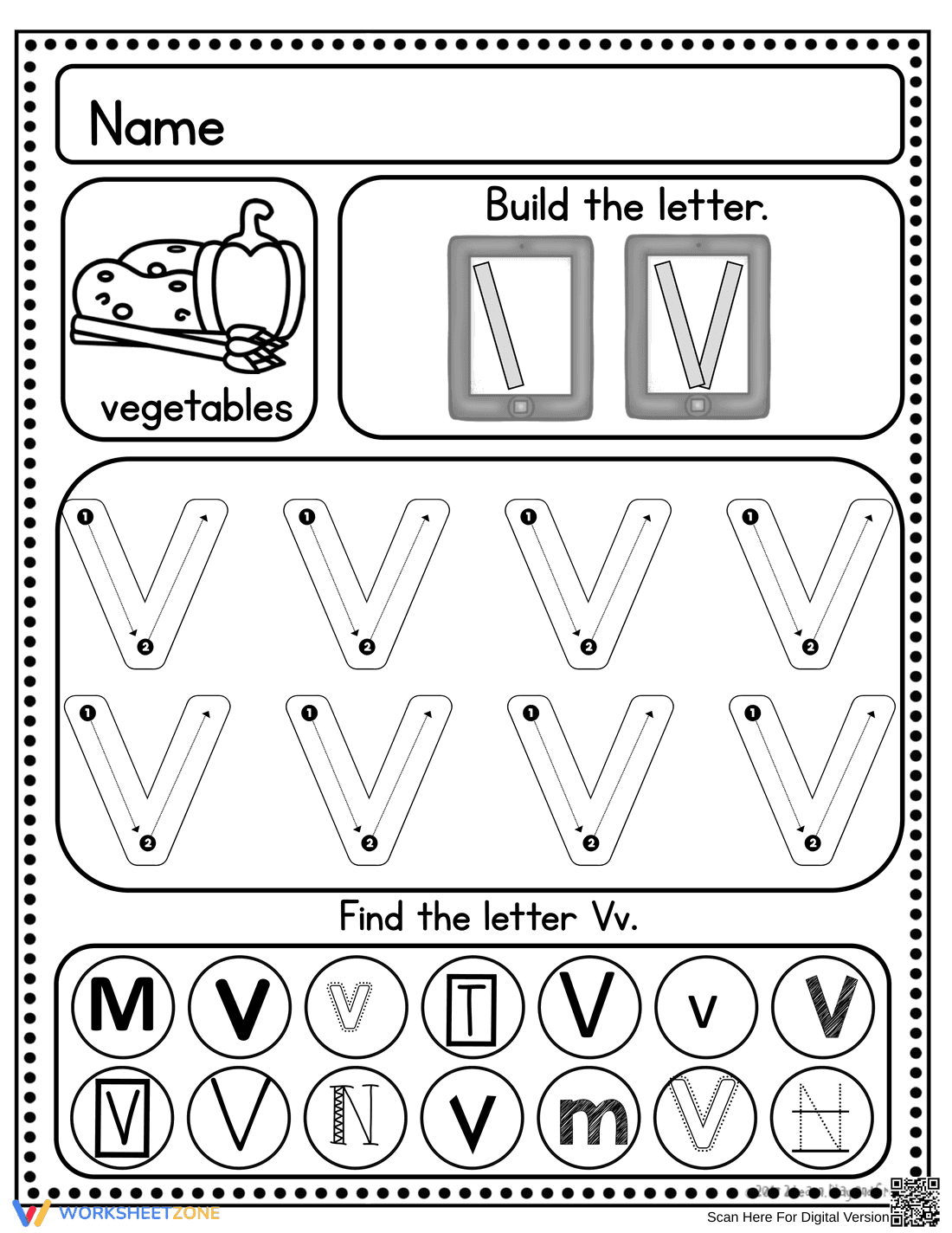
This single-page resource features three distinct activity zones designed to reinforce letter V concepts. At the top, a "Build the letter" section demonstrates the stroke sequence using straight lines. The middle section provides eight large, guided tracing models with numbered directional arrows to ensure proper top-to-bottom stroke habits. Finally, the bottom section includes a "Find the letter Vv" visual discrimination task where students must identify uppercase and lowercase V among fourteen mixed letters in various fonts.
This worksheet is designed for immediate classroom implementation with a streamlined workflow:
- Print (1 minute): Generate the single-page PDF for your entire class roster. The black-and-white design ensures crisp, ink-saving reproduction.
- Distribute (1 minute): Hand out the sheets during morning arrival or transition times. The intuitive layout requires minimal verbal instruction.
- Review (1 minute): Quickly scan the bottom letter-hunt section to verify accurate visual discrimination.
With under two minutes of total teacher prep time, this resource is highly suitable for emergency sub plans, literacy centers, or independent seatwork.
This activity is directly aligned to CCSS.ELA-LITERACY.L.K.1.A, requiring students to print many upper- and lowercase letters. It also supports foundational reading skills by reinforcing letter recognition. Both standard codes can be copied directly into lesson plans, IEP goals, or district curriculum mapping tools.
Deploy this worksheet during morning work to establish a calm, productive routine as students arrive. Alternatively, use it as an independent station during small-group literacy centers. As students complete the tracing section, observe their pencil grip and stroke direction; this provides an excellent formative assessment opportunity to correct bottom-to-top writing habits before they become ingrained. Expected completion time ranges from 10 to 15 minutes.
This resource is primarily designed for Kindergarten students developing foundational handwriting skills. The explicit visual cues and numbered arrows offer built-in differentiation for students who struggle with spatial organization or motor planning. It pairs perfectly with tactile letter-building activities, such as using wooden pieces or play dough, before moving to pencil-and-paper tasks.
Mastering letter formation through explicit instruction is a critical component of early literacy development. According to Fisher & Frey (2014), providing students with clear visual models and guided, repetitive practice significantly improves both handwriting legibility and subsequent writing fluency. This resource directly targets CCSS.ELA-LITERACY.L.K.1.A by requiring students to print many upper- and lowercase letters accurately. The combination of stroke-sequence modeling, directional tracing, and visual discrimination tasks ensures that early learners internalize the structural properties of the letter V. By isolating these foundational skills, educators can effectively reduce cognitive load, allowing young writers to focus entirely on motor execution and letter recognition. Consistent, daily practice with highly structured materials like this worksheet builds the automaticity necessary for more complex encoding, spelling, and composition tasks in later elementary grades.


