


























Views
Downloads

Printable Letter A Worksheet | Grade K Handwriting
Paste this activity's link or code into your existing LMS (Google Classroom, Canvas, Teams, Schoology, Moodle, etc.).
Students can open and work on the activity right away, with no student login required.
You'll still be able to track student progress and results from your teacher account.
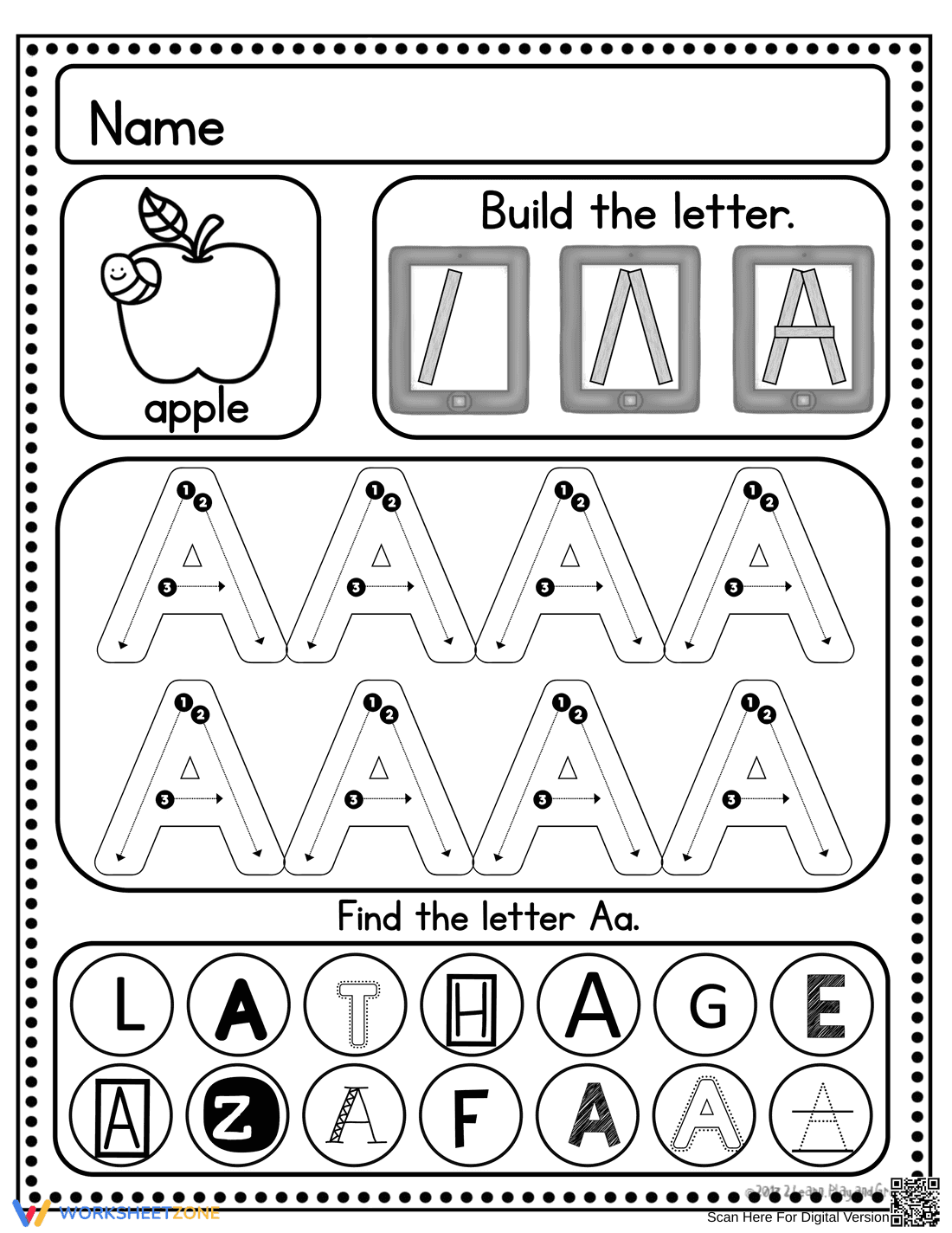
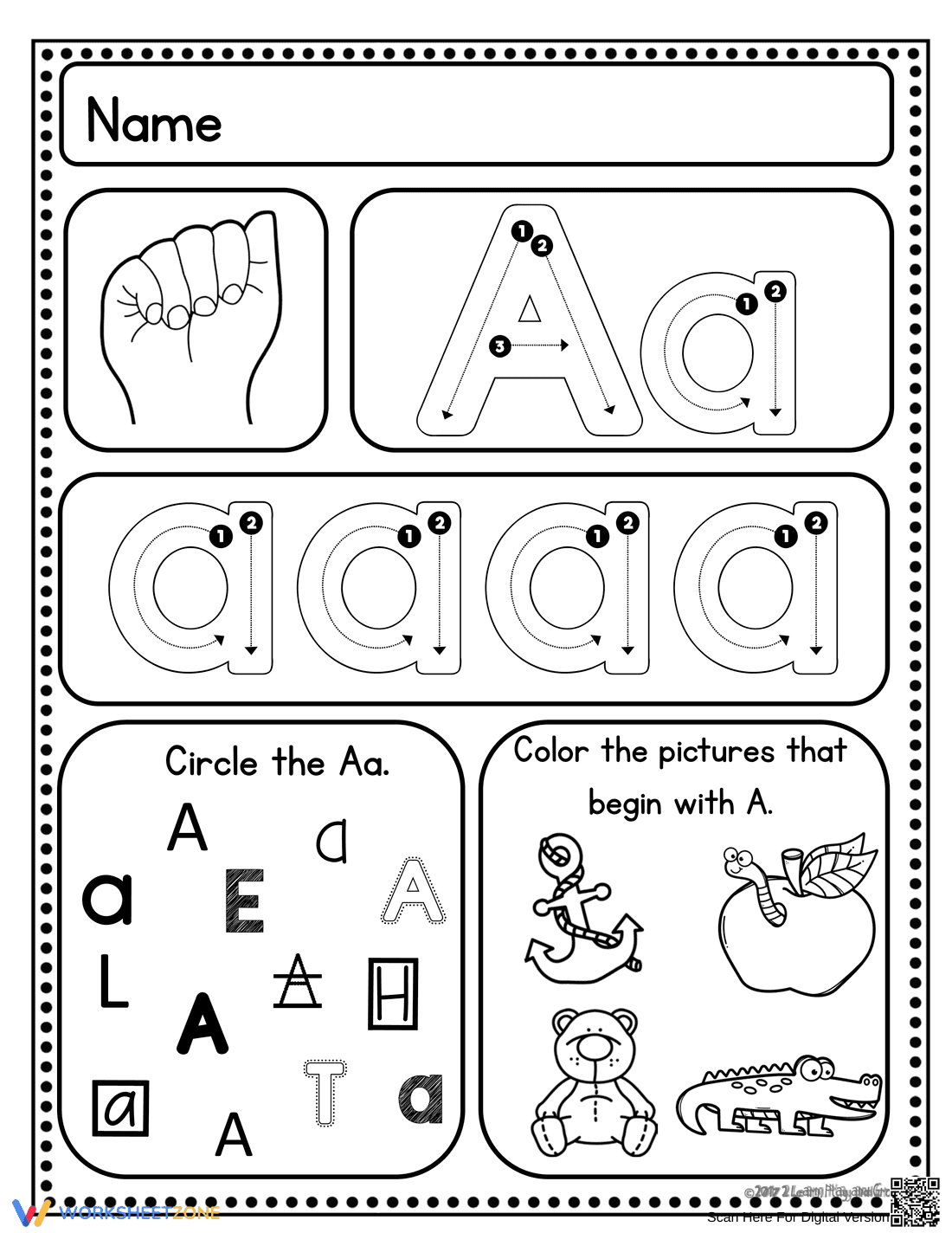
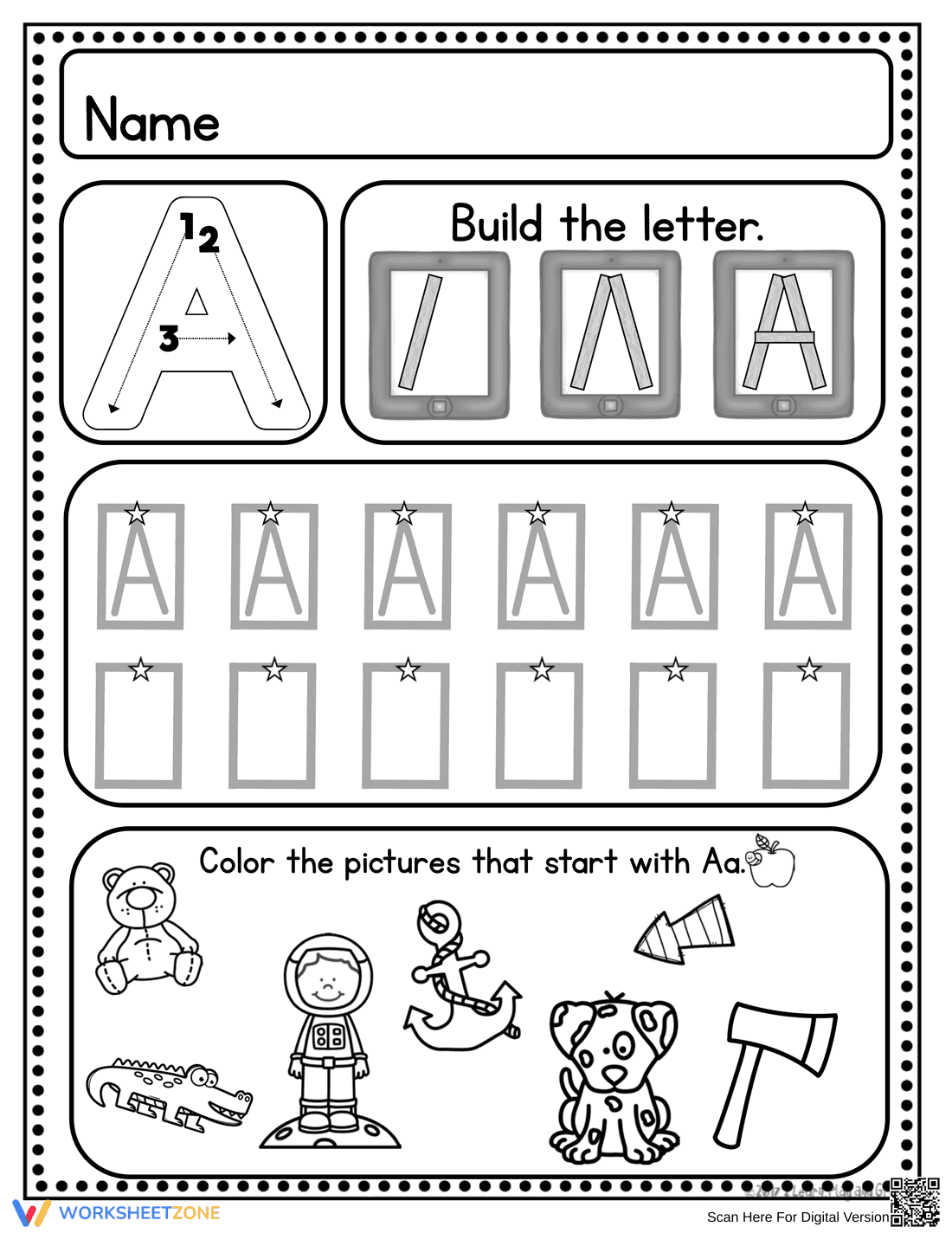
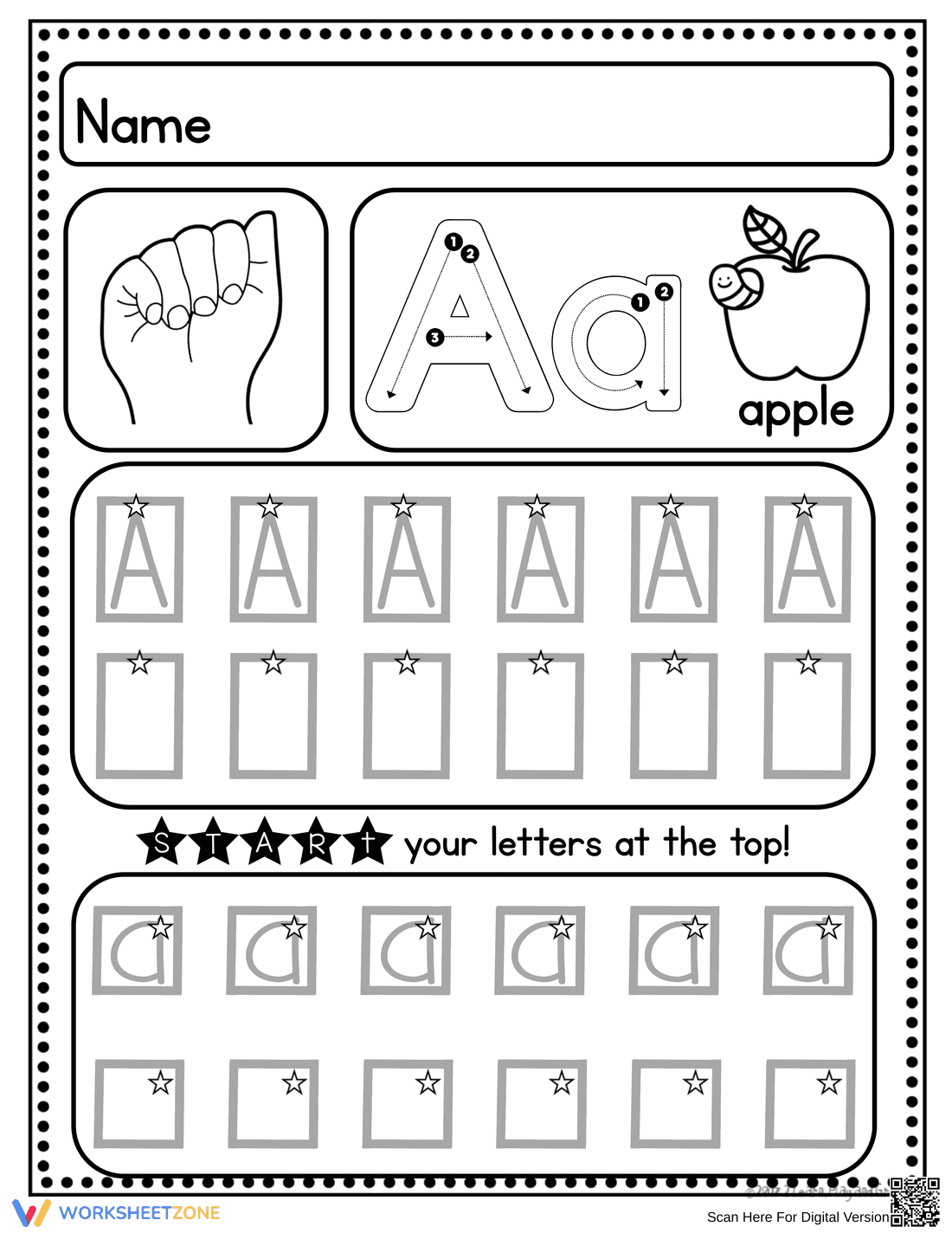
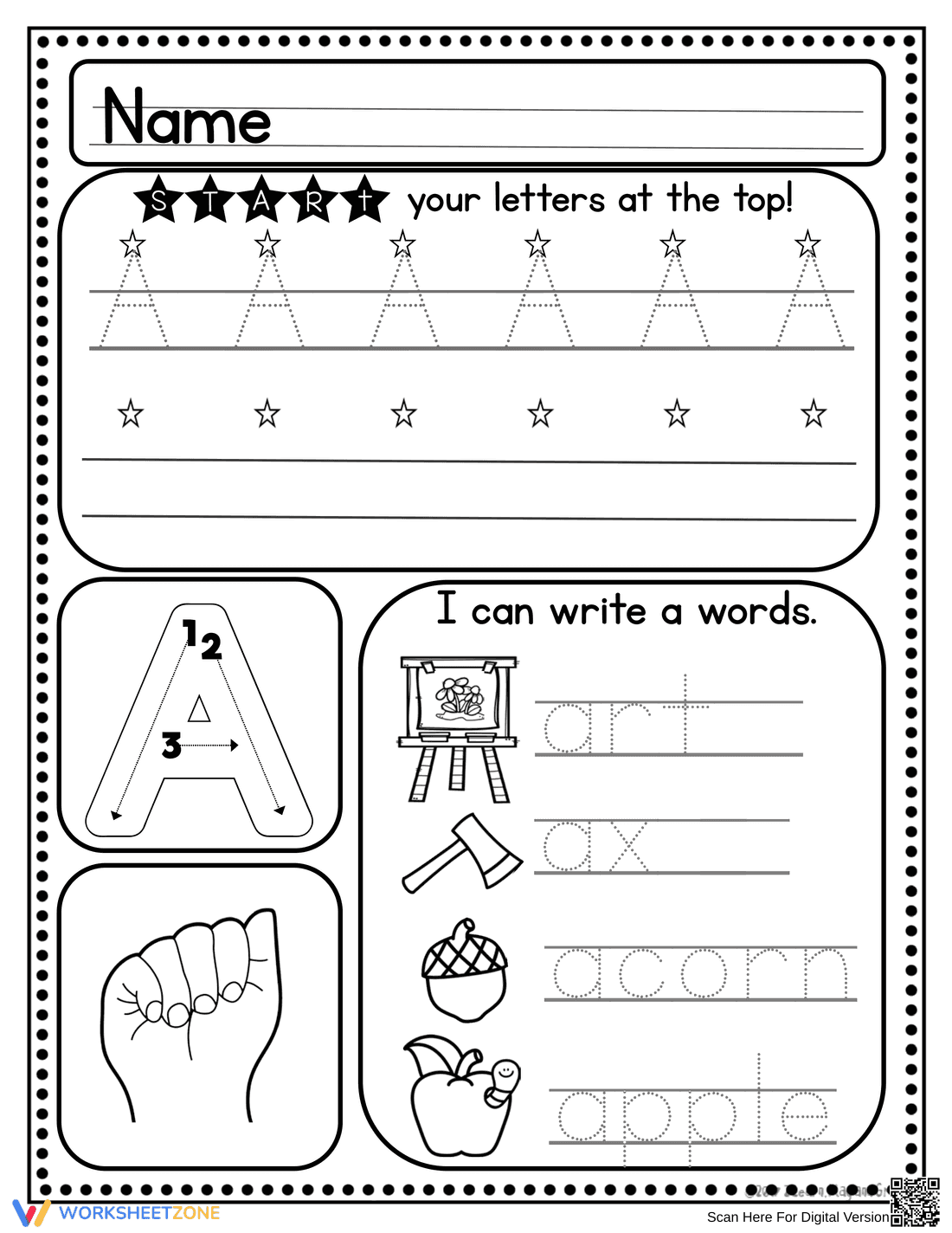
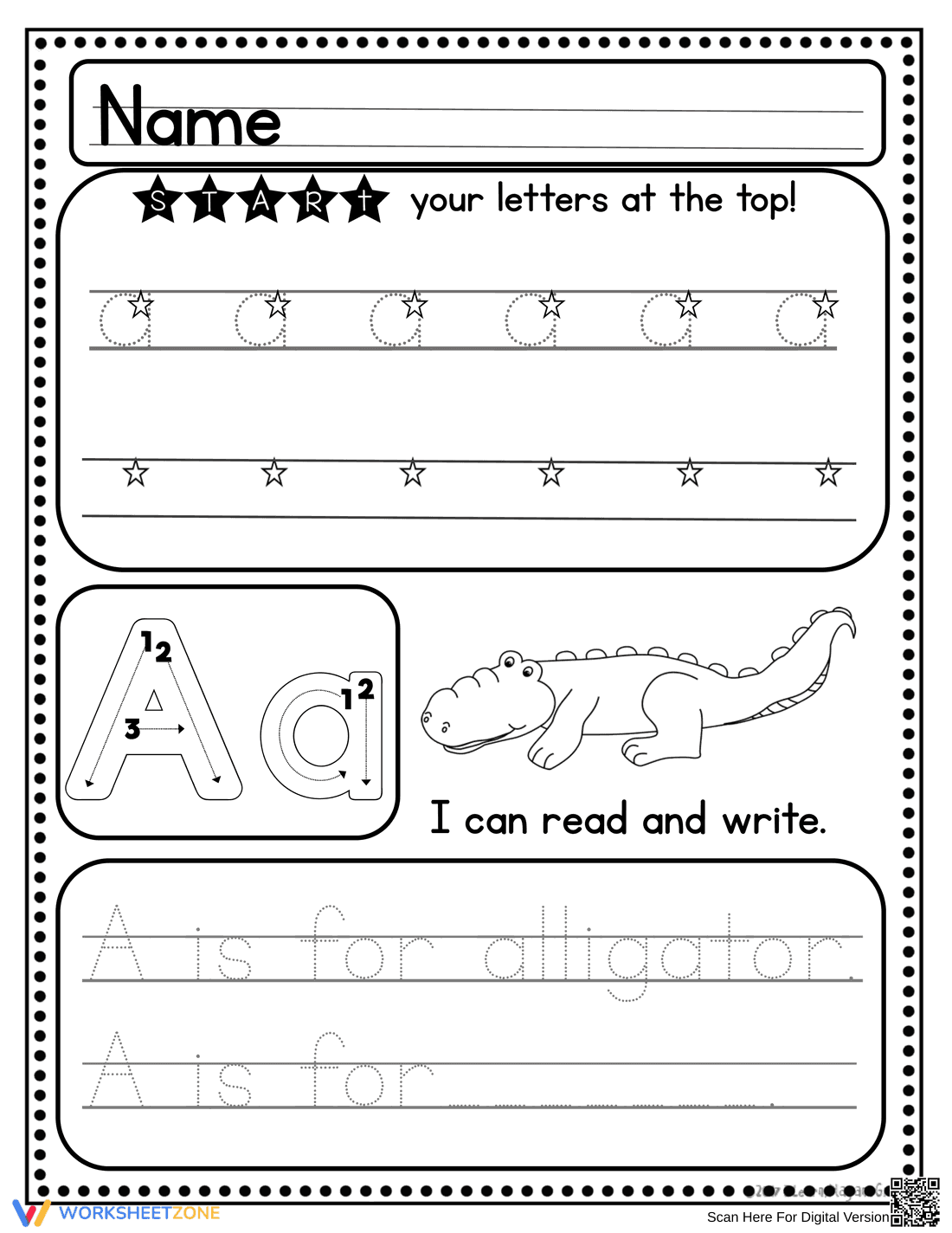
This printable Grade K handwriting worksheet helps students master uppercase Letter A formation and recognition. Using a structured, step-by-step approach, early learners practice building, tracing, and identifying the letter A. This resource builds essential fine motor skills and foundational literacy required for confident writing.
At a Glance
- Grade: K · Subject: English
- Standard:
CCSS.ELA-LITERACY.L.K.1.A— Print uppercase and lowercase letters- Skill Focus: Letter A formation and recognition
- Format: 1 page · 3 task sections · No answer key needed · PDF
- Best For: Morning work or literacy centers
- Time: 10–15 minutes
This single-page resource features three distinct task sections designed to reinforce letter familiarity. At the top, a visual sequence demonstrates stroke order using simple graphics. The middle section provides eight large, guided tracing letters with numbered arrows to ensure proper mechanics. Finally, the bottom activity challenges students to visually discriminate the target letter among fourteen mixed fonts, reinforcing recognition.
Zero-Prep Workflow
This worksheet requires absolutely no teacher preparation.
- Print (1 minute): Download the PDF and print. The design is ink-friendly.
- Distribute (1 minute): Hand out during morning arrival or literacy centers.
- Review (1 minute): Visual instructions mean students can begin independently immediately.
With total prep under two minutes, this is excellent for sub plans.
Standards Alignment
This resource is directly aligned to CCSS.ELA-LITERACY.L.K.1.A, which requires students to print many upper- and lowercase letters. By combining stroke-order modeling, guided tracing, and visual discrimination, the worksheet ensures comprehensive practice of this foundational standard. Both standard codes can be copied directly into lesson plans, IEP goals, or district curriculum mapping tools.
How to Use It
Deploy this worksheet during independent literacy centers after direct instruction on the Letter A. Alternatively, use it as targeted morning work to establish a focused routine. As students work, observe their pencil grip and stroke directionality—checking if they start letters at the top—as a quick formative assessment. Expected completion time is 10 to 15 minutes.
Who It's For
This resource is ideal for Kindergarten students, pre-K learners preparing for elementary school, and first graders needing handwriting intervention. For students requiring extra support, provide a physical alphabet manipulative or a tactile sand tray to practice the letter shape before attempting the pencil-and-paper tasks. Pair this worksheet with an interactive read-aloud focusing on words that begin with the short 'A' sound, such as an apple-themed picture book.
Mastering early handwriting skills, specifically the ability to print uppercase and lowercase letters as outlined in CCSS.ELA-LITERACY.L.K.1.A, is a critical predictor of later reading and writing success. When students practice letter A formation and recognition through structured, multi-modal tasks—such as visual building, guided tracing, and visual discrimination—they develop the automaticity required for fluent written expression. According to Fisher & Frey (2014), providing explicit instruction followed by targeted, independent practice significantly improves students' orthographic mapping and fine motor coordination. This worksheet bridges the gap between letter introduction and independent writing by offering clear, numbered stroke sequences that prevent the formation of poor handwriting habits. By isolating the letter A and providing varied interaction types on a single page, educators can efficiently build the foundational literacy skills necessary for early childhood academic achievement.


