


























Views
Downloads

Letter B Handwriting Worksheet | Grade K-1 Essential
Paste this activity's link or code into your existing LMS (Google Classroom, Canvas, Teams, Schoology, Moodle, etc.).
Students can open and work on the activity right away, with no student login required.
You'll still be able to track student progress and results from your teacher account.
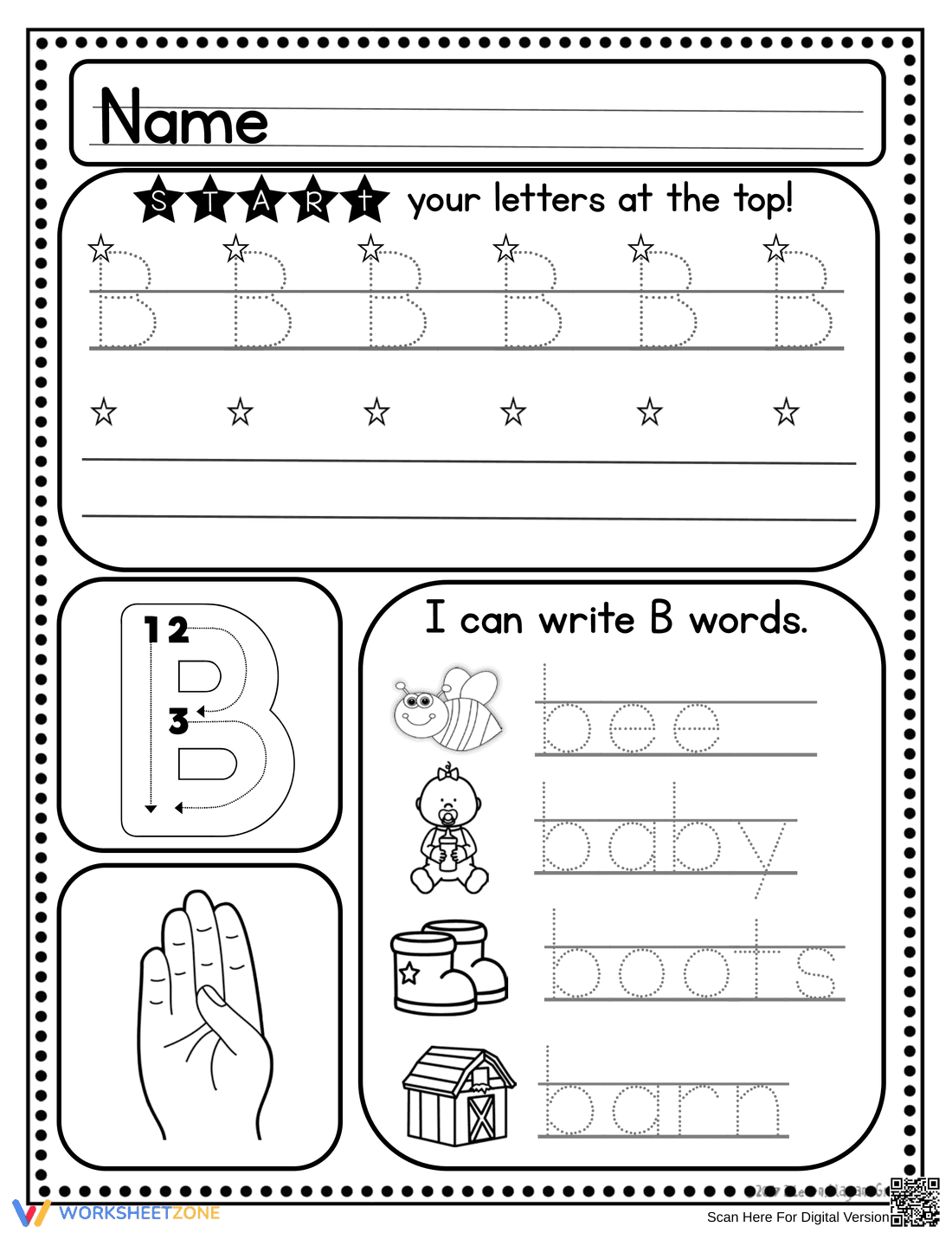
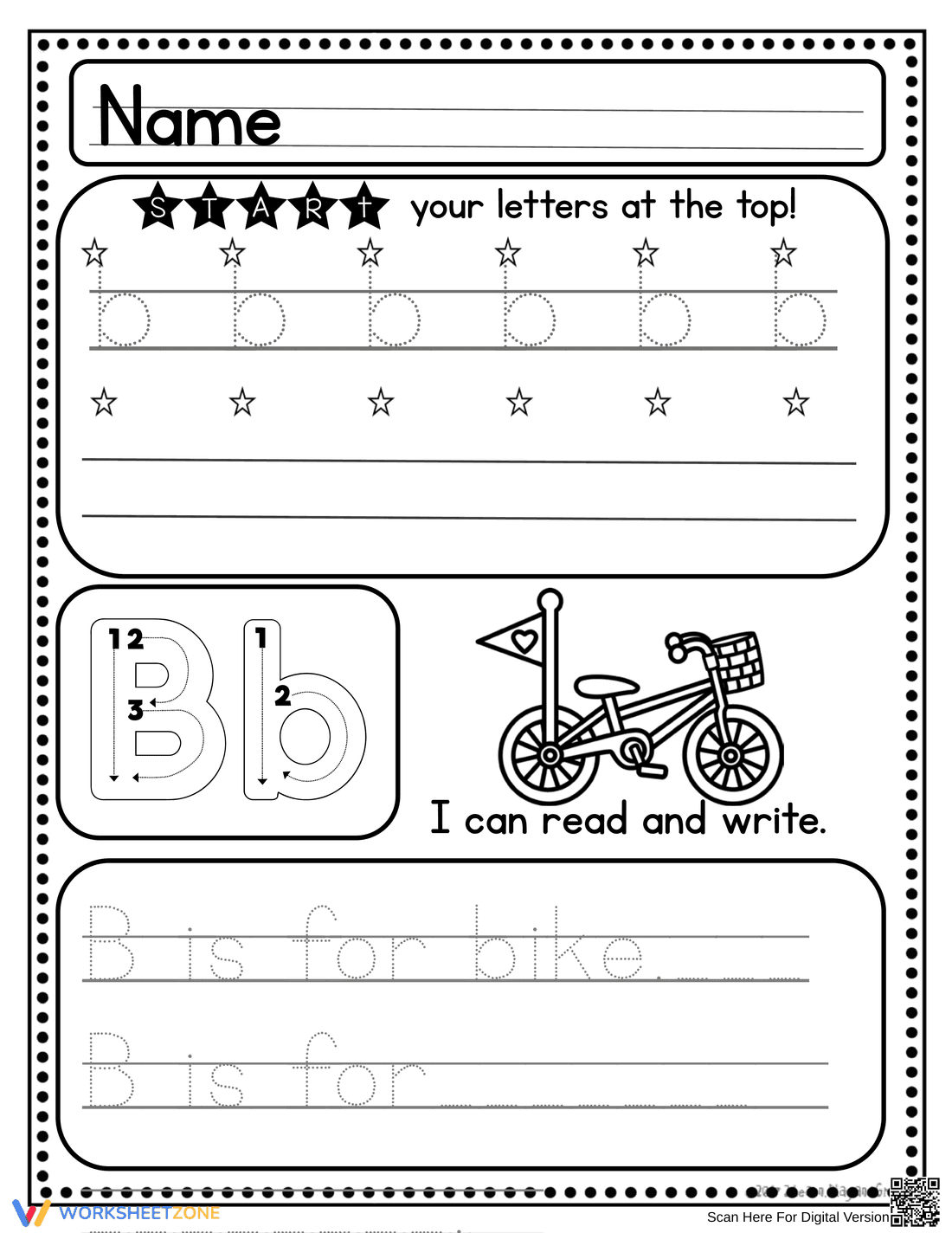
This Kindergarten handwriting worksheet provides a structured approach to mastering the uppercase letter B through a multi-sensory build, trace, and find method. Students develop fine motor control and letter-sound correspondence using a barn-themed layout. By focusing on correct stroke order, learners build the muscle memory necessary for legible, fluid writing.
At a Glance
- Grade: Kindergarten · Subject: Handwriting
- Standard:
CCSS.ELA-LITERACY.L.K.1.A— Print many upper- and lowercase letters correctly and legibly- Skill Focus: Letter B formation and recognition
- Format: 1 page · 25 tasks · No-prep · PDF
- Best For: Morning work and literacy centers
- Time: 10–15 minutes
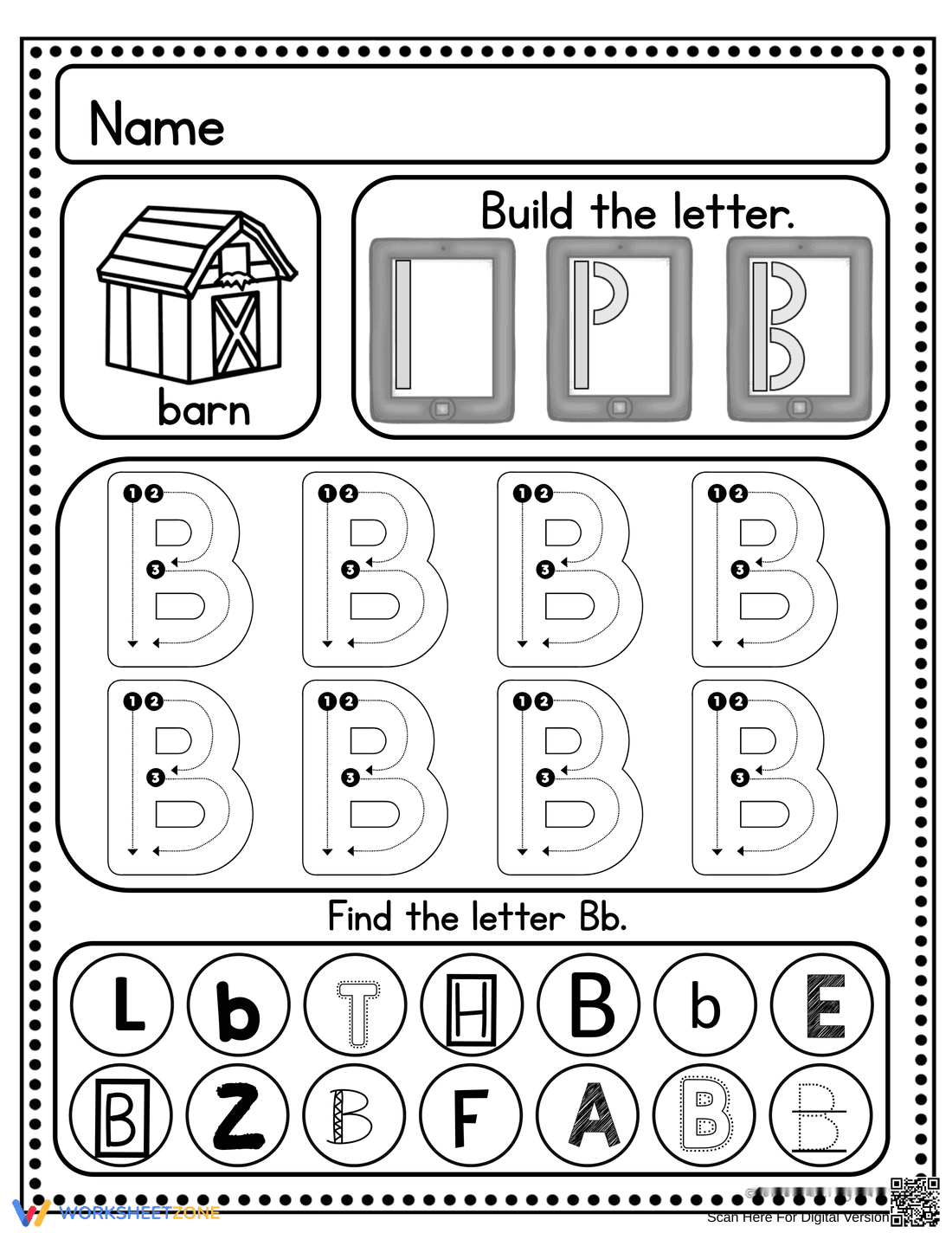
This single-page PDF features three distinct instructional zones. The top section uses a Build the Letter visual guide that breaks the letter B into its component strokes: big line, small curve, and small curve. The middle section contains 8 large tracing prompts with numbered directional arrows to ensure proper top-to-bottom formation. Finally, a Find the Letter grid includes 14 character circles to reinforce visual discrimination between uppercase B, lowercase b, and similar-looking distractors.
The zero-prep design allows for immediate classroom implementation. Teachers can print the worksheet in under 30 seconds, distribute it to students during the transition to literacy blocks, and review the completed work in less than 1 minute per student. This efficiency makes it an ideal resource for substitute folders or unexpected schedule gaps where high-quality instructional materials are needed without prior setup.
The primary focus is `CCSS.ELA-LITERACY.L.K.1.A`, which requires students to print many upper- and lowercase letters. By providing numbered stroke guides, the worksheet ensures students move beyond simple imitation to disciplined formation. This resource also supports `CCSS.ELA-LITERACY.RF.K.1.D` by requiring students to recognize and name all upper- and lowercase letters of the alphabet. Both standard codes can be copied directly into lesson plans, IEP goals, or district curriculum mapping tools.
Use this worksheet as a formative assessment during the independent practice phase of a gradual release lesson on the letter B. After demonstrating the Big Line, Little Curve sequence on the board, assign this page to monitor student grip and stroke direction. It also serves as an excellent quiet-time activity for early finishers or as a targeted intervention for students struggling with letter reversals. Completion typically takes 12 minutes.
This resource is designed for Kindergarten students, though it is highly effective for Pre-K learners ready for pencil-and-paper tasks and Grade 1 students requiring remedial handwriting support. It pairs naturally with an alphabet anchor chart or a Letter of the Week phonics lesson. The clear, uncluttered layout is particularly beneficial for students with occupational therapy goals or those who need reduced visual stimulation.
Effective handwriting instruction in early childhood requires explicit modeling of letter formation combined with immediate practice. According to Fisher & Frey (2014), the gradual release of responsibility—moving from the visual prompts to independent tracing—is critical for developing automaticity in young writers. This worksheet addresses the CCSS.ELA-LITERACY.L.K.1.A standard by providing 25 distinct opportunities for students to interact with the letter B, reinforcing both the motor patterns and the visual identification of the character. Research from the NAEP suggests that students who master fluid letter formation early are better able to focus cognitive resources on higher-level composition tasks in later grades. By integrating stroke-order cues and visual discrimination, this resource provides a comprehensive foundation for literacy development that aligns with evidence-based pedagogical practices for early elementary education.


