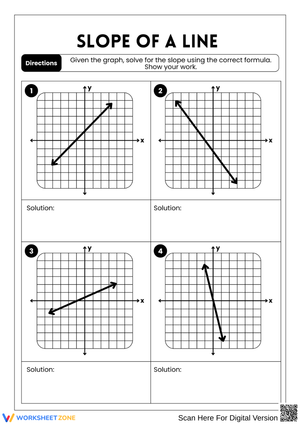
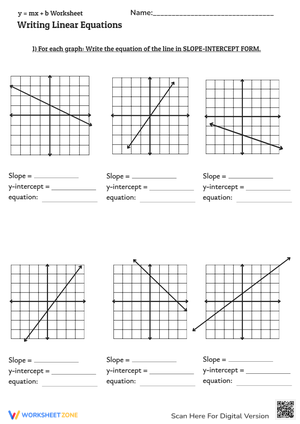
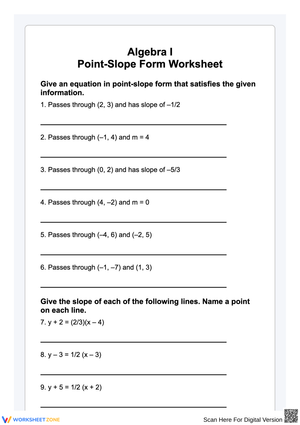
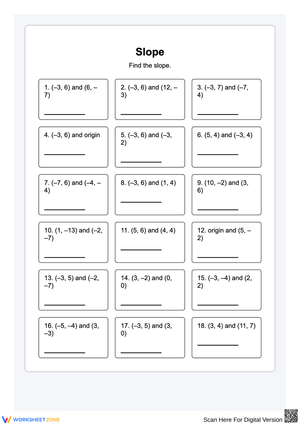
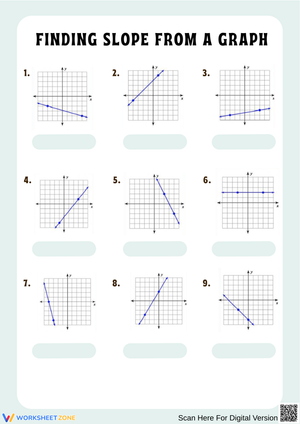
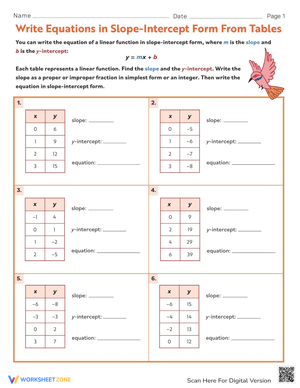
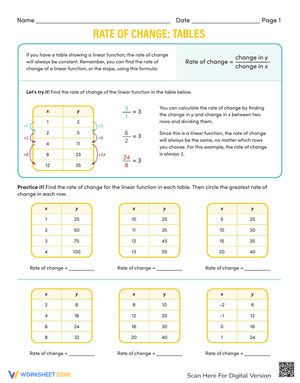
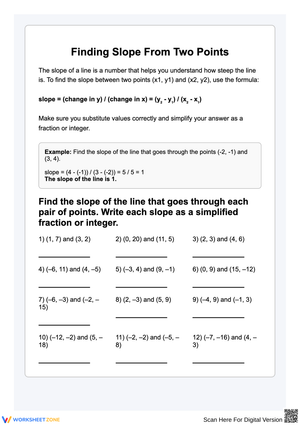
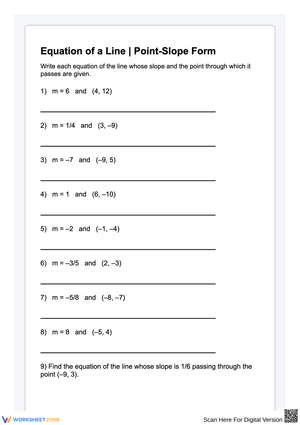
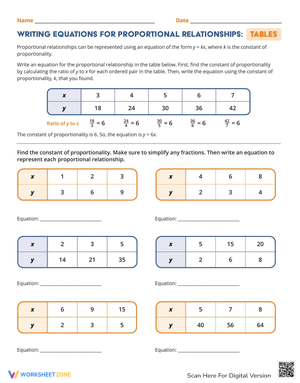
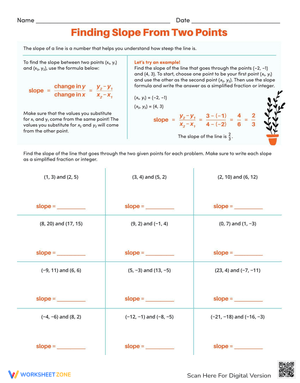
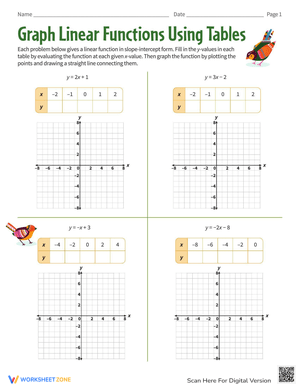
These linear equations worksheets for 8th grade target the full skill progression described in CCSS 8.EE.C.7 — from inverse operations on one-step equations all the way through special-case solutions — and each worksheet stands alone so teachers can assign exactly what a lesson or small group needs. The set includes procedural solving practice, word problems that require students to write their own equations from a described situation, and graphing tasks that connect symbolic representations to the coordinate plane. Answer keys accompany each worksheet, which makes the set practical for homework, intervention rotations, and sub plans alike.
The Skills Each Worksheet Targets
The set moves students through seven distinct skill categories, each one occupying its own worksheet so practice stays focused on one type of reasoning at a time:
- One-step equations — students isolate the variable using a single inverse operation, reinforcing the basic structure of equality before integer complications enter.
- Two-step equations — students practice the correct order for undoing addition or subtraction, then multiplication or division, which directly reverses what order of operations builds up.
- Multi-step equations — students distribute, combine like terms, and then solve, which is where arithmetic errors and algebraic misunderstandings frequently appear side by side.
- Variables on both sides — students move variable terms to one side of the equation, deciding which expression to subtract and understanding why that step works.
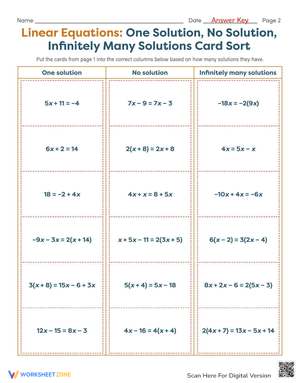
- Special-case equations — students work through equations that reduce to a true statement (infinitely many solutions) or a false statement (no solution), then annotate each result in writing.
- Word problems — students read a short scenario, define a variable, write the equation, and solve — the transition from situation to algebra that most 8th graders need repeated exposure to before it becomes automatic.
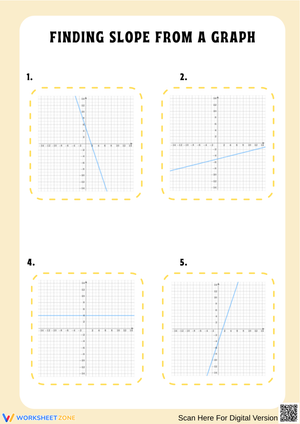
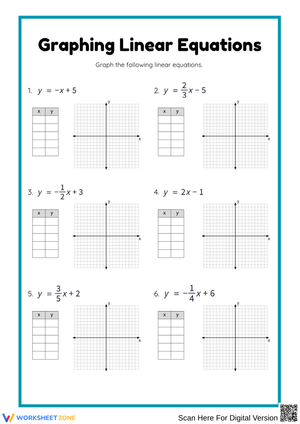
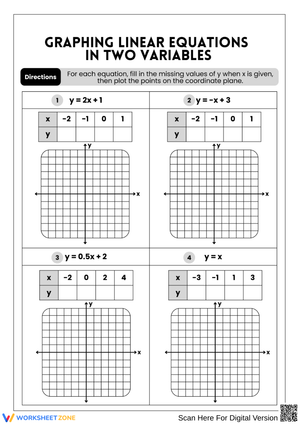
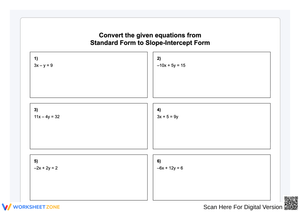
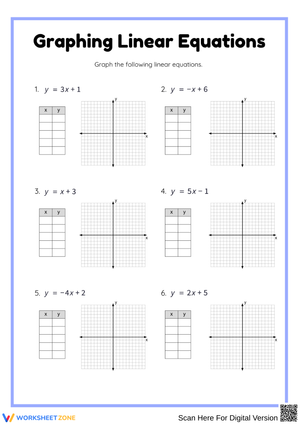
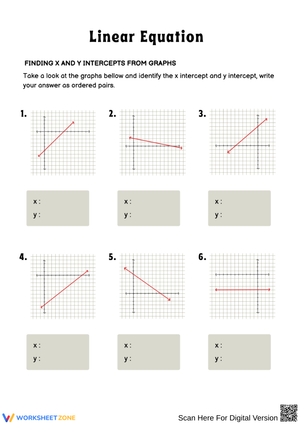
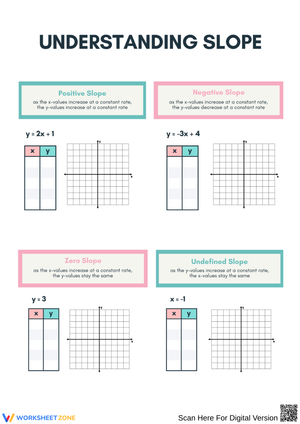
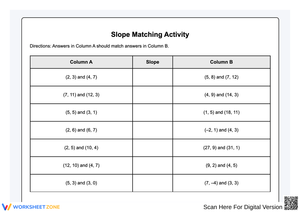
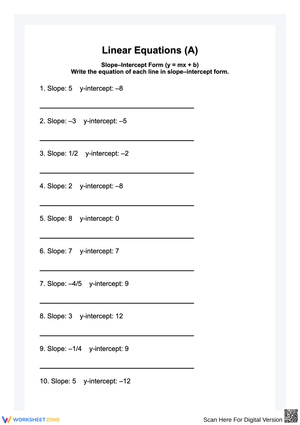
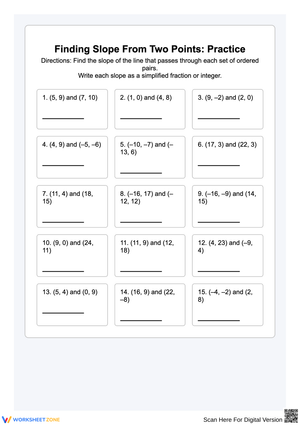
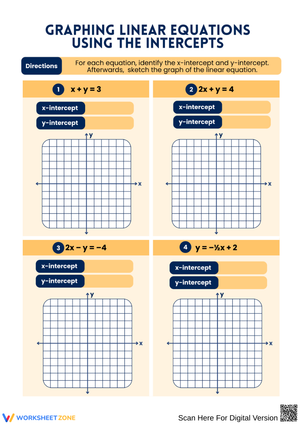
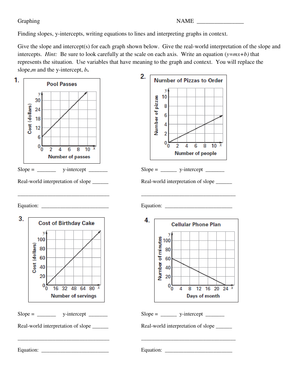
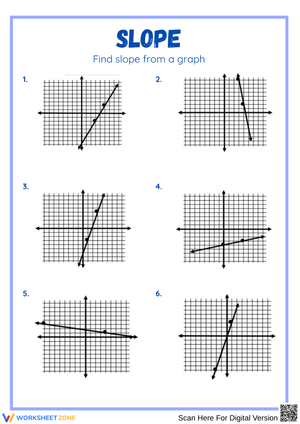
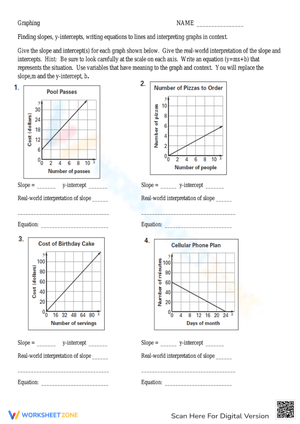
- Graphing connections — students graph equations in slope-intercept form and identify key features, tying procedural solving to visual linear reasoning on the coordinate plane.
Keeping each worksheet within a single category lets teachers assign them as precise follow-ups to direct instruction rather than dropping students into a mixed set before their understanding of any one type is secure.
Student Error Patterns Worth Knowing Before You Assign
The most persistent error in multi-step equation work involves sign distribution. Students who correctly expand 3(x + 4) will often write -2(x - 3) as -2x - 6 rather than -2x + 6. The subtraction inside the parentheses looks like it should stay negative, so students treat the minus sign as belonging to the second term rather than recognizing that the negative coefficient flips it. This error follows students directly into systems of equations and linear function work later in the year, which is why it is worth surfacing and correcting explicitly during this unit rather than hoping students self-correct later.
Special-case equations produce a different kind of confusion. When students simplify an equation down to 0 = 0, a common response is to write "x = 0" — they see the zero and assume it is the solution. The reverse happens too: a result of 5 = 5 prompts some students to write "x = 5." What they are missing is the interpretation step — understanding that a true statement means the equation works for every real number, and a false statement means no value of x satisfies it. The special-cases worksheet includes an annotation requirement where students write a sentence explaining their result, which surfaces that interpretive gap directly rather than letting it hide behind a correct-looking procedure.
On the variables-on-both-sides worksheet, watch for students who always move the variable term from the right side to the left, regardless of which move is more efficient. If an equation reads 2x + 7 = 5x - 8, some students will subtract 5x from both sides and arrive at -3x + 7 = -8, then struggle with a negative coefficient they did not plan for. That approach is not wrong, but drawing attention to it in class discussion reveals whether students are making deliberate choices or just imitating a rule without thinking about what it produces.
How to Build These Worksheets Into Your Unit Planning
Because each worksheet targets a single skill, the most effective classroom use treats them as modular pieces within a unit rather than a packet to work through from beginning to end. A typical 8th grade unit might open with the one-step equation worksheet as a Monday warm-up — five problems in the first ten minutes of class, students working independently and then comparing answers with a partner before the lesson begins. That immediate retrieval practice surfaces lingering confusion from the prior week before new material lands on top of it.
After direct instruction on a new equation type, a focused worksheet serves as the check-for-understanding step before moving to group work or homework. Eight to ten problems, about twelve minutes of work time, then collect or self-check with the answer key. What teachers see in that review tells them whether to reteach the next morning or press forward.
For intervention small groups, returning to the one-step and two-step worksheets is often the right move even when the class is working on variables on both sides. Students who are struggling with more complex equations frequently have gaps in inverse operations habits — they are guessing rather than applying a reliable procedure. Using the earlier worksheets diagnostically is faster than trying to identify those gaps through conversation alone, and it gives students low-stakes repetition with the foundational steps they need before tackling more complex structure.
The special-cases worksheet works better as a structured class discussion than silent independent work. Put three problems on the board, give students a few minutes to solve, then use the disagreements that surface — and there will be disagreements — as the entry point into what a true or false statement means within an equation. That conversation often accomplishes more than any follow-up assignment could.
Standard Alignment
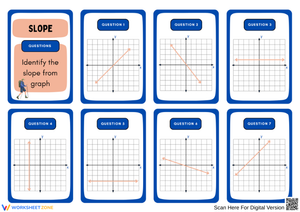
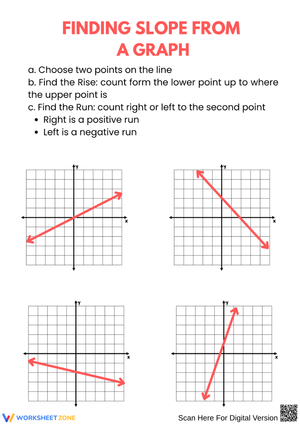
The set aligns to CCSS 8.EE.C.7, which addresses solving linear equations in one variable. 8.EE.C.7a specifically targets recognition of equations with one solution, no solution, or infinitely many solutions — the content the special-cases worksheet addresses directly. 8.EE.C.7b covers equations with rational number coefficients, including those that require distributing and combining like terms before isolating the variable. Graphing worksheets in the set connect to 8.EE.B.6, which addresses deriving y = mx + b and understanding slope, linking equation-solving to visual representation on the coordinate plane.
In most district pacing guides, 8.EE.C.7 falls in the first or second unit of the school year, making linear equations worksheets for 8th grade among the first substantive algebra materials teachers reach for in September or October. That placement means the early worksheets in the sequence need to be procedurally clear — not because the content is simple, but because students are still orienting to 8th grade math expectations and building the algebraic fluency that harder units later in the year will depend on.
Adjusting the Set for a Range of Learners
The skill-by-skill structure of linear equations worksheets for 8th grade makes differentiation more manageable than building separate materials from scratch. Students who need more time with integer operations or combining like terms stay on the one-step through multi-step worksheets longer, while students who are ready move into variables-on-both-sides and special-cases work. The progression does the organizing work without requiring the teacher to construct two or three entirely different lesson tracks.
For students who need additional support, a graphic organizer listing inverse operation pairs — addition and subtraction, multiplication and division — placed on the board or in a reference section of the notebook lets students look up what they need without cluttering the worksheet itself. Students who freeze when a problem involves a negative coefficient respond well to a single worked example modeled on the board immediately before independent work begins; one demonstrated problem is usually enough to break the hesitation that costs them the first five minutes of solving time.
Students who are ready for extension move naturally into the word problem and graphing worksheets, then into an error-analysis format where they examine a fictitious student's solved equation, identify the mistake, and rewrite the solution correctly. That task requires more genuine mathematical reasoning than adding more problems to a solving set, and it mirrors the kind of analytical thinking that appears on state assessments across this grade band.
Frequently Asked Questions
What order should these worksheets be assigned in?
Start with one-step equations, move through two-step and multi-step, then introduce variables on both sides. The special-cases worksheet belongs after students have had several days of practice moving variable terms — students who have not built that fluency yet are not ready to reason about what 0 = 0 means. Graphing worksheets fit best near the end of the unit, once students can solve fluently and are ready to connect equations to visual representations.
Are these better suited to classwork or homework?
Procedural worksheets — one-step, two-step, multi-step — work well as homework once the equation type has been introduced and modeled in class. The word problem and special-cases worksheets are better as classwork because students benefit from discussing their reasoning before they solidify a misunderstanding in writing. Sending the special-cases worksheet home before that classroom conversation happens often results in students memorizing a rule without ever understanding the reasoning behind it.
What's a quick extension for a student who finishes early?
Ask them to write a short word problem that produces the same equation they just solved. Going from equation back to real-world situation is genuinely difficult for most 8th graders and requires a level of reversible thinking that linear equations worksheets for 8th grade rarely ask for directly. It takes five minutes, needs no extra materials, and reveals whether the student understands what the equation is representing — or only what to do with its symbols.
Do these worksheets fit students in an accelerated track or early Algebra 1?
Yes. The skills covered — multi-step equations, variables on both sides, special cases, and graphing in slope-intercept form — appear in both grade-level 8th grade math and traditional Algebra 1 courses. Accelerated students get the most value from the word problem and graphing worksheets, plus the error-analysis extension. Students who have already moved past linear equations in one variable and are beginning systems of equations work can use earlier worksheets in this set as targeted review before starting elimination or substitution.













 Interactive Worksheet Maker
 Quiz Maker
 Word Search Maker
 Crossword Puzzle Maker
 Word Scramble Generator
 Sentence Scramble Generator
 Handwriting Worksheet Generator
 Name Tracing Generator
 Fill In The Blank Generator