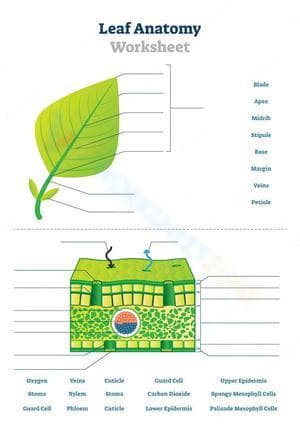
These 5th grade living and non living things worksheets resources move past the dog-is-alive, rock-is-not step that most students cleared in second grade. At Grade 5, the work shifts to evidence: students name which life processes apply to an example and explain why appearance alone doesn't settle the question. The worksheets in this set give teachers printable, device-free tools for building that reasoning habit before plant and organism units begin.
Predictable Mistakes Students Make — and What They Reveal
The most consistent error in 5th grade student work is treating motion as a proxy for life. A cloud drifts, water flows, a candle flame bends toward a draft — students regularly mark all three as living. This error persists into spring if nobody addresses it directly. The correction is not "motion doesn't count"; it's "motion is one clue, but a strong classification requires growth, energy use, response to the environment, and reproduction together."
Seeds cause a different kind of confusion. A student who knows a seed will become a plant still sometimes writes "nonliving" because the seed appears inactive at the moment of classification. That answer reveals something specific: the student is sorting by current visible behavior, not by life-process capacity. A worksheet that asks students to mark which traits apply — even traits that are temporarily dormant — makes this reasoning gap visible before the class moves on to plant structures.
Fire is worth a class conversation of its own. It consumes fuel, releases energy, spreads, and seems to respond to wind. Students who classify it as living are working from real observations; the problem is they have not asked whether fire reproduces, grows through a life cycle, or maintains any internal biological process. That distinction between a physical process and a life process is exactly what 5th grade classification work should be developing. A well-structured worksheet gives you a record of which students are making this error before the unit assessment arrives.
The Specific Skills These Worksheets Target
Every worksheet in the set asks students to do more than name a category. The tasks range from picture-based sorting and illustrated chart completion to list-and-explain formats and short claim-with-evidence responses. In each case, students identify which life processes an example demonstrates and then defend their classification — in writing, in a diagram, or through a structured partner discussion.
The four traits that anchor the evidence frame across the 5th grade living and non living things worksheets collection are growth, energy use, response to surroundings, and reproduction. Students sorting a set of images — a mushroom, a crystal, a river, a puppy, a flame — must reach for those traits rather than guessing from visual familiarity. That shift from appearance-based to process-based reasoning is the core skill this topic builds at the 5th grade level, and it's the reasoning students need before they can handle argumentation tasks in later life science units.
- Picture-based sorting: students classify images with a label and one supporting trait.
- Illustrated charts: students place examples under living and nonliving headings and add a brief evidence note for each.
- List-and-explain: students write a short claim identifying the example's category and the single trait that determined it.
- Claim-with-evidence: students produce a full sentence explaining their classification using at least two life-process traits.
How to Work These Worksheets Into Your Week
The realistic entry points for these worksheets in a Grade 5 science block are narrower than a full lesson period. The most useful slots are the 8 minutes before specials, the transition between a read-aloud and independent work time, and the last 5 minutes of a lesson when you need to see where the class landed before planning tomorrow. A picture-sort worksheet handles all three of those moments without any setup beyond printing.
For centers, a cut-and-sort worksheet paired with a one-sentence explanation written in a science notebook gives students a low-stakes task they can complete independently while you work with a small group. For sub plans, the visual formats carry enough instructional weight that a substitute does not need to pre-teach the content. The 5th grade living and non living things worksheets format is especially practical here because each worksheet is self-contained — concrete directions, clear visuals, no device access required on either end.
As formative assessment, these worksheets generate two kinds of data at once: category data (which items students place correctly) and reasoning data (which trait they used to decide). In 5 minutes of reviewing exit tickets, you can distinguish students who are guessing by appearance from those applying a consistent evidence framework — which is exactly the information you need to plan the next small-group session.
Standard Alignment
NGSS 5-LS1-1 asks students to support an argument that plants get the materials they need for growth mainly from air and water. That standard assumes students already understand that plants are living organisms with definable needs — needs that differ categorically from what a rock, a flame, or a cloud requires. Living-and-nonliving classification practice is the conceptual groundwork that makes 5-LS1-1 instruction coherent. Without it, students treat photosynthesis as a memorized procedure rather than something a living organism does because it is alive and has specific ongoing needs.
In classroom terms, this means the topic belongs at the front of the unit, not as a quick review after plant anatomy. Teachers who build process-based classification practice into the first two weeks of instruction report that students approach the 5-LS1-1 argumentation task with more precise language — fewer answers that amount to "plants need sunlight" without explaining why that distinguishes a living organism from a nonliving object sitting in the same sunlight.
Adjusting the Set for Different Levels of Readiness
The format variety in this set creates the differentiation opportunity without requiring separate materials for each group. Picture-based and illustrated chart worksheets carry lower reading demand, making them the right choice for students who need the classification thinking preserved while the writing load is reduced. That said, picture-only formats have a real ceiling: students ready for extended reasoning find them too easy to complete without showing genuine understanding, and the visual format limits how much of their thinking actually becomes visible. For those students, the picture sort is a starting point, not the whole task.
The most effective extension is not a separate worksheet — it is a harder prompt added to the same one. After completing a sort, stronger students generate two additional examples of their own: one clearly living, and one borderline case requiring a full evidence defense using at least two traits. That task demands transfer rather than recognition. The 5th grade living and non living things worksheets format supports this because each worksheet is a standalone item — stronger students can extend independently while the rest of the group completes the base activity at their own pace.
Frequently Asked Questions
Why are borderline examples like seeds, dead wood, and fire more valuable than obvious ones?
Obvious examples confirm vocabulary. Borderline examples reveal whether a student understands the evidence framework. A seed looks inactive, which tempts students to classify it as nonliving. A flame releases energy and moves, which tempts students to classify it as living. Both errors point to a specific gap — sorting by appearance versus reasoning from life processes — that a well-structured worksheet makes visible and correctable before the unit moves forward.
Can these worksheets function as formative assessments rather than just practice?
Yes, and that is their most practical classroom use. When a worksheet asks students to mark which life process applies to each example, you collect category data and reasoning data simultaneously. In 5 minutes of reviewing exit tickets, you can identify who is relying on appearance, who understands life processes, and who is ready for a multi-trait written defense — which is exactly the information you need before planning the next small-group session.
How should these worksheets fit into a unit that also covers plant structures and organism needs?
Classification practice belongs at the front of the unit, not at the end as review. When students establish the four-trait evidence frame before they encounter plant anatomy content, they approach photosynthesis and water transport as life processes rather than isolated vocabulary terms. A short classification worksheet before a plant structures lesson takes less than 10 minutes and activates exactly the prior knowledge students need to connect new content to the framework they already built — particularly the understanding that living things have ongoing, observable needs that nonliving things simply do not share.















 Interactive Worksheet Maker
 Quiz Maker
 Word Search Maker
 Crossword Puzzle Maker
 Word Scramble Generator
 Sentence Scramble Generator
 Handwriting Worksheet Generator
 Name Tracing Generator
 Fill In The Blank Generator