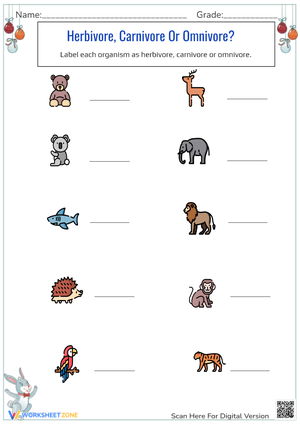
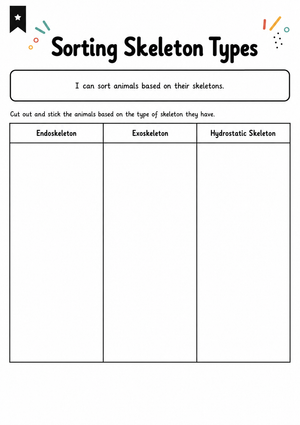
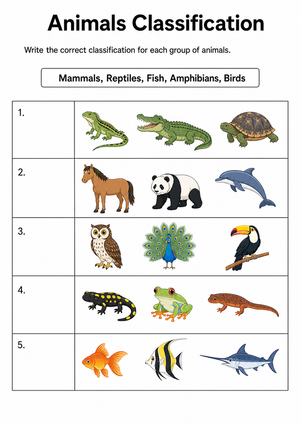
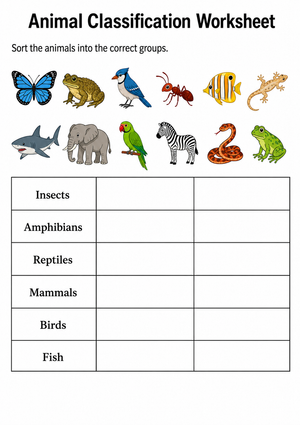
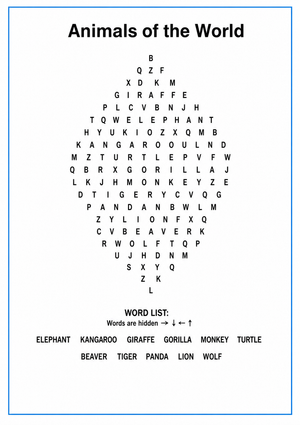
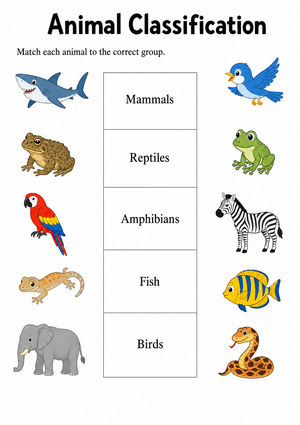
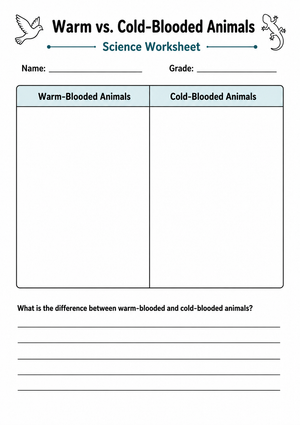
These animal classification worksheets for 5th grade focus on trait-based reasoning rather than label memorization — students identify the structural evidence first, then assign the group. The set covers the vertebrate/invertebrate divide and the five familiar vertebrate classes: mammals, birds, fish, reptiles, and amphibians. Each worksheet works as a bell ringer, a science center task, a homework assignment, or a short formative check without pulling the lesson off its content focus.
The Specific Skills Each Worksheet Builds
The work moves from observation to argument. Students start by identifying a trait — body covering, limb structure, breathing apparatus, method of reproduction — before assigning a category. That sequence matters. When students name the relevant feature first, classification becomes an evidence-based decision rather than a guess shaped by where an animal happens to live.
- Sort animals into vertebrate and invertebrate groups based on the presence or absence of a backbone
- Assign vertebrates to one of the five classes using observable characteristics
- Mark the specific trait that justifies each answer before selecting the group name
- Compare two animals that share a surface feature but belong to different groups — a bat and a sparrow, for instance
- Write one sentence of evidence: "This animal belongs in [group] because..."
That written justification step is where the most useful assessment information surfaces. A student who circles "mammal" and a student who writes "it has fur, breathes air, and nurses its young" are not at the same point in their understanding. Each worksheet creates space for both the answer and the reasoning that produced it.
Starting With the Vertebrate/Invertebrate Split
The most efficient entry point for this unit is the backbone question. Vertebrates have one; invertebrates don't. That single anatomical feature gives students a reliable sorting anchor across thousands of species and keeps the initial cognitive demand manageable before the five vertebrate classes come into play. A student who is still confusing "reptile" and "amphibian" can usually answer the backbone question correctly — that early success matters for building confidence before the harder distinctions arrive.
These worksheets use a two-step structure: students place animals into the two broad groups first, then subdivide the vertebrates. That format makes errors easier to pinpoint. When a student misclassifies a spider as a vertebrate, the reteach target is the backbone concept itself. When a student correctly separates vertebrates from invertebrates but puts a frog with reptiles, the issue is the amphibian/reptile distinction — a much more specific intervention. A single-step sort across all seven categories at once hides that difference entirely.
The Classification Errors That Show Up Most in Student Work
The whale-as-fish error is the most persistent at this grade level. Students who have spent years connecting "ocean" with "fish" override trait evidence with habitat evidence — and they do it confidently. A student might write "whale — fish — lives in water" without hesitation. That isn't a vocabulary gap; it reflects a deeper assumption that habitat determines group membership. These worksheets address this directly by requiring students to underline the relevant trait before selecting a group, which slows down the habitat shortcut before it can take hold.
Amphibians produce a different confusion. Many fifth graders associate frogs with "slimy" and draw a line to reptiles based on skin texture alone. The distinguishing features — moist, smooth skin and a life cycle that moves between aquatic and terrestrial environments — need to be named explicitly before students can use them as classification evidence. An item that shows a frog image without flagging its key characteristics often produces the wrong answer not because the student doesn't know amphibians exist, but because no feature was marked as the deciding one. Requiring students to circle the trait before filling in the class name reduces this pattern noticeably.
Standard Alignment
These worksheets connect most directly to NGSS 3-LS4-3, which asks students to build arguments using evidence about how specific environments support the survival of particular organism groups. Classification is prerequisite knowledge here: students need to understand how organisms are grouped before they can reason meaningfully about which groups live in which habitats and why. In classroom terms, these worksheets belong early in the life science sequence — before the ecosystems and food web lessons that assume students already know how animals are organized into classes.
Teachers working with LS1.A (Structure and Function) can also draw on these worksheets to reinforce the idea that observable structures carry functional information. At grade 5, students are ready to use structural traits as evidence rather than simply naming them, and the animal classification worksheets for 5th grade set is built around exactly that shift.
Fitting Classification Practice Into the Science Block
These worksheets fit naturally into three spots in the week. As a bell ringer, a four-to-six animal sort takes about eight minutes and primes students for a connected lesson on adaptations or ecosystems. In a center rotation, pairing each worksheet with animal picture cards gives students a physical object to discuss before writing — that brief partner talk reduces the blank-page hesitation that slows center work considerably. For a sub plan, the self-contained format and clear visuals mean the task doesn't depend on a class discussion that already happened.
One practical note: the animal classification worksheets for 5th grade set works best after at least one direct instruction lesson that introduces the trait vocabulary. Used before that foundational lesson, even clear worksheets produce more confusion than practice. After it, students move into application work — and that's when the formative data from written justification items becomes genuinely useful for planning next steps.
How to Adapt the Set When Your Class Has a Wide Range of Starting Points
For students who need more support, the main adjustment is narrowing the answer options. Instead of sorting across all five vertebrate classes at once, limit the task to two or three high-recognition groups — mammals, birds, and fish are the most visually identifiable — and include a brief trait reference list students can consult while working. This keeps the mental effort on classification reasoning rather than on holding seven categories in memory simultaneously. High-interest animal choices help too: a student who disengages from a generic item will often re-engage when the animal is something familiar — a great white shark instead of a generic "fish," a red-tailed hawk instead of "bird."
Students who move through the basic sort quickly need items that disrupt the habitat shortcut. Include a bat (mammal, not bird), a dolphin (mammal, not fish), and a sea turtle (reptile, not fish) to push their reasoning past surface-level clues. Asking these students to design one classification item of their own — picking an animal, identifying the misleading trait, and writing the correct classification with evidence — extends the work without requiring a separate resource.
For English language learners, the most effective adjustment is pairing each animal name with an image and each group name with a short trait summary. The core classification task isn't linguistically complex — backbone or no backbone is a binary decision — but vocabulary around "body covering," "mode of reproduction," and "breathing structures" can block students whose science understanding is considerably stronger than their current English vocabulary suggests.
Frequently Asked Questions
What animal groups are typically covered in grade 5 classification work?
Most grade 5 classification tasks include the vertebrate and invertebrate categories plus the five vertebrate classes: mammals, birds, fish, reptiles, and amphibians. Some curricula extend into basic invertebrate groups such as insects and arachnids, but the five vertebrate classes are the core expectation at this level.
How long does each worksheet take in a typical class period?
Most students complete each worksheet in 10 to 15 minutes. Bell ringer versions with four to six items run closer to eight minutes. When time is short, teachers often pull three items from a longer worksheet for a quick exit check rather than assigning a separate task.
Are these worksheets useful for formative assessment, or mainly for review practice?
Both, depending on item type. Multiple-choice items with labeled pictures work well for review but reveal little about student reasoning. Items that ask students to mark the deciding trait and write a justification sentence function as genuine formative tools — they show whether a student used the right evidence, not just whether they selected the right answer. The animal classification worksheets for 5th grade set includes both formats so teachers can choose based on where they are in the unit.
What's the best way to use these worksheets with students reading below grade level?
Select worksheets where images carry most of the classification information rather than written descriptions. Students who read below grade level can still reason about visible traits from pictures — the science thinking stays accessible even when the text load is reduced. Keep directions brief and the answer format consistent throughout each worksheet so students spend their effort on the classification task, not on decoding the instructions.












 Interactive Worksheet Maker
 Quiz Maker
 Word Search Maker
 Crossword Puzzle Maker
 Word Scramble Generator
 Sentence Scramble Generator
 Handwriting Worksheet Generator
 Name Tracing Generator
 Fill In The Blank Generator