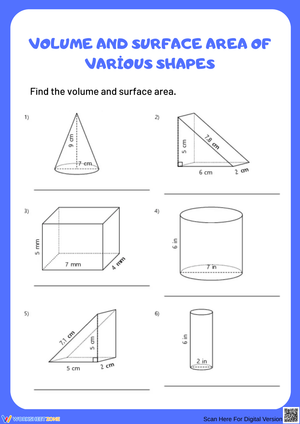
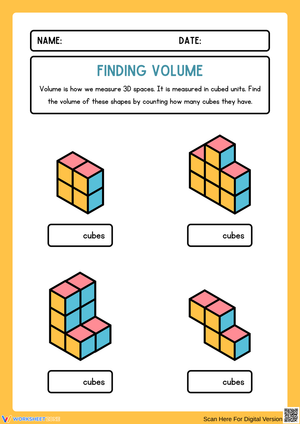
These volume printable worksheets for 5th grade give teachers a print-ready set of practice that maps directly onto the instructional sequence Grade 5 math demands — from visual cube models to formula-based calculation, composed figures, and applied word problems. Each worksheet targets a specific step in that progression, which means teachers can pull cube-model practice when students are still building understanding and shift to formula-based items when they are ready — rather than defaulting to mixed review before the groundwork is in place.
What the Set Covers
The worksheets address the full scope of 5.MD.C expectations. Students move through five skill areas across the set:
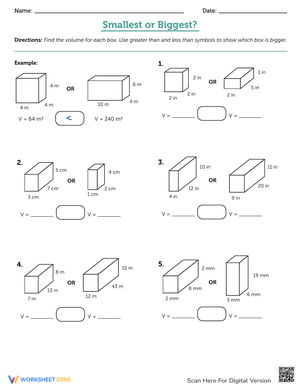
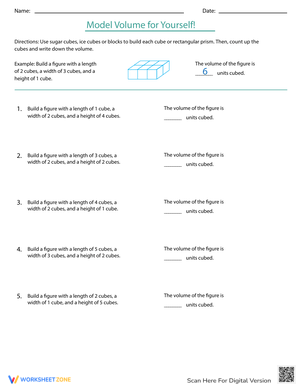
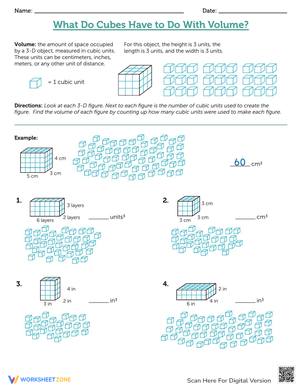
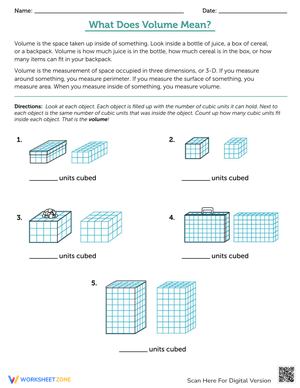
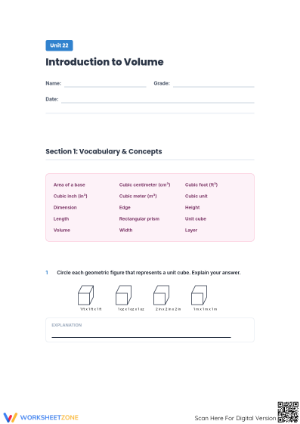
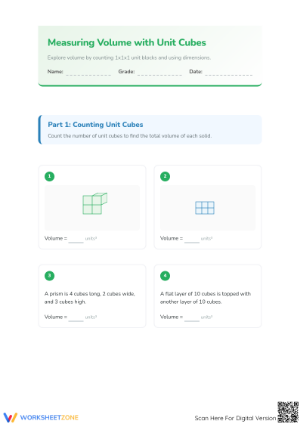
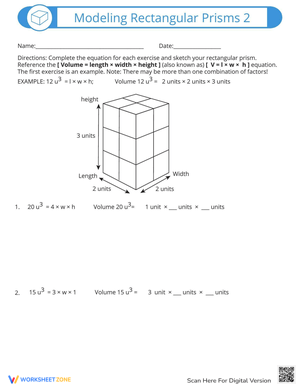
- Unit cube counting: Students count cubes packed into right rectangular prisms, including models that show visible layers and those where some cubes are hidden from view.
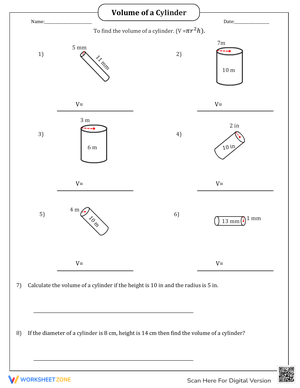
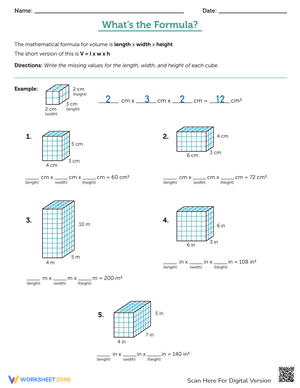
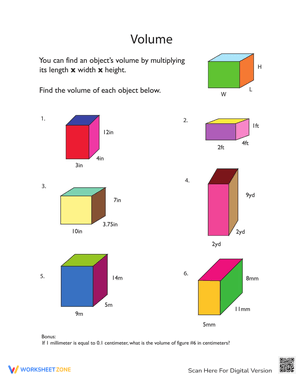
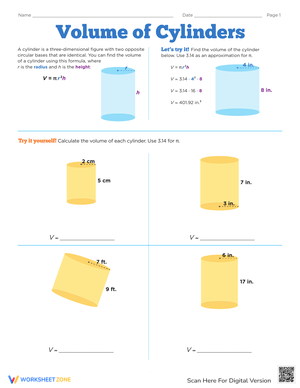
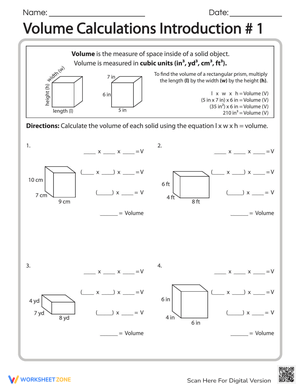
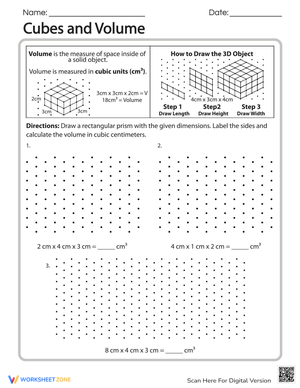
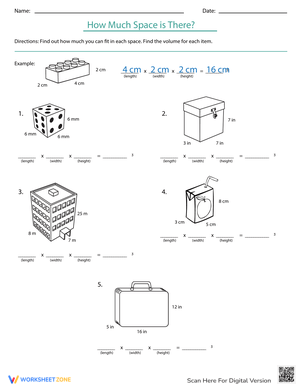
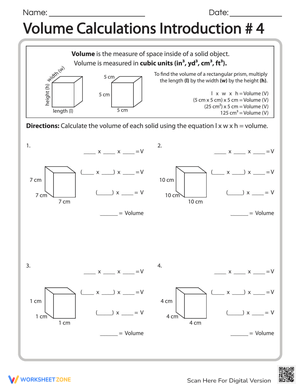
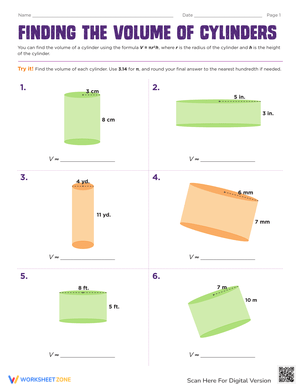
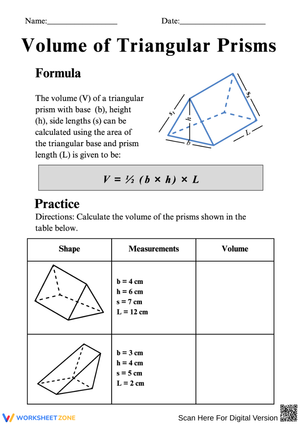
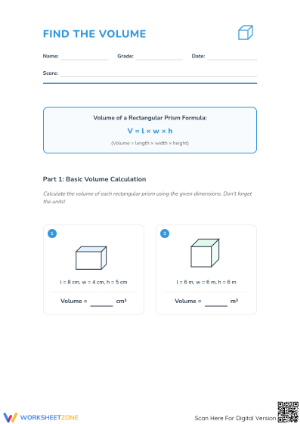
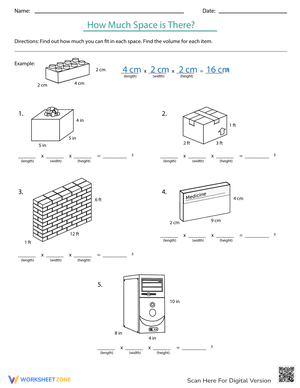
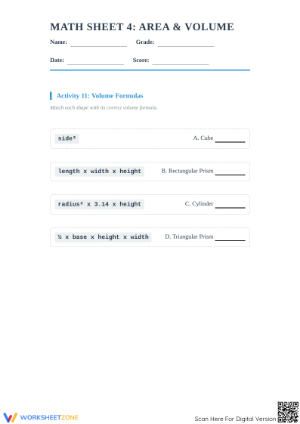
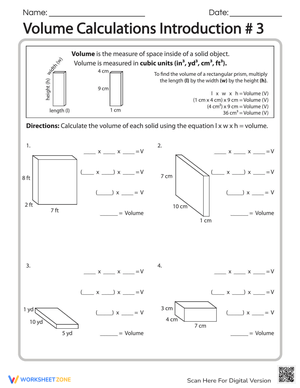
- Labeled prism problems: Students apply V = l x w x h and V = B x h using whole-number edge lengths and record answers in cubic inches, cubic feet, or cubic centimeters.
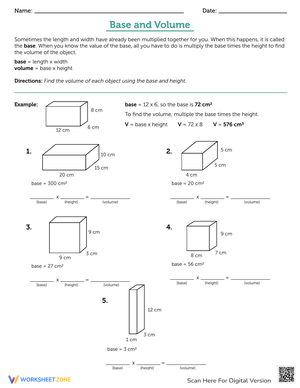
- Base area and height tasks: Students connect prior area work to the idea that volume equals base area multiplied by height — bridging a concept they already own into the new formula.
- Missing-dimension items: Students work backward from a known volume and two edge lengths to find the third, which requires actual understanding of the formula rather than rote multiplication.
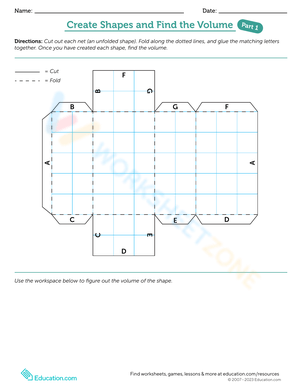
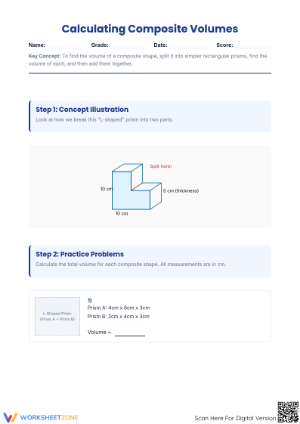
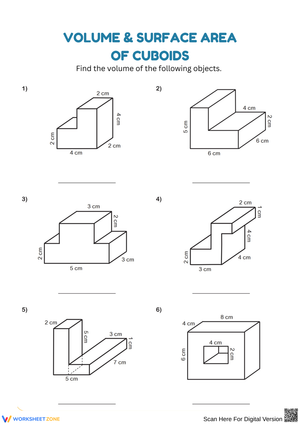
- Composed-prism problems: Students decompose a non-standard solid into two non-overlapping rectangular prisms, calculate each volume separately, and add the results.
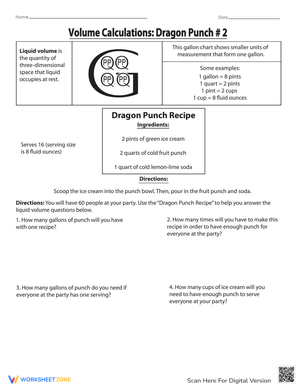
- Word problems: Students apply volume to filled containers, packed storage boxes, and layered solids using whole-number dimensions throughout.
Each worksheet leaves room for student thinking. On cube-counting items, students can mark layers directly on the figure. On formula problems, there is space to show the multiplication in stages. On composed figures, students label each sub-prism before combining totals. A cluttered layout teaches students to skip their reasoning and guess — these avoid that.
From Unit Cubes to l × w × h: Getting the Sequence Right
The temptation in volume instruction is to move to l x w x h quickly because the multiplication looks clean and students produce correct answers fast. The problem is that early formula use often masks a real gap: students multiply three numbers without understanding that those numbers represent layers of a structured array. When that gap surfaces on a test or in a new problem type, there is no foundation to fall back on.
A useful diagnostic move is to give students two items representing the same prism — one showing visible cube layers, one with only labeled dimensions — and compare what they do. A student who solves the cube model correctly but misses the dimension-only version is telling you exactly where the breakdown is: they have not yet connected abstract notation to the concrete structure of layers. That is a much more actionable observation than "struggles with volume," and it points directly to reteaching the relationship between one layer's area and the prism's height rather than reassigning a full review worksheet.
The worksheets in this set build that bridge deliberately. Cube-counting items ask students to describe one layer before counting the rest. Base-area tasks ask students to name the area of the base before multiplying by height. Formula items follow that groundwork — not precede it.
Errors Worth Anticipating Before You Assign These
Volume generates a consistent set of student errors that are worth knowing before grading a class set. The most frequent one is labeling answers in square units instead of cubic units. A student who writes "24 square inches" for a volume problem has not made a careless mistake — that answer reflects a conceptual blurring of area and volume that requires direct correction, not just a red mark and a move on.
A second pattern: students multiply only two of the three dimensions. This usually happens when students over-rely on the area formula they already know well (length times width) and treat height as a descriptor rather than a factor. It shows up most often on labeled prism items where the height measurement is printed vertically alongside the figure rather than along a visible edge.
On composed-figure items, students frequently treat the entire irregular solid as one prism and multiply its overall outer dimensions together. The error looks like one multiplication problem where there should be two. Asking students to draw a partition line first and label each sub-prism with its own three dimensions — before doing any arithmetic — eliminates most of these mistakes before they happen.
Fitting These Worksheets Into Your Lesson Plans
Volume printable worksheets for 5th grade work best when each one has a clear role in the lesson sequence rather than functioning as general filler. During first instruction, a cube-model worksheet used right after a hands-on lesson with snap cubes gives students a way to record what they just built before moving to abstract notation. During independent practice, a mixed worksheet that includes both visual and formula-based items reveals whether students are ready to transition. The difference in student work between those two moments is diagnostic — that is the point of staging them separately.
Within a typical week, the worksheets fit into several practical slots:
- Warm-up (first 8 minutes): One labeled prism item and one cube-counting model. Students work independently, then compare with a partner before the main lesson begins.
- Independent practice: A mixed worksheet spanning cube models, formula use, and one word problem. Teachers circulate specifically watching for the label error (square vs. cubic units) and the two-factor multiplication pattern.
- Exit ticket: Two items — one visual, one formula-based — to confirm whether students can identify the correct unit and select an appropriate method.
- Small-group reteach: Pull only the cube-counting items or only the composed-figure items, depending on which gap appeared in student work. Keeping practice narrow means students spend their time on the actual misconception rather than re-doing problems they already handle well.
- Homework: A worksheet with familiar formats — item types students have already seen during class — so families can follow the work without needing to learn a new procedure alongside their child.
Standard Alignment
These worksheets align to Common Core State Standards for Mathematics, Grade 5, Measurement and Data, cluster 5.MD.C: "Geometric measurement: understand concepts of volume and relate volume to multiplication and to addition." The cluster breaks into three linked expectations. Under 5.MD.C.3, students recognize that a unit cube with side lengths of one unit occupies exactly one cubic unit of space. Under 5.MD.C.4, students measure volume by counting unit cubes using cubic centimeters, cubic inches, and cubic feet. Under 5.MD.C.5, students find the volume of right rectangular prisms by packing with unit cubes and applying V = l x w x h and V = B x h, including composing irregular volumes by adding non-overlapping parts.
In most Grade 5 classroom sequences, this cluster lands in the second half of the year — after students have put in substantial time on fraction operations and decimal place value. Teachers typically have four to six weeks for the full volume progression, which is enough to move through cube counting, formula use, and composed figures without compressing the concept work, provided the instructional order follows the progression the standards describe.
Adjusting the Set for a Range of Learners
Volume printable worksheets for 5th grade serve a wide range of learners in the same classroom when teachers pull the right worksheets for each group. Students who are still developing fluency with three-factor multiplication benefit most from cube-model and base-area worksheets, where the visual structure carries much of the cognitive load and the arithmetic stays manageable. Students who have the formula down but haven't yet applied it to composed figures or word problems need exactly those item types — not more cube-counting practice they have already internalized.
For students who are ready to extend, missing-dimension items push into algebraic reasoning within Grade 5 expectations. Finding the missing length of a prism when volume and two dimensions are given is the same structural thinking that will matter later in expressions and equations work — and it stays firmly inside 5.MD.C without introducing sixth-grade content early.
One honest limitation worth naming: composed-figure worksheets with complex visual layouts can be frustrating for students who struggle to read three-dimensional figures on a flat page. For those students, pairing the worksheet with a physical model or a rough hand-drawn sketch of the two sub-prisms labeled separately shifts the focus back to volume reasoning — rather than testing spatial visualization, which is a different skill entirely.
Frequently Asked Questions
What volume skills are covered across this set?
The set includes unit cube counting, labeled rectangular prism problems using both V = l x w x h and V = B x h, base-area and height tasks, missing-dimension items, composed-figure problems, and word problems with applied contexts. Together, those item types span the full range of 5.MD.C expectations.
Should students use these worksheets before or after hands-on cube work?
After. The cube-model worksheets in this set are meant to record and extend what students have already explored with physical snap cubes or drawn models — not to replace that experience. When cube-counting worksheets precede any hands-on work, students treat them as a drawing exercise rather than a reasoning task, and the conceptual purpose of the sequence is lost.
How do these worksheets help teachers check understanding of 5.MD.C before the unit assessment?
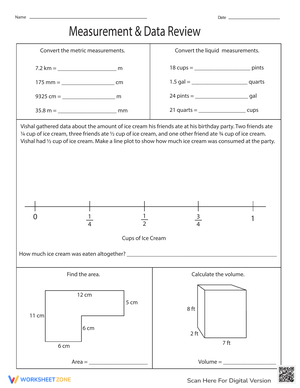
Volume printable worksheets for 5th grade that include multiple problem types — visual models, formula-based problems, composed figures, and word problems — give a far more accurate picture of what students actually understand than a single-format quiz does. A student who applies l x w x h correctly every time may still write square units, struggle to decompose a composed solid, or lose the thread when volume appears in a word problem. Using worksheets across item types makes those gaps visible while there is still time to address them.
What word problem contexts work well for Grade 5 volume?
Packing boxes, filling rectangular containers, comparing storage spaces, and building structures from non-overlapping prisms all work well at this level. The criteria that matter most: whole-number edge lengths, clearly labeled cubic units, and a reading demand light enough that the language does not bury the math. Grade 5 volume word problems should assess measurement reasoning, not reading comprehension.














 Interactive Worksheet Maker
 Quiz Maker
 Word Search Maker
 Crossword Puzzle Maker
 Word Scramble Generator
 Sentence Scramble Generator
 Handwriting Worksheet Generator
 Name Tracing Generator
 Fill In The Blank Generator




 BACK TOSCHOOL