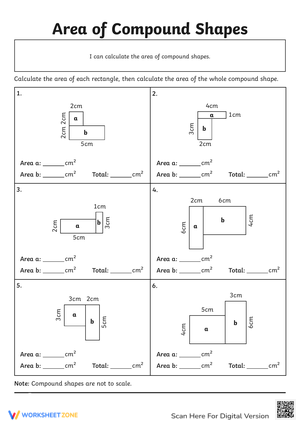
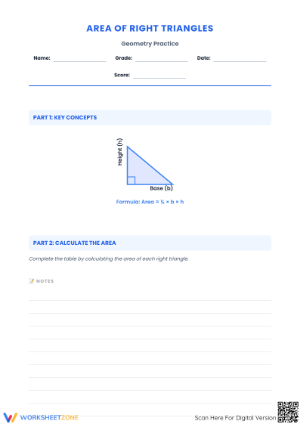
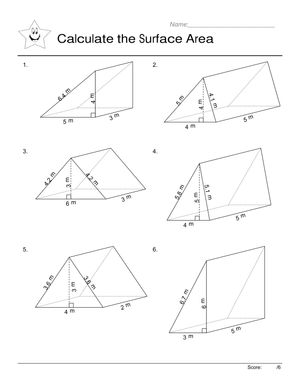
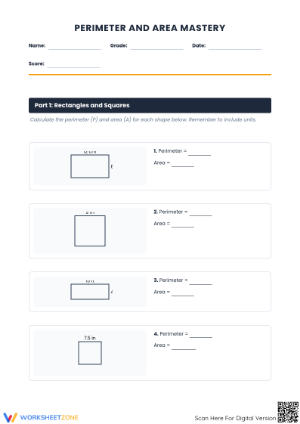
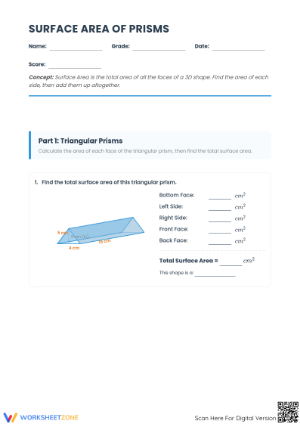
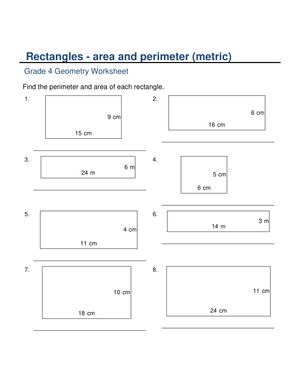
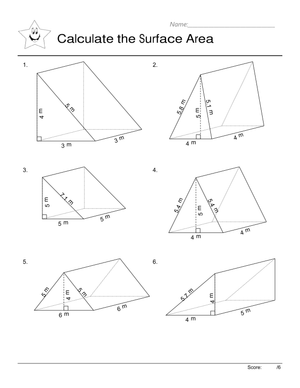
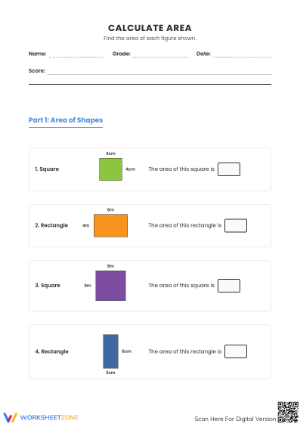
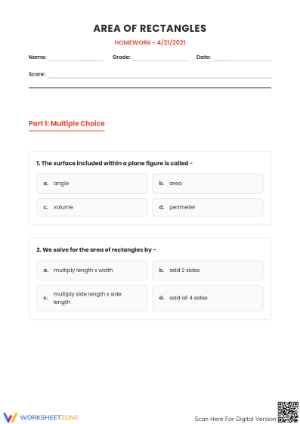
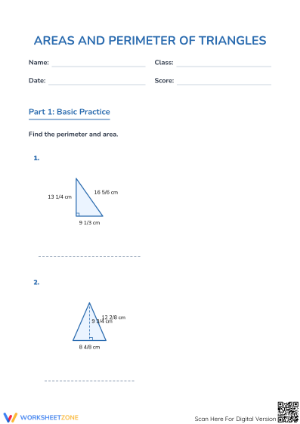
5th grade area printable worksheets resources carry the most instructional weight when they cover the full range Grade 5 demands: grid-based counting, length-times-width application, composite figure decomposition, missing-side reasoning, and the perimeter comparison tasks teachers reach for when a misconception surfaces mid-lesson. This set addresses all of those, giving teachers material that works during whole-group modeling, targeted small-group reteach, independent practice, and exit-ticket collection — without hunting across multiple sources.
What the Set Covers, Problem Type by Problem Type
Grade 5 area practice is not one skill — it is a progression. Students who can count square units on a labeled grid are often not yet ready to decompose an L-shaped figure into two rectangles and sum the parts. Each worksheet in this set targets a specific location in that progression rather than stacking every format into one crowded task.
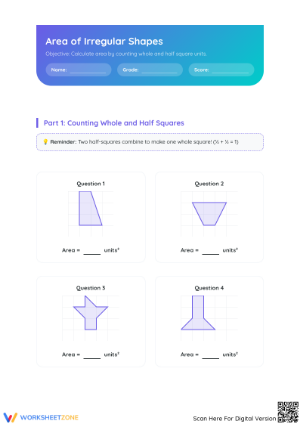
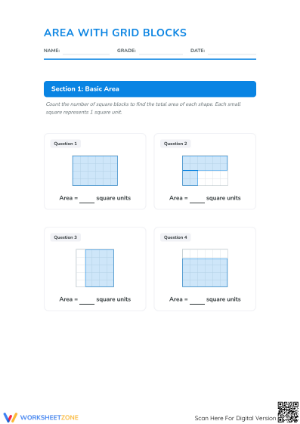
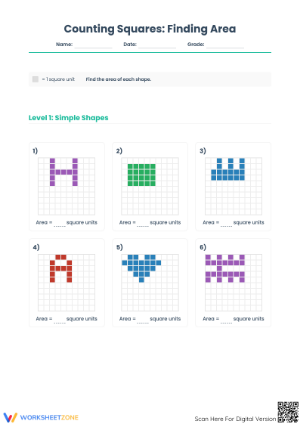
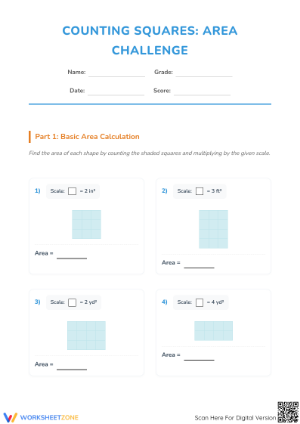
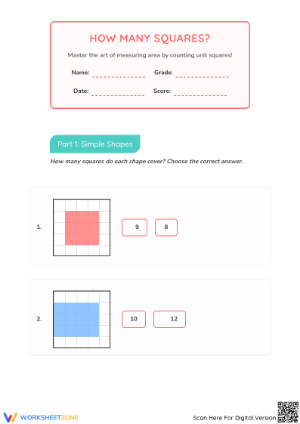
- Grid-based area problems — students count square units to connect area to covering a surface before any formula appears
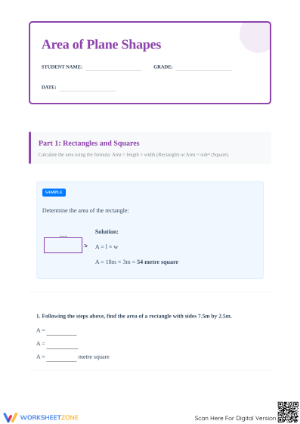
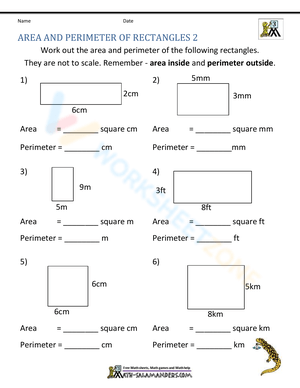
- Rectangle area from labeled side lengths — straightforward length times width with square unit labeling required on every answer
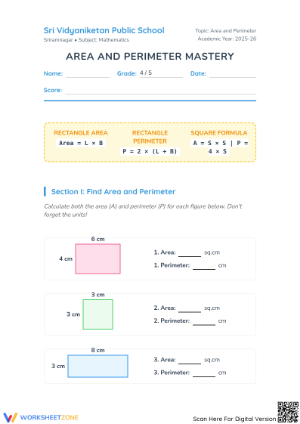
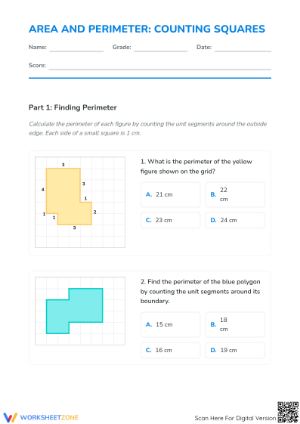
- Perimeter-and-area comparison — same figure, two different measures, with space to write a brief explanation of the difference
- Missing-side problems — given the area and one dimension, students work backward to find the unknown side length
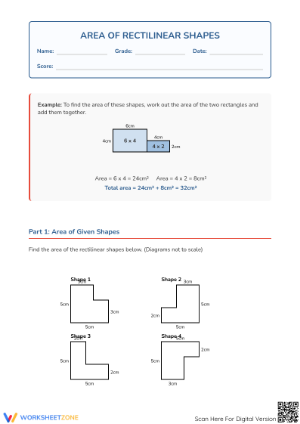
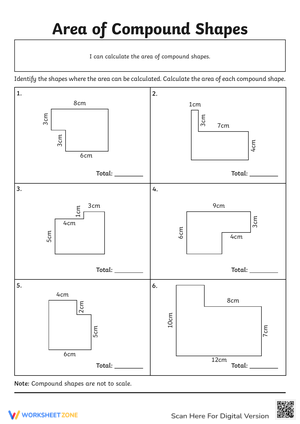
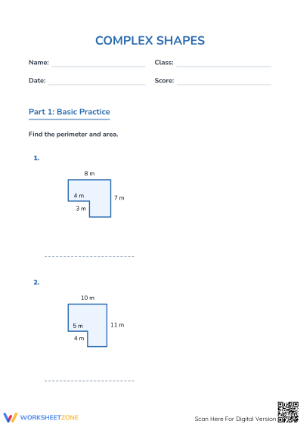
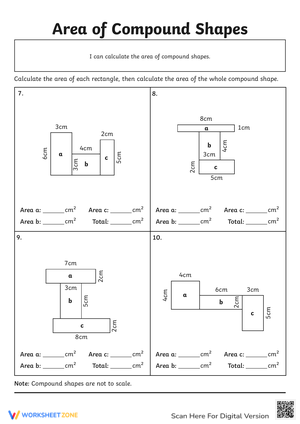
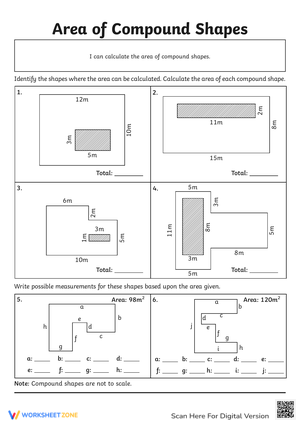
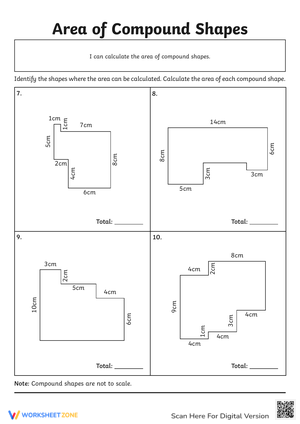
- Composite figures — L-shapes and irregular rectilinear figures that students must decompose into smaller rectangles before computing
- Area word problems — real-measurement contexts with clearly stated units, requiring students to identify relevant dimensions before calculating
That range matters in a mixed classroom. A student who still counts grid squares to verify needs different practice than one who is ready to write a two-step composite figure solution. Separate worksheets for each task type mean teachers can assign by skill rather than modifying problems on the fly.
Where Students Go Wrong — and What These Worksheets Reveal
The most consistent error in Grade 5 area work shows up in the answer line, not the calculation. A student will correctly multiply 7 cm by 4 cm, arrive at 28, and write "28 cm" — dropping the square unit because the number looks identical to any other measurement answer. It is worth treating this as a conceptual issue rather than a careless one: students who write linear units for area often do not yet have a firm image of area as a count of unit squares covering a surface. Requiring the unit on every answer — and marking it wrong when omitted — surfaces that gap faster than any class discussion will.
A second, related error is that students reach for perimeter when a problem asks for area. This is especially common when a figure shows all four sides labeled. The shape looks like a perimeter problem because all the measurements are visible, so students add them. Mixing perimeter and area items on the same worksheet — or placing one of each side by side with identical dimensions — forces students to read the question rather than pattern-match to a visual cue. That design choice turns a routine practice worksheet into a diagnostic tool.
Smart Ways to Work These Worksheets Into Your Week
A grid-based worksheet works well as a Monday warm-up after morning meeting — one or two problems projected at the front, solved together, with deliberate attention to what "square unit" means before any independent work begins. The missing-side or composite-figure worksheets fit better mid-week as focused independent practice or a ten-minute task before transitioning to another subject. Word problem worksheets make reliable exit tickets: they reveal in four to six problems whether students can apply the formula in a measurement context, not just in abstract number work.
For sub plans, the rectangle area worksheets with labeled dimensions and clear answer lines require no setup and are easy to review when the regular teacher returns. For math centers, pairing a composite figure worksheet with a highlighter — so students can mark the internal cut lines before they calculate — slows down guessing and makes the decomposition step visible. That small physical action catches students who want to add all the labeled numbers without thinking about shape structure, which is exactly the misconception worth catching before the volume unit begins.
Standard Alignment
These worksheets align to CCSS 5.MD.B.3 and CCSS 5.MD.B.5, which place area understanding at the center of Grade 5 volume instruction. The standards expect students to use area fluency as the entry point for volume — not to treat the two topics as separate units with unrelated formulas. In classroom terms, teachers who sequence these area worksheets directly before or during rectangular prism work are using them exactly as the instructional progression intends: to give students a working model of covering space before asking them to think about filling it. That connection is documented in Grade 5 learning progressions from both the Common Core State Standards Initiative and Illustrative Mathematics Grade 5 Unit 7, which treat area and volume as linked ideas rather than sequential checklist items.
Adjusting the Worksheets Across a Range of Learners
The strongest use of 5th grade area printable worksheets resources comes when teachers treat them as a selection rather than a fixed sequence. For students still building fluency, the grid-based worksheets provide a concrete check: students can count to verify before trusting their multiplication. That visual confirmation keeps the work from becoming pure symbol manipulation before students have a clear spatial image of what area actually measures.
For students who have the formula solid, composite figures with three or more internal rectangles push the reasoning without changing the underlying skill. Requiring students to label each sub-rectangle and show the partial areas before summing makes those worksheets function closer to short constructed-response tasks. On the other end, students who consistently confuse perimeter and area benefit most from working through the comparison worksheet in a small group where a teacher can intervene the moment they choose the wrong operation — that real-time correction is worth more than a full period of independent practice on the same error pattern.
Frequently Asked Questions
Do these worksheets cover both area and perimeter?
Several worksheets include perimeter comparison items alongside area problems. That pairing is deliberate — Grade 5 students frequently conflate the two measures, and presenting both within the same task is the fastest way to expose that confusion. Perimeter does not appear as a standalone topic; it shows up where it is most instructionally useful as a contrast to area.
Which worksheet works best for intervention?
The perimeter-and-area comparison worksheet and the missing-side worksheet are the most diagnostic for intervention. Both require students to decide which operation to use before calculating, so teachers can observe formula-choice errors in real time. Keep the problem count light during those sessions — four to six problems with clean spacing produce more useful data than a full worksheet of fifteen rushed answers.
How do these worksheets connect to fifth-grade volume instruction?
These 5th grade area printable worksheets resources build the conceptual foundation that volume instruction depends on. When students understand area as counting unit squares covering a surface, they have a working model for understanding volume as counting unit cubes filling space — layer by layer, each layer equal to the area of the base. Teachers who assign these worksheets immediately before introducing rectangular prisms find that students grasp the layering concept faster because they are not simultaneously learning what area means and what volume means.
Can these worksheets be used for homework?
The rectangle area worksheets and word problem worksheets translate well to homework because the directions are self-contained and do not depend on classroom materials or manipulatives. Composite figure worksheets are better kept in class, where students can ask questions before getting stuck on how to decompose an irregular shape. For any homework assignment, writing one worked example on the board before students leave — or sending a reference card home alongside the 5th grade area printable worksheets assignment — gives students a model to consult when working without teacher support.














 Interactive Worksheet Maker
 Quiz Maker
 Word Search Maker
 Crossword Puzzle Maker
 Word Scramble Generator
 Sentence Scramble Generator
 Handwriting Worksheet Generator
 Name Tracing Generator
 Fill In The Blank Generator




 BACK TOSCHOOL