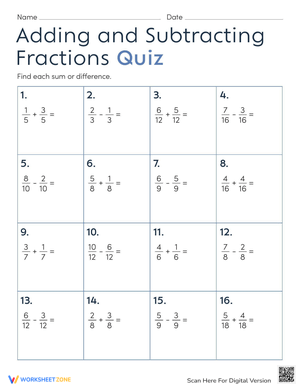
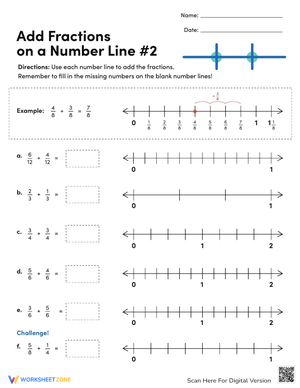
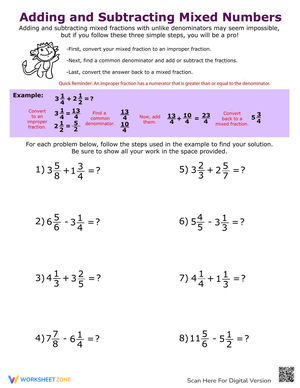
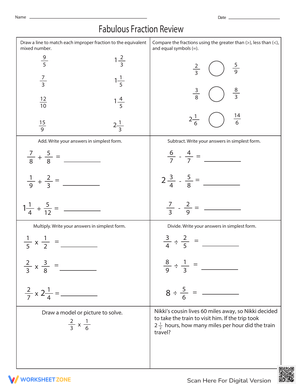
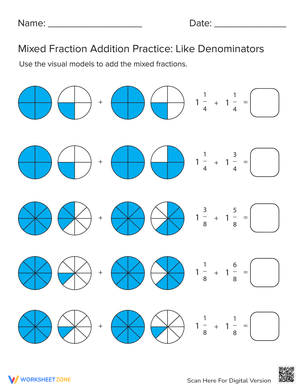
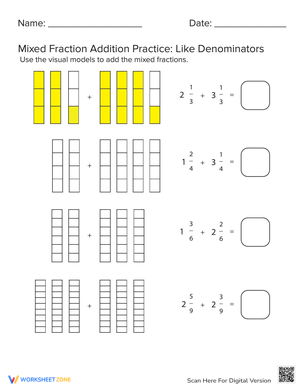
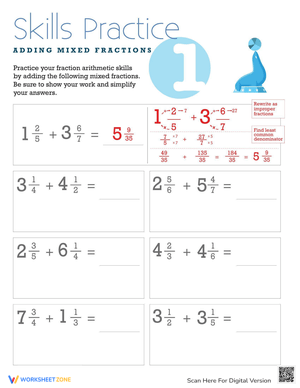
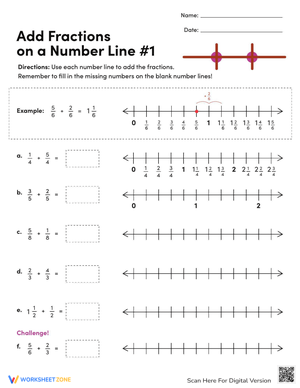
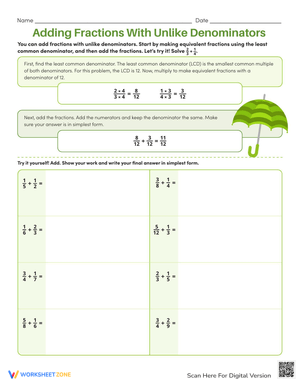
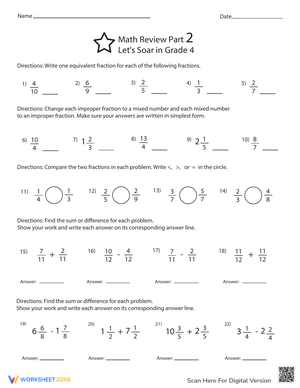
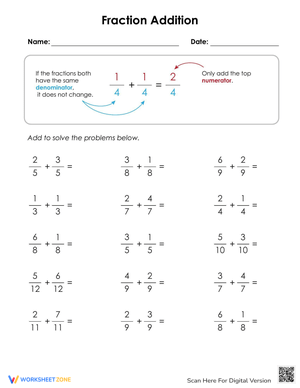
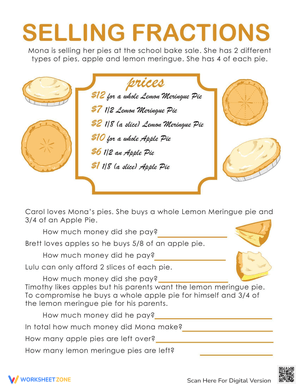
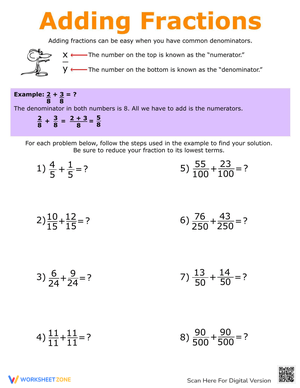
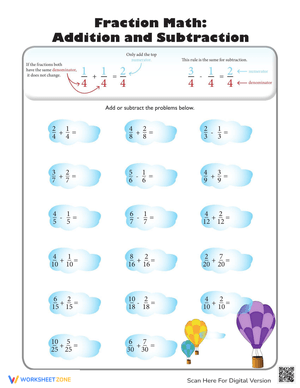
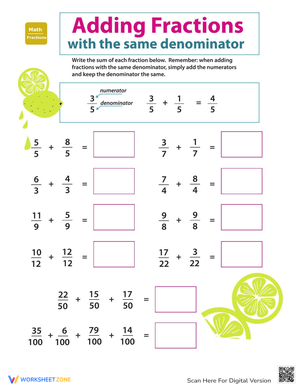
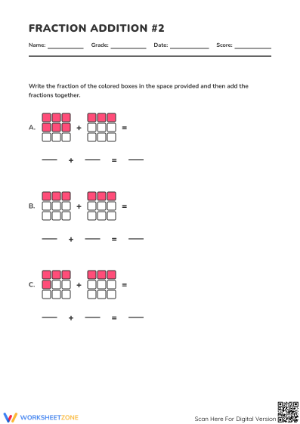
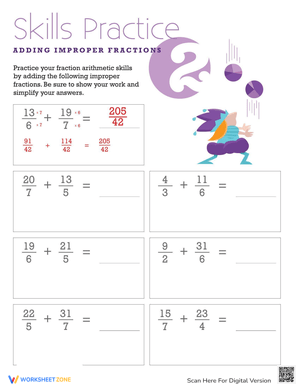
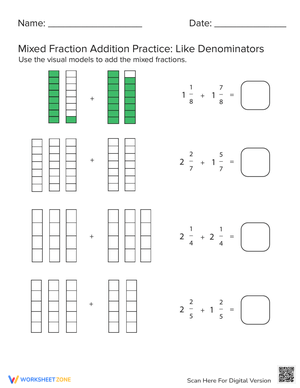
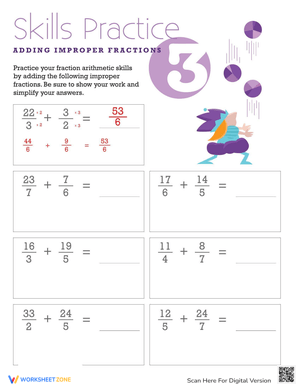
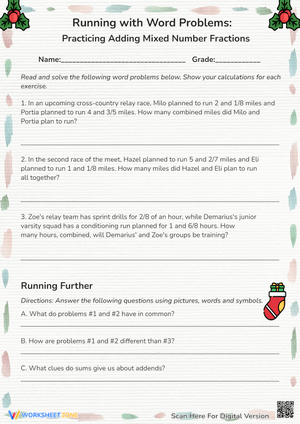
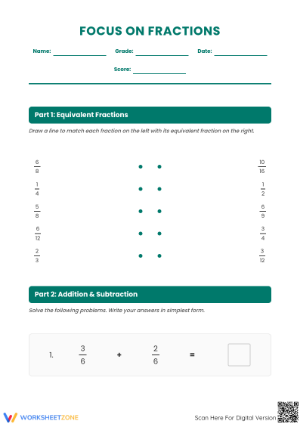
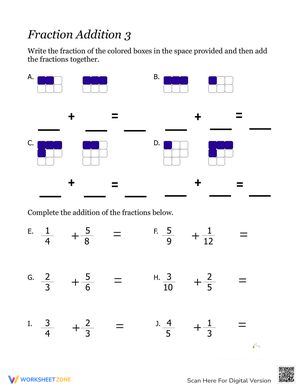
These adding fractions worksheets for 5th grade give teachers targeted, print-ready practice for the full scope of what CCSS 5.NF.A demands — unlike denominators, mixed numbers, and word problems that require students to check whether their answer is reasonable. Each worksheet isolates one skill before asking students to work across mixed formats, so you can match the right worksheet to exactly where a student or group has stalled. The set includes answer keys, which matters when you are managing small-group rotations and need to check work between pulls.
The Specific Skills Each Worksheet Builds
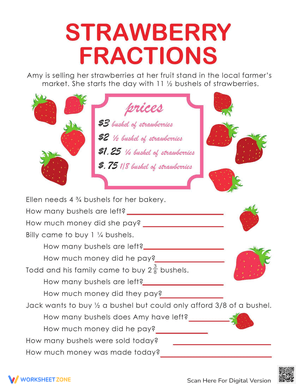
Grade 5 fraction addition involves at least four distinct moves that each deserve dedicated attention before students encounter them in combination. The first is adding fractions with like denominators — not because it is hard, but because it confirms students understand what the denominator represents before you ask them to change it. The second is generating a common denominator for unlike fractions, which requires producing equivalent fractions rather than just recognizing them. Third is adding mixed numbers, where students must manage the whole-number part while correctly rewriting the fractional parts. Fourth is applying all of that within word problems, where students also evaluate whether a result is close to a benchmark like 1 or 2.
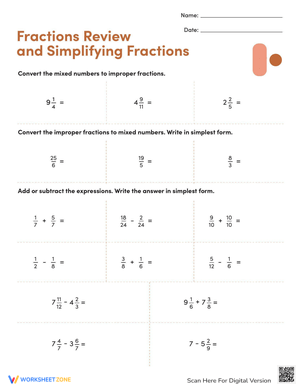
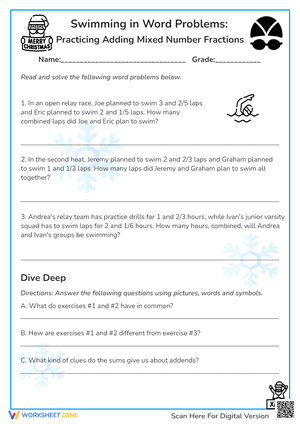
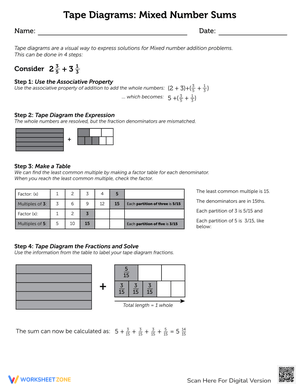
Each worksheet in this set addresses one of these moves directly. Problem layouts leave room for students to record equivalent fractions, write out the common denominator, and note simplification — not as a formatting preference, but because that visible work is how teachers identify where reasoning breaks down rather than just where a final answer is wrong.
Standard Alignment
The relevant standards are CCSS.MATH.CONTENT.5.NF.A.1 and CCSS.MATH.CONTENT.5.NF.A.2. The first requires students to add fractions with unlike denominators, including mixed numbers, by replacing given fractions with equivalent fractions that share a common denominator. The second extends that work into word problems and asks students to assess the reasonableness of answers through estimation and benchmark comparison.
In classroom terms, these are not fluency standards — they are conceptual ones. Students must demonstrate not just that they reached the right number, but that they understand why parts must be the same size before they can be counted together. Any adding fractions worksheets for 5th grade that omit the work-showing requirement may still yield accurate answers during practice, but they won't generate the evidence needed to determine whether students actually understand equivalent fractions or are following a memorized sequence of steps.
Errors Worth Anticipating Before You Hand These Out
The most persistent error in Grade 5 fraction addition is adding across both the numerators and the denominators. A student who writes 1/3 + 1/4 = 2/7 is not being careless — that answer follows the same additive logic that works in whole-number arithmetic, where both parts of the expression increase. The error is conceptual, not computational. It signals that the student has not yet internalized what the denominator represents. Worksheets that group like-denominator problems separately from unlike-denominator problems let you identify exactly which problem type triggers the error, which a randomly ordered mixed-review worksheet often obscures.
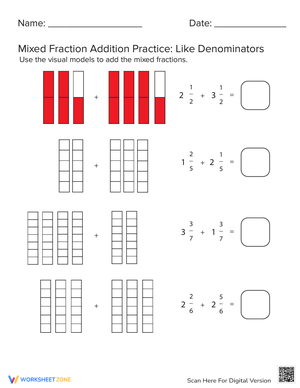
A second issue appears in mixed-number addition. Students frequently handle the fractional parts and the whole-number parts correctly in isolation, but then lose track when the fractional sum exceeds 1. A student might correctly find that 2/3 + 5/6 = 3/2, convert that to 1 1/2, and then write 4 1/2 as the final answer when the whole-number portions add to 4. The total should be 5 1/2. The mistake happens at the handoff between the two parts of the problem, not inside either one. Requiring students to write a final consolidation step — separate from their fraction work — catches this consistently.
How to Fit These Worksheets Into Your Fraction Unit
In whole-group instruction, the like-denominator worksheet works well as the guided-practice component of the first lesson. It is short enough to finish in 10 to 12 minutes and immediately shows who is ready to move to unlike denominators. The unlike-denominator worksheets then serve as independent practice the following day, after students have watched at least two modeled examples of the equivalent-fraction rewriting step.
During small-group intervention, narrow the focus. If a group is still adding denominators straight across, stop after every two problems and ask students to explain aloud why the denominator changed. That talk-through — not another full worksheet — is usually what closes the gap. If a group is close to mastery, shift to the mixed-number worksheet and add one brief word problem at the end of the session.
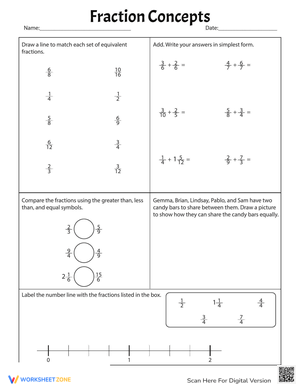
For Friday review blocks or math centers, the multi-skill worksheets — those combining unlike denominators, mixed numbers, and a word problem or two — work well as self-check practice. Pair them with the answer key and train students to mark their own errors and write what they would fix. Teachers who build that correction habit early in the unit spend less time reteaching the same material the following week. When planning a unit review, the adding fractions worksheets for 5th grade in this set give the clearest picture of where each student stands when the multi-skill formats are used together.
Adjusting the Set Across Student Readiness Levels
Students who are not yet fluent with equivalent fractions need a narrower entry point. Assign the like-denominator worksheets first, limit each session to six to eight problems, and require students to write every answer in simplified form — even when simplification is not strictly necessary — to keep them reasoning about fraction size rather than rushing through steps.
On-level students can move from unlike denominators into basic mixed-number addition within the same week. Keep the denominators manageable — common factors of 12 or smaller — so that attention stays on the method rather than the multiplication involved in finding common multiples.
For students ready for extension, a useful prompt is: "Find two fractions with unlike denominators that sum to exactly 1." That task stays squarely within the 5.NF.A.2 standard, but it asks students to reason backward from the sum rather than forward from the addends. It naturally connects to benchmark reasoning, which the standard explicitly names, and requires no additional materials — the blank workspace on the existing worksheets is sufficient.
Frequently Asked Questions
Do these worksheets address mixed numbers and word problems, or only straightforward fraction addition?
The set covers the full scope of Grade 5 fraction addition: like denominators, unlike denominators, mixed numbers, and word problems with reasonableness checks. Like-denominator practice is included as a skill confirmation point rather than the main target — which is appropriate given that students first encounter like-denominator addition in Grade 4 work, not Grade 5.
How many problems per worksheet is appropriate for a 5th grader working on unlike denominators?
Ten to fifteen problems is generally sufficient when students are working with unlike denominators for the first time. Unlike-denominator addition carries a higher cognitive load than like-denominator addition because students must complete two distinct operations — generating the common denominator and then rewriting both fractions — before they even begin adding. A shorter worksheet with complete, visible student work tells you more than a longer one that students rush through.
Are these aligned to Common Core, and do they work alongside non-CCSS state standards?
These adding fractions worksheets for 5th grade align directly to CCSS.MATH.CONTENT.5.NF.A.1 and 5.NF.A.2. Most non-CCSS state standards at Grade 5 address the same skills — unlike denominators, mixed numbers, and fraction word problems — because that content follows directly from Grade 4 fraction work and prepares students for the ratio and proportion concepts that appear in Grade 6. A quick check against your specific state document is worth doing, but the content overlap is close in most cases.
What is the best way to sequence these worksheets across a fraction addition unit?
Start with the like-denominator worksheet as a formative check at the beginning of the unit. Move to unlike denominators once you have confirmed that students understand what changing the denominator means. Add the mixed-number worksheets only after unlike-denominator work is stable. Close with the multi-skill worksheets that include word problems. That order follows the conceptual dependencies in the standard rather than jumping to the most complex problem type before foundational ideas are in place.














 Interactive Worksheet Maker
 Quiz Maker
 Word Search Maker
 Crossword Puzzle Maker
 Word Scramble Generator
 Sentence Scramble Generator
 Handwriting Worksheet Generator
 Name Tracing Generator
 Fill In The Blank Generator




 BACK TOSCHOOL