


























Views
Downloads

Essential Fraction Vocabulary Glossary | Grade 5 Printable
Paste this activity's link or code into your existing LMS (Google Classroom, Canvas, Teams, Schoology, Moodle, etc.).
Students can open and work on the activity right away, with no student login required.
You'll still be able to track student progress and results from your teacher account.
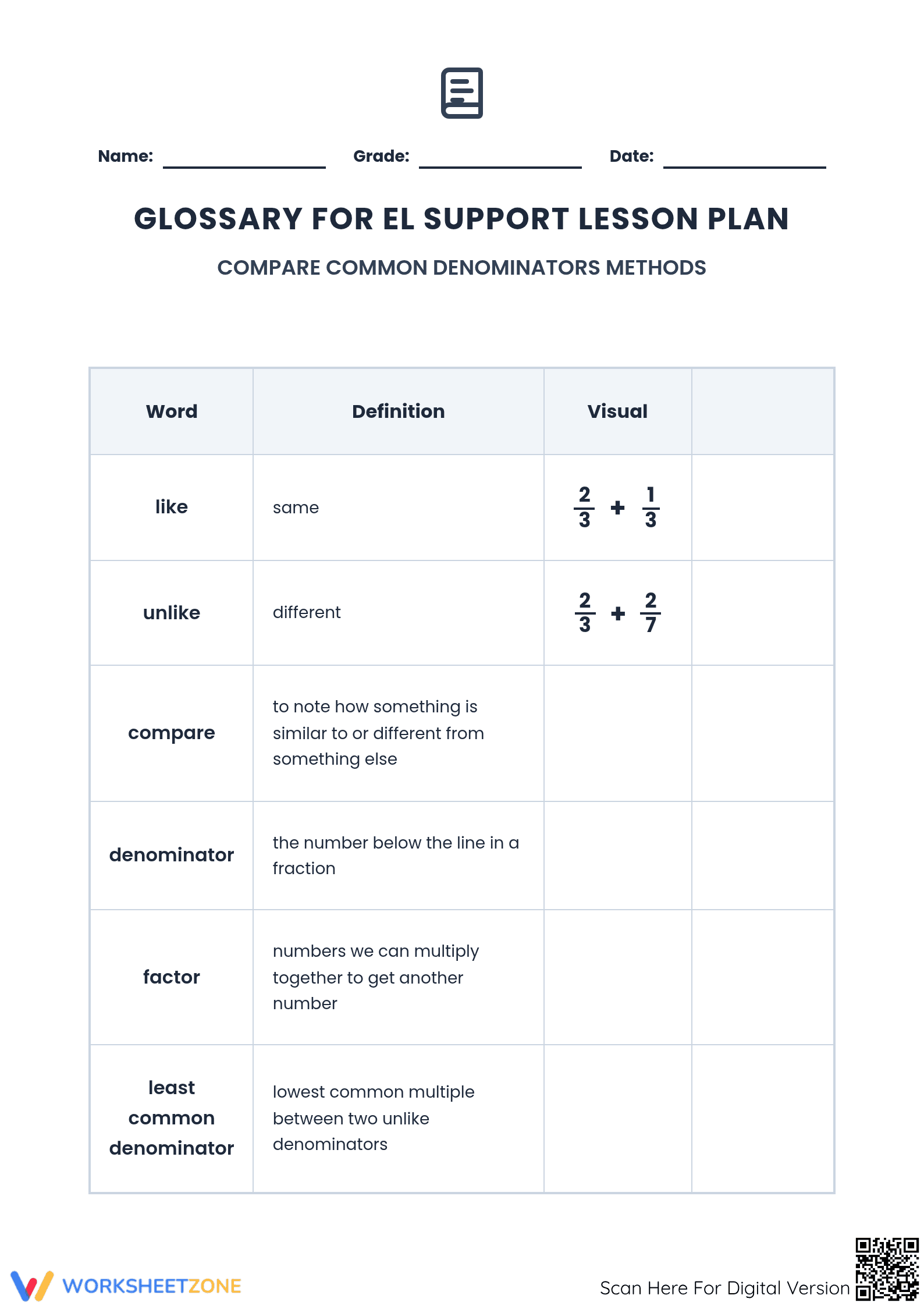
This Grade 5 fraction vocabulary glossary provides a foundational reference for students mastering fraction comparisons and operations. By defining critical mathematical terms with clear language and supporting visuals, this resource ensures learners can confidently explain their reasoning. It streamlines the instructional path for 5.NF.A.1 mastery by removing language barriers in complex fraction tasks.
At a Glance
- Grade: 5 · Subject: Math
- Standard:
5.NF.A.1— Add and subtract fractions with unlike denominators by finding equivalent fractions.- Skill Focus: Mathematical Vocabulary
- Format: 2 pages · 9 terms · Reference guide included · Digital and PDF
- Best For: EL support, math intervention groups, and resource room environments.
- Time: 5–10 minutes per session
What's Inside
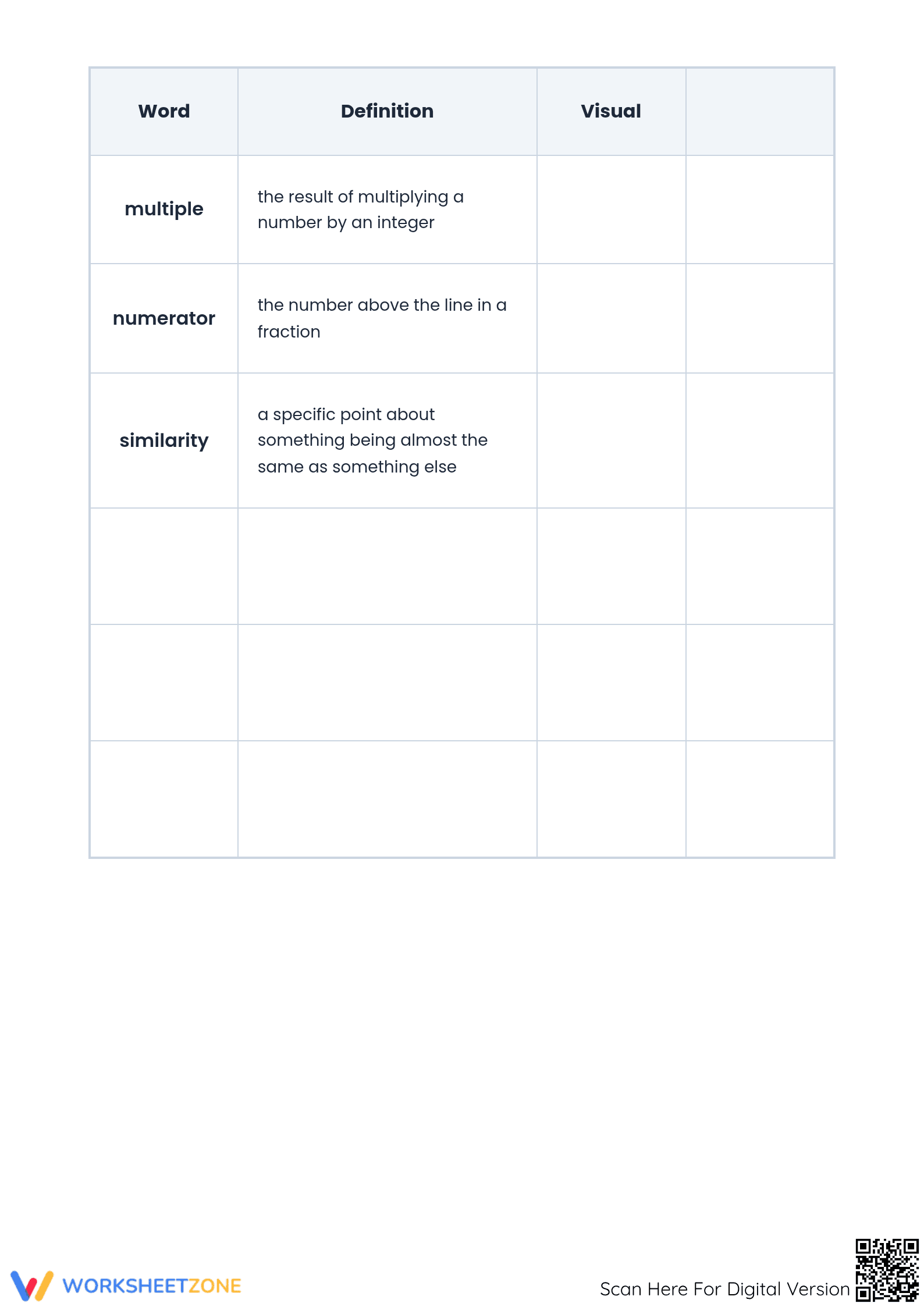
This two-page PDF features nine essential mathematical terms organized in a clean, tabular format. Each entry includes the word, a student-friendly definition, and a corresponding visual representation where applicable. The layout includes empty rows for student-generated additions, making it a living document that grows alongside their conceptual understanding of common denominators and factors.
Zero-Prep Workflow
The implementation process is designed for immediate classroom integration. Step 1: Print the two-page document (30 seconds). Step 2: Distribute to students as a desk reference or interactive notebook insert (1 minute). Step 3: Review the "Visual" column during your direct instruction to anchor abstract concepts (30 seconds). This entire workflow requires less than two minutes of teacher preparation time, making it an ideal sub-plan component.
Standards Alignment
This resource aligns directly with 5.NF.A.1: "Add and subtract fractions with unlike denominators (including mixed numbers) by replacing given fractions with equivalent fractions in such a way as to produce an equivalent sum or difference of fractions with like denominators." This standard code can be copied directly into lesson plans, IEP goals, or district curriculum mapping tools.
How to Use It
Use this glossary as a scaffold during the "I Do" phase of your lesson to introduce academic language before students begin independent problem-solving. It also serves as an effective formative assessment tool; observe if students reference the glossary when explaining why they chose a specific least common denominator. This quick check helps identify which learners need further conceptual support before proceeding to complex operations.
Who It's For
This glossary is specifically designed for English Learners (ELs) and students in Tier 2 or Tier 3 math intervention. The combination of simple definitions and visual models helps bridge the gap between everyday language and formal mathematical notation. It pairs naturally with any fraction unit passage, anchor chart, or direct instruction lesson focused on comparing fractions with unlike denominators.
Mastering the specialized language of mathematics is a critical prerequisite for procedural fluency in middle-grade fraction operations. According to the RAND AIRS 2024 report on mathematics instructional materials, providing explicit vocabulary support with visual scaffolds significantly improves the problem-solving accuracy of English Learners and students with language-based learning disabilities. This glossary targets the 5.NF.A.1 standard by demystifying terms like "factor," "multiple," and "least common denominator," which are often the primary stumbling blocks in adding fractions with unlike denominators. By grounding abstract definitions in concrete visual examples, the resource helps students move from rote memorization to authentic conceptual understanding. Educators can utilize these nine defined terms as a linguistic bridge, allowing students to articulate their mathematical thinking more clearly during peer discussions and individual assessments. This evidence-based approach to mathematical literacy ensures that all students can access the rigor of Grade 5 standards.


