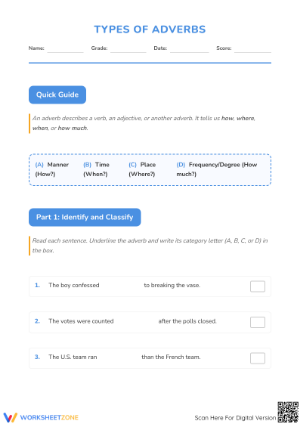
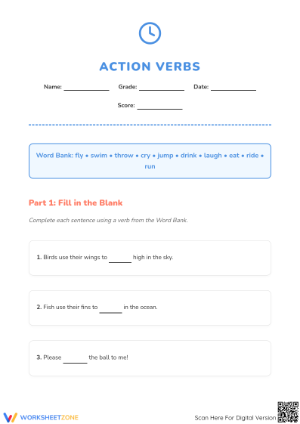
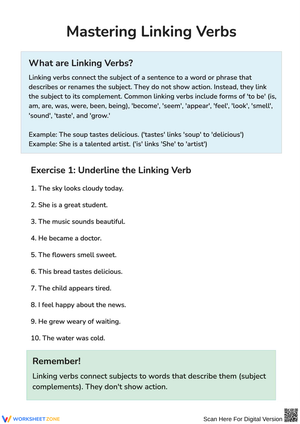
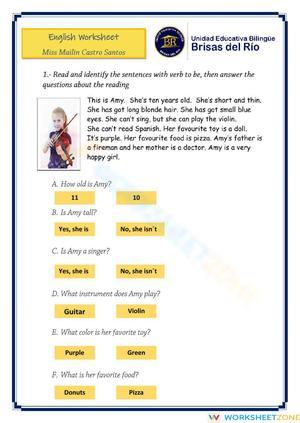
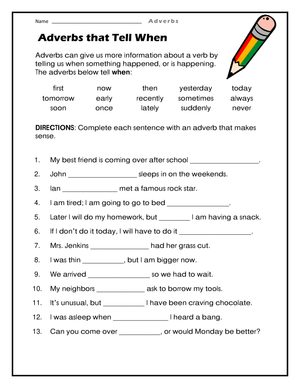
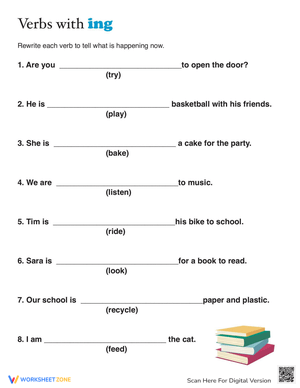
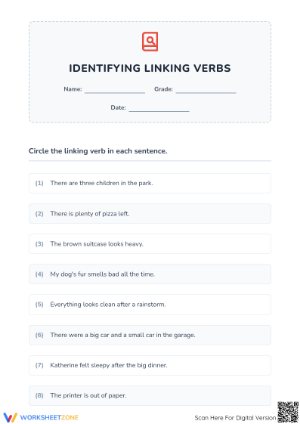
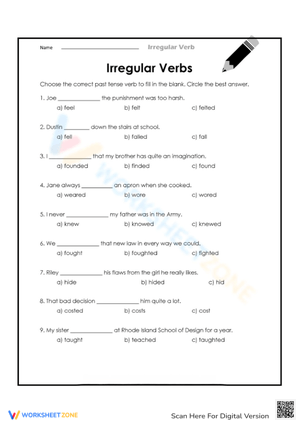
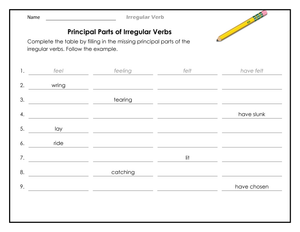
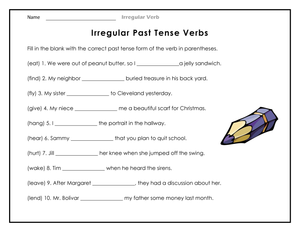
These verbs printable worksheets for 4th grade address a specific inflection point in grammar instruction — the moment when students stop simply labeling action words and start analyzing how verbs shape meaning, sequence, and condition. Teachers get four distinct skill areas across the set: progressive verb tenses, modal auxiliaries, helping versus linking verbs, and irregular past tense forms.
The Verb Skills Each Worksheet Targets
Fourth grade is where the verb curriculum genuinely gets complicated. Students arrive knowing that "run," "jump," and "read" are action verbs. What they have not yet worked with is was running, will be reading, or might go — and those are exactly the structures the Common Core expects them to produce. The set covers:
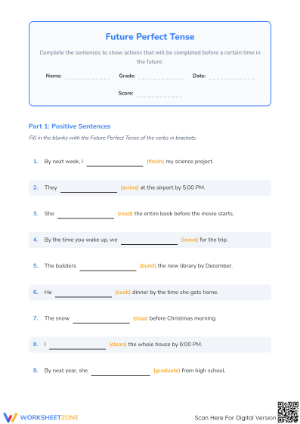
- Progressive verb tenses — past progressive (was/were + verb-ing), present progressive (am/is/are + verb-ing), and future progressive (will be + verb-ing). Each worksheet in this group isolates one tense before later ones mix all three.
- Modal auxiliaries — can, may, and must used in context, with tasks that ask students to match modals to intended meanings and rewrite sentences to shift the degree of certainty or obligation.
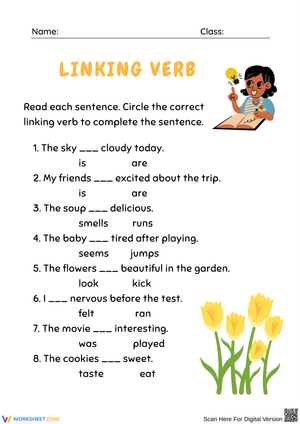
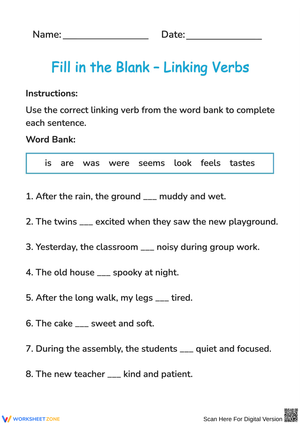
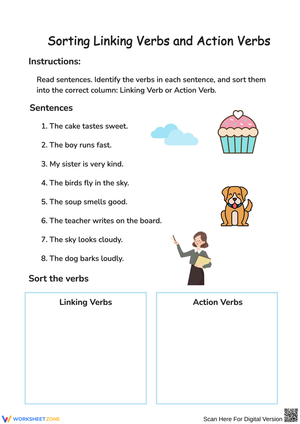
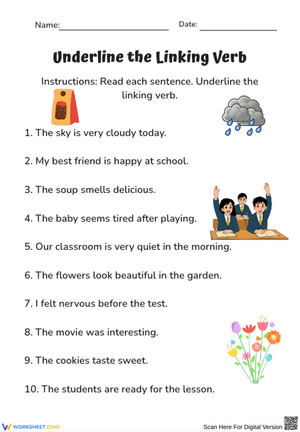
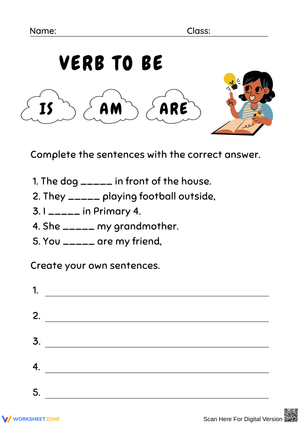
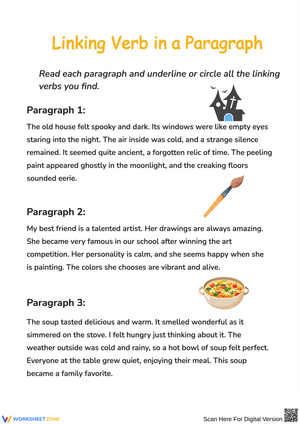
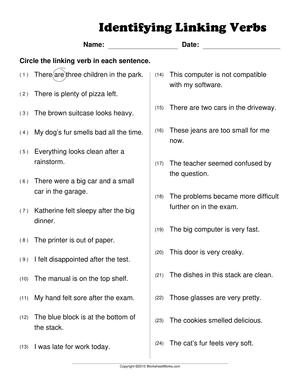
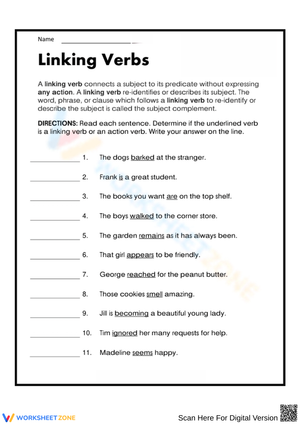
- Helping versus linking verbs — identifying whether a form of to be connects a subject to a description or assists a main verb in forming a verb phrase.
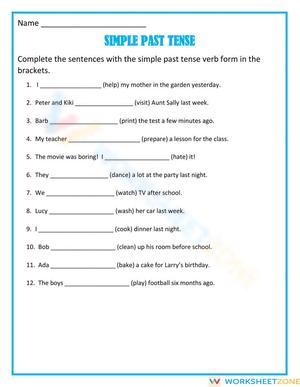
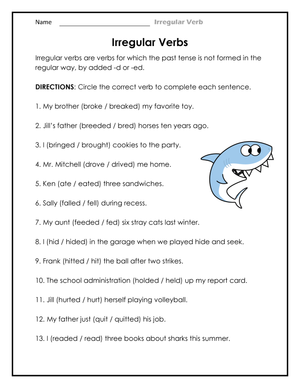
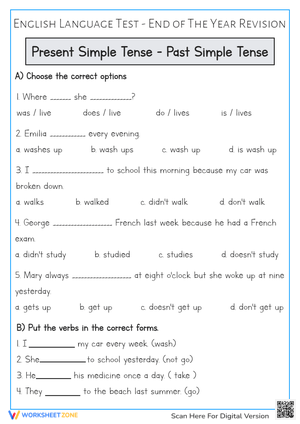
- Irregular past tense forms — identifying, correcting, and applying forms such as caught, went, and brought in both isolated sentences and short paragraphs.
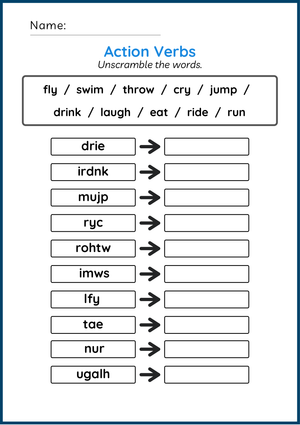
Most worksheets in the set ask students to do more than circle answers. They underline verb phrases, rewrite sentences in a different tense, sort verb forms into categories, or proofread a passage for tense errors. That variety of task type reflects how the standard plays out across actual writing and grammar assessments at this grade level.
The Verb Mistakes Fourth Graders Make Most Often
The most persistent error with progressive tenses is dropping the helping verb entirely. A student who writes "She running to the bus" has internalized the -ing marker but missed the to be component. This pattern appears more often in present progressive than in past, probably because students hear informal speech that omits it regularly. Worksheets that require students to write the full verb phrase — not select it from a word bank — surface this gap faster than multiple-choice formats do.
With modal auxiliaries, can versus may is the consistent sticking point. Students use can for everything: ability, permission, and possibility alike. They have heard "Can I go to the bathroom?" accepted by enough adults that the formal distinction feels invented. The most useful worksheet tasks present a sentence where context determines the correct modal — something like "You ___ borrow the book, but only if you return it by Friday" — so students must read for meaning rather than guess. Without that contextual pressure, the distinction does not stick.
Irregular verbs produce the predictable over-regularization errors: "catched," "runned," "bringed." These are developmentally normal, not signs of carelessness. Students are applying the only rule they know. Proofreading tasks embedded in running text, rather than isolated sentence drills, build the self-monitoring habit that matters most when students write independently.
Where These Worksheets Fit in the Grammar Unit
The most reliable placement for these worksheets is the day after direct instruction, not during it. Introduce progressive tenses on Monday — model the structure, discuss the helping verb, work through a few examples as a class — then hand out the relevant worksheet on Tuesday as independent practice while you pull a small group. Students who appear confident during whole-class instruction often reveal specific gaps when they work alone, and Tuesday gives you the rest of the week to respond.
For the helping-versus-linking verb worksheets, a five-minute "Verb Hunt" in whatever book the class is currently reading works well as a warm-up. Write two or three sentences from the current chapter on the board — ones containing both verb types — and ask students to sort them before they open the worksheet. When they then encounter the same distinction on the page, it does not feel abstract. They have just found it in a real text.
The irregular verb worksheets work particularly well as exit tasks. They are self-contained, require no setup, and fit inside the last eight minutes of class. Stack three or four across a week during a narrative writing unit, when irregular past tense forms appear constantly in student drafts. The verbs printable worksheets for 4th grade that cover irregular forms are short enough to serve as quick formative checks without cutting into instruction time.
Standard Alignment
CCSS.ELA-LITERACY.L.4.1.b requires students to form and use progressive verb tenses — past, present, and future. This standard appears in the Language strand and shows up on state ELA assessments both as isolated grammar items and embedded in writing conventions rubrics, where tense consistency is a scored element. CCSS.ELA-LITERACY.L.4.1.c names modal auxiliaries specifically, citing can, may, and must as the target words. Together, these two sub-standards account for most of the verb-focused Language instruction at this grade level. Because the worksheets in this set are organized by sub-standard rather than alphabetically or by difficulty, teachers can pull the resource that matches what they are actually teaching on a given day.
Adjusting Expectations When Student Readiness Varies
For students still consolidating simple past tense, the progressive tense worksheets move faster than they can handle without a reference anchor. Attaching a small verb chart — showing present, past, and future forms alongside their progressive counterparts for five or six common verbs — gives those students something concrete to cross-reference while they work. This is not the same as pre-teaching the content. It is more like keeping a multiplication table nearby during long division: the thinking still belongs to the student.
Students who finish early can extend any worksheet by writing two or three original sentences that follow the same pattern they just practiced, then exchanging with a partner to check helping verb choices. The modal auxiliary worksheets support a particularly demanding extension: ask students to take one base sentence and rewrite it three times using can, may, and must, then explain in writing how the meaning shifts each time. That task asks for exactly the kind of semantic precision the standard requires.
English learners often find the helping-verb component of progressive tenses harder than native speakers do, because many home languages do not use an auxiliary verb the same way English does. Partner practice — where students read each sentence aloud before writing — reduces error rates and builds the oral exposure that supports written accuracy over time. Even a brief exchange ("does this sound right when I say it?") moves learning faster than silent independent work for many of these students. Pairing verbs printable worksheets for 4th grade with that kind of structured oral rehearsal is a straightforward adjustment that does not require separate materials.
Frequently Asked Questions
Do these worksheets cover all three progressive tenses, or just one?
All three — past, present, and future progressive. Some worksheets isolate one tense for initial practice; others mix all three in the same set of sentences. That range supports both first instruction and later review without requiring different resources at each stage of the unit.
Can I use these with students who are working below grade level?
Yes, with some additional support in place. A student who has not yet consolidated simple past tense will struggle with past progressive before the foundation is solid. Starting those students on the irregular verb worksheets builds the past-tense footing they need before they move to the progressive forms. The set does not have to be used in order — pull whatever worksheet matches where a student actually is.
How are modal auxiliaries organized — is there a separate worksheet for each word?
The modal auxiliary worksheets group can, may, and must together rather than isolating each one. That grouping is intentional. Students learn to distinguish between the three by encountering them in contrast within the same task, not by studying one modal at a time in a vacuum before moving to the next.
Are these appropriate for a partner station or rotation setup?
Most of them work well in that format. Each worksheet is self-contained, the directions are clear enough that students can begin without teacher explanation, and most tasks fit inside a standard rotation window. The verbs printable worksheets for 4th grade that focus on proofreading are especially well-suited to partner stations — students catch more errors when they read the text aloud to each other than when they work through the same material in silence.












 Interactive Worksheet Maker
 Quiz Maker
 Word Search Maker
 Crossword Puzzle Maker
 Word Scramble Generator
 Sentence Scramble Generator
 Handwriting Worksheet Generator
 Name Tracing Generator
 Fill In The Blank Generator