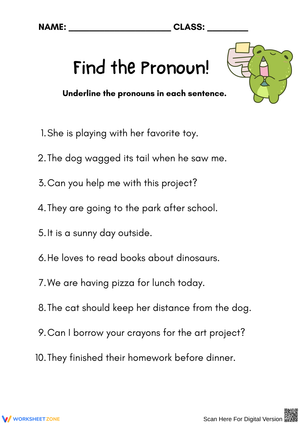
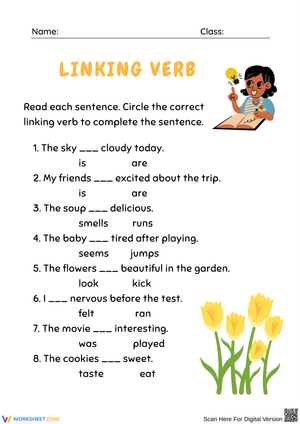
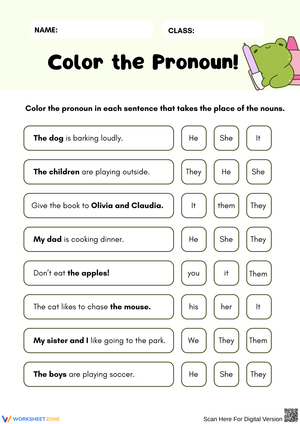
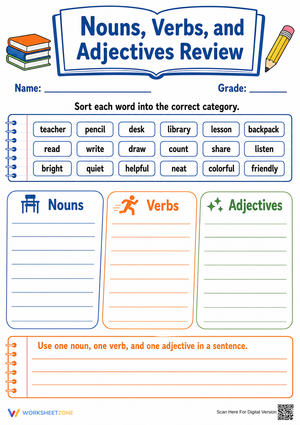
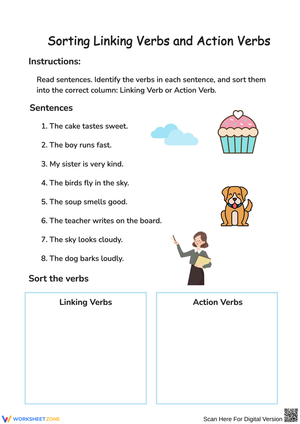
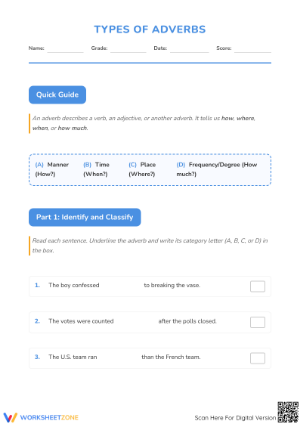
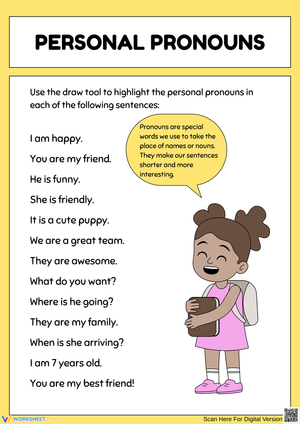
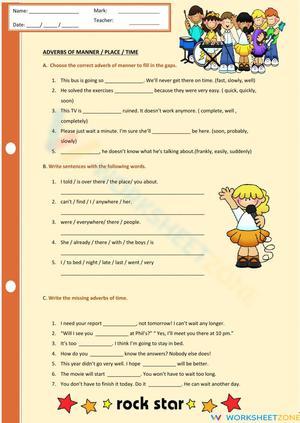
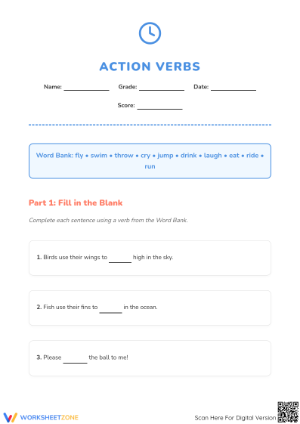
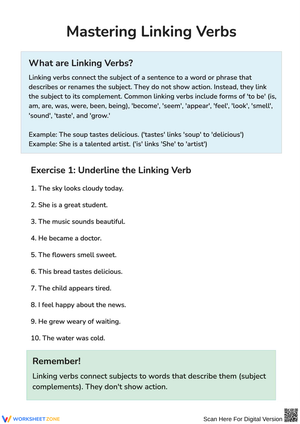
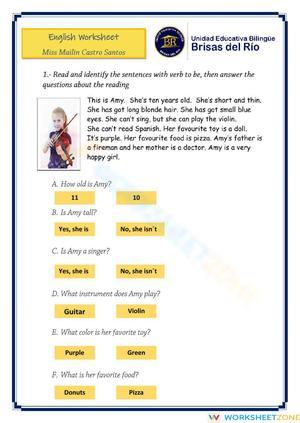
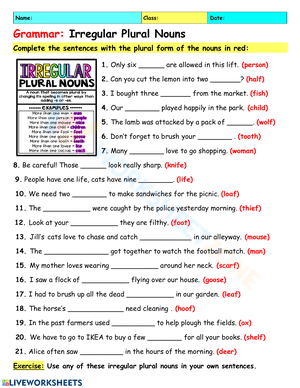
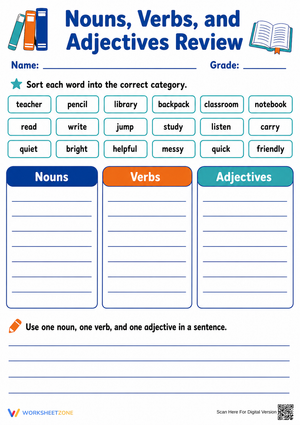
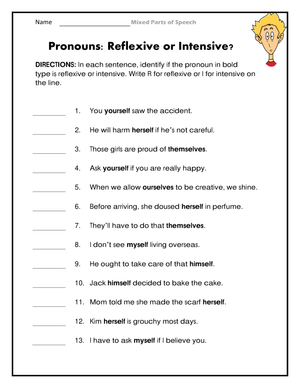
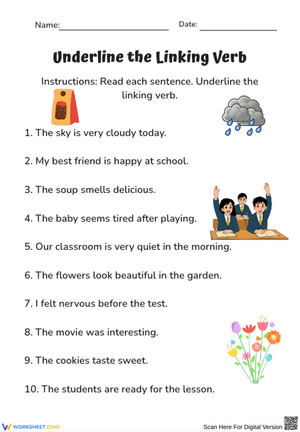
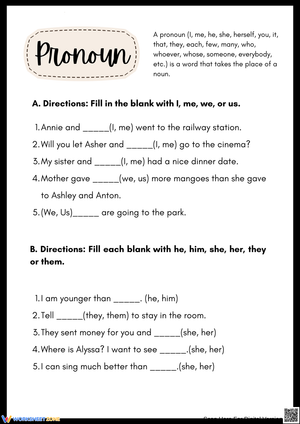
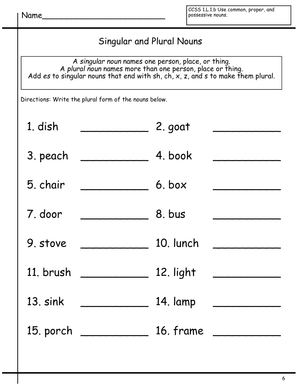
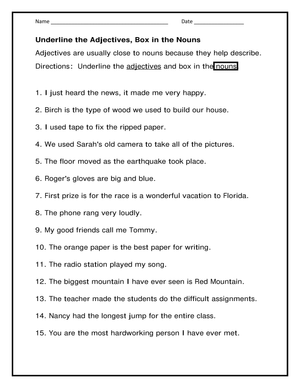
These parts of speech worksheets for 4th grade cover the grammar territory where the L.4.1 standards get genuinely demanding — relative pronouns, modal auxiliaries, the conventional sequence for stacking adjectives, and the three progressive tenses. Each worksheet isolates one skill and keeps the exercises focused enough to finish in a single class segment, which makes them practical for morning warm-ups, small-group instruction, or targeted review before a writing assignment.
The Grammar Skills Each Worksheet Targets
The skills in this set map directly to the sub-standards inside CCSS.ELA-LITERACY.L.4.1. Here is what students actually practice across the worksheets:
- Relative pronouns — choosing correctly among who, whose, whom, which, and that to connect clauses within a single sentence
- Relative adverbs — using where, when, and why to join clauses while signaling place, time, or reason
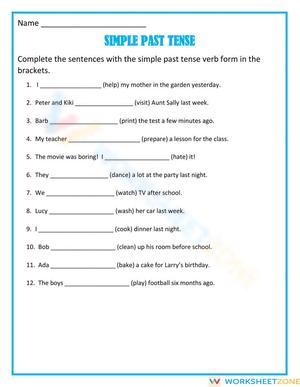
- Progressive verb tenses — forming and using present progressive, past progressive, and future progressive to show ongoing or continuous action
- Modal auxiliaries — selecting among can, could, may, might, must, should, will, and would to express ability, permission, possibility, or obligation
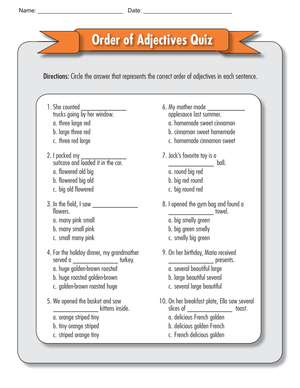
- Adjective ordering — arranging multiple adjectives in the conventional English sequence before a noun
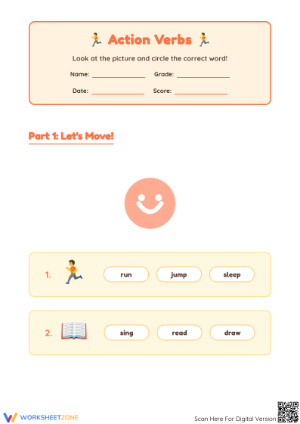
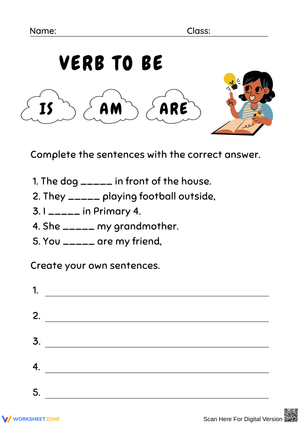
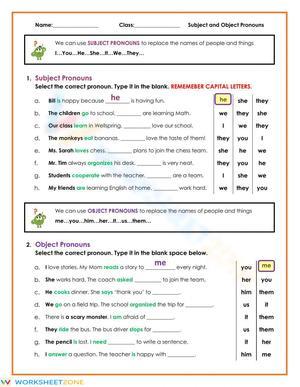
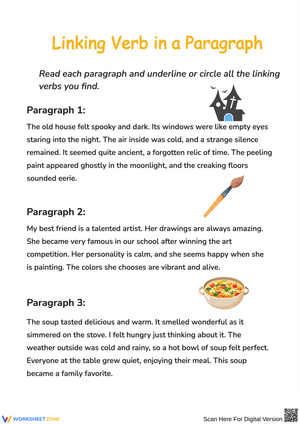
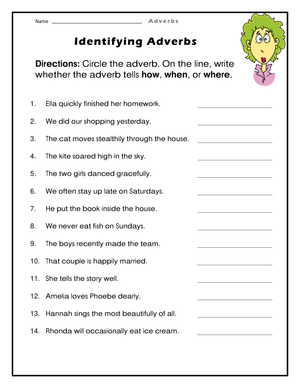
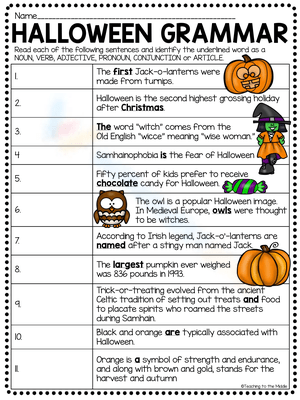
Several worksheets also place familiar parts of speech — nouns, verbs, adverbs, prepositions — inside longer and more complex sentences than students encountered in third grade. The point is not review for its own sake; it is that fourth-grade writing tasks require students to recognize and use these parts of speech in embedded clauses and compound structures, not just in simple sentences.
Standard Alignment
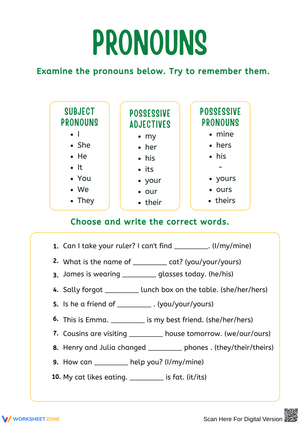
CCSS.ELA-LITERACY.L.4.1 is the governing standard for this set, covering the conventions of standard English grammar and usage in Grade 4 writing and speaking. The three sub-standards most directly addressed are L.4.1a (relative pronouns and relative adverbs), L.4.1b (progressive verb tenses), and L.4.1c (modal auxiliaries to convey conditions). These three sub-standards represent the clearest departure from the L.3 expectations — none of them appear before fourth grade — so they carry real weight on writing rubrics and benchmark assessments at this level. Teachers in states using adapted standards built from the Common Core will find the skill content aligns closely even where the code numbers differ.
Frequent Student Errors Worth Watching For
The relative pronoun errors are the most predictable across student work at this level. Students reliably reach for which when describing people — writing "the librarian which recommended the book" — because they have not yet internalized the human/nonhuman distinction that separates who from which. That single error surfaces in fourth-grade writing with enough consistency that it is worth flagging during the first worksheet session and returning to it throughout the unit.
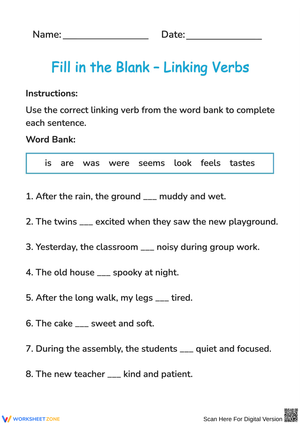
Modal auxiliaries produce a different kind of confusion. Students tend to treat can as a general-purpose helping verb, flattening the distinctions modals are meant to carry. A student writes "you can leave when you finish" in a context where "may" (permission) or "should" (expectation) carries the intended meaning — and they will not notice the difference until the categories are made explicit. The sentence-revision and fill-in-the-blank exercises in these parts of speech worksheets for 4th grade make those distinctions visible and provide enough repetition for students to start sorting them reliably.
Adjective ordering errors tend to be subtler. Students write sequences like "a red small wooden box" — grammatically plausible, but not how native English strings adjectives together. The conventional ordering rule (opinion, size, age, shape, color, origin, material) is an intuitive felt sense for native speakers but needs direct instruction for most learners. Before presenting the rule itself, ask students to say both sequences aloud. The version that sounds wrong is usually obvious when heard, which hands students a self-checking strategy before the rule chart ever comes out.
Working These Worksheets Into Your Lesson Week
The most effective placement for parts of speech worksheets for 4th grade is directly before a writing assignment that requires the targeted skill. A relative-pronoun worksheet completed the morning before students write a character description puts the grammar and the application in the same day's work. That pairing shortens the distance between isolated practice and actual use — students finish the worksheet and open their writing notebooks with the skill already activated.
Bell-ringers work particularly well for the modal auxiliary and adjective ordering worksheets. Five minutes at the start of a lesson, followed by a quick whole-class check, is enough to surface the most common errors before students embed them in a longer piece. Progressive tense worksheets double as a useful diagnostic at the start of a narrative writing unit — a short set of items tells you within minutes whether the class needs direct instruction, a brief reminder, or a small-group pull. These worksheets also serve as fast exit tickets: students complete five or six items at the close of a lesson, hand them in on the way out, and you have a read on comprehension before the next session begins.
Adjusting for a Range of Learners
Students who find the relative-pronoun worksheets difficult are often struggling with the underlying concept of a clause, not the pronoun vocabulary itself. A short anchor activity — asking students to combine two simple sentences into one ("The dog is barking. The dog is mine.") before they pick up a pencil — builds the structural understanding the worksheet exercises depend on. Once students can feel the connection between the two ideas, choosing who versus which becomes a matter of recognizing what the word refers to rather than guessing from a list.
Students ready for more challenge can move from the provided exercises into sentence-level production: writing three original sentences that use two or more adjectives in the correct order, or revising a short paragraph where every modal auxiliary has been replaced with can. That revision task demands that students read for meaning and nuance rather than just fill in blanks — a heavier cognitive lift than identification alone. For parts of speech worksheets for 4th grade to reach the full range of a mixed-ability class, the extension tasks need to push students past recognition and into purposeful, controlled use of the skill.
Frequently Asked Questions
Do these worksheets cover all eight parts of speech, or do they concentrate on the L.4.1 priority skills?
The set centers on the L.4.1 priority skills — relative pronouns, relative adverbs, progressive tenses, modal auxiliaries, and adjective ordering — because those are the grammar concepts that are new to fourth grade and most commonly underdeveloped in student writing. Several worksheets also address nouns, verbs, adverbs, and prepositions within more complex sentence contexts than earlier grades use, but the primary emphasis stays on the L.4.1 content.
Can these worksheets be used on a digital platform, or are they strictly for print?
PDF format holds its layout across devices and uploads cleanly to most learning management systems, including Google Classroom and Seesaw, for student completion on tablets or laptops. Typed responses work without issue. For annotation tasks — color-coding adjectives by category, underlining relative clauses — students need either a PDF annotation app or printed copies with colored pencils or highlighters.
What do I do when students can name the parts of speech correctly on a worksheet but still make those errors in their writing?
Recognition and application are distinct skills, and the gap between them is common at this grade level. If a student completes a worksheet accurately but still writes "the teacher which taught us" in a draft, the issue is transfer, not identification. The most effective follow-up is requiring students to underline every relative pronoun in their own writing and read that sentence aloud before submitting. That self-audit step moves the skill from worksheet performance into an actual writing habit — which is where it needs to live.












 Interactive Worksheet Maker
 Quiz Maker
 Word Search Maker
 Crossword Puzzle Maker
 Word Scramble Generator
 Sentence Scramble Generator
 Handwriting Worksheet Generator
 Name Tracing Generator
 Fill In The Blank Generator