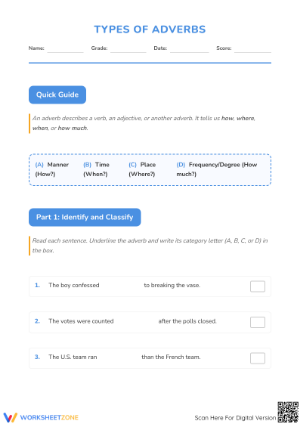
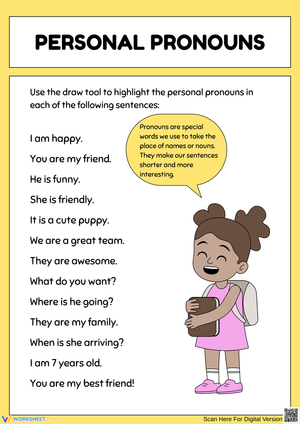
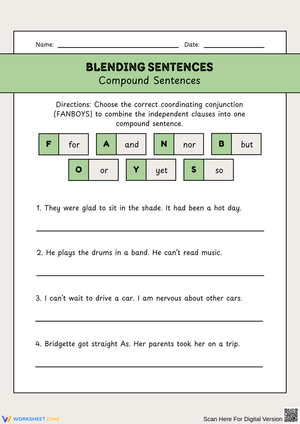
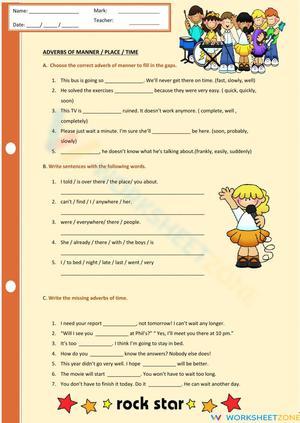
Grammar and mechanics pdf worksheets for 4th grade target the conventions students need to apply across every writing task they encounter — from book responses to research paragraphs — not just in isolated warm-up sentences. This set gives teachers focused, printable practice across capitalization, punctuation, verb tense, pronouns, and sentence structure. Both single-skill worksheets and multi-convention editing tasks are included, so there is something to pull during direct instruction and something to use once students are ready to manage more than one rule at a time.
The Specific Skills Targeted
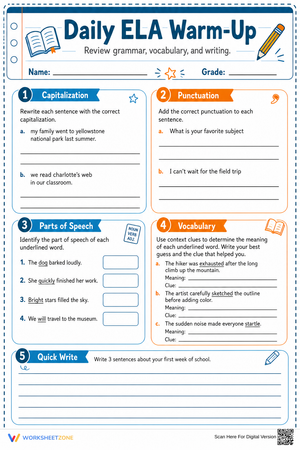
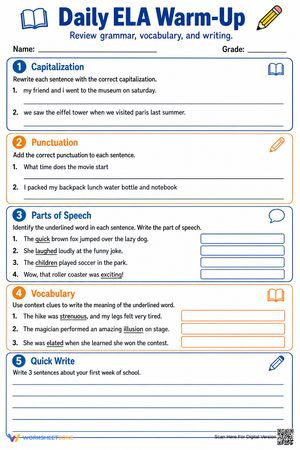
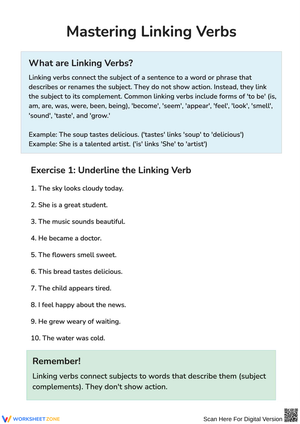
Each worksheet focuses on a defined skill area, making it straightforward to pull the right one at the right instructional moment. Skills covered include:
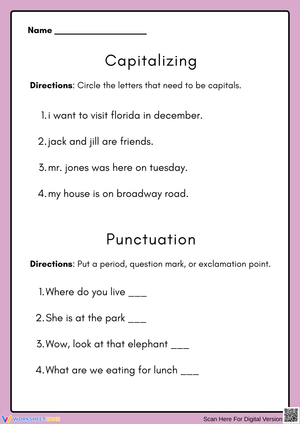
- Capitalization — proper nouns, titles, and the first word of dialogue
- Punctuation — end marks, commas in a series, apostrophes in contractions and possessives, and quotation marks in dialogue
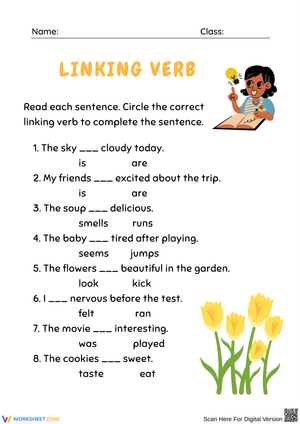
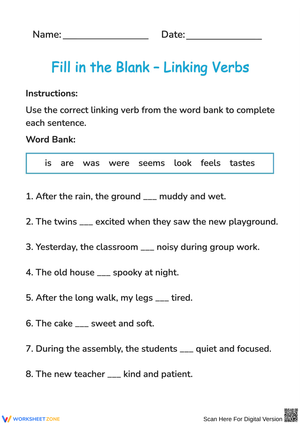
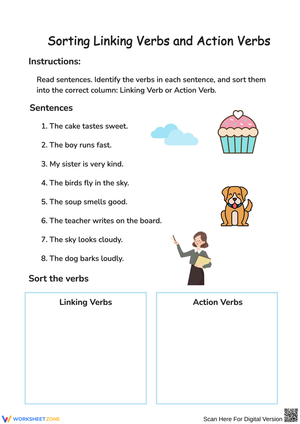
- Verb tense — consistent use within a sentence and across a short paragraph
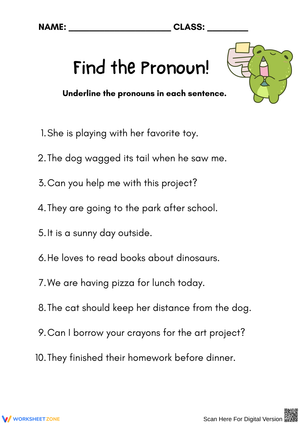
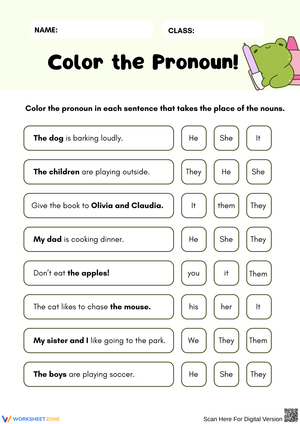
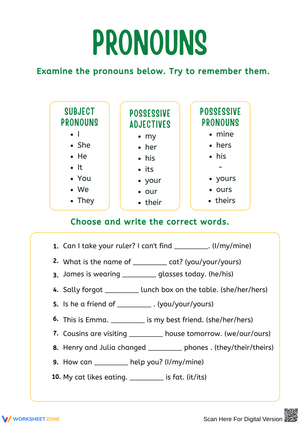
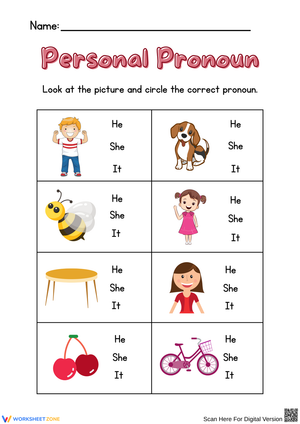
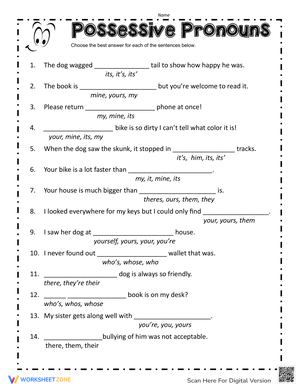
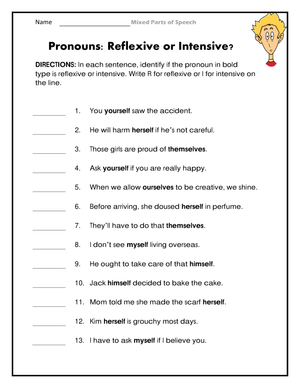
- Pronouns — subject and object forms, and clear pronoun-antecedent reference
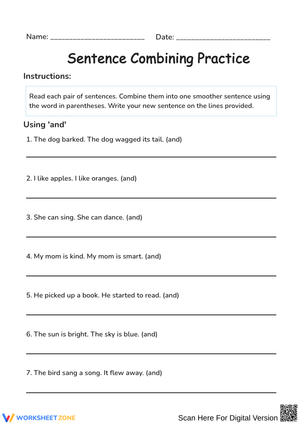
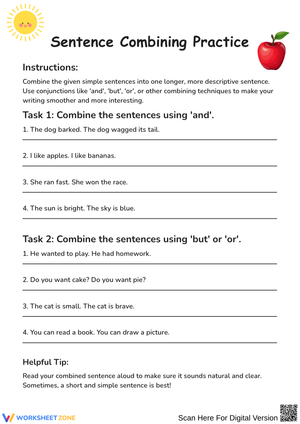
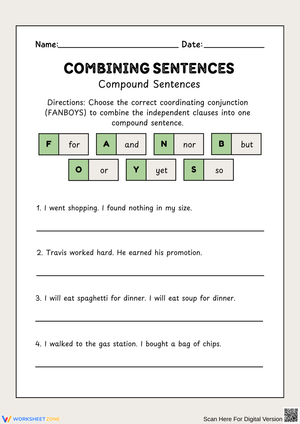
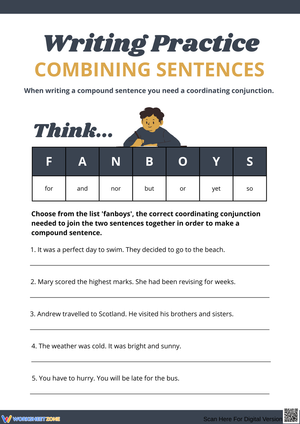
- Conjunctions — coordinating conjunctions and subordinating conjunctions such as although, because, and while
- Sentence structure — identifying fragments and run-ons, combining simple sentences into compound or complex ones
- Editing passages — short paragraphs where students locate and correct multiple errors across several conventions at once
The editing passages deserve particular attention. A focused verb-tense worksheet tells you whether a student can apply a rule in a controlled setting. An editing passage tells you whether that same student can spot the error while simultaneously managing capitalization and punctuation — which is far closer to what actual writing revision demands.
Frequent Student Errors Worth Watching For
Verb tense is where 4th graders trip most reliably. A student who writes cleanly in the present tense will shift to past mid-sentence without noticing: The explorer walks to the river and found a campsite. Reading back over it, they miss the shift entirely because they are tracking meaning, not form. The verb-tense worksheets isolate this pattern so students practice recognizing it before it becomes a persistent habit in independent writing.
Quotation marks in dialogue produce a distinct cluster of errors. Students place the end punctuation outside the closing quotation mark, omit the comma before the attribution tag, or forget to start a new line when the speaker changes. These aren't random slips — they reflect that students have heard the rules stated once but haven't had enough repetition with the actual format. Short, readable dialogue exchanges in the worksheets build that repetition more effectively than textbook-style sentence drills ever do.
Pronoun reference generates a third pattern worth anticipating. Students write When Emma met Sofia, she was nervous and see no problem because they know who "she" means — the ambiguity is invisible to them as the writer. Worksheets that ask students to rewrite the sentence to eliminate the confusion, rather than simply marking it wrong, do more to shift the underlying habit than any multiple-choice correction task.
Building These Worksheets Into Your Lesson Plans
The most effective placement is alongside current writing instruction, not as a separate grammar strand running in parallel. If the class is drafting narrative writing, pull the dialogue-punctuation worksheet in the day or two before students write scenes with spoken dialogue. If students are revising informational paragraphs, the verb-tense and conjunction worksheets reinforce exactly what a revision conference would address. The connection between worksheet practice and the writing task doesn't need to be announced — students make it when the timing is right.
Short blocks work well. Eight to ten minutes at the start of an ELA period — especially Monday through Wednesday when new skills need reinforcement — give students meaningful practice without compressing reading or writing time. The editing passages are better used later in a unit, after students have some familiarity with the individual conventions, because combining multiple error types too early produces guessing rather than application. That sequencing matters more than most teachers expect when they first introduce the editing format.
Each worksheet includes an answer key, which makes station work and independent review reliable. Students can self-correct without teacher proximity, and a substitute can run the activity without any advance preparation. Keeping a small folder organized by skill area means the right worksheet is there for a quick small-group reteach or a last-minute sub plan without any scrambling.
Standard Alignment
These grammar and mechanics pdf worksheets for 4th grade align directly to the Common Core Language Standards L.4.1 through L.4.3. L.4.1 covers relative pronouns, progressive verb tenses, modal auxiliaries, and correctly ordered adjectives. L.4.2 addresses capitalization, punctuation, and spelling conventions. L.4.3 focuses on word choice and sentence variety for effect — which is where the sentence-combining and editing worksheets contribute beyond pure mechanics. These Language standards don't exist in isolation; they directly support the accuracy expected in the writing standards W.4.1 through W.4.3. The skill labels on each worksheet map to these codes without any translation, which keeps standards-based grading and progress notes straightforward.
Differentiating Across Ability Levels in the Same Block
For students who need additional support, sentence-level worksheets where error locations are already indicated are the right starting point — the task is to correct the marked errors, not to hunt for them first. Pairing those students with a brief reference card showing the target rule before they begin keeps their focus on applying the convention rather than retrieving it from memory under pressure. That adjustment takes less than two minutes of setup and makes the practice genuinely accessible rather than discouraging.
Students who handle individual conventions with confidence are ready for the editing passages, which ask them to manage several rules at once. The next step beyond that is applying the same editing checklist to a paragraph from their own writing folder. That transfer step is where grammar instruction tends to stick — and it adds roughly five minutes to the activity, which is a reasonable trade for the retention it produces.
Grammar and mechanics pdf worksheets for 4th grade also work well when intervention and enrichment groups run simultaneously in the same block. The skill labels make it easy to assign different worksheets to different groups without confusion about what each group is working on, and the answer keys mean neither group needs to wait for teacher support to check their work.
Frequently Asked Questions
Do these worksheets come with answer keys?
Yes. Every worksheet in the set includes a complete answer key. This matters most for station work, peer review, and any session run by a substitute or paraprofessional — the activity doesn't require teacher proximity to be useful.
How is the set organized?
The worksheets are organized by skill area: capitalization, punctuation, verb tense, pronouns, conjunctions, sentence structure, and editing passages. Within each skill group, focused practice worksheets come first, followed by the editing tasks that ask students to manage multiple conventions in connected text at once.
Can these be used for standardized test preparation?
The editing-passage format mirrors the language sections on most state assessments at this grade level, where students read a short draft and identify or correct errors. Regular use of grammar and mechanics pdf worksheets for 4th grade in this format — spread across the year rather than concentrated in the weeks before testing — builds the habit of reading for correctness that isolated sentence-level drills don't fully develop on their own.
Do these worksheets work for 3rd or 5th grade as well?
The sentence-level capitalization, end punctuation, and basic verb-tense worksheets work for review at the start of 5th grade or as extension for advanced 3rd graders. The editing passages are calibrated to a 4th-grade reading level and are most appropriate at grade level; using them as challenge material in 3rd grade is reasonable, but they are not an entry-level introduction to conventions for students encountering these rules for the first time.












 Interactive Worksheet Maker
 Quiz Maker
 Word Search Maker
 Crossword Puzzle Maker
 Word Scramble Generator
 Sentence Scramble Generator
 Handwriting Worksheet Generator
 Name Tracing Generator
 Fill In The Blank Generator