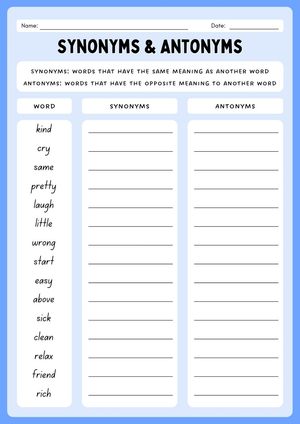
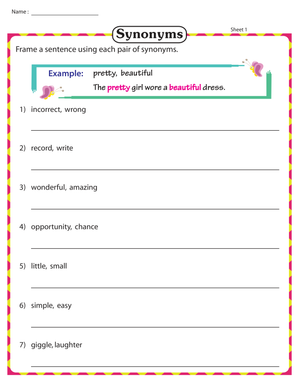
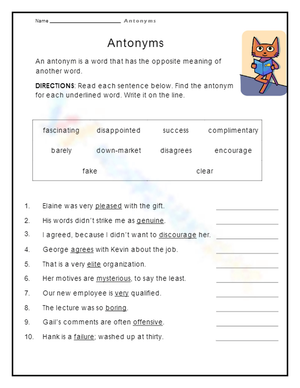
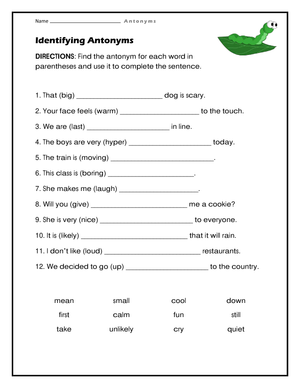
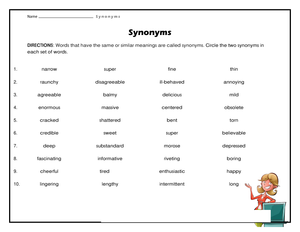
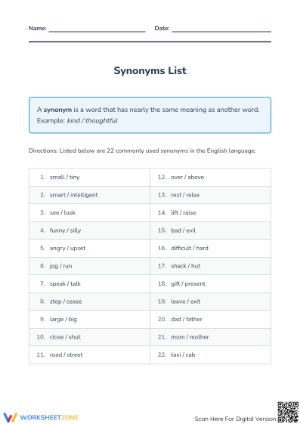
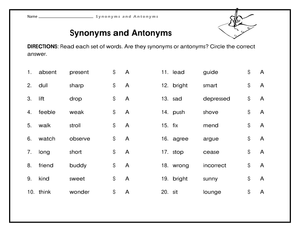
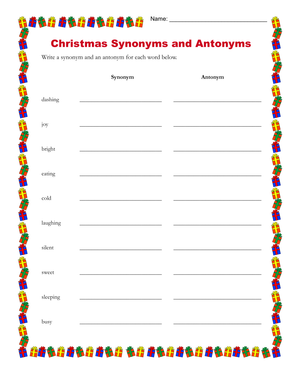
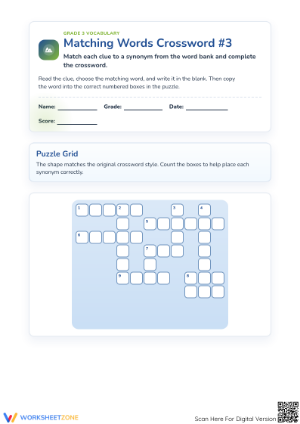
These 3rd grade antonyms and synonyms printable worksheets give students focused, varied practice with word relationships at exactly the point in third grade when vocabulary precision starts affecting both reading comprehension and writing quality — not just performance on a vocab quiz. The set covers synonym substitution, antonym identification, degree-of-meaning distinctions, and context-based word choice, with enough format variety that teachers can slot individual worksheets into warm-ups, centers, small-group rotations, or end-of-unit review.
Skills Covered Across the Set
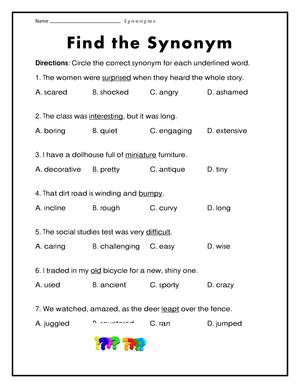
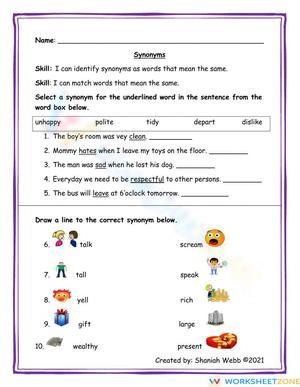
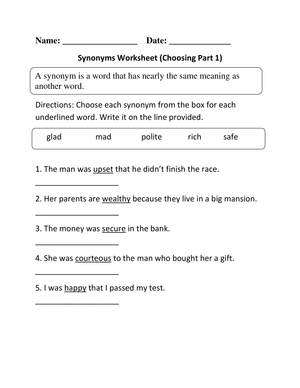
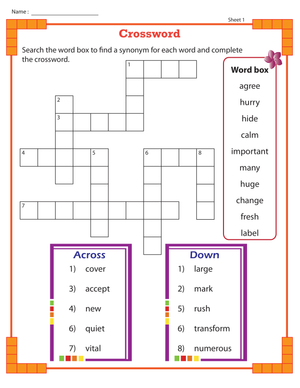
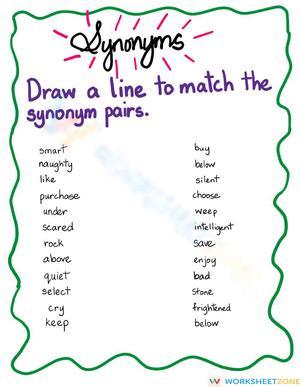
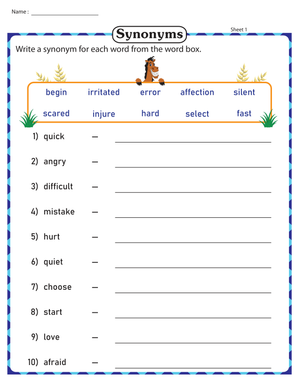
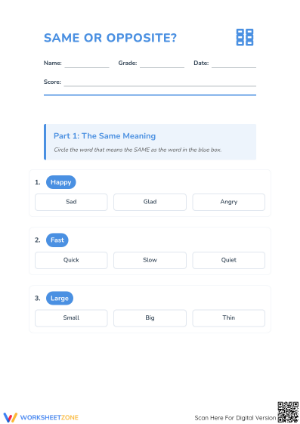
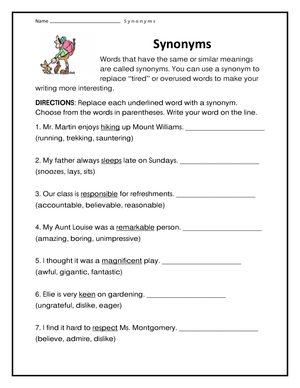
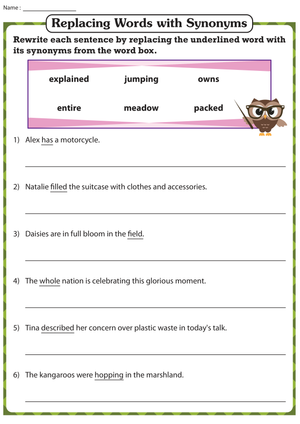
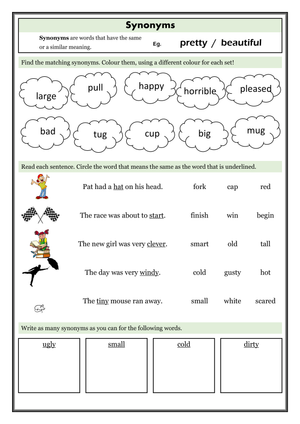
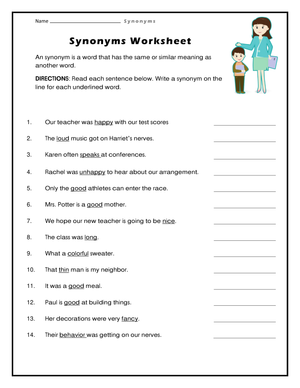
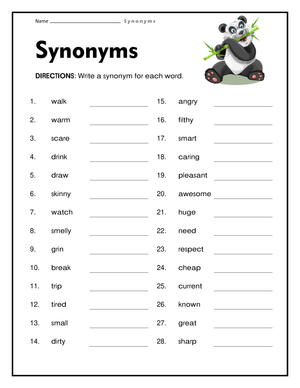
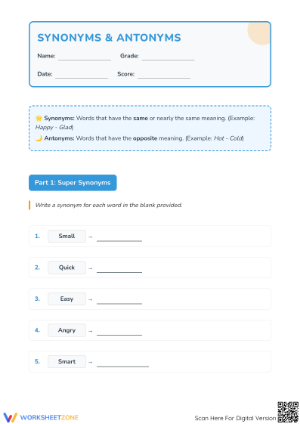
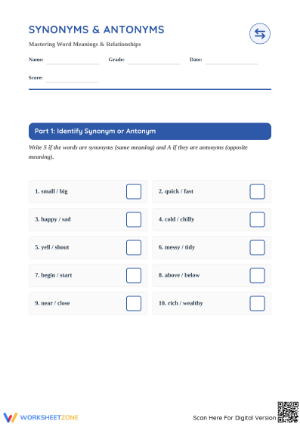
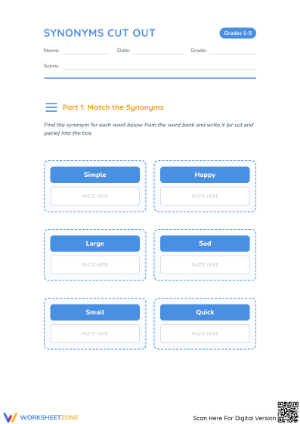
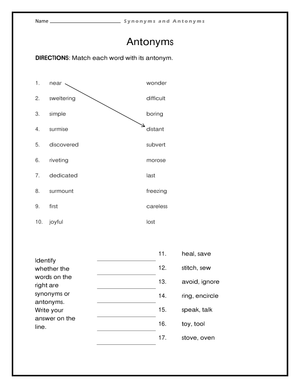
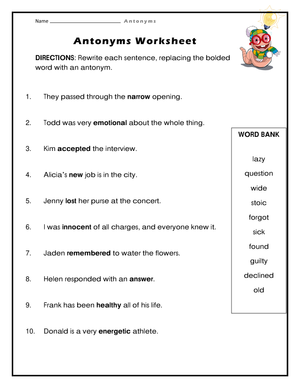
Each worksheet targets a specific layer of word-relationship work rather than blending everything into undifferentiated practice. Some worksheets focus on matching synonyms from a word bank — students draw lines between pairs or write the match beside the target word. Others present a sentence with an underlined word and ask students to select the synonym that preserves the sentence's meaning, which pushes beyond simple memorization into contextual thinking. Antonym work follows a similar range: basic opposites appear first, then paired sentence tasks where students must confirm that the replacement word truly reverses meaning rather than just sounding different.
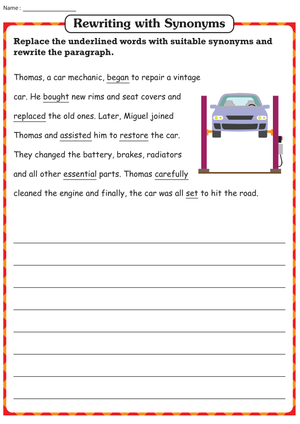
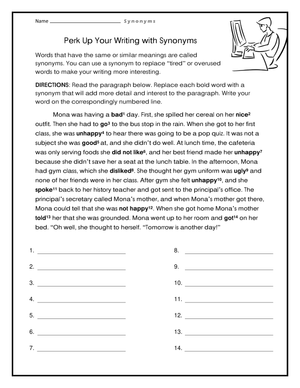
Several worksheets use T-charts and word webs so students see clusters of synonyms around anchor words like said, walked, and happy — the overused words that show up constantly in third-grade narrative writing. The final worksheets in the set ask students to perform a word swap: take a short paragraph, identify two or three flat adjectives, and replace them with synonyms that add specificity. That task is where vocabulary work becomes writing instruction.
Frequent Student Errors Worth Watching For
The most consistent error at this grade level is treating near-synonyms as fully interchangeable. A student who correctly identifies enormous as a synonym for big will still write "She felt enormous sadness" without noticing the word swap broke the sentence. The problem isn't that the student doesn't know the definition — it's that they haven't yet internalized how register and collocation constrain word choice. The sentence-level synonym tasks in this set force exactly that confrontation.
With antonyms, watch for students who confuse degree with opposition. Asked for the antonym of warm, many third graders write cool rather than cold, reasoning that cool moves in the "opposite direction." That's not wrong thinking — it reflects genuine attention to a spectrum — but it needs redirection toward how antonyms function as true reversals. A brief class conversation using the word-web worksheets, where students place synonyms and antonyms on the same organizer, makes the distinction visible. A different error shows up with pairs like courageous/cowardly: students who know both definitions independently will still reverse them under time pressure because both words sound formal and weighty in similar ways.
Getting the Most Out of These Worksheets Each Week
Monday warm-ups work well for the matching and basic identification worksheets — they run six to eight minutes and reactivate word pairs from the previous week before morning meeting wraps up. The sentence-completion worksheets belong later, once students have spent a day with the core vocabulary. Treat those as either a brief independent task after a read-aloud or as a partner check-in during literacy centers.
The word-swap worksheet earns its place during writing workshop. After students finish a first draft, hand out the synonym word-web worksheet for whatever anchor word they've overused — said, nice, big — and ask them to return to their draft and make three replacements before conferencing. Students who resist standalone vocabulary work often engage far more readily when the task connects directly to their own sentences. The T-chart worksheets work well projected for whole-group modeling before students complete their own copies independently — that gradual release keeps the cognitive load manageable the first time through a new format.
Standard Alignment
CCSS.ELA-LITERACY.L.3.5 anchors this set. That standard asks students to demonstrate understanding of word relationships and nuances in word meanings. Substandard L.3.5.C specifically targets shades of meaning among related words — distinguishing between hot, warm, and scalding, or between happy, pleased, and overjoyed. Third grade is the placement for L.3.5.C because students at this age have enough reading vocabulary to work with multiple near-synonyms at once, but still need explicit instruction to notice those words don't behave identically in a sentence. The degree-of-meaning worksheets in this set directly address that gap rather than stopping at simple pair recognition.
Adjusting the Worksheets for a Range of Learners
Students who are still building foundational vocabulary do best starting with the matching worksheets, where word pairs are provided and the task is recognition rather than generation. One effective move: have those students cut apart a printed copy of the matching worksheet and physically sort the word cards into synonym and antonym piles before writing anything. It lowers the entry barrier without changing the skill target.
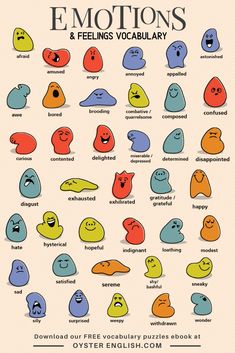
For students who are ahead, the more productive challenge isn't harder word pairs — it's more constrained sentence work. Give them a sentence where two or three synonyms would technically fit, then ask them to write one sentence explaining why their chosen word is stronger than the alternatives. The word-web worksheets can also be extended by asking students to rank synonyms from least intense to most intense, which previews the vocabulary work they'll encounter in grades four and five. Students learning English as an additional language benefit most from the visual organizers in this set; pairing the word-web worksheet with illustrated vocabulary cards keeps meaning accessible while they work through the relationship tasks.
Frequently Asked Questions
Do these worksheets work for both whole-class instruction and independent practice?
Yes. The matching and T-chart worksheets are easy to project and complete together, making them natural for whole-group modeling. The sentence-completion and word-swap worksheets work better as independent tasks after students have had guided exposure to the word pairs, since those formats require judgment calls that benefit from prior discussion.
What vocabulary is covered — high-frequency words or academic vocabulary?
Both. Earlier worksheets use high-frequency pairs students likely know in context — fast/quick, happy/joyful, start/finish — so early tasks build confidence through familiarity. Later worksheets shift toward academic vocabulary: pairs like ancient/modern, courageous/cowardly, and permanent/temporary. Those words appear regularly in third-grade informational texts and social studies reading, so the practice transfers well beyond ELA class.
How long does each worksheet take to complete?
Most worksheets in this collection of 3rd grade antonyms and synonyms printable worksheets take between five and fifteen minutes depending on format. Matching tasks are on the shorter end; word-swap and sentence-revision tasks run longer because students apply choices to full sentences rather than isolated items. Most teachers work through one worksheet per day during a targeted vocabulary unit or space them across several weeks as recurring practice.
Can these be used with students who are working below grade level?
The matching and word-bank worksheets are accessible to students working below grade level when the word pairs are pre-taught in context — using them in spoken sentences before students attempt the written tasks. Avoid cold-assigning the sentence-completion worksheets to students still building basic word knowledge; those tasks land better once the vocabulary is at least partially familiar. For a mixed-readiness small group, start everyone on the same matching worksheet, then split: on-level and above-level students move to sentence completion while students still building vocabulary do a second round with a different word-bank worksheet and a partner.












 Interactive Worksheet Maker
 Quiz Maker
 Word Search Maker
 Crossword Puzzle Maker
 Word Scramble Generator
 Sentence Scramble Generator
 Handwriting Worksheet Generator
 Name Tracing Generator
 Fill In The Blank Generator