


























Views
Downloads

Printable Synonyms and Antonyms Worksheet | Grade 4
Paste this activity's link or code into your existing LMS (Google Classroom, Canvas, Teams, Schoology, Moodle, etc.).
Students can open and work on the activity right away, with no student login required.
You'll still be able to track student progress and results from your teacher account.
This vocabulary resource helps fourth-grade students master word relationships by identifying synonyms and antonyms for ten holiday-themed words. Students write one similar word and one opposite word for each prompt, expanding their descriptive vocabulary and improving reading comprehension.
At a Glance
- Grade: Grade 4 · Subject: English Language Arts
- Standard:
CCSS.ELA-LITERACY.L.4.5.C— Relate words to their opposites and to words with similar meanings- Skill Focus: Synonyms and antonyms
- Format: 2 pages · 20 problems · Answer key included · PDF
- Best For: Independent vocabulary practice or morning work
- Time: 15–20 minutes
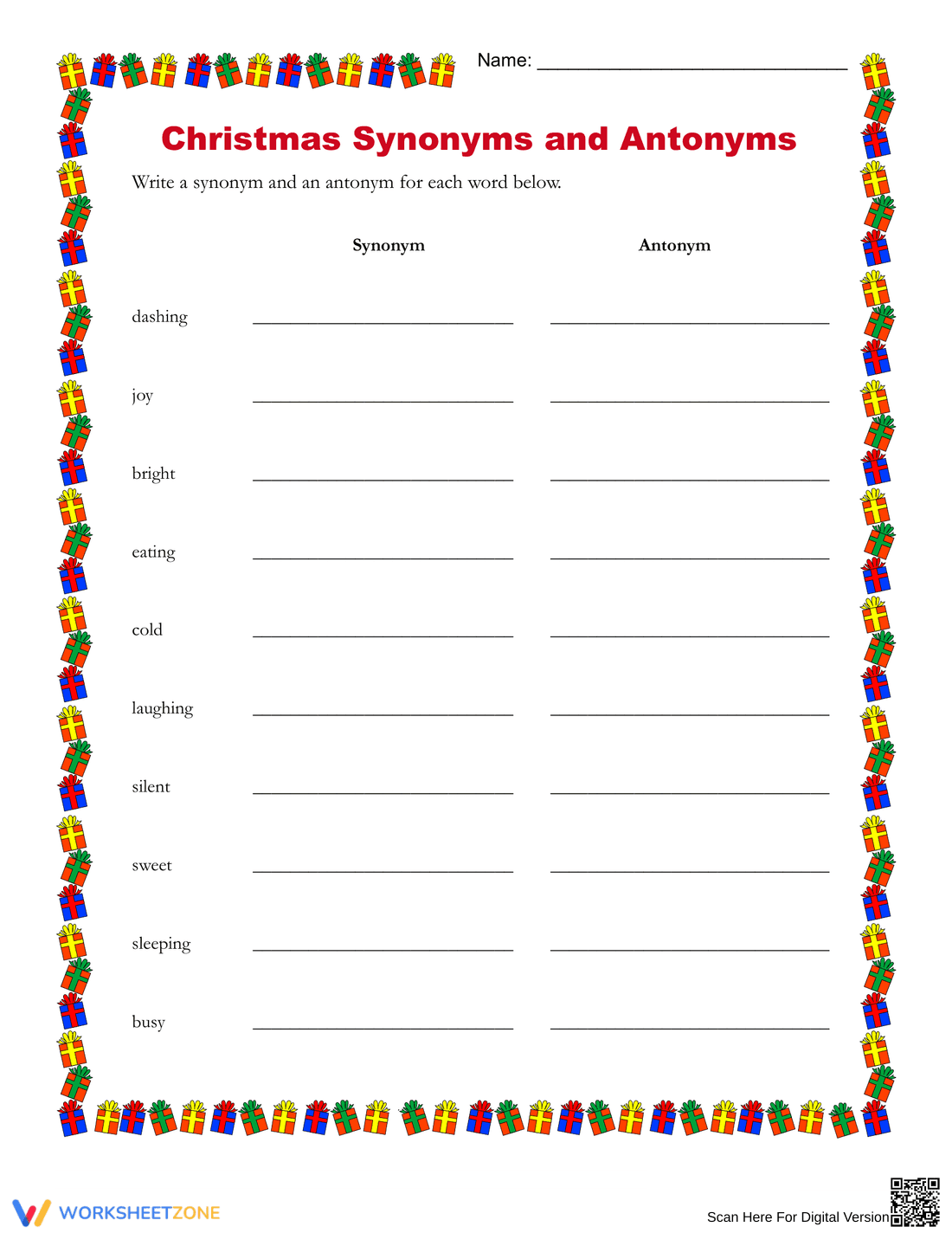
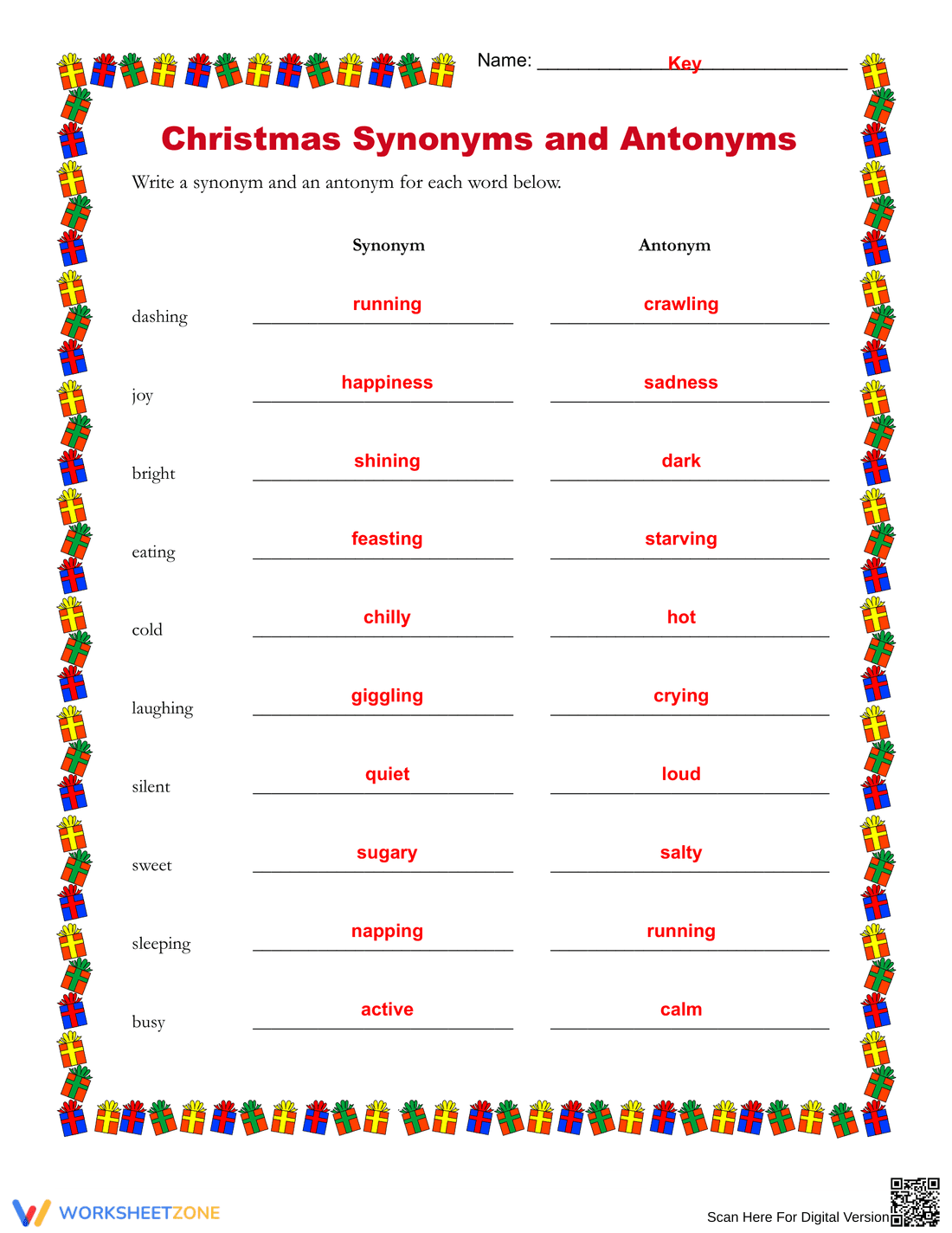
The download includes a clean, two-page PDF. The first page features the student worksheet, decorated with a festive holiday border. It presents ten target words, such as 'dashing' and 'silent,' with blank lines for writing a synonym and an antonym. The second page contains a complete answer key with clear exemplars for quick grading.
Zero-Prep Classroom Workflow
This resource saves valuable teacher preparation time. First, print the single-page student worksheet in under one minute. Second, distribute copies to your class for immediate work. Third, review answers using the provided key in less than one minute. With under two minutes of total prep, this worksheet is ideal for emergency sub plans or morning work.
Standards Alignment
This activity aligns with CCSS.ELA-LITERACY.L.4.5.C, which requires students to demonstrate understanding of words by relating them to their opposites (antonyms) and to words with similar meanings (synonyms). It also supports CCSS.ELA-LITERACY.L.4.6 regarding academic vocabulary. Both standard codes can be copied directly into lesson plans, IEP goals, or district curriculum mapping tools.
How to Use It
Use this worksheet as a quick formative assessment after direct instruction on word relationships. Have students complete the 20 tasks independently during a 15-minute work block. While they work, observe if students struggle more with synonyms or antonyms to guide future instruction. Alternatively, assign it as a festive homework sheet to reinforce vocabulary skills at home.
Who It's For
This resource is tailored for fourth-grade students, but also serves as a review for fifth graders or a challenge for third-grade learners. It is highly beneficial for English Language Learners practicing word associations. Pair this worksheet with a holiday-themed reading passage or a vocabulary anchor chart to provide context and support student learning.
According to research by Fisher & Frey (2014) on vocabulary acquisition, intentional word-association tasks significantly accelerate semantic development in elementary students. This worksheet targets CCSS.ELA-LITERACY.L.4.5.C by requiring learners to generate synonyms and antonyms for ten distinct words, totaling 20 unique responses. By actively contrasting opposites and identifying similar meanings, students build deeper cognitive connections to academic vocabulary. The structured layout provides immediate practice that reinforces word relationships without cognitive overload. Educators can utilize this resource to gather quick formative data on student vocabulary mastery. The inclusion of a complete answer key ensures efficient grading and immediate feedback, which is critical for reinforcing correct word associations. This evidence-based approach helps bridge the gap between basic word recognition and advanced reading comprehension, making it a valuable addition to any fourth-grade language arts curriculum.


