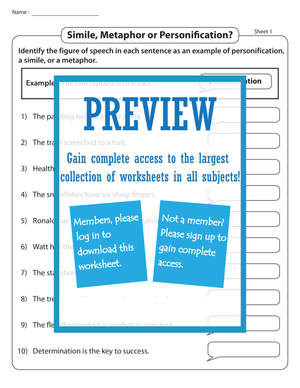
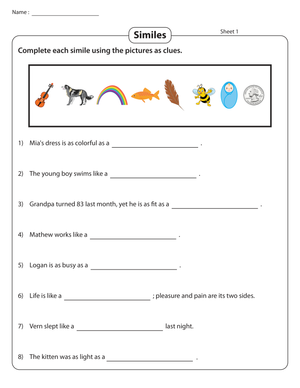
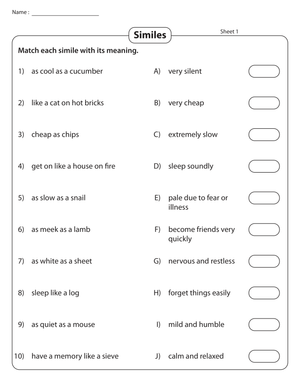
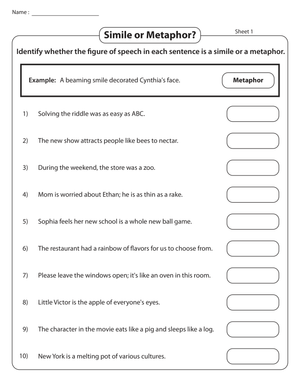
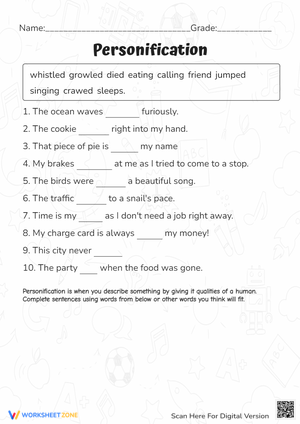
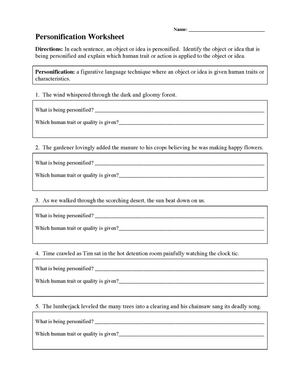
These 2nd grade figurative language printable worksheets cover the four devices second graders are ready to tackle: similes, idioms, onomatopoeia, and alliteration. Each worksheet isolates one type, giving students the chance to build real confidence before the set asks them to work across multiple devices. The format suits students who are just crossing the threshold from mostly literal reading into recognizing that authors choose words for effect.
The Specific Skills Targeted
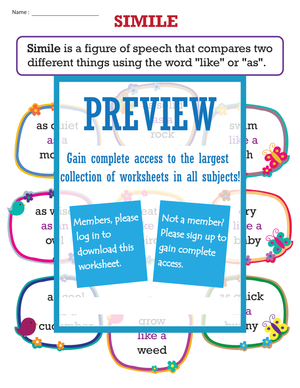
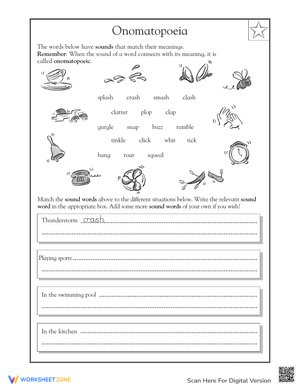
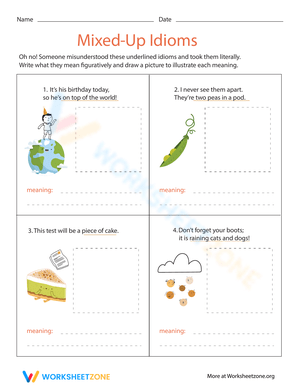
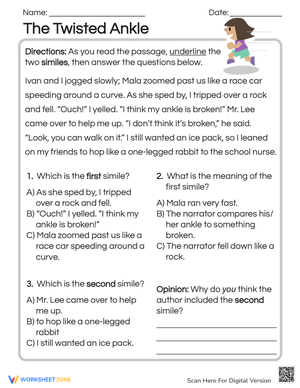
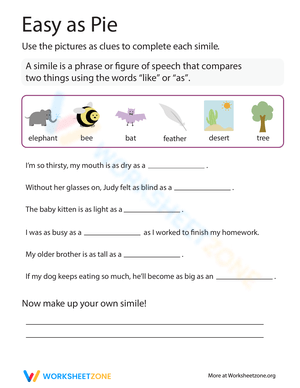
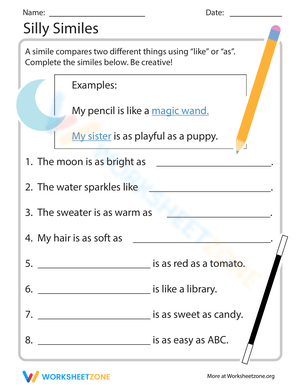
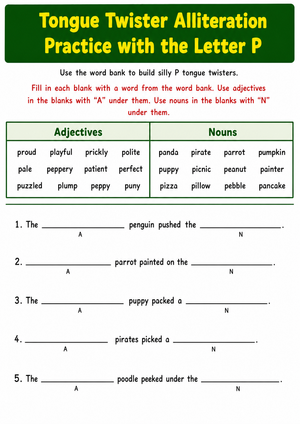
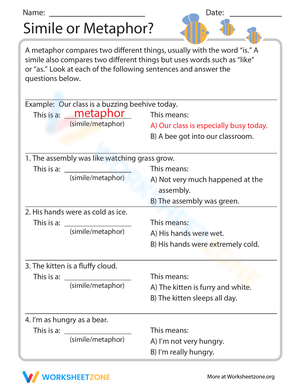
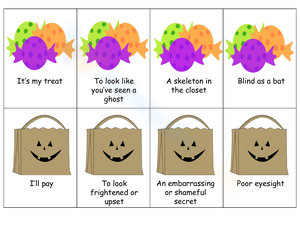
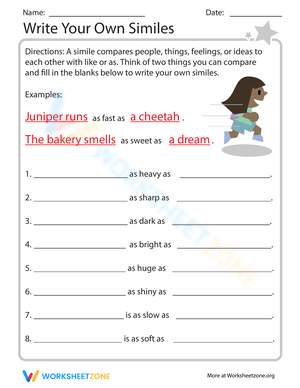
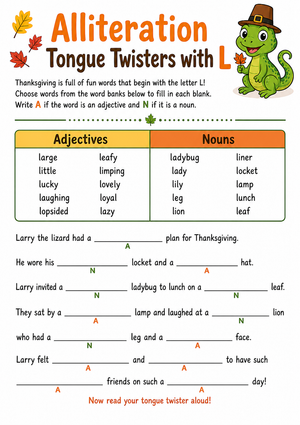
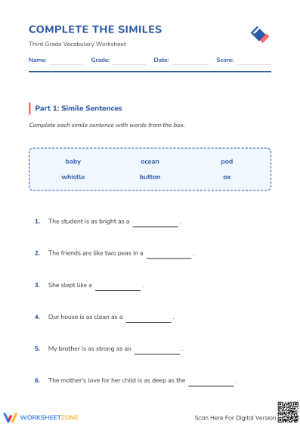
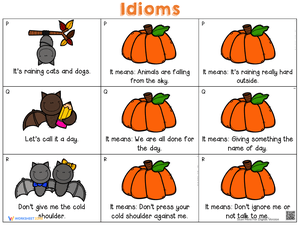
Simile worksheets go beyond circling like or as. Students underline the full comparison, identify the two things being compared, and write a sentence explaining what the simile suggests — that three-part sequence separates recognition from comprehension in a way that simple identification tasks don't. Idiom worksheets pair a common expression with two possible meanings, and students mark the correct one, then sketch what the phrase would look like taken literally. That drawing step matters: the image of someone literally "spilling the beans" next to the real meaning lodges the idiom in memory better than rereading the definition. Onomatopoeia worksheets give students a word bank to sort by sound category — impact sounds, animal sounds, water sounds — and then ask them to place two of those words into a short sentence frame. Alliteration worksheets move from identifying repeating initial sounds in given phrases to producing a three-word alliterative phrase independently, which is where the writing connection becomes concrete.
Errors Worth Watching For Before You Move On
On simile worksheets, the most common error is circling like every time it appears regardless of function. "I like ice cream" gets flagged alongside "quiet like a mouse." Students are pattern-matching instead of reading for meaning. A quick two-minute whole-class comparison at the board — like as a verb of preference versus like as a comparison signal — handles most of this before students work independently.
Idiom worksheets expose a different problem: students who have never heard the expression can only guess. "Hit the sack" produces "when you punch a bag" because there is genuinely nothing in the phrase to decode. This is not a worksheet failure — it is a prompt to sequence instruction differently. Introduce two or three idioms at morning meeting over a few days, talk through their meanings conversationally, and then release the worksheet as reinforcement rather than first contact.
Alliteration exercises trip up students who track any repeated letter anywhere in a word rather than just at the start. "Cat" and "back" both contain a 'c,' so students mark them as alliterative. Asking students to put one finger on the first letter only before reading each word narrows the search and clears this up faster than restating the definition.
Standard Alignment
CCSS.ELA-LITERACY.L.2.5 asks second graders to demonstrate understanding of word relationships and nuances in word meanings. In classroom terms, that means students are learning that authors make deliberate choices — that sizzle does more work than cook, and that "the moon was a cold coin" communicates something a plain description cannot. These 2nd grade figurative language printable worksheets sit in the L.2.5 instructional window most naturally after read-aloud time, when students have just encountered figurative language in context and need a structured activity to consolidate what they noticed.
Where These Worksheets Fit in Your Week
The most reliable placement is the 10 to 12 minutes directly after a read-aloud where the target device appeared. Students carry a live example in their heads — they heard "the wind howled like a wolf" two minutes ago — and the worksheet becomes reinforcement rather than abstraction. That sequence also gives you something to point back to: "Find one like the comparison we just heard in the story."
For small-group work, the 2nd grade figurative language printable worksheets in this set are short enough to complete in one sitting without losing momentum. Pull three or four students who struggled during whole-group instruction and ask them to read each sentence aloud before answering. That oral pause reveals whether students are processing meaning or just pattern-matching — students who scan for like without reading the whole sentence will slow down noticeably when they have to say it out loud first. Individual worksheets also work well as exit checks: eight minutes at the end of a simile lesson, collect and scan for whether explanation responses show genuine comprehension or just word-level guessing.
Adapting These Worksheets for Mixed-Ability Groups
Students who are still solidifying decoding get more out of these 2nd grade figurative language printable worksheets when the reading demand is handled first. Have a partner read sentences aloud, or preview the sentences together before independent work begins. A small reference card at the workspace — one example of each device type — gives students an anchor without giving away answers, keeping the focus on figurative meaning rather than on remembering definitions mid-task.
Students who move quickly can go from identifying examples to generating them. After completing a simile worksheet, ask them to write three similes about classroom objects — the texture of the carpet, the sound of chairs scraping, the weight of a backpack. That production step pushes past recognition into active internalization. For idiom work, challenge fast finishers to find one idiom used at home that week and bring it back to share; it builds awareness that figurative expressions live in everyday speech, not just in reading lessons.
Frequently Asked Questions
Which device should I introduce first?
Similes first. They have a visible signal — like or as — that gives students a concrete hunting strategy, so early success is more predictable. Onomatopoeia is a strong second because students already know most of the words from daily life and enjoy saying them aloud. Save idioms for after students understand that figurative language is an intentional category of word choice; going in with idioms first tends to make the whole concept feel arbitrary and confusing.
Can these worksheets double as formative assessments?
Yes. Hand one out at the end of a lesson and give students eight minutes to work independently. Look specifically at explanation responses — a student who writes "it means the dog runs really fast" on a greyhound simile is demonstrating comprehension, while a student who leaves that line blank or copies the simile back is telling you another lesson is needed before moving on. The worksheets produce a paper record that is easy to sort by readiness level in a quick post-lesson scan.
My students keep mixing up similes and metaphors. How should I handle that?
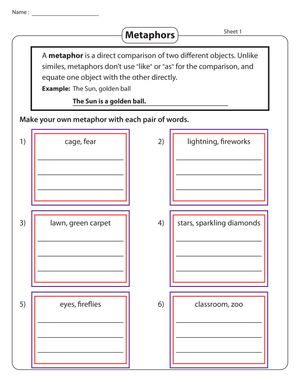
At second grade, metaphors fall outside the standard — the Common Core introduces them formally in third grade. When a metaphor appears in a read-aloud, name it briefly ("that's called a metaphor; we'll study those next year") and move on rather than contrasting the two devices. Trying to teach both at once at this grade level creates confusion that is harder to correct later. Keep the focus on similes until students can identify, explain, and produce them reliably; that foundation makes the third-grade metaphor work substantially easier.