




























Views
Downloads

Personification Printable Worksheet | Grade 2-3 ELA

Paste this activity's link or code into your existing LMS (Google Classroom, Canvas, Teams, Schoology, Moodle, etc.).
Students can open and work on the activity right away, with no student login required.
You'll still be able to track student progress and results from your teacher account.
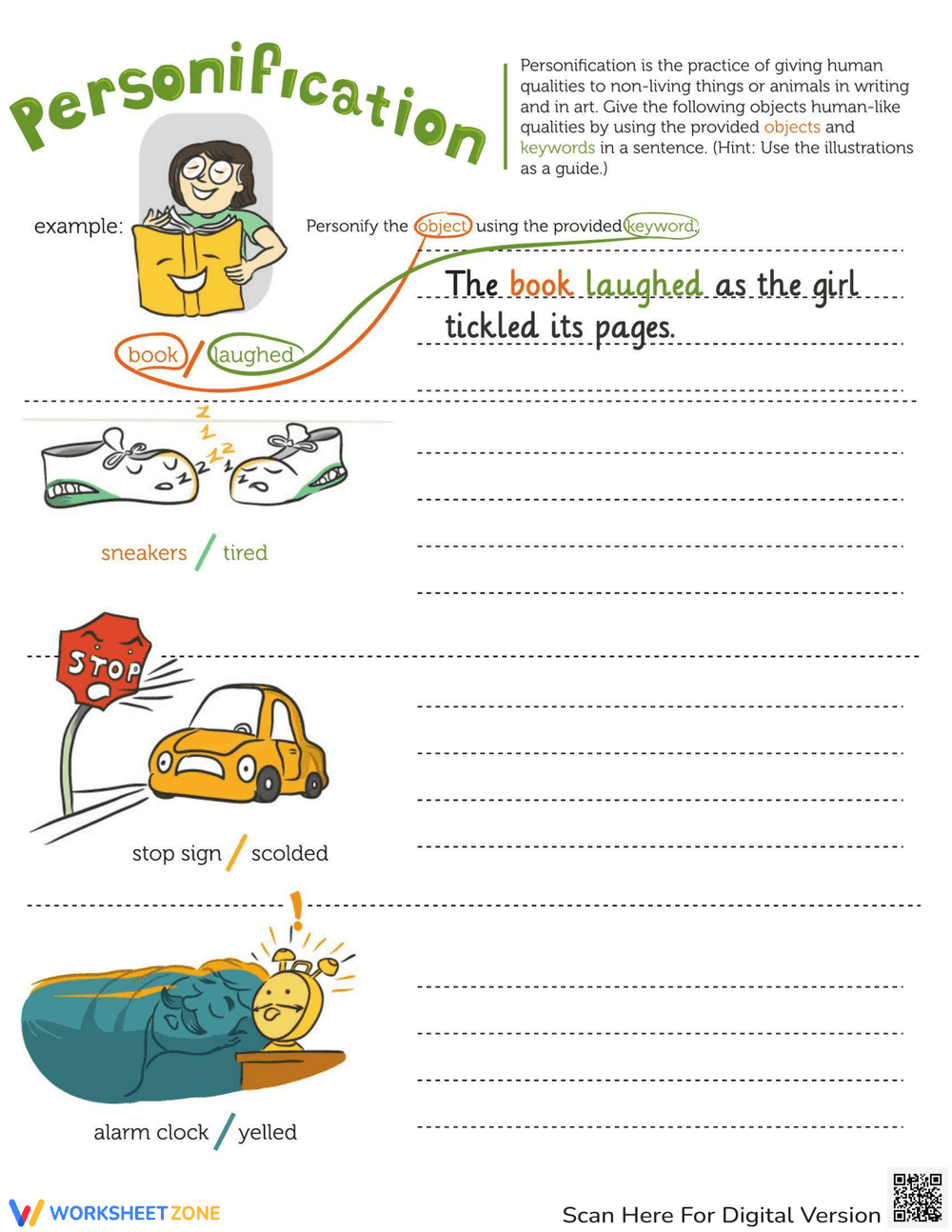
This printable personification worksheet helps elementary students master figurative language by giving human traits to everyday objects. Students practice writing creative sentences using guided prompts, improving their descriptive writing and vocabulary. This resource directly supports narrative development and sentence structure, helping young writers express abstract concepts clearly.
At a Glance
- Grade: Grade 2 · Grade 3
- Subject: English Language Arts
- Standard:
CCSS.ELA-LITERACY.L.2.4.A— Use sentence-level context to determine word meaning and apply figurative language- Skill Focus: Personification and descriptive writing
- Format: 2 pages · 9 problems · Answer key not included · PDF
- Best For: Independent writing practice and ELA centers
- Time: 15–20 minutes
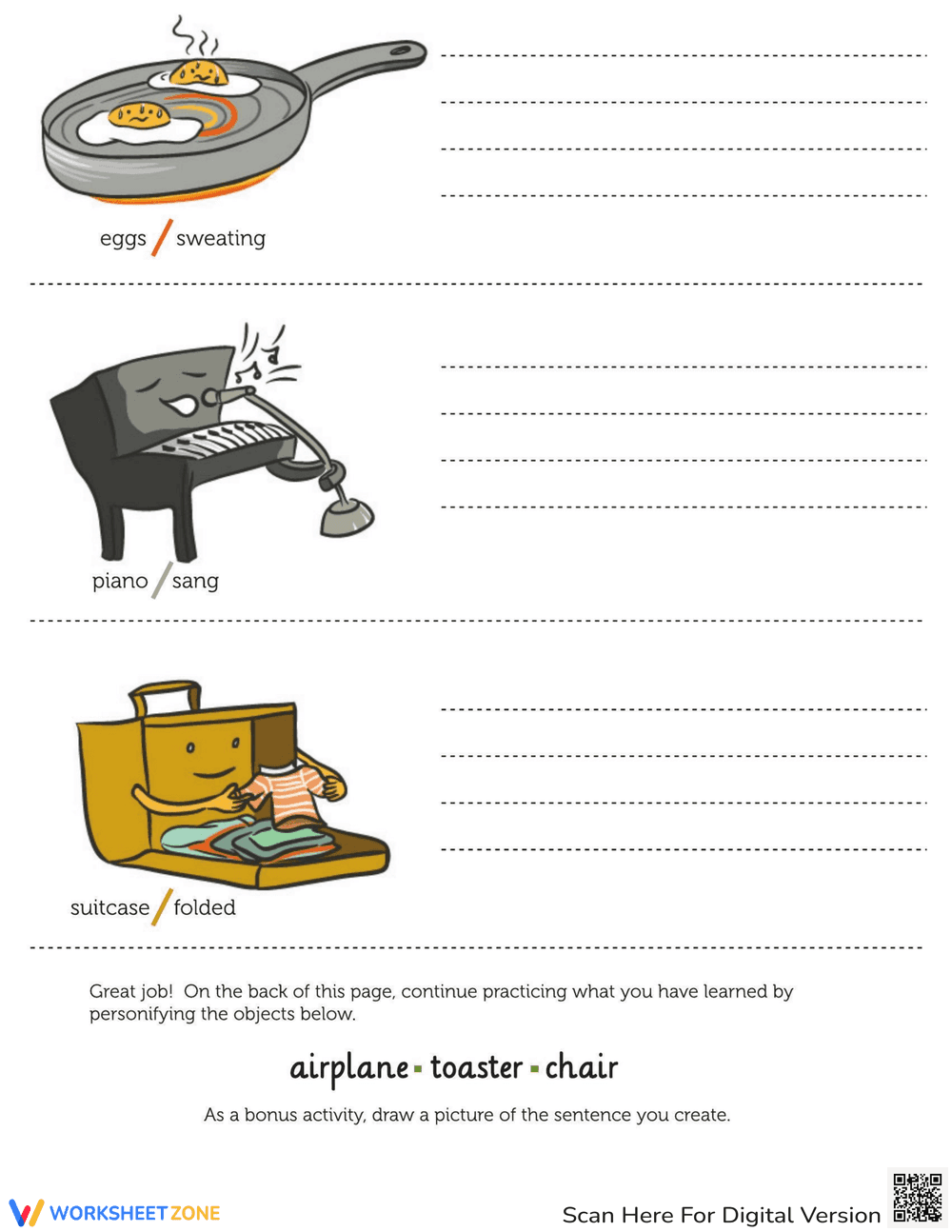
This two-page PDF contains six structured sentence-writing prompts featuring clear illustrations of objects like tired sneakers, a scolding stop sign, and a sweating egg. Each prompt provides a specific noun and verb pairing to scaffold the writing process. Additionally, the second page includes three bonus words—airplane, toaster, and chair—for open-ended extension practice on the back of the sheet.
Teachers can integrate this resource into their daily routine with a simple three-step workflow. First, print the double-sided worksheet in under one minute. Second, distribute the sheets to students and spend one minute explaining the illustrated example. Finally, review student responses during a five-minute peer-sharing session. The entire setup requires less than two minutes of teacher preparation, making it an excellent choice for emergency substitute plans or morning work.
Standards Alignment
This activity aligns with the Common Core State Standard CCSS.ELA-LITERACY.L.2.4.A, which focuses on using sentence-level context as a clue to the meaning of a word or phrase. It also supports third-grade standards for distinguishing literal from nonliteral language. Both standard codes can be copied directly into lesson plans, IEP goals, or district curriculum mapping tools.
How to Use It
Use this worksheet during the independent practice portion of a lesson on figurative language. After direct instruction, have students complete the first page individually to demonstrate their understanding. For formative assessment, walk around the room and observe if students are correctly combining the noun and verb to create a logical human action. The expected completion time is 15 to 20 minutes.
Who It's For
This resource is designed for second and third-grade students learning to enhance their narrative writing. It offers visual scaffolding for struggling writers and English language learners who benefit from the paired illustrations. Pair this worksheet with a mentor text containing rich figurative language, or use it alongside an anchor chart displaying common examples of personification.
This ELA resource targets the standard CCSS.ELA-LITERACY.L.2.4.A, helping students apply figurative language and use sentence-level context to construct meaning. According to research from Fisher & Frey (2014) on the gradual release of responsibility, structured writing scaffolds—such as the noun-verb pairings and visual cues provided here—are critical for helping young learners transition from guided instruction to independent application of complex literary devices. By practicing personification through these 9 targeted tasks, second and third-grade students build the cognitive frameworks necessary for advanced reading comprehension. The worksheet serves as a practical tool for formative assessment, allowing educators to quickly identify students who struggle with nonliteral language concepts. This evidence-based design ensures that students receive the precise level of support needed to master figurative writing.


