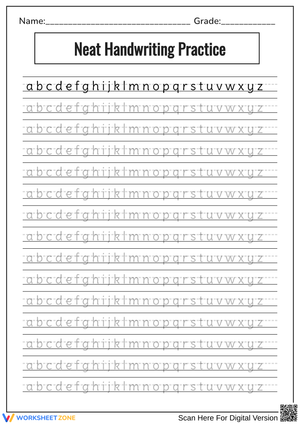
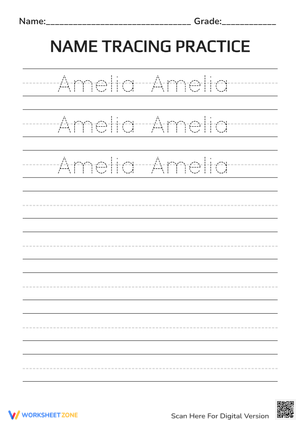
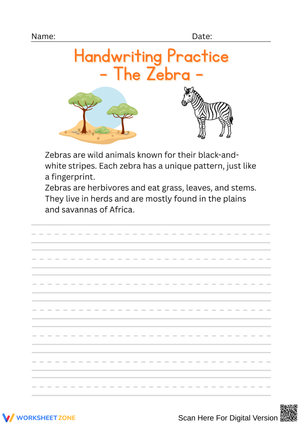
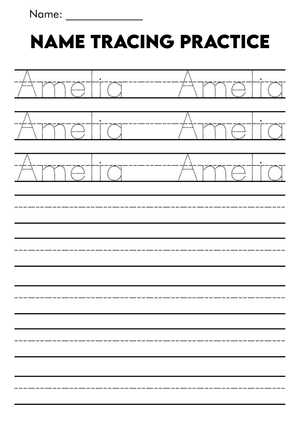
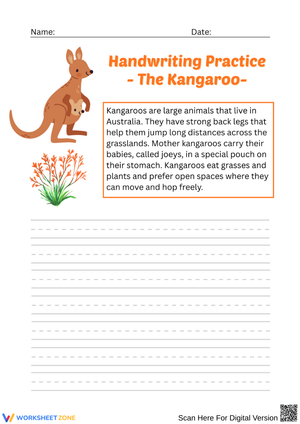
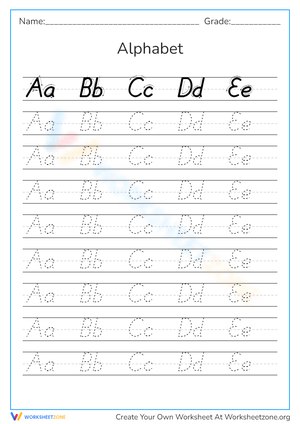
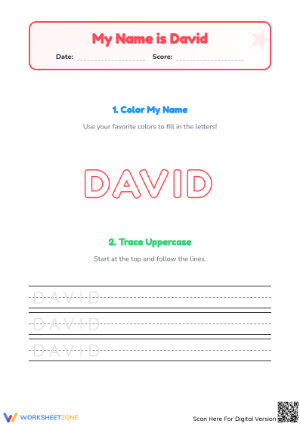
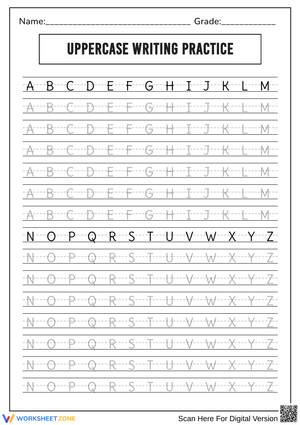
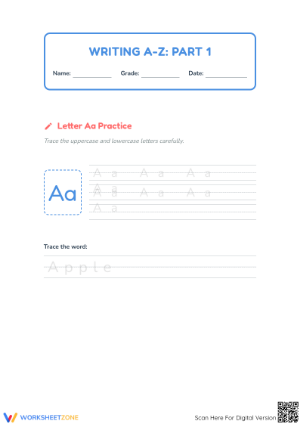
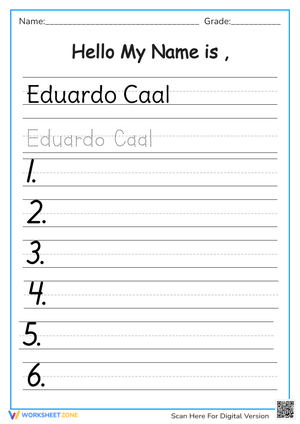
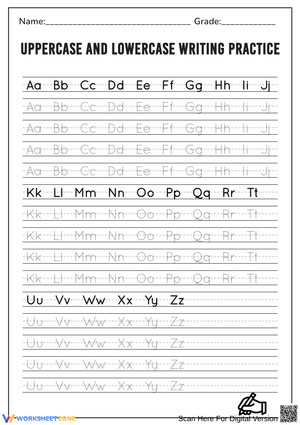
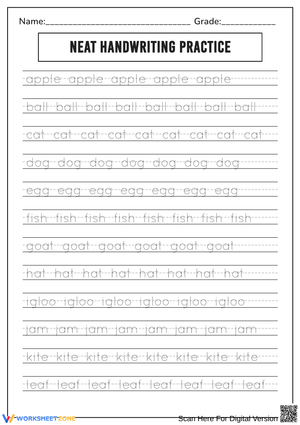
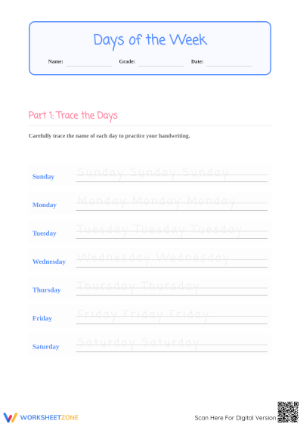
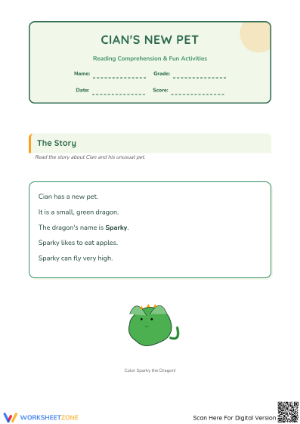
These handwriting for kids printable worksheets for 1st grade give teachers ready-to-use pages that move students from tracing letter models to writing words and short sentences with growing independence. Each worksheet targets a specific formation or writing behavior — baseline control, consistent letter height, spacing between words — rather than assigning "handwriting practice" in the abstract. First grade is the year these habits get built or get reinforced incorrectly, and having structured printables in place makes the difference between productive daily routines and time-filling busywork.
The Specific Skills These Worksheets Target
Each worksheet focuses on one or more of the following areas, structured so students can work independently after a brief teacher model:
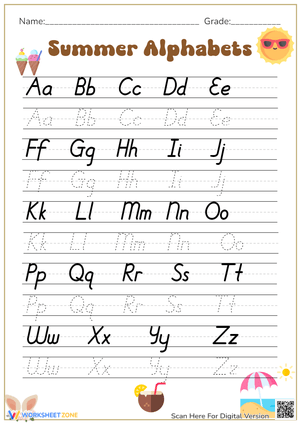
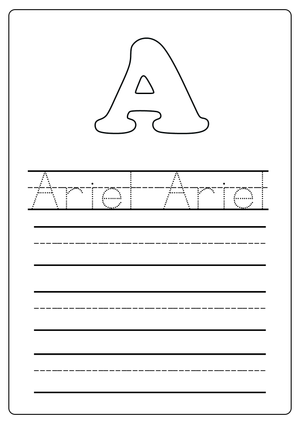
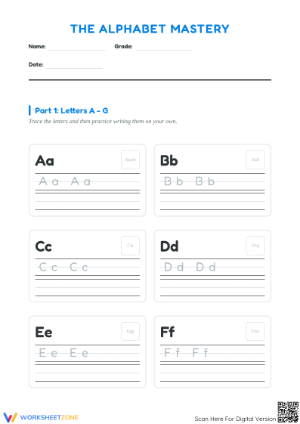
- Letter formation sequences: Students trace directional arrows showing starting points and stroke order, not just the finished shape. Many first graders form recognizable letters through non-standard paths — an "f" drawn bottom to top, an "e" started at the baseline — habits that compound into speed and legibility problems by second grade.
- Baseline and height control: Wide writing lines with a dashed midline help students distinguish tall letters (b, d, h) from short letters (a, e, o) and descenders (g, p, y) from both groups.
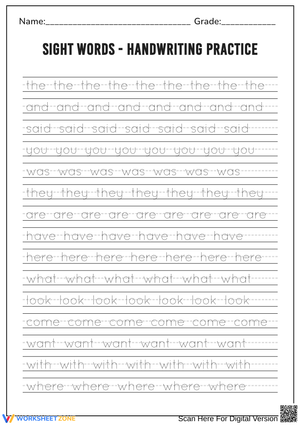
- High-frequency and decodable word practice: Students write words they already recognize from reading, which keeps attention on formation rather than spelling.
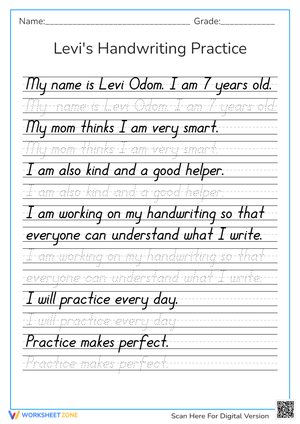
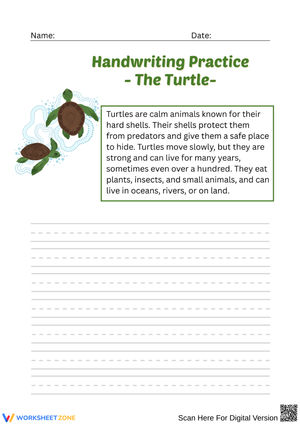
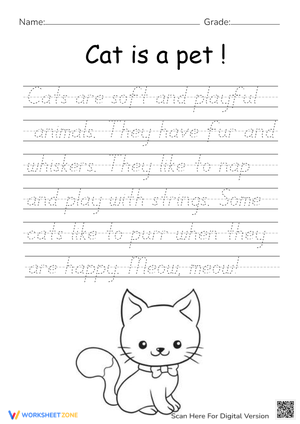
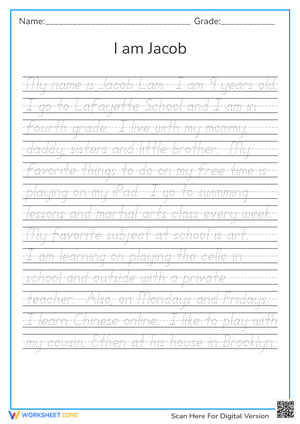
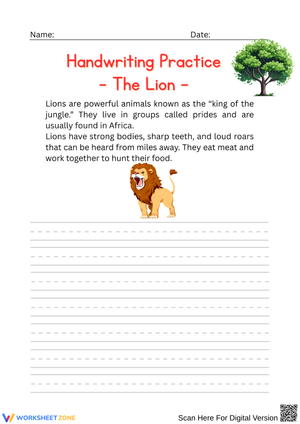
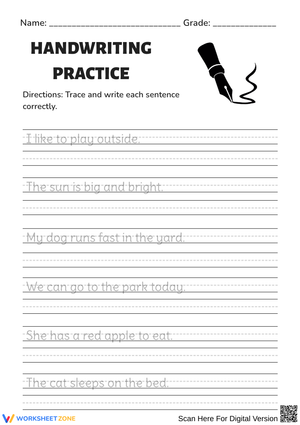
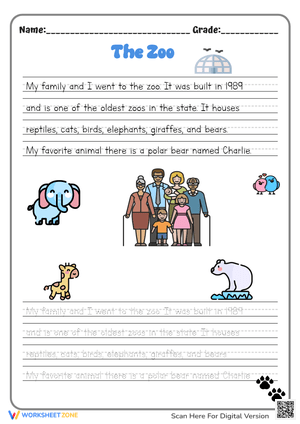
- Sentence-level copying: Short sentences require students to apply capitalization, end punctuation, and word spacing simultaneously — the same demands that surface daily in writing workshop.
The sentence-level worksheets are the ones teachers reach for most often in the second half of first grade, when students have enough letter control to shift attention toward fluency and spacing. A student who writes "Thedog ran fast" without spaces is not confused about what spaces are — she just has not made the habit automatic under the pressure of composition. Copying sentences removes that composition pressure and isolates the spacing habit for deliberate practice.
Frequent Student Errors Worth Catching Early
Letter reversals — especially b/d and p/q — get the most attention, but the errors that persist unnoticed longer are letter-size inconsistencies. Students routinely write a lowercase "l" the same height as an uppercase "L," or compress their "h" to match their "a," and then the line looks crowded without either the student or teacher knowing quite why. Pointing to the midline and naming it — "short letters stop here, tall letters go all the way up" — is more useful than a general note about neatness.
Floating letters are the second persistent issue. Students who trace correctly but then write from memory often produce letters that hover above the baseline or drop below it. Wide-lined worksheets with a clearly marked baseline address this directly, but the approach works best when teachers add a post-writing step: students underline their baseline letters with a colored pencil before submitting the worksheet. That 30-second self-check catches floaters the student missed while writing.
Spacing errors divide into two types. Students who jam letters together usually need a physical spacer — a craft stick laid between words, or a consistent finger-space routine. Students who leave enormous gaps between words are treating each word as a separate event rather than a unit within a line. Consistent sentence-copying practice trains the eye to read the sentence as one continuous unit, and the gaps close over time.
Why Frequent, Short Practice Outperforms Long Drill Blocks
First-grade fine-motor effort is genuinely tiring. Letter formation deteriorates noticeably in the bottom half of a long worksheet for many students — the handwriting that looked careful in row one looks hurried in row five. A 10-minute daily routine produces steadier results than a 30-minute block twice a week, both because students maintain accuracy longer and because spaced repetition builds motor memory more effectively than massed practice. Handwriting is a motor skill, and motor skills respond to frequent short sessions, not long infrequent ones.
These worksheets are sized for that reality. A typical first grader completes one worksheet in 8–12 minutes when working carefully. A student who finishes in five minutes finished too fast — that is feedback, not a success to celebrate.
Fitting These Worksheets Into Your Daily Lesson Plans
The most consistent results come from a fixed slot that students recognize as routine. The 10 minutes before morning meeting — when students arrive, unpack, and need an independent task they can begin without directions — is the setting where teachers see the strongest return. One worksheet placed on the desk at arrival sets the tone and gives the teacher time to handle attendance, morning logistics, and a quick one-on-one check-in before the day formally begins.
Literacy centers are a reliable second setting. A handwriting station — worksheet, pencil, and an alphabet strip or word wall card for reference — runs independently with minimal oversight. Students who finish early add one original sentence using the words from the page. That transfer step takes 90 seconds and shows whether formation practice is carrying into real writing, without requiring a separate assessment task.
For small-group intervention, handwriting for kids printable worksheets for 1st grade work best when the teacher sits alongside students and narrates what she observes in real time: "Your 'b' has a strong tall stick — now watch where the bump starts." That kind of specific, immediate commentary turns a worksheet into an active teaching moment rather than a quiet compliance activity.
Standard Alignment
These worksheets support CCSS.ELA-Literacy.L.1.1a, which requires first graders to print all upper- and lowercase letters. That standard reads as a single sentence in the document, but in classroom terms it means every letter, in both cases, formed legibly and consistently. Many state standards add explicit handwriting benchmarks around baseline use, spacing, and letter sizing — all of which this set addresses through its progression from letter tracing to word practice to sentence copying. Consistent practice produces a running record of formation growth that is useful at parent conferences and during small-group planning cycles.
Adjusting These Worksheets for a Range of First-Grade Writers
First-grade classrooms routinely hold three to four years of fine-motor development spread across 20-plus students. Using handwriting for kids printable worksheets for 1st grade across that range means adjusting volume and structure, not swapping out the materials entirely.
For students still building basic motor control, assign one row rather than a full page. A sticky note covering the remaining rows accomplishes this without cutting or reprinting anything. The formation target stays the same; only the volume changes. Students who freeze when they see a full worksheet often work steadily when the task is visually reduced to a single row.
Students with solid letter formation are ready for the sentence-copying worksheets and a one-step extension: after copying the sentence, they change one word and write the new version below. That shift from copying to composing stays within the handwriting context, keeping the session focused without abandoning the formation goal.
Left-handed writers need paper angled slightly counterclockwise and a wrist position below the writing line — not hooked above it — to prevent smearing and hand tension. These are hand-and-paper adjustments, not changes to the worksheet itself, but they affect how comfortable and legible left-handed first graders find the practice.
For students with significant fine-motor delays, have them trace the model word with a finger before picking up the pencil. That tactile rehearsal reduces the initial motor demand and consistently produces better first attempts than going straight to pencil without any preview of the stroke sequence.
Frequently Asked Questions
Do these worksheets cover print or cursive?
These handwriting for kids printable worksheets for 1st grade focus on manuscript print, the standard across most U.S. first-grade classrooms. Cursive instruction, where it still occurs, typically begins in second or third grade. Building clean manuscript habits first — correct stroke order, baseline control, consistent letter sizing — lays the groundwork for a smoother cursive transition when the time comes.
How do I know when a student is ready to move from tracing to writing independently?
Watch what happens when the student copies without the model directly under the pencil. A student who glances at the model, holds the shape in working memory, and produces a recognizable letter is ready for independent rows. A student who still needs to trace stroke by stroke benefits from another round of guided tracing before the model is removed. The worksheets sequence tracing rows first, copying rows second, and independent writing rows last — that order makes the transition point visible in the student's work.
What do I do when students rush through pages to finish quickly?
Set the expectation before pencils touch the paper: "We are not racing. We are making our neatest letters." Then assign a specific self-check — students circle their best letter on each line before moving to the next row. That pause breaks the race-to-finish habit without requiring constant teacher monitoring. If rushing persists, assign two rows with a clear quality expectation rather than a full worksheet, and increase the amount only as the habit stabilizes.
Can parents use these at home to support classroom practice?
Yes — with one practical note. Send home a brief reminder of the formation targets for the week and the self-check routine the class uses, so at-home practice reinforces the same habits rather than introducing a different model. A parent who demonstrates her own cursive "f" while the student is learning manuscript print creates confusion rather than support.












 Interactive Worksheet Maker
 Quiz Maker
 Word Search Maker
 Crossword Puzzle Maker
 Word Scramble Generator
 Sentence Scramble Generator
 Handwriting Worksheet Generator
 Name Tracing Generator
 Fill In The Blank Generator