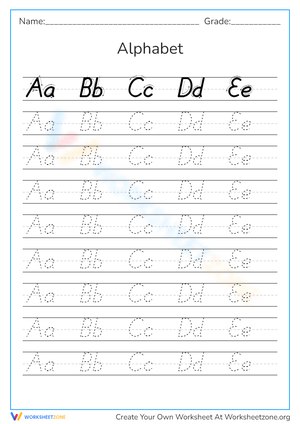
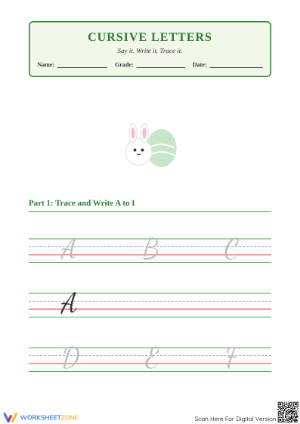
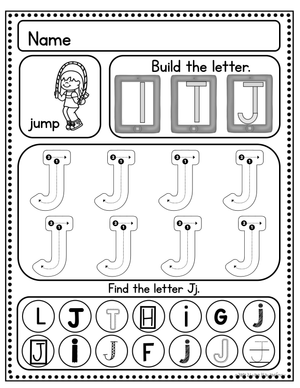
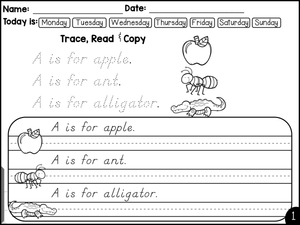
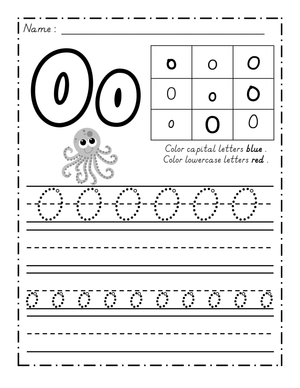
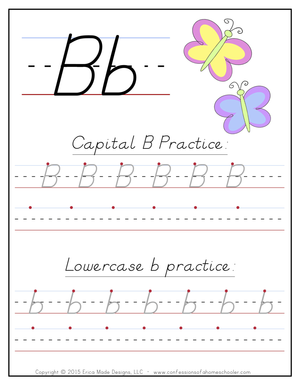
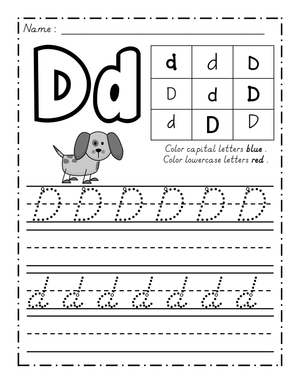
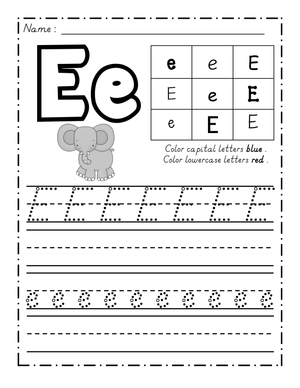
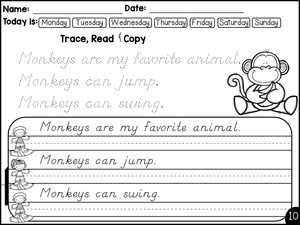
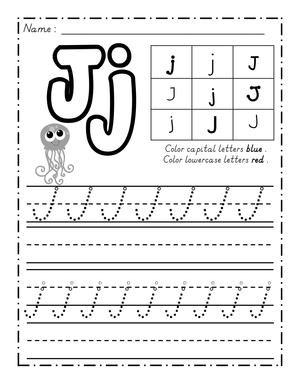
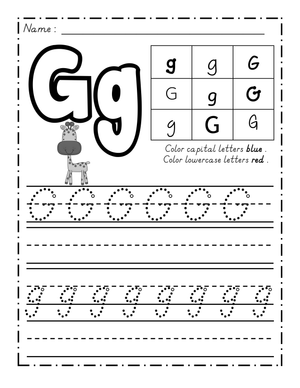
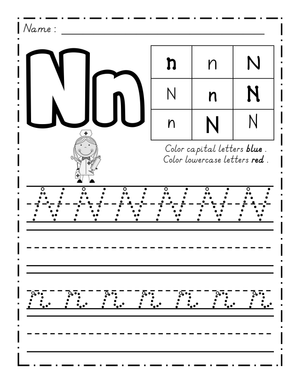
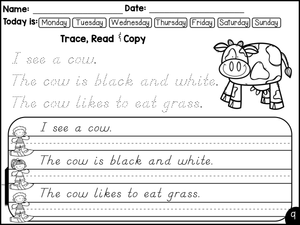
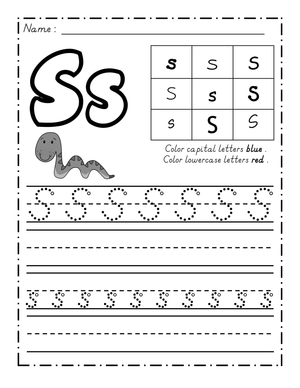
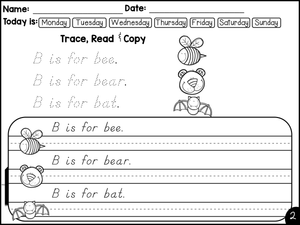
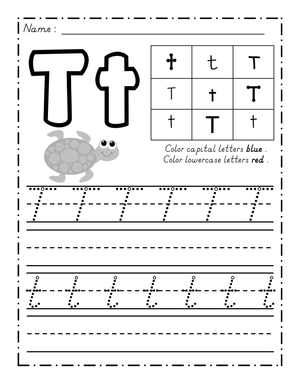
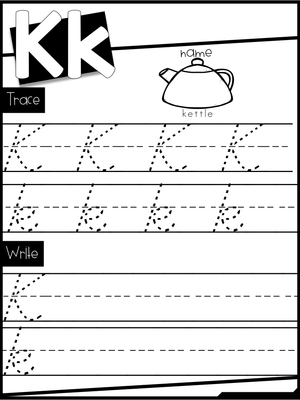
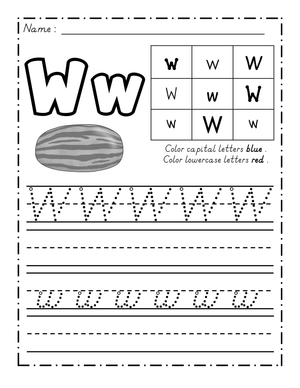
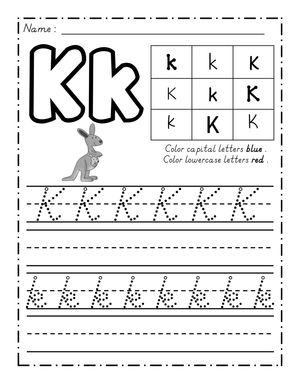
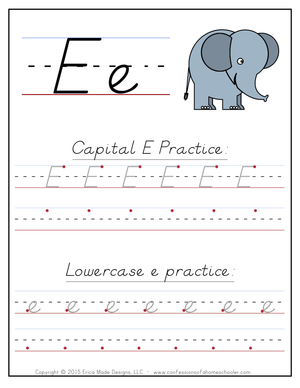
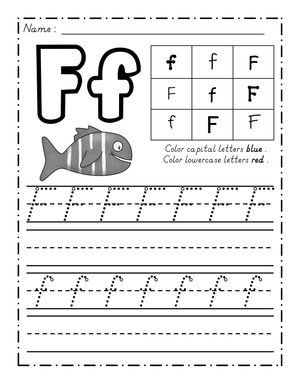
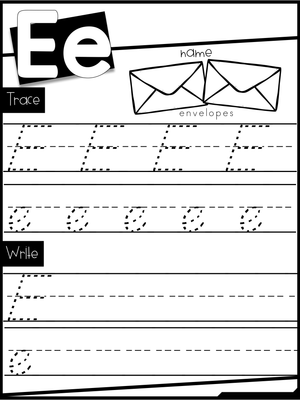
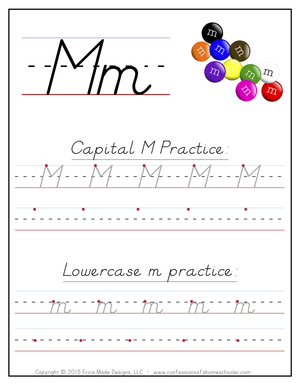
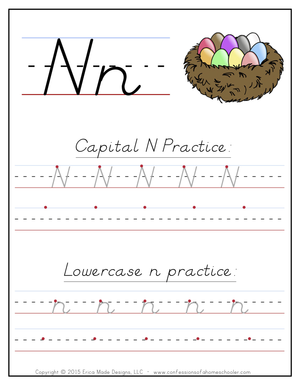
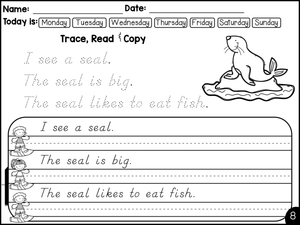
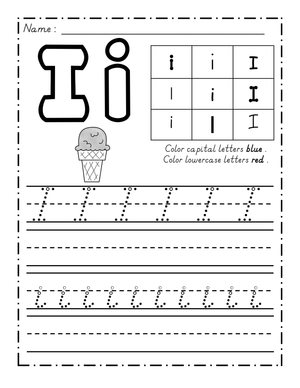
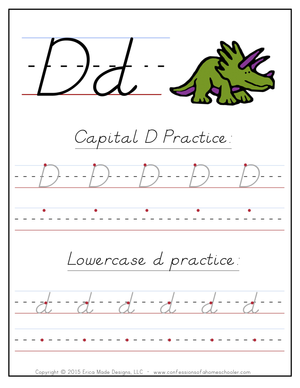
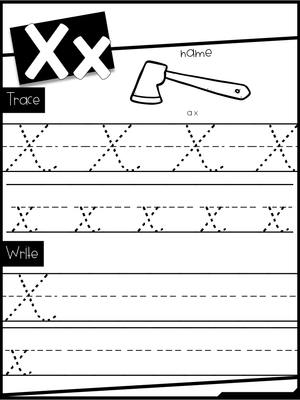
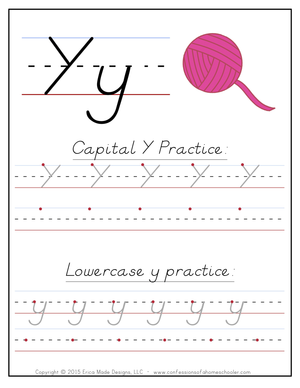
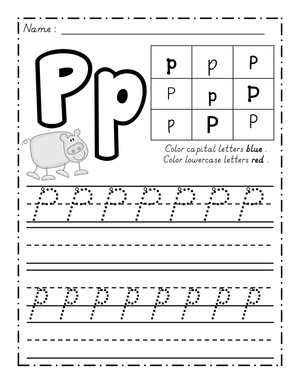
These dnealian handwriting worksheets for 1st grade center on the features that make Thurber's system distinct: the 85-degree slant, the continuous pencil path through most lowercase letters, and the terminal tails — sometimes called monkey tails — that lay the groundwork for cursive joins years before students ever encounter connected script. The set covers individual letter formation, high-frequency word copying, and short sentence work, moving from isolated stroke practice to real writing without a gap between drills and application.
The D'Nealian Design and First-Grade Development
D'Nealian's continuous stroke method directly addresses where 1st graders are physically. Fine motor control is developing, but wrist and forearm endurance for sustained writing sessions is not yet reliable. By keeping the pencil on the paper longer per letter, D'Nealian reduces fatigue and frees working memory for thinking about the letter's shape rather than managing unnecessary pencil lifts — a meaningful cognitive load reduction at an age when students are simultaneously learning to read and compose. The method also encodes directionality into the stroke itself: b and d begin from different starting positions and curve in opposite directions, which lowers the reversal rate in a way that vertical manuscript instruction does not consistently produce.
Skills These Worksheets Build
The dnealian handwriting worksheets for 1st grade in this set move through a deliberate progression — individual letter pairs first, then sight words, then sentences. Every letter worksheet includes starting dots and directional arrows for both uppercase and lowercase. Several worksheets isolate the monkey tail stroke in a dedicated practice row before it appears inside full letter forms, so students build the exit movement before they need it inside a word. Sentence-level worksheets use line guides set at the appropriate letter height for this age, and select pages print a reference line at the 85-degree target angle so students can compare their slant without waiting for teacher feedback.
- Letter formation: Uppercase and lowercase pairs with stroke sequence cues for every letter in the alphabet
- Monkey tail isolation: Terminal stroke practice rows introduced before full-letter work begins
- Sight word copying: Trace and independent write rows using D'Nealian letterforms throughout
- Sentence copywork: Short sentences with consistent line spacing and built-in slant reference guides
What First Graders Get Wrong and Why It Matters
The most consistent error in early D'Nealian practice is a missing or truncated monkey tail. Students focused on the letter body frequently lift their pencil before completing the exit stroke, producing something that looks like Zaner-Bloser print rather than D'Nealian manuscript. The tail is not decorative — it is the functional link to future cursive instruction, and a student who omits it habitually will face retraining before connected script begins.
Slant drift within a single word is the second pattern worth watching closely. Students form the first letter at 85 degrees and slide toward vertical by the third or fourth letter — noticeably in words like little or between, where tall letters reappear midword. Several worksheets address this with a built-in self-monitoring step: students mark the spine of their tall letters (h, l, t) with a yellow highlighter and check whether those lines run parallel. The technique delivers immediate visual feedback without requiring teacher marks on every page. Starting point errors — beginning an a from the bottom of the oval rather than the top — are worth catching before the compensating extra stroke becomes ingrained, since that inefficiency compounds across a full sentence and eventually disrupts both letter width and slant consistency.
Fitting These Worksheets Into the Instructional Day
The dnealian handwriting worksheets for 1st grade set works best in the first eight to ten minutes of the morning literacy block, before reading instruction begins. Students are seated, transitions are done, and the focused repetition of handwriting practice settles the room without demanding the active cognitive engagement a new lesson requires. One worksheet — one letter pair or one sight word row — takes about eight minutes and produces measurable improvement in slant consistency and tail completion when done every weekday.
For literacy centers, insert worksheets into dry-erase pockets. Students trace with a whiteboard marker, wipe, and write independently on the same surface — removing the pressure of permanent marks and letting them repeat a letter three or four times per rotation. Reserve paper copies for the gradual release phase, when you want a permanent work sample to assess. Small group time is the right setting for sentence copywork: sitting close to students while they write lets you catch starting point errors and slant drift in real time, before those formation habits solidify over weeks of practice.
Standard Alignment
CCSS.ELA-LITERACY.L.1.1a requires 1st graders to print all upper- and lowercase letters, placing explicit letter formation instruction inside language arts expectations with legibility as a measurable outcome. Every letter worksheet in this set covers both cases with correct starting points and stroke direction, producing work samples that document progress toward that benchmark. State frameworks that go further — California's CCSS-aligned language standards and Texas TEKS ELA Grade 1 standard 1.A, which both name legibility and letter consistency as separate, assessable expectations — are supported by the sentence copywork worksheets, which generate writing samples appropriate for formative documentation across multiple reporting periods.
Tailoring These Worksheets to Different Readiness Levels
Students who arrive with kindergarten D'Nealian experience move through letter formation worksheets quickly. For these writers, shift to sentence copywork and add one metacognitive step: ask them to circle their three best-formed letters on each worksheet and write one word explaining what made those letters succeed. That reflection builds awareness of what correct formation feels like internally — a distinction that matters when students begin writing without a model in front of them.
For students still uncertain about formation in October, the sight word worksheets provide repetition in a meaningful context. A student working on lowercase g or j encounters those letters multiple times across a single word list — more meaningful exposure than a full drill page, with less mechanical feel. Left-handed students need one consistent adjustment: the top-right corner of the worksheet tilts down toward the desk rather than up. A small piece of tape on the desk marking the correct paper corner eliminates the need to re-explain this at every session and keeps left-handers from drifting into a hooked wrist position to compensate.
Frequently Asked Questions
What is the core difference between D'Nealian and Zaner-Bloser for 1st graders?
Zaner-Bloser manuscript uses vertical strokes and separated circles, requiring multiple pencil lifts per letter. D'Nealian builds the slant and the connecting tail directly into the original letter form, so the muscle memory students develop in print transfers to cursive without a second round of formation instruction. Students are not asked to unlearn their manuscript when cursive instruction begins — the angle and exit strokes they practiced in 1st grade are already correct.
Are these worksheets workable for left-handed writers?
Yes. The continuous stroke method in the dnealian handwriting worksheets for 1st grade set suits left-handed writers particularly well, since it reduces the pencil lifts that often cause smudging. The critical adjustment is paper angle: left-handers tilt the top-right corner of the page downward, which mirrors the right-handed position and allows a natural wrist angle when writing toward the body rather than away from it.
How much daily practice time do these worksheets require?
Each worksheet takes eight to twelve minutes for independent work. That range fits a morning warm-up block, a literacy center rotation, or a brief opening to writing workshop. Daily practice at that duration produces visible improvement in slant consistency and tail completion within three to four weeks — making these a realistic daily commitment rather than an occasional addition to the week.
Do the worksheets address number formation alongside letters?
The set focuses on letter formation. Number formation follows different stroke logic and is typically covered through math program materials. Teachers looking for D'Nealian-style number practice should seek math handwriting supplements rather than expecting a language arts worksheet set to carry both areas.












 Interactive Worksheet Maker
 Quiz Maker
 Word Search Maker
 Crossword Puzzle Maker
 Word Scramble Generator
 Sentence Scramble Generator
 Handwriting Worksheet Generator
 Name Tracing Generator
 Fill In The Blank Generator