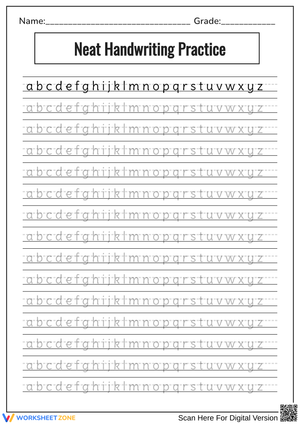
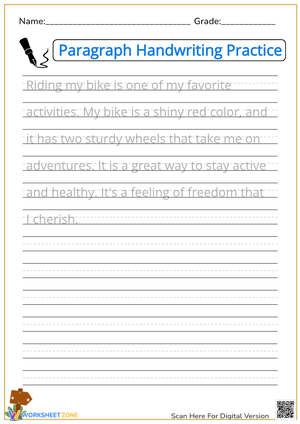
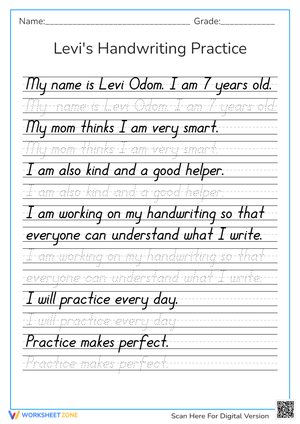
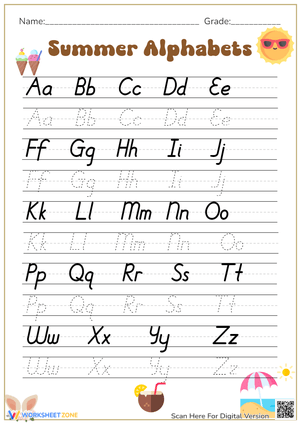
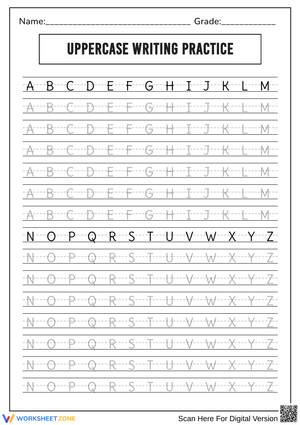
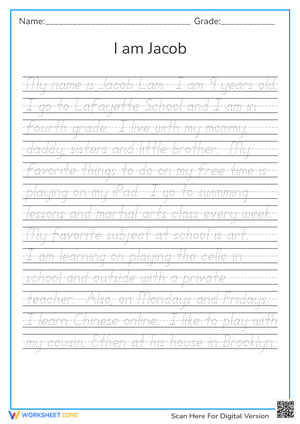
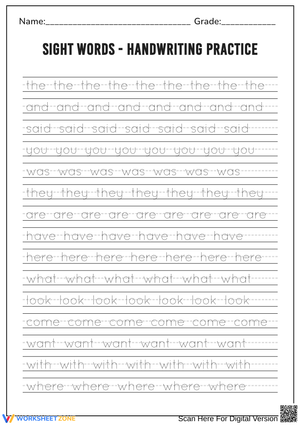
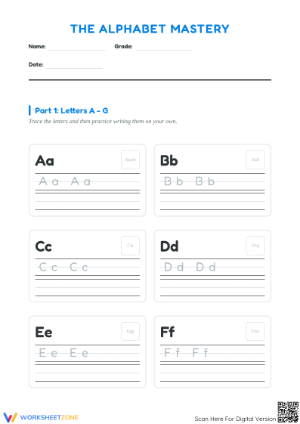
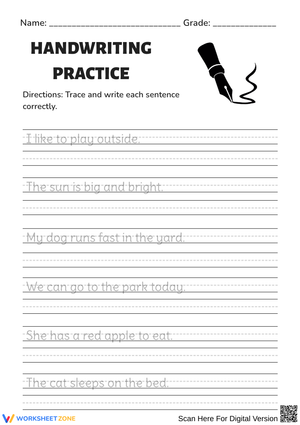
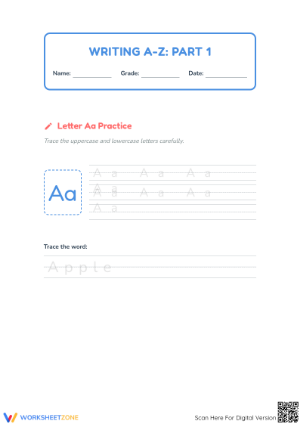
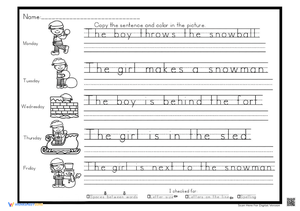
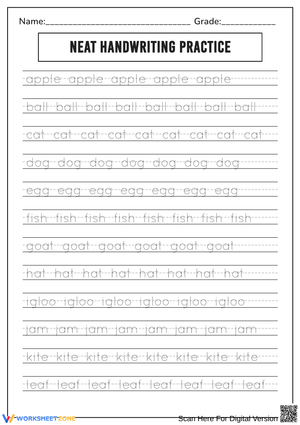
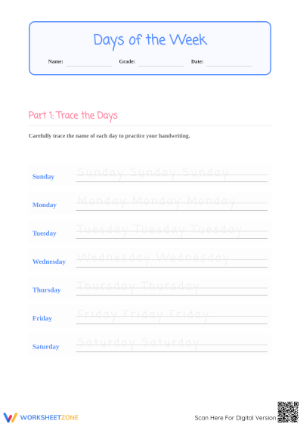
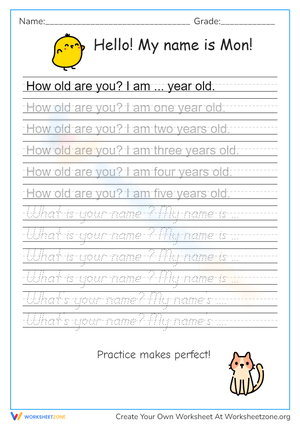
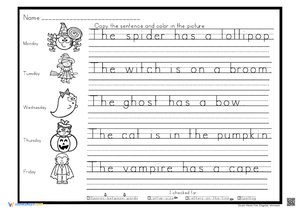
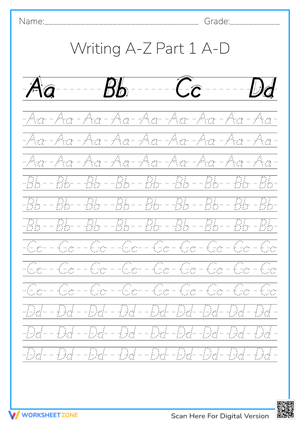
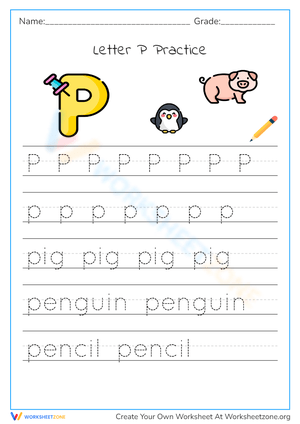
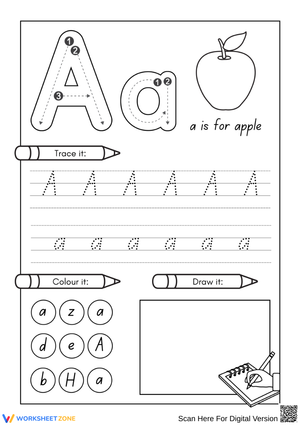
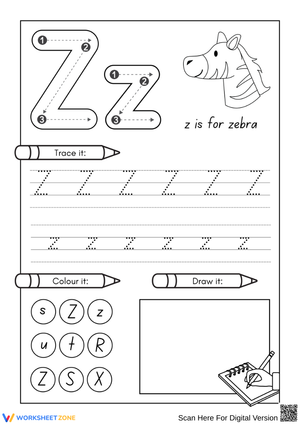
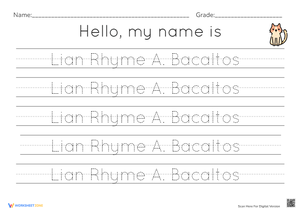
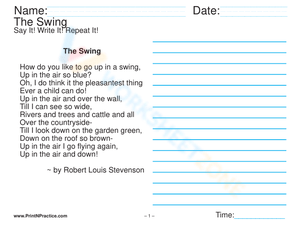
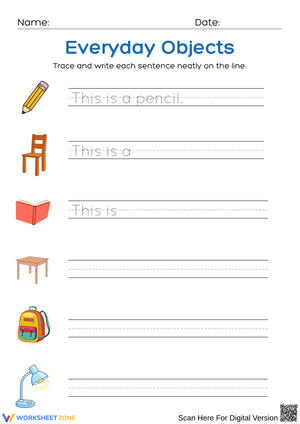
These 1st grade daily handwriting pdf worksheets give teachers a consistent, print-and-go practice structure for the ten to fifteen minutes of daily letter work that moves manuscript writing from a slow, conscious effort to an automatic skill. Each worksheet uses the standard 5/8-inch ruling with a dotted midline — the specific format that makes letter height relationships immediately visible without requiring any verbal explanation from the teacher at the start of every session.
The Specific Skills Each Worksheet Targets
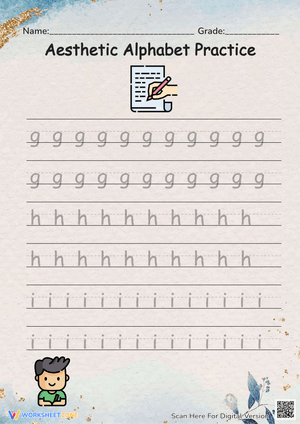
Instruction is organized by stroke families rather than alphabetical order. Letters that share a foundational movement — the down-stroke group (l, i, t, j), the oval group (a, d, g, q, c, o), the hump group (n, m, h) — are practiced together so students transfer stroke technique across letters rather than treating each one as an entirely new task. This approach reduces the number of distinct motor programs students need to build. A student who forms a cleanly tends to form d cleanly once the oval stroke is secure, and that transfer is worth pointing out explicitly to first graders — it shows them the system underneath the alphabet.
Across the set, students practice:
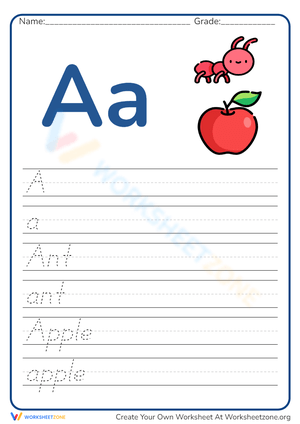
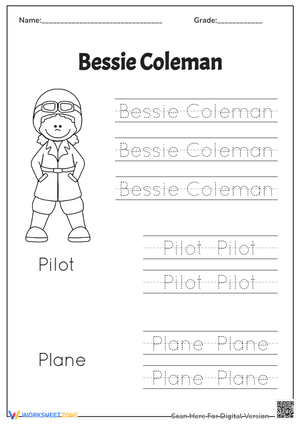
- Tracing letter models with numbered stroke-direction arrows, then writing independently on open lines
- Correct starting points for all 26 lowercase letters and their uppercase counterparts
- Consistent letter height — short letters contained below the midline, tall letters reaching the top rule, descenders dropping below the baseline
- Word spacing using the one-finger-width standard
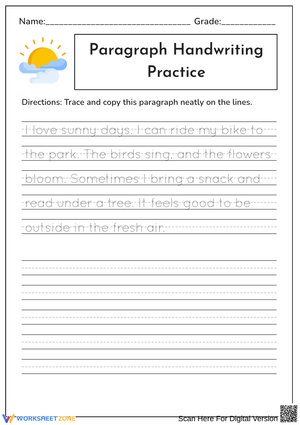
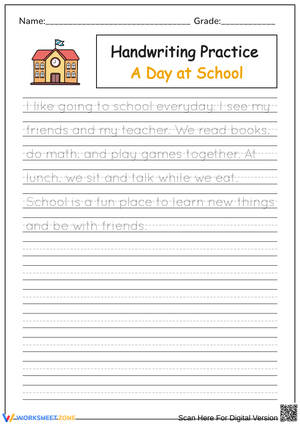
- Sentence copying with opening capitalization and end punctuation
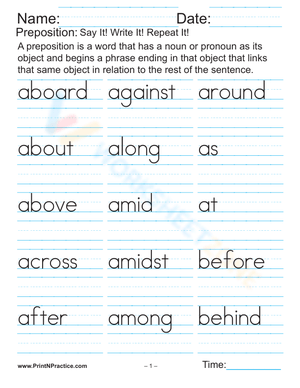
- High-frequency word integration within sentence prompts rather than isolated word lists
How to Build These Worksheets Into Your Lesson Plans
Morning work is the most reliable placement. A handwriting worksheet on each student's desk as they arrive provides a self-directed, low-stakes task during the seven to eight minutes teachers spend on attendance, lunch counts, and morning meeting prep. The format's consistency is the real asset here — students who practice with the same layout every day stop spending cognitive energy figuring out what to do and put that energy toward letter formation instead.
A second placement that works well is a literacy center station. While the teacher runs a guided reading group, students work independently through their handwriting practice. When the day's 1st grade daily handwriting pdf worksheets carry sentence prompts tied to the week's phonics pattern — short-u words, blends, or a current sight word list — the station doubles as phonics reinforcement without requiring any additional teacher preparation. The instructions are simple enough that a parent volunteer or classroom aide can manage the center without training.
Errors First Graders Make That These Worksheets Help You Catch
Starting-point errors are the most consequential and the least visible on a finished page. A student who draws the letter a as a circle and then adds a separate down stroke produces a result that looks acceptable in first grade — but that out-of-sequence habit makes writing slower and messier by third grade, when students are expected to draft full paragraphs under time pressure. The stroke-direction arrows on these worksheets address the sequence directly, but catching this error requires circulating during the tracing rows and watching the pencil move, not evaluating the finished letter.
Two additional patterns appear in nearly every first-grade classroom. The first is size drift: students begin a writing line with correctly proportioned letters and gradually write larger as they move across the page, usually because a loosening grip shifts their control. Marking the dotted midline in yellow highlighter before practice gives students a self-monitoring reference that catches drift without teacher intervention. The second is floating short letters — a, c, and e written above the baseline rather than sitting on it, which signals the student is drawing the shape rather than anchoring it to a line. Explicit baseline tapping ("touch the bottom line first, then start your letter") corrects this in most cases within a week of consistent daily practice.
Standard Alignment
These worksheets address CCSS ELA-Literacy L.1.1a, which requires first graders to print all uppercase and lowercase letters with correct formation. In practical classroom terms, this standard belongs at the front of the year because it is a prerequisite for the independent writing tasks in W.1.2 and W.1.3 — informational and narrative writing — both of which expect students to generate and record their own sentences without teacher transcription. A student who has not automated letter formation cannot allocate working memory to sentence composition; the physical act of writing consumes all available attention. Daily handwriting practice in the first eight to twelve weeks of first grade builds the automaticity that makes later writing instruction productive rather than bottlenecked by basic letter recall.
Adjusting for a Range of Writers
Students who arrive in first grade with limited pre-K writing experience — or who show signs of underdeveloped fine motor control, such as a full-fist pencil grip or difficulty staying on the ruled lines — benefit from fewer independent writing lines per session. Reducing the writing rows from four to two and extending time on the tracing section keeps these students in a productive zone without requiring a separate resource. Placing a foam sheet under the paper adds gentle resistance that improves proprioceptive feedback, helping students feel the pencil contact more clearly. These are adjustments teachers make to the practice conditions, not to the 1st grade daily handwriting pdf worksheets themselves.
For students who arrive already forming letters correctly, the sentence-level worksheets provide the right level of demand. These writers move quickly past single-letter practice and spend their daily ten minutes on sentence copying and dictation. A natural extension is asking them to write a second original sentence after completing the worksheet, or to self-evaluate by comparing their letter heights against the model and circling any letter that doesn't match the proportions shown.
Frequently Asked Questions
How long should first graders practice handwriting each day?
Ten to fifteen minutes, practiced daily, produces better results than a single thirty-minute session once a week. Frequent short sessions build muscle memory through repetition; infrequent long sessions produce hand fatigue and rushed work that reinforces bad habits. The goal is consistent repetition across the school week, not extended effort on any single day.
What is the difference between Zaner-Bloser and D'Nealian manuscript?
Zaner-Bloser uses vertically oriented letters formed with distinct, separate strokes. D'Nealian uses slightly slanted letters with small exit strokes — "tails" — intended to ease the later transition to cursive. Both are well established in first-grade instruction. The most important factor is consistency within a school: choose the style your district uses and apply it uniformly. Mixing letter models mid-year creates genuine confusion about which forms are correct and undermines the automaticity students are working to build.
Can students use these worksheets on a tablet with a stylus?
Yes — the PDF format opens cleanly in most digital annotation apps, and a stylus on a tablet replicates the fine motor demands of pencil on paper reasonably well. That said, the haptic feedback of actual paper and pencil is still meaningfully different, and students who practice exclusively on a smooth glass surface often show less developed pencil control when they return to paper. Digital use works best as a supplement for remote or hybrid situations, not as a full replacement for physical handwriting practice.
What should I do when a student finishes the worksheet quickly?
Fast finishers on 1st grade daily handwriting pdf worksheets usually fall into two camps: students who genuinely formed every letter correctly and worked efficiently, and students who rushed. Train students to self-check by re-reading each line and tapping any letter that doesn't match the model. For students who truly finish with quality work, a standing extension is to flip the worksheet over and write one sentence of their own — same spacing and punctuation standards apply. That small addition turns early finishers into independent writers rather than idle distraction sources.












 Interactive Worksheet Maker
 Quiz Maker
 Word Search Maker
 Crossword Puzzle Maker
 Word Scramble Generator
 Sentence Scramble Generator
 Handwriting Worksheet Generator
 Name Tracing Generator
 Fill In The Blank Generator