Why a First Grader's Own Name Is the Best Place to Start
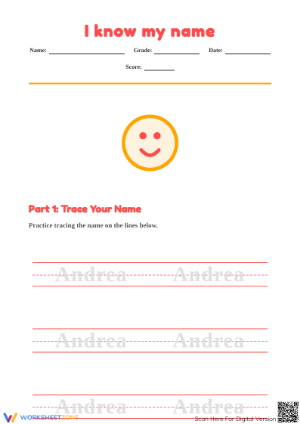
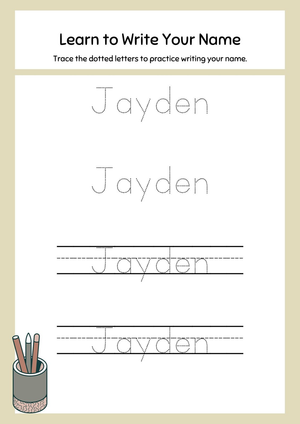
When you hand a six-year-old a worksheet covered in the alphabet, the letters can feel abstract and disconnected. Hand that same student a sheet that spells out their own name, and something shifts. The word means something. Printable Name Tracing Sheets for Grade 1 work because they pair a personally meaningful word with repeated muscle-memory practice, and that personal connection is what drives attention and letter retention. A child who shrugs at tracing rows of random letters will often sit up straighter when the first letter is the one their name starts with.
This matters developmentally, too. By age six or seven, most children are expected to copy or independently write their own first name, and that benchmark is exactly what many of your Grade 1 students are working toward right now. Starting with the name turns an everyday classroom expectation into focused, repeatable practice that students actually want to do.
What to Check Before Your Students Start Tracing
Name tracing assumes a few fine motor skills are already in place. Before you launch a tracing routine, watch how students hold a pencil. Are they using a functional grip, or fisting the pencil in a whole-hand grasp? Can they draw a vertical line, a horizontal line, and a basic circle on request? These pre-writing shapes are the building blocks of nearly every letter, so a student who cannot yet copy a cross or a circle will struggle with letter formation no matter how motivated they are.
Here's the part that's easy to miss: fine motor development peaks between ages three and seven, which means Grade 1 sits at the closing edge of that prime window. Tracing a name during this stage isn't just handwriting practice, it's leveraging a narrow developmental opportunity to lock in pencil control before it gets harder to remediate. Students who arrive in second grade with shaky letter formation often missed exactly this window, so the tracing you do now has outsized long-term payoff.
A Three-Stage Path From Tracing to Independent Writing
Tracing is a starting point, not the destination. The goal is a student who can write their name without a model. Use these printable sheets inside a simple three-stage progression that you can move through over days or weeks depending on the child.
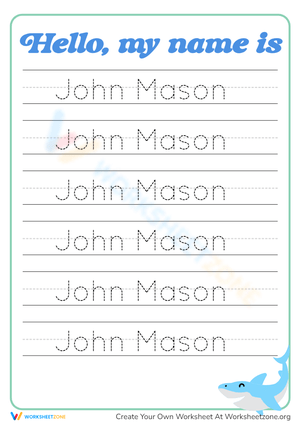
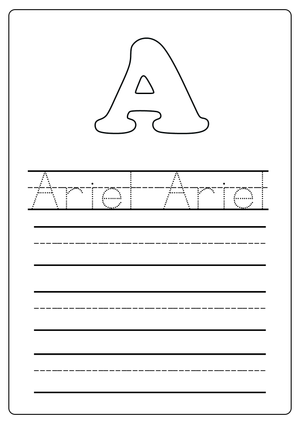
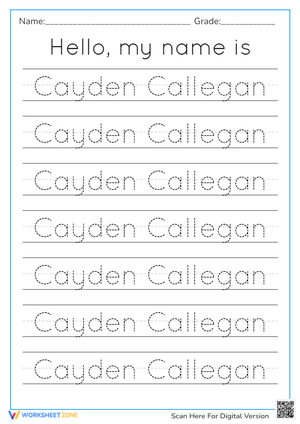
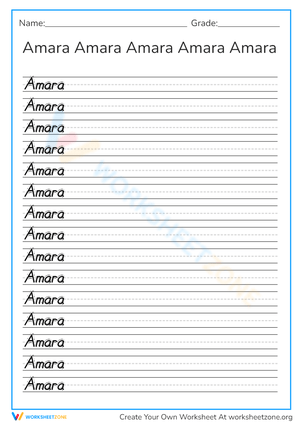
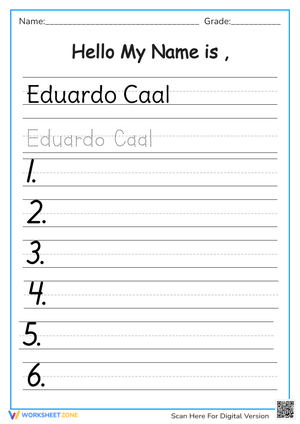
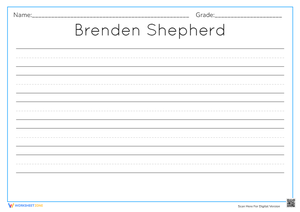
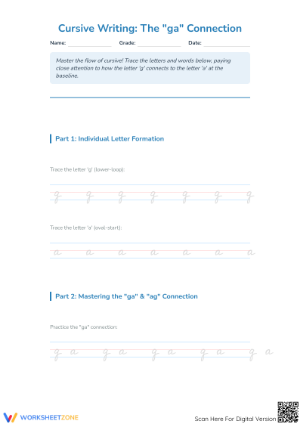
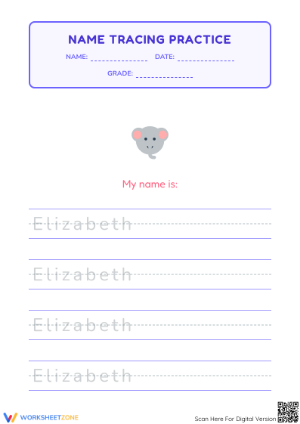
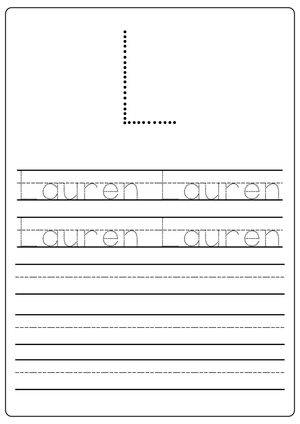
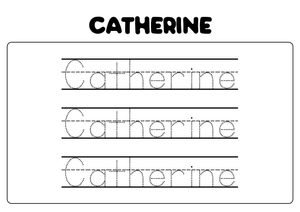
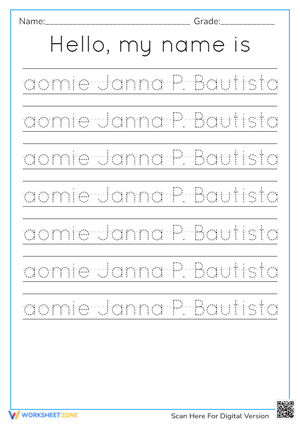
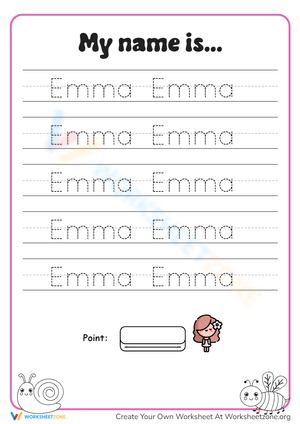
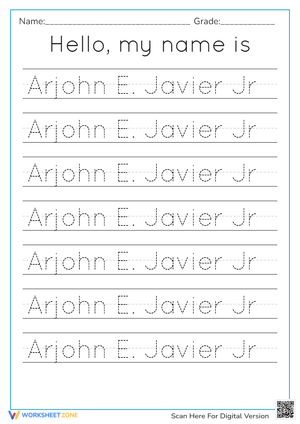
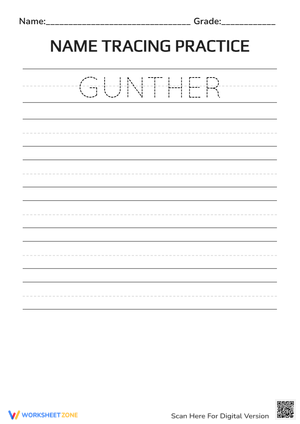
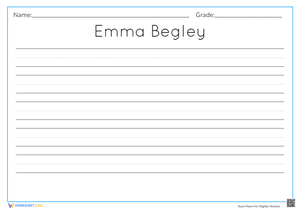
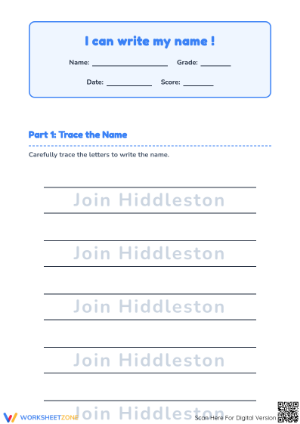
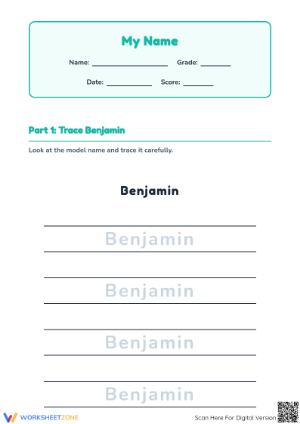
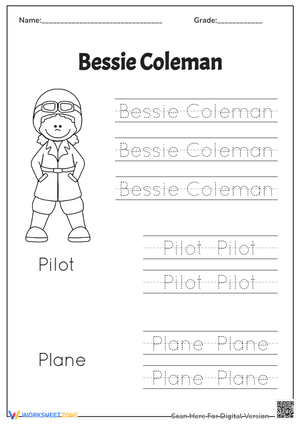
Stage one is full tracing. Students trace directly over the dotted or gray letters, following the guided lines on the sheet. Focus on correct starting points and stroke direction, not speed. Stage two is guided copy. The student looks at their printed name at the top of the page and copies it onto a blank line just below, so the model is visible but the muscle work is now theirs. Stage three is freewrite. You cover or remove the model and ask the student to write their name from memory.
Moving a student forward only when they're ready keeps the task at the right level of challenge. Most Grade 1 classrooms will have students spread across all three stages at once, and that's exactly how it should look.
Classroom Implementation
The strength of a print-and-go sheet is how many slots in your day it fits. You don't need a separate handwriting block to make name tracing work, you need to slot it into routines you already run.
Use name tracing as morning work, sitting on each desk before the bell so students have a calm, independent task on arrival. Use it as a whole-class warm-up before your literacy block, narrating the strokes aloud while students trace. Pull a small group for targeted intervention when a few students need extra repetitions, and drop the sheets into a handwriting center for independent rotations.
Handwriting deserves this kind of daily attention. According to Edutopia (2023), children in the primary grades spend up to half of their school day on tasks that require handwriting, yet penmanship itself is rarely taught explicitly. Name tracing is one of the lowest-effort ways to close that gap and build a motor foundation the rest of the day depends on.
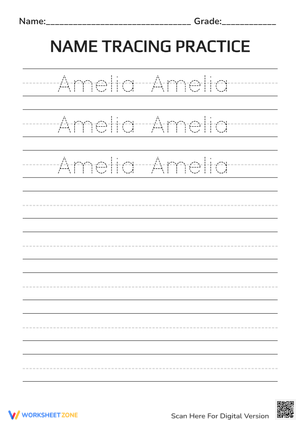
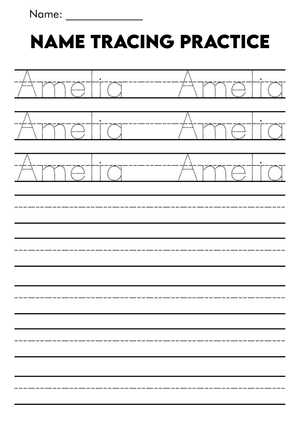
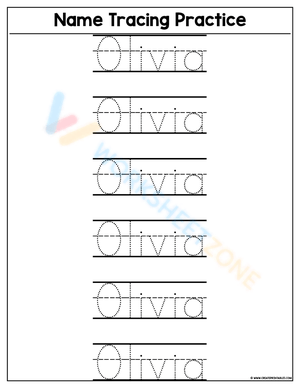
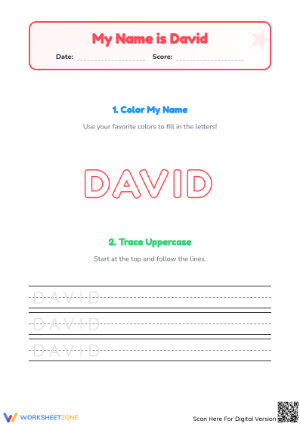
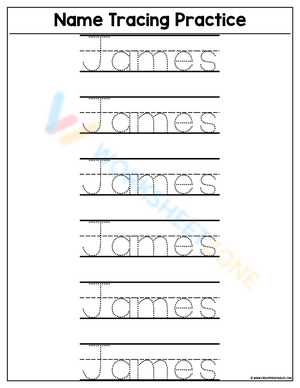
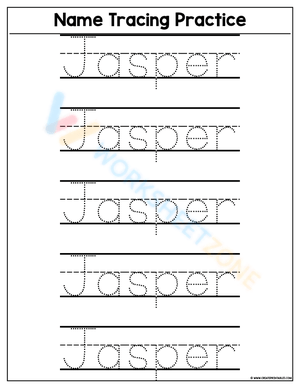
Worksheetzone's Grade 1 name tracing collection includes personalized sheets for names like Amelia, Olivia, David, James, and Jasper, each with five to eight guided tracing lines in a print-and-go format, so you can match a sheet to every student in the room.
Differentiation for ELLs, IEPs, and Early Finishers
One name tracing routine can flex for a wide range of learners. For English language learners, name tracing is a low-pressure entry into English letter forms. The student already knows how to say their name, so they can focus entirely on shape and stroke without also decoding new vocabulary. Say each letter name aloud as they trace to pair sound with symbol.
For students with IEPs or those still building pencil grip, scaffold the task. Use fewer tracing lines per session, add a pencil grip, or have the student trace with a finger first before picking up a pencil. Hand-over-hand support on the first letter can set the stroke direction before they continue on their own.
For advanced writers who finish quickly, extend the task. Have them write their last name, add a friend's name, or flip the sheet over and write a short sentence using their name. The same printable becomes enrichment instead of busywork, so no one is left waiting.
Frequently Asked Questions
1. What age or grade should students start name tracing?
Most children are ready for name tracing in pre-K and kindergarten and should be able to copy or independently write their first name by age six or seven. That makes Grade 1 an ideal time to reinforce the skill, especially for students who arrive still working toward that benchmark.
2. How many tracing lines should a Grade 1 student do per session?
Aim for three to five well-formed tracing lines rather than a full page rushed. Short, accurate sessions build correct muscle memory and prevent the fatigue that creates sloppy habits. You can always run a second short session later in the day.
3. How do I find a sheet for a student with a longer or unusual name?
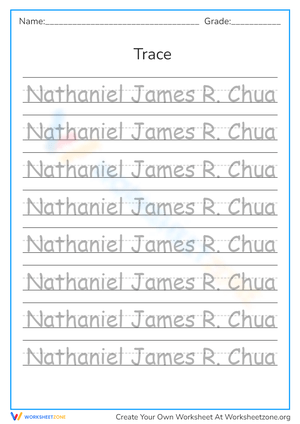
Worksheetzone's name tracing collection is personalized, so you can pull sheets for specific names like Amelia, Olivia, or Jasper. For longer names, split the practice across two lines or two sessions so the student isn't overwhelmed by the length.
4. Can name tracing double as a handwriting assessment?
Yes. Move a student to the freewrite stage and watch them write their name from memory. Their starting points, stroke direction, and letter spacing give you a quick, repeatable snapshot of handwriting progress over the year.
5. How does name tracing help ELL students?
It lets English language learners practice English letter forms using a word they already know how to say. With no new vocabulary to decode, they can focus fully on shape and stroke, and saying each letter aloud pairs sound with symbol.












 Interactive Worksheet Maker
 Quiz Maker
 Word Search Maker
 Crossword Puzzle Maker
 Word Scramble Generator
 Sentence Scramble Generator
 Handwriting Worksheet Generator
 Name Tracing Generator
 Fill In The Blank Generator