If you are pulling up 1st grade cursive worksheets right now, you are probably answering a request from a parent, a curriculum lead, or a state literacy mandate rather than a formal grade-level standard. Most K-12 handwriting scopes still treat full cursive fluency as something students build once print handwriting is solid, and 1st grade is not typically the year that happens. That does not mean cursive has no place in a 1st grade classroom. It means the worksheets you choose should function as readiness-building tools rather than fluency drills.
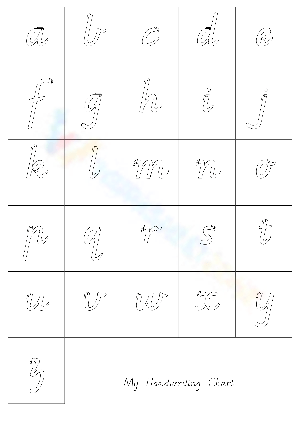
Readiness-focused cursive practice looks different from the loop-heavy cursive pages designed for older elementary writers. For 1st graders, useful worksheets emphasize pre-cursive strokes: consistent slant, connecting lines, entry and exit strokes, and letter shapes that will transfer smoothly once formal cursive instruction begins. Framing the work this way keeps expectations realistic while still giving students meaningful practice time.
Fine Motor Readiness Comes Before Cursive Fluency
Cursive writing asks a lot of a young hand: sustained pencil control, consistent slant, and the ability to keep letters connected without lifting the pencil. Most children are not considered developmentally ready for sustained cursive practice until around age 8, which is roughly when the small muscles in the hand and wrist have matured enough to support it. That timeline is a useful planning anchor for 1st grade teachers, since it explains why cursive worksheets at this stage should prioritize control and confidence over speed.
Research on handwriting sequencing also points to a clear pattern: students who build a strong, consistent print foundation in the earliest years before transitioning to cursive tend to show stronger handwriting fluency and spelling accuracy than students who mix print and cursive instruction too early. That does not rule out light cursive exposure in 1st grade. It does argue for treating it as supplemental practice rather than the primary handwriting focus of the year.
Structuring Daily Practice Time for 1st Grade Cursive Worksheets
Direct handwriting instruction commonly begins in 1st grade with short, focused lessons of about 20 minutes, paired with roughly 40 additional minutes of practice opportunities spread across the day. That structure works well for cursive readiness worksheets too. A short whole-group lesson can introduce a single stroke pattern or letter family, while the additional practice time lets students work independently at their own pace.
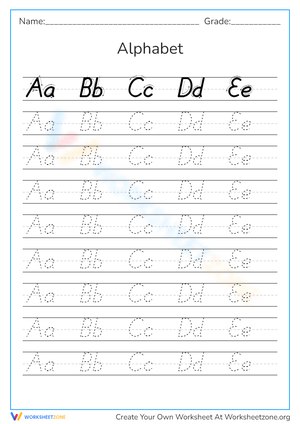
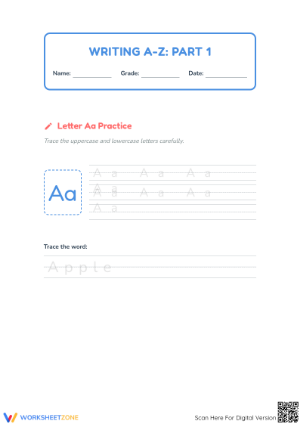
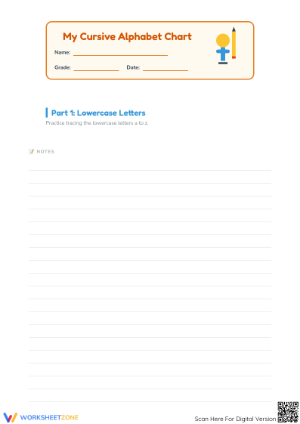
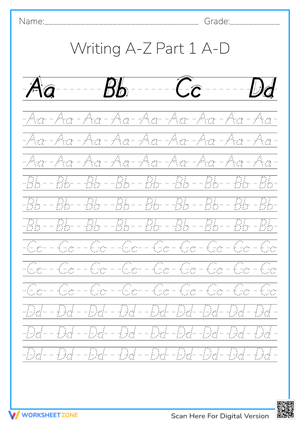
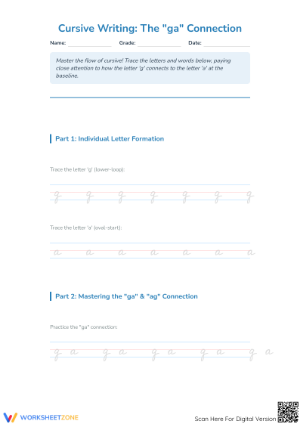
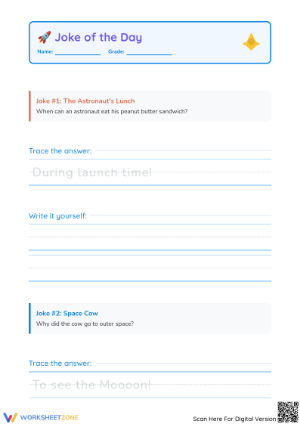
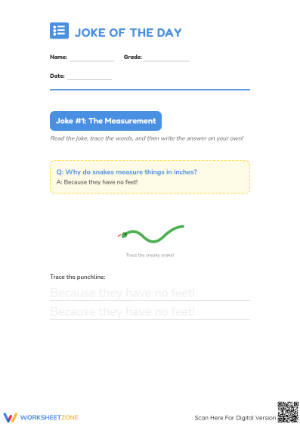
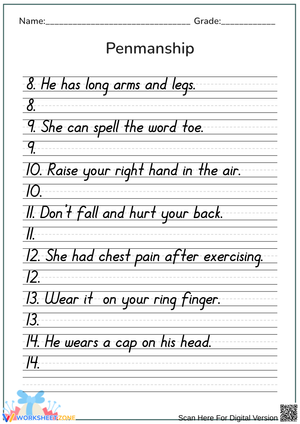
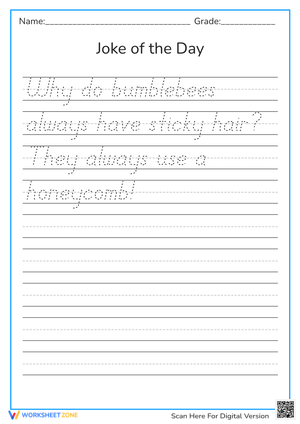
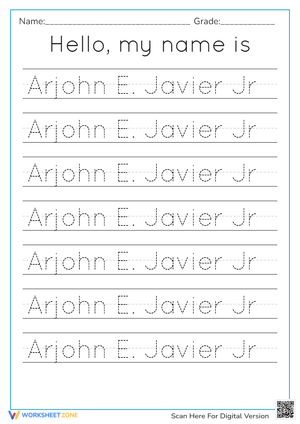
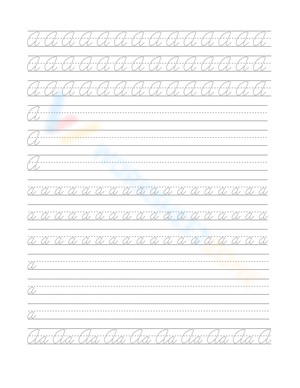
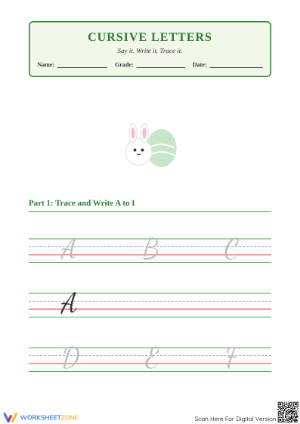
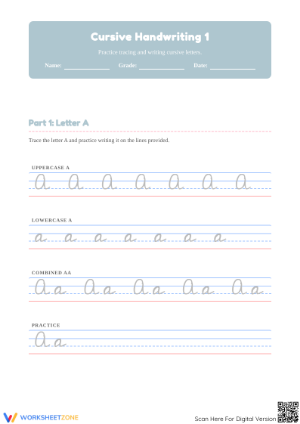
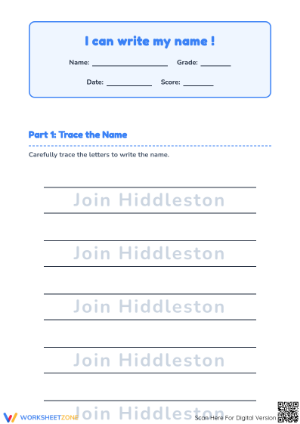
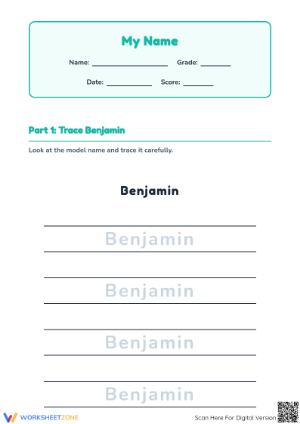
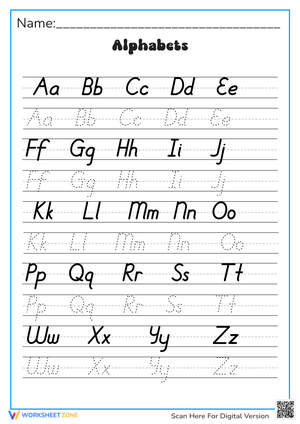
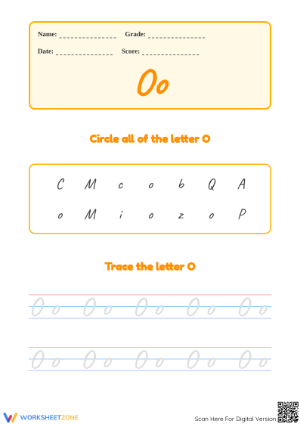
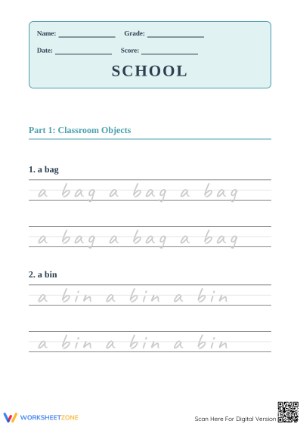
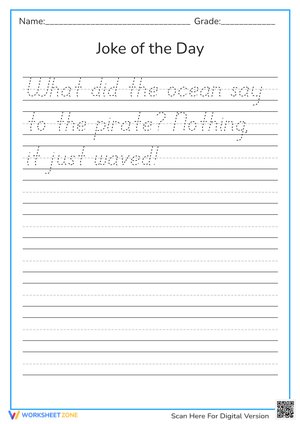
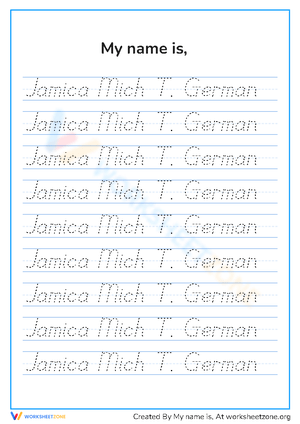
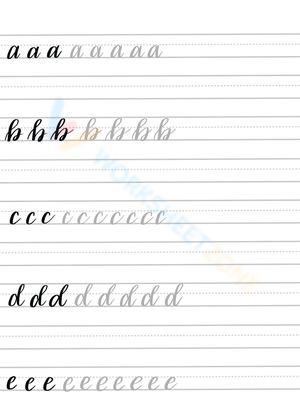
A simple progression keeps this manageable: start with tracing, move to guided copying with visual cues, then shift to independent formation once a student can reproduce the letter shape consistently without a model. Worksheets that offer all three stages for the same letter family let you differentiate within a single lesson without creating extra prep work.
Classroom Implementation
A few practical routines make 1st grade cursive worksheets easier to sustain across the school year.
- Introduce one letter family per week rather than moving through the alphabet in strict order, grouping letters that share similar strokes.
- Keep cursive practice sessions short and consistent, ideally at the same point in the daily schedule, so it becomes a predictable routine rather than a special event.
- Use tracing worksheets for whole-group instruction and independent-formation worksheets for small-group or center rotations.
- Track student progress with quick formation checks rather than formal assessments, since the goal at this stage is readiness, not mastery.
- Communicate with families about why cursive worksheets at this age focus on strokes and readiness rather than full cursive writing, especially if a state mandate or school policy is driving the request.
These routines let you respond to rising interest in cursive instruction without displacing the print-based handwriting and early literacy work that still anchors 1st grade.
Frequently Asked Questions
1. Is 1st grade too early to teach cursive writing?
Full cursive fluency is not a typical 1st grade expectation, but readiness-focused practice, such as pre-cursive strokes and letter tracing, can fit well within a 1st grade handwriting block.
2. What does research say about teaching cursive alongside print in early grades?
Findings from a first-year primary school study suggest that cursive instruction paired with print can support writing and reading prerequisite skills, though pacing and balance with print instruction still matter.
3. How many minutes a day should 1st graders spend on cursive or handwriting practice?
A common structure pairs a short, roughly 20-minute focused lesson with about 40 additional minutes of practice opportunities spread across the day.
4. Why are more schools introducing cursive requirements now?
A growing number of US states have passed laws requiring cursive instruction, which is increasing demand for cursive materials earlier in elementary schooling than in past years.
5. How should teachers differentiate cursive worksheets for different readiness levels?
Students still building print fluency benefit from staying longer in tracing and copying stages, while students with strong print control can move into independent formation as enrichment work.