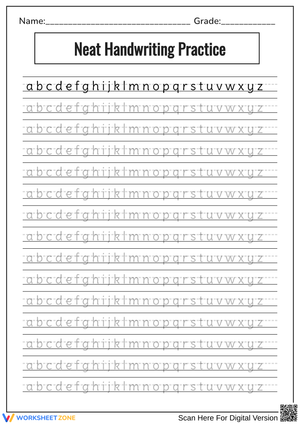
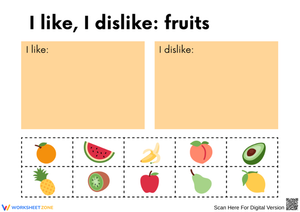
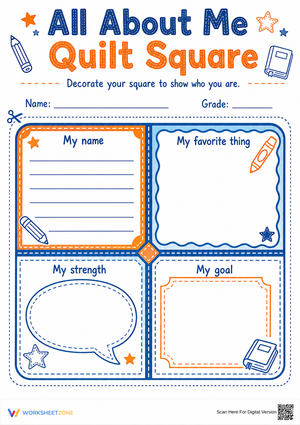
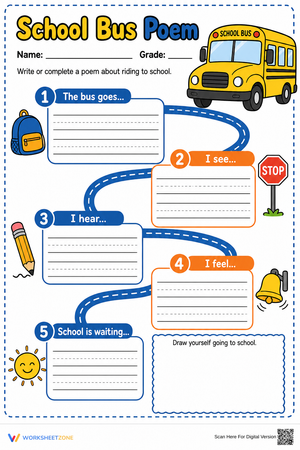
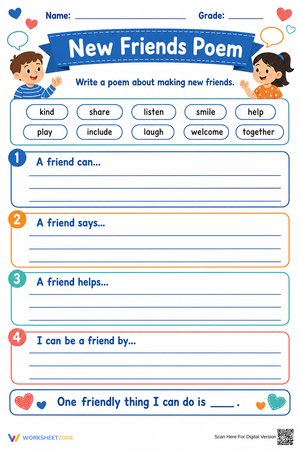
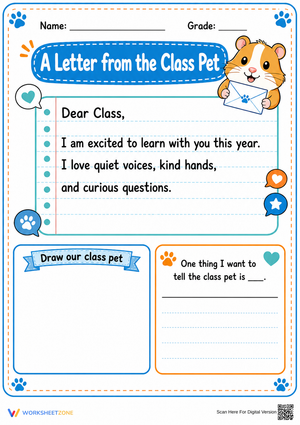
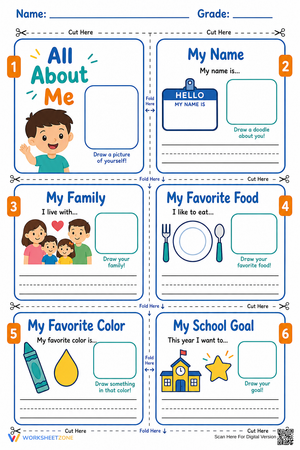
These 1st grade writing worksheets materials target the three text types first graders are formally responsible for producing — narrative, opinion, and informative — alongside the sentence mechanics that make those pieces readable. The set gives teachers print-ready resources for morning work, literacy centers, and small-group instruction, organized by skill so practice stays focused rather than diffuse. First grade is the year when the gap between a child's spoken ideas and their physical ability to write them down is widest, and these worksheets are built with that tension in mind.
The Specific Skills Targeted
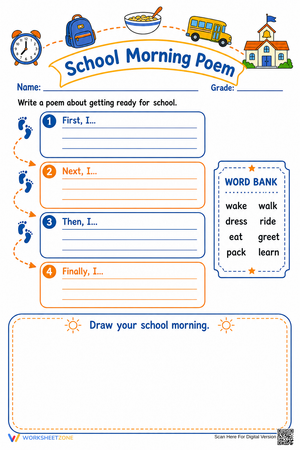
Narrative writing worksheets ask students to sequence events using temporal language — "first," "next," "then," "last" — and to include at least one detail beyond a bare-bones plot summary. Students don't just write what happened; they practice adding how something felt or looked, which is the habit that separates thin narratives from ones worth reading. Graphic organizers on separate worksheets let students sketch and sequence before drafting, which reduces cognitive load during the actual sentence-writing phase.
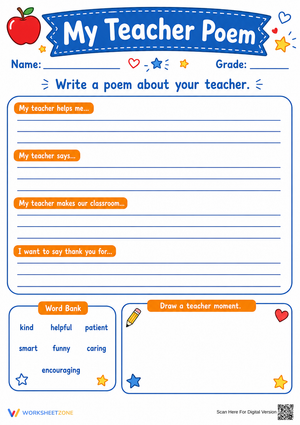
Opinion worksheets give students a structured frame: a topic sentence slot, a reason slot, and a closing. The critical instructional move is helping students distinguish between restating their opinion and providing an actual reason — a gap that shows up in almost every first draft. Informative worksheets follow a parallel frame, with a topic sentence, two or three fact lines, and a concluding sentence, reinforcing that this kind of writing draws from what students know rather than what they imagine.
Sentence mechanics run through the entire set. Fix-it sentences ask students to rewrite incorrectly punctuated and capitalized sentences, training the eye to notice errors before the habit of producing them takes hold. Daily sentence starters reduce the blank-page problem and let instruction focus on end punctuation and word spacing rather than idea generation alone.
Frequent Student Errors Worth Watching For
The most persistent mechanical error in first-grade writing is the missing period — not because students don't know the rule, but because the physical act of forming letters consumes working memory, and punctuation is the last thing added when a writer is already exhausted at the end of a sentence. Students can tell you, unprompted, that sentences end with periods. They still omit them. Fix-it sentence practice creates a low-stakes habit of scanning for that final mark before moving on.
Opinion writing produces a specific structural error that's easy to miss in a quick read: the circular reason. A student writes "I think recess should be longer because recess is fun" and believes the reasoning requirement is satisfied. The worksheet format catches this because there's a dedicated "my reason" line separate from the "my opinion" line — when a student has written the same idea twice in different words, that gap becomes visible on the page in a way it doesn't in a conversation.
In narrative writing, students frequently produce list format rather than developed sentences. "We went to the park. We played. We went home." Each event gets one sentence with no detail, and the piece reads like a schedule rather than a story. Modeling with a think-aloud — where the teacher writes a thin sentence on chart paper, then expands it with one added detail — makes the revision process concrete in a way that abstract instruction about "adding more" does not.
How to Work These Worksheets Into Your Weekly Lesson Plans
Morning work is the most reliable slot. As students arrive, a fix-it sentence or sentence starter on the desk gives them an immediate, manageable task that doesn't require teacher direction. Five minutes of this daily — Monday through Friday — produces measurable gains in capitalization and punctuation by midyear, because repetition across short sessions outperforms longer, infrequent blocks. The key is consistency: the same format, the same location on the desk, the same expectation every morning.
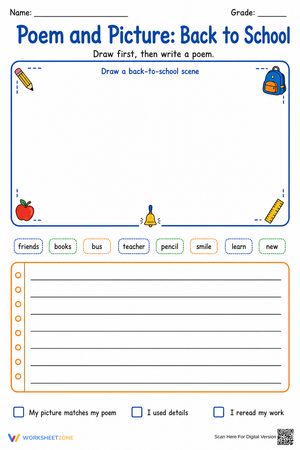
Literacy centers work well for opinion and informative worksheets because both text types have enough structure that students can complete them without on-the-spot instruction. Set up one center bin with opinion templates organized by prompt theme — food, animals, school activities — and rotate the prompts every two weeks to maintain engagement without changing the instructional routine. A second bin holds narrative graphic organizers paired with picture prompts so students choose the image that interests them before drafting their sequence.
Small-group time is where teachers get the most diagnostic value from these materials. When four students sit together and work through the same fix-it sentence, the errors they find first — and the ones they miss entirely — reveal exactly where instruction needs to focus next. That real-time observation is harder to gather from collected worksheets graded after the fact.
Standard Alignment
These worksheets align to the Common Core State Standards for English Language Arts, Grade 1 Writing. The three text-type standards — W.1.1 (opinion), W.1.2 (informative/explanatory), and W.1.3 (narrative) — each have dedicated worksheet formats within the set. Language standards L.1.1 and L.1.2, which address capitalization of names, dates, and first words in sentences along with end punctuation, are embedded in the fix-it sentence and daily sentence activities. The set also connects to W.1.5, which describes the expectation that students respond to feedback and strengthen writing with support — a standard the graphic organizer worksheets address directly by separating the planning stage from the drafting stage. A complete 1st grade writing worksheets collection covers all five of these standards without requiring teachers to pull from multiple sources during planning.
Adapting the Worksheets for Mixed-Ability Classrooms
For students who need additional support, the structured frames on opinion and informative worksheets do most of the heavy lifting — the student fills in the topic, reason, and closing rather than generating the organizational structure independently. Teachers working with these students can also pre-fill the first word of each sentence on a narrative worksheet, which removes the capitalization decision and lets the student concentrate entirely on the content of what they're expressing.
Students who move through the basic frames quickly benefit from open-ended extensions added to any worksheet. A student who finishes the opinion frame in four minutes should have somewhere to go — a second reason, a counterargument, or a more precise closing sentence. A sticky note with a follow-up prompt attached to the bottom of the worksheet handles this without requiring separate materials. For the strongest writers in the room, the most productive challenge is returning to a completed worksheet and revising one sentence to be more specific. The habit of revision, introduced in first grade, pays significant dividends by third grade when written response demands increase substantially.
Frequently Asked Questions
How many text types do these worksheets cover?
The set addresses all three text types outlined in the Grade 1 Common Core ELA writing standards: narrative, opinion, and informative. Each type has multiple worksheet formats — graphic organizers, sentence frames, picture prompts, and fix-it activities — so teachers aren't cycling through the same format repeatedly within a single text type.
Can I use these worksheets for assessment, or are they purely for practice?
Both uses work. As practice, the worksheets build fluency through repetition without requiring formal scoring. For formative assessment, a completed opinion or narrative worksheet shows exactly where a student applies capitalization and punctuation rules and where those rules break down under the cognitive pressure of composing. Teachers who collect one worksheet per student per week have a running record of writing development that's more informative than a single end-of-unit writing sample.
What do I do when a student finishes quickly but the writing is thin?
The answer is almost always a sentence-level revision prompt rather than a new task. Ask the student to find one sentence in the completed worksheet and rewrite it with one added detail. This targets the most common quality issue in first-grade writing — brevity without substance — and it builds the revision habit at the grade level where that habit is easiest to establish. Using the 1st grade writing worksheets set this way, students begin anticipating the revision question and preemptively add detail before they consider themselves done.
Are these worksheets suitable for intervention blocks?
Yes. The structured format of the 1st grade writing worksheets makes each worksheet well-suited for pull-out or push-in intervention because the frames reduce the number of simultaneous decisions a struggling writer has to make. An interventionist can work with a student on one element — the reason in an opinion piece, or the closing line in an informative paragraph — without the student having to manage the entire organizational structure at the same time.












 Interactive Worksheet Maker
 Quiz Maker
 Word Search Maker
 Crossword Puzzle Maker
 Word Scramble Generator
 Sentence Scramble Generator
 Handwriting Worksheet Generator
 Name Tracing Generator
 Fill In The Blank Generator