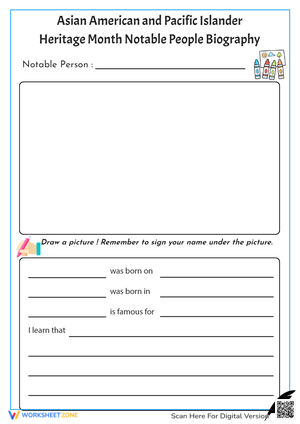
1st grade organization and structure pdf worksheets give teachers a printable set of tools aimed at one of the most specific tensions in early writing instruction: a first grader's spoken story is often vivid and logically sequenced, but that same child stares at a blank page and produces three sentences of beginning followed by a single abrupt ending. Each worksheet in this set makes the invisible architecture of written text — beginnings that establish context, middles that develop ideas, endings that close deliberately — physically visible through labeled boxes, sentence starters, and structured organizer layouts across narrative, opinion, and informational writing.
The Writing Skills Covered Across This Set
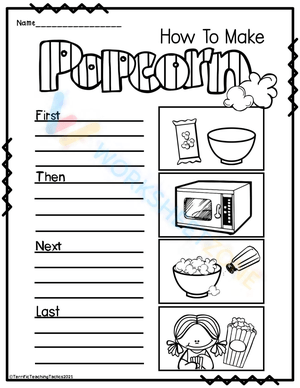
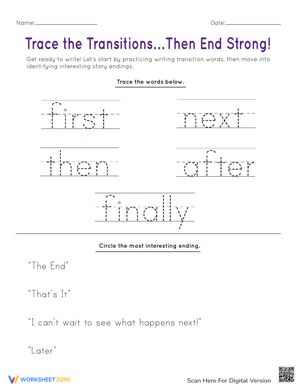
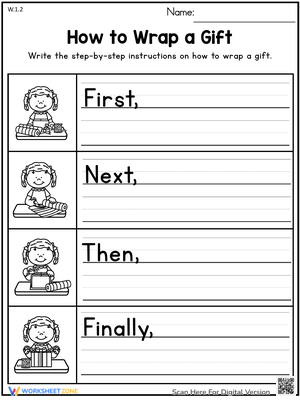
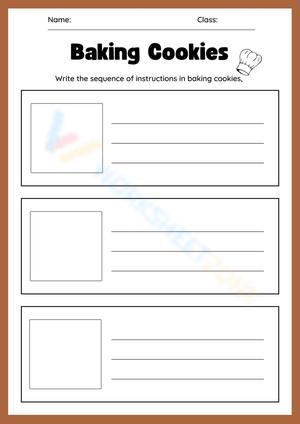
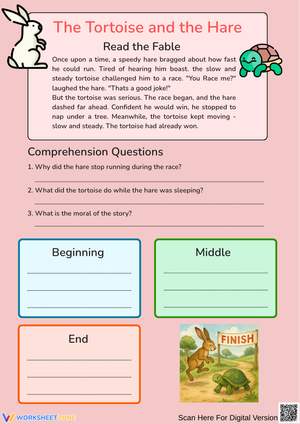
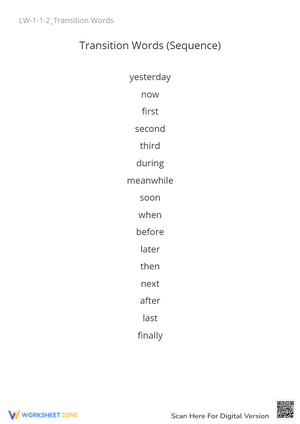
The skills split between cross-genre foundations and genre-specific structures. Every worksheet uses the Beginning, Middle, and End (BME) framework as its baseline, whether the student is recounting a field trip, arguing that school should have more recess, or explaining how a caterpillar becomes a butterfly. Temporal transition words — First, Next, Then, Last — appear across multiple worksheets through fill-in-the-blank sentences and picture-to-sentence sequencing tasks that require students to use the words correctly, not just recognize them from a word wall.
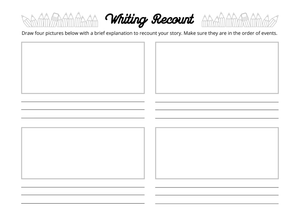
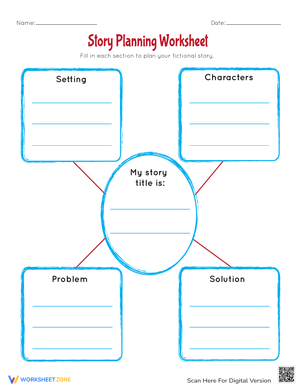
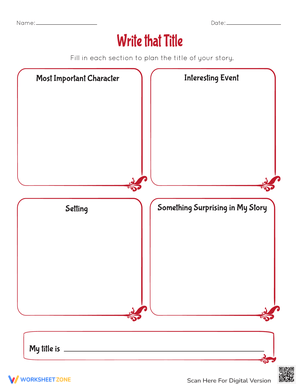
Genre-specific targets include opinion claim construction, the single-reason support structure, informational topic sentences with two or three supporting facts, and narrative event sequencing using picture prompts. One design detail that matters in practice: the middle box on narrative organizers is intentionally larger than the beginning and ending boxes, communicating visually that the middle section requires more content. Students who see that proportional difference start to internalize the structural expectation before it's ever stated aloud.
How to Build These Worksheets Into Your Writing Block
The strongest placement for these organizers is the seven or eight minutes at the start of writer's workshop, immediately before students move to independent drafting. Run the organizer whole-class under a document camera: fill in one box together, thinking aloud about why a detail belongs in the middle rather than the beginning, then send students to their seats to complete their own copy with that model still projected. When shared completion and independent work happen back-to-back, students transfer the structure more reliably than when they encounter the organizer cold the following day.
A second reliable placement is the Monday warm-up at the start of a new genre unit. If the week will focus on opinion writing, a completed opinion-structure worksheet Monday morning — before any formal instruction — gives students their first encounter with the terms "claim," "reason," and "closing" in a low-stakes context. By the time the formal lesson arrives mid-week, those words have already appeared once, which shortens the vocabulary lift considerably. These 1st grade organization and structure pdf worksheets also serve as a Friday check at the end of a genre unit: a completed organizer tells you exactly which students still write a one-sentence middle or skip the closing entirely, producing more specific data than most informal end-of-unit assessments.
Mistakes Students Make That These Worksheets Help You Catch
The most consistent narrative error is the missing middle. Students write "One day I went to my grandma's house" in the beginning box and "We had fun" in the ending box, and the middle sits empty or contains a second version of the beginning. They understand that stories start and stop; the middle — as a zone of developed events — is conceptually vague. When the middle box is the largest of the three and carries a label like "What happened? (2–3 events)," students recognize that something substantial belongs there. The conversation that follows, about what an event actually is, is the instruction that box makes possible.
Opinion writing surfaces a near-universal circular-reason pattern: "I think pizza is the best food because pizza is really yummy." The student has restated the claim with synonyms rather than introduced new information. The opinion worksheets address this with a sentence frame beginning "One reason is ___," which requires students to complete a different thought. Direct instruction on what makes a reason different from a repetition is still necessary, but the frame prevents the most automatic form of the error from appearing on the page. Informational writing brings a separate problem: students write their most specific fact as the topic sentence — "Elephants can pick up logs with their trunk" — then run out of things to say because they spent their strongest detail in the opener. When the topic sentence sits in a top box and the supporting facts live in clearly subordinate boxes below it, students can see the tier difference before they write a single word.
Temporal transition words cause a subtler issue: students learn First, Next, Then, Last as a memorized chain and apply it regardless of genre. Opinion pieces arrive reading "First, I think dogs are great. Next, they are fluffy. Then, I like to play with them." The words are present and correctly spelled; the problem is that temporal sequence carries no meaning in an opinion piece. Catching this pattern during shared completion — asking aloud whether an opinion has a timeline — closes it before it becomes habitual.
Standard Alignment
Grade 1 writing standards under the Common Core address three distinct genres, and each has a corresponding worksheet type in this set. W.1.1 (opinion writing) requires students to introduce a topic or book, state an opinion, supply a reason, and provide a sense of closure — the four-part structure every opinion organizer here follows. W.1.2 (informational/explanatory writing) calls for naming a topic, supplying facts about it, and providing closure; the informational worksheets present this as a top box for the topic sentence and two or three subordinate boxes for supporting facts. W.1.3 (narrative writing) mandates recounting two or more sequenced events with details, temporal words signaling order, and a sense of closure. Closure is the hardest W.1.3 requirement to address without a dedicated structural prompt — a labeled ending box is the most direct solution, because without it students simply stop writing when they exhaust their events. Teachers who use 1st grade organization and structure pdf worksheets consistently across a genre unit address all three standards without requiring additional planning materials or supplementary resources.
Adjusting the Worksheets for a Range of Writers in Your Room
For students still developing encoding fluency — those who lose the thread of an idea while sounding out words — reduce the transcription demand by having them draw the beginning, middle, and end in each box and dictate their sentences to a partner or paraprofessional who records the words. The structural thinking is the target at this stage, and students who process the organizer orally build the BME framework just as reliably as students who write it out. On the other end, remove sentence starters for students who have mastered the basic structure: asking a strong writer to construct their own opinion opener from scratch requires them to internalize the form rather than follow a template. Adding a second reason line to the opinion organizer takes thirty seconds and meaningfully raises the ceiling for those students without creating a separate resource.
During small-group instruction, 1st grade organization and structure pdf worksheets work particularly well with approaching-level students because the teacher can pause at each box, prompt the thinking, and watch the student form the sentence before moving forward. Running the same organizer in small group that students already saw whole-class provides a second pass through the structure with closer feedback — without requiring a separate differentiated version. For students receiving formal writing intervention, placing a completed teacher-model copy alongside the blank worksheet gives a concrete reference point while still requiring students to produce their own original sentences, which preserves the cognitive demand of the task.
Frequently Asked Questions
Do students write a full draft after completing the organizer, or is the worksheet the finished product?
The organizer is a planning tool, not the final composition. Once students fill in each box, they use those notes to write a connected paragraph or short piece — in a writing journal or on a separate lined draft sheet. Some teachers have students physically cut the boxes apart and arrange them in sequence before drafting, which reinforces structural order in a hands-on, concrete way.
What order should I introduce the three writing genres?
Most Grade 1 pacing guides sequence narrative first, followed by informational, then opinion. Narrative tends to be the most accessible because students draw directly on personal experience, and the BME structure maps onto stories they already know from read-alouds. Informational writing stretches them into fact-based language and a topic-to-detail hierarchy. Opinion writing, which requires the abstract concept of a "reason," lands better once students have practiced both previous genres and understand the difference between a detail and a claim.
A student fills every box with only one or two words — what should I do?
This is a planning habit, not a writing deficit. The student is treating the organizer as a quick-note system rather than a sentence-level planning tool. During shared completion, model writing complete sentences in each box and ask students to check whether their box answers the prompt in a full thought. A sentence-starter strip clipped to the worksheet — "In the beginning... / One thing that happened... / At the end..." — gives students a concrete entry point into sentence-level thinking before they move to the draft.












 Interactive Worksheet Maker
 Quiz Maker
 Word Search Maker
 Crossword Puzzle Maker
 Word Scramble Generator
 Sentence Scramble Generator
 Handwriting Worksheet Generator
 Name Tracing Generator
 Fill In The Blank Generator