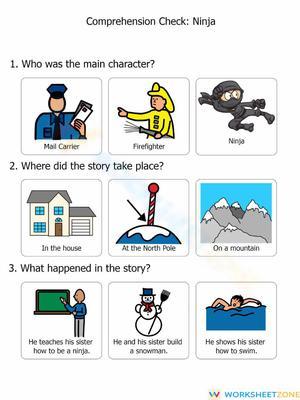
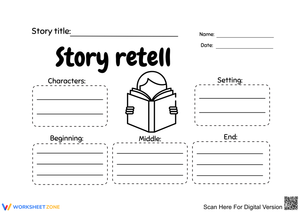
1st grade story elements worksheets give teachers a concrete tool for one of the trickiest transitions in early literacy — the shift from recognizing words on a page to making meaning from a complete narrative. This set includes story maps, sequencing organizers, character and setting response sheets, and problem-solution match-ups, each built for the six- and seven-year-old reader who is just beginning to hold an entire story in mind as a structured whole.
The Specific Skills Targeted
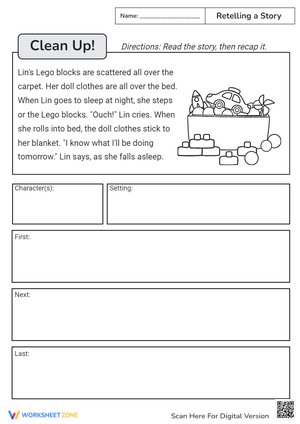
Characters, settings, and major events are the three anchors across every worksheet in this collection. The worksheet types break down as follows:
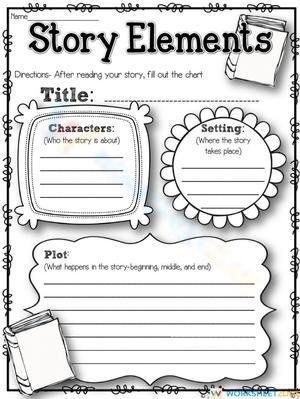
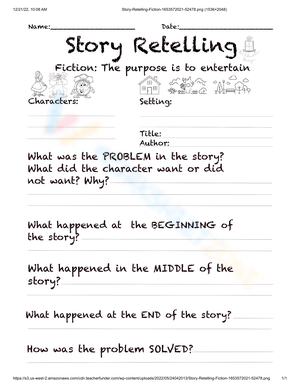
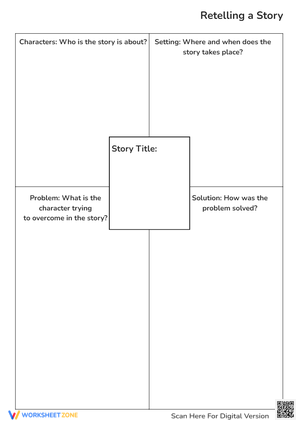
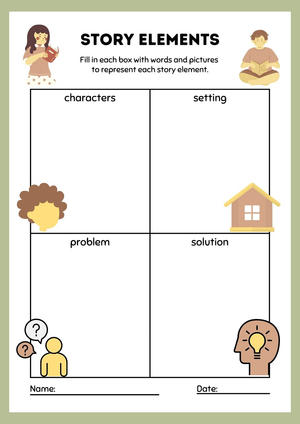
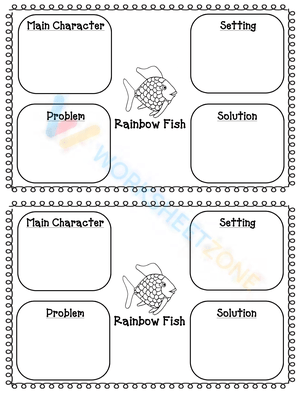
- Story maps: labeled organizers with dedicated sections for characters, setting, problem, major events, and solution
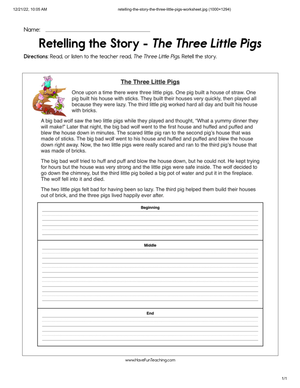
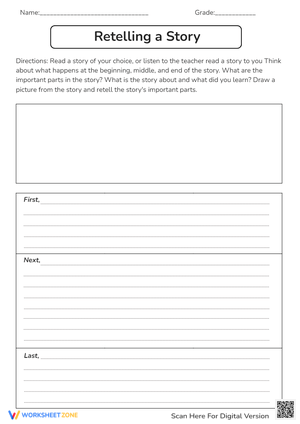
- Sequencing organizers: beginning-middle-end frames and cut-and-paste strip activities for ordering events chronologically
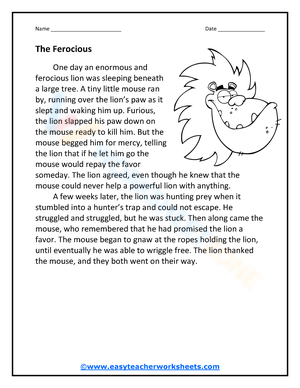
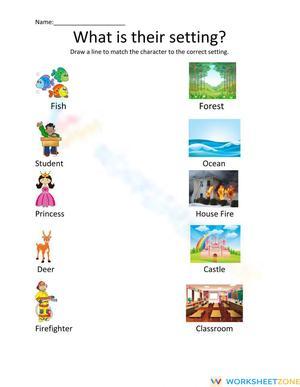
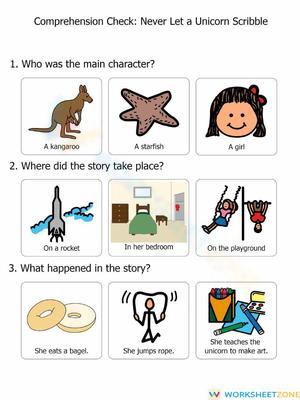
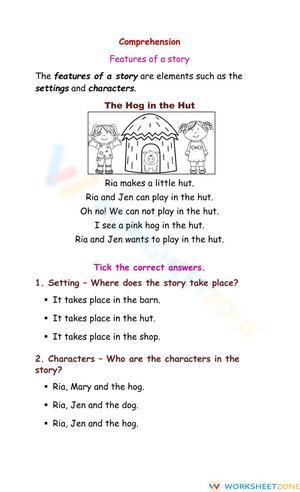
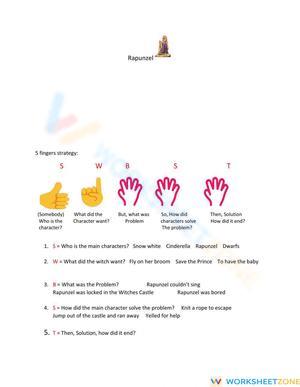
- Character and setting response sheets: paired with a short passage; students underline character names in one color and setting details in another before responding to prompts
- Problem-solution match-ups: three-scenario formats asking students to connect each conflict to its resolution
Students practice identifying the main character — not simply listing every name that appears, but determining who the story is actually about. Setting work asks them to locate both place and time clues; a prompt might direct students to find the sentence that tells where the story happens and circle any time-of-day detail mentioned in the opening lines. Together, these 1st grade story elements worksheets build the vocabulary of narrative structure — character, setting, event, problem, solution — through repeated, low-pressure application rather than isolated terminology drills.
The cut-and-paste sequencing worksheets deserve specific mention. Students pick up each sentence strip, read it, place it, reconsider. That deliberate physical handling slows down the sequencing process in a way that produces more accurate work than fill-in formats where students can rush through without fully processing the order of events.
Why This Format Works for Six- and Seven-Year-Old Readers
The reason structured response organizers matter at this grade comes down to cognitive load. A first grader reading independently is directing significant mental effort toward decoding — letter-sound relationships, blends, high-frequency words — and has noticeably less working memory available for comprehension than a fluent reader does. Delivering the story as a read-aloud and pairing it with a response worksheet removes the decoding demand entirely, allowing students to focus on what happened, who was involved, and where the story took place.
The labeled boxes on a story map act as external memory prompts — the student does not have to hold the question in mind while searching the text because the worksheet holds it. Story elements instruction falls in Grade 1 — rather than earlier — because narrative comprehension requires simultaneously holding multiple pieces of information in sequence. Most kindergartners can retell an ending; first graders, with more reading experience and developing working memory capacity, are ready to identify and articulate each structural component in relation to the whole. The standards placement reflects real cognitive development, not arbitrary curriculum sequencing.
Fitting These Worksheets Into Your Weekly Literacy Routine
Story maps work best as immediate post-read-aloud response tools. The 10-to-15 minutes right after the book closes — while characters and events are still fresh — is the strongest window for written response. Waiting until after a transition, or the following morning, produces noticeably thinner answers, particularly in the setting and minor event fields.
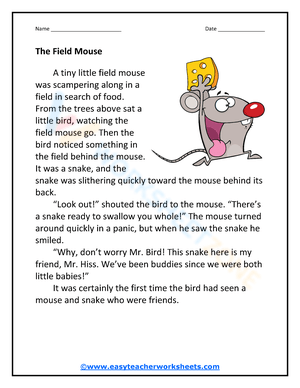
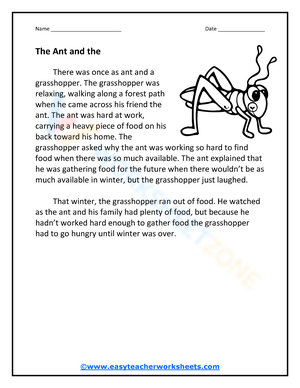
For literacy centers, the character and setting detective sheets work independently once students have heard a short passage read aloud. Printing the text on one side and the response prompts on the other keeps everything self-contained and reduces the chance of students losing their place between passage and task. Using 1st grade story elements worksheets across multiple formats during the week — a story map on Monday, a sequencing organizer on Wednesday, a character response sheet on Friday — keeps the routine varied enough to sustain engagement without sacrificing the repetition that builds fluency with narrative structure.
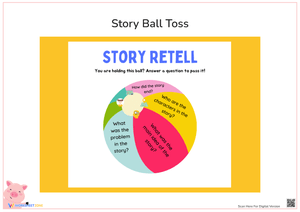
Sequencing worksheets make effective warm-up activities when revisiting a book read the previous week. The deliberate gap between reading and retelling gives students a low-stakes opportunity to practice spaced retrieval — they reconstruct the narrative from memory before checking the text. Teachers who include a brief verbal retell before students write consistently see more organized sequencing on the page. Even 60 seconds of partner talk about what happened first sharpens the written response that follows.
Common Misconceptions to Catch Early in Story Elements Instruction
The most persistent error is confusing setting with events. A student who correctly knows the story takes place outside will write "the setting is when the dog got lost" — mixing location with action. The phrasing "where AND when" helps distinguish the two, but many first graders need to see the distinction modeled several times before it holds in independent written work.
Main character identification produces more errors than teachers expect. When a story features three named animals and students are asked to name the main character, a significant portion will list all three. Re-asking the question rarely redirects them; the follow-up prompt "who does the story mostly follow from beginning to end?" focuses their thinking on narrative centrality rather than character presence.
Sequencing exposes a predictable pattern: students write the same central event in both the "middle" and "end" boxes. This almost always means they identified one strong moment from the story and have not parsed the narrative finely enough to locate a distinct ending. Asking students to cover the middle box and focus only on "the very last thing that happened before the story ended" typically resolves the confusion without a lengthy one-on-one conference.
Finally, when prompted to describe a character using key details, first graders default almost universally to physical appearance — "she has red hair" — even when the text offers richer behavioral or emotional evidence. A quick anchor chart divided into "looks like / acts like / says" gives students a wider set of response lenses without turning the worksheet into a test of the anchor chart itself.
Standard Alignment
These worksheets directly target CCSS.ELA-LITERACY.RL.1.3, which requires first-grade students to describe characters, settings, and major events in a story using key details from the text. In practical classroom terms, RL.1.3 is the standard addressed every time a teacher leads a post-reading discussion — these worksheets translate that oral comprehension work into written, assessable evidence. The standard is placed at Grade 1 because students at this stage are developmentally ready to move from passive listening comprehension toward active identification and articulation of narrative components, laying groundwork for the more analytical reading standards in Grades 2 and 3.
The beginning-middle-end sequencing worksheets also connect to RL.1.2, which asks first graders to retell stories including key details and demonstrate understanding of the central message or lesson. Teachers addressing both standards can use the retelling organizers as a comprehension frame, then extend the whole-group discussion toward what lesson the story teaches.
Adjusting the Worksheets for a Range of First-Grade Readers
Students who are not yet writing independently can draw responses on every organizer in this set. Sketching the main character or illustrating the setting demonstrates comprehension directly — the worksheet captures evidence of understanding, not writing proficiency. For students partway between drawing and writing, a labeled drawing records both the comprehension and the literacy development at once, which proves useful documentation during parent conferences and progress monitoring conversations.
On-level students work with the standard format — a mix of short written responses and drawing spaces. The sentence starters built into each prompt ("The main character is ___" and "The story takes place ___") supply the syntactic frame so students can direct their effort toward locating the answer in the text rather than constructing the sentence from scratch.
For students reading above grade level, removing the sentence starters and adding a handwritten extension prompt shifts the task toward inference. A question like "Why does the setting make the problem harder to solve?" or "What does the character's choice tell you about how they feel?" pushes analytical thinking without requiring a separate worksheet. The 1st grade story elements worksheets in this set are formatted so extension prompts can be added on a sticky note or delivered verbally, keeping the core layout consistent for every student in the room.
Frequently Asked Questions
What story elements are covered across this set?
Characters, settings, and major events appear on every story map and response sheet in the collection. Several worksheets also introduce problem and solution at a first-grade level, framed as "what went wrong" and "how it got fixed." Sequencing worksheets address beginning, middle, and end as a framework for organizing events in the order they occurred. Students encounter all of these elements across multiple formats, reinforcing the concepts through varied practice rather than repetition of a single task type.
Do the worksheets require specific books or texts?
No specific texts are required. Each worksheet functions as a generic response organizer compatible with any narrative picture book or decodable reader. The story map formats accommodate stories with one central character or several, and the setting prompts accept both single-location and multi-location narratives. Teachers typically pair each worksheet with whatever book is in the current read-aloud rotation or literacy block.
How should teachers handle students who are not yet writing independently?
Drawing is a fully acceptable response mode on every organizer in this set. A student who sketches the character or draws the setting demonstrates comprehension of the story element just as clearly as a student who writes a sentence — the worksheet captures understanding, not handwriting ability. For students mid-transition to writing, a labeled drawing captures both the comprehension and the developing literacy simultaneously, which can be valuable at student-led conferences or IEP check-ins.
When in the lesson do these worksheets work best?
Immediately after the read-aloud is the most effective placement. Details are freshest in the 10-to-15 minutes after the book closes, and responses completed in that window tend to be more specific and text-grounded than work attempted after a transition. For sequencing worksheets specifically, 60 seconds of partner talk about the events before students begin writing — a brief verbal rehearsal — produces noticeably more organized written sequences than going straight to the page.












 Interactive Worksheet Maker
 Quiz Maker
 Word Search Maker
 Crossword Puzzle Maker
 Word Scramble Generator
 Sentence Scramble Generator
 Handwriting Worksheet Generator
 Name Tracing Generator
 Fill In The Blank Generator