These 1st grade writing process worksheets give teachers a staged, printable system for walking students through prewriting, drafting, revising, editing, and publishing — each step on its own worksheet so the stages remain visually and physically distinct. The set is built for first-grade realities: primary lines with dashed midlines, prompt boxes sized for early illustrators, and editing checklists narrow enough that a six-year-old can work through them independently. Teachers who have tried running writing process units without consistent printed materials know how quickly stages collapse into each other when nothing on paper holds them apart.
What Each Worksheet Covers
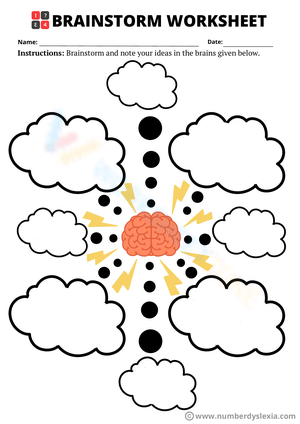
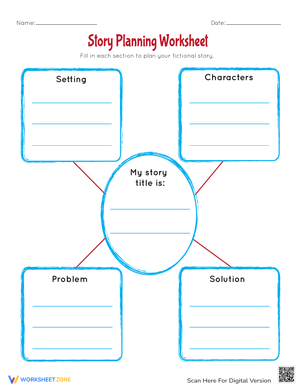
The prewriting worksheets center on a three-part story map — beginning, middle, end — with large white space for drawing before writing. Drawing is not a workaround for students who can't yet write fluently; it is the cognitive work of planning. Students who skip this stage consistently produce drafts that stall after one sentence because they have nothing to say next. The drafting worksheets pair wide primary lines with an illustration frame at the top, keeping the picture-text connection active throughout the session. Phonetic spelling is the expectation at the drafting stage, not a compromise — stopping to ask how every word is spelled breaks the compositional flow that first graders are still learning to sustain.
Revision worksheets narrow the task to one concrete action: finding a "plain" sentence and stretching it. "The dog ran." becomes "The big brown dog ran fast to the park." Color words, size words, and location details are the revision vocabulary first graders can actually apply. Editing worksheets use a three-item checklist — capital letter to open each sentence, punctuation to close it, finger space between words — because a checklist longer than three items shifts the focus from quality checking to box checking. Publishing worksheets provide a clean final-copy format with a bordered illustration space, which matters because first graders need the physical artifact of a finished page to understand what publishing actually means.
Where First-Grade Writers Tend to Go Off Track
The most consistent confusion in first-grade writing units is the collapse of revising and editing into a single step. When asked to revise, many students erase a misspelled word and fix it — which is editing. Revising asks "does this say what I meant?" and editing asks "are the mechanics right?" Most six-year-olds don't have a category for that distinction yet, which is exactly why separate worksheets for each stage matter: the physical separation makes the conceptual difference concrete rather than abstract.
A second pattern worth watching: students who grasp revision at the sentence level will still "revise" by copying their entire draft in neater handwriting without changing a word. They are responding to the instruction "make it better" by making it look cleaner. The revision worksheet's sentence-stretching prompt short-circuits this by giving students a specific action — find a plain sentence, add a detail word — rather than a general directive to improve. At the editing stage, watch for students who move through the checklist in under 30 seconds without rereading. They have learned to check boxes, not to check writing. A brief teacher model of reading each sentence aloud while moving a finger under the words resets that habit quickly.
Fitting These Worksheets Into the Writing Block
The most efficient implementation pairs prewriting and drafting in the same block rather than on consecutive days. A 15-minute drawing-and-planning session followed immediately by 20 minutes of drafting keeps the story warm — students who return to a prewriting worksheet the next day frequently can't recall the details they drew and need to restart. Revising works best as a partner activity: two students exchange drafts, one reads aloud while the other listens for a sentence that sounds plain or incomplete, and the writer marks it for stretching. This keeps revision socially active rather than solitary and corrective.
The editing checklist worksheet functions well as a Monday morning warm-up after students have had a weekend away from their drafts; the distance makes mechanical errors easier to catch. One classroom routine that increases editing engagement: give each student a brightly colored pencil exclusively for the editing pass. Students mark corrections in a color that stands out against the original black pencil draft, which makes the editing work visible and lets the teacher assess at a glance how thoroughly each student reviewed. Using the 1st grade writing process worksheets as a complete cycle — rather than pulling individual stages in isolation — produces stronger writers faster because students internalize the sequence through repetition.
Standard Alignment
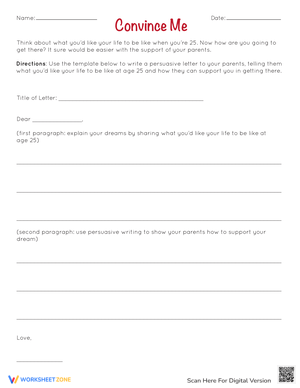
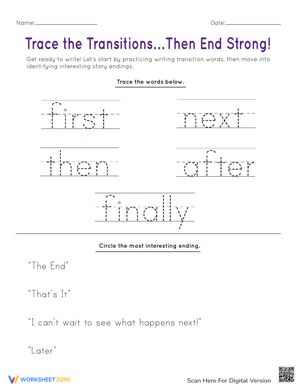
These worksheets address CCSS W.1.5 directly: students focus on a topic, respond to peer suggestions, and add details to strengthen writing with adult guidance. The revision and editing worksheets are the operational tools for W.1.5 — the standard describes a process, and each worksheet gives that process a printed form students can move through with increasing independence. Narrative worksheets connect to W.1.3, which requires first graders to recount two or more sequenced events, use temporal words (first, next, then, finally), and provide a sense of closure. The story-map prewriting worksheet makes that sequence visible before drafting begins, which is where W.1.3 instruction most often breaks down — students who skip planning produce narratives that loop or end without resolution. Opinion and informational publishing prompts address W.1.1 and W.1.2, ensuring the process applies across all three text types required at this grade.
Adjusting the Work for Writers at Different Points in the Year
For emergent writers, the prewriting and drafting worksheets work with a sentence starter printed at the top — "I see ___" or "My favorite ___ is ___" — so the first line is never blank. A word bank of four to six high-frequency words printed at the bottom of the editing worksheet reduces the cognitive demand of sight-word checking for students still building that vocabulary. These added supports can be removed as fluency grows without changing the worksheet format, which matters because consistency in the visual layout keeps classroom routines stable even as the challenge level shifts.
For students writing fluently and producing multiple sentences per session, open-ended prompts with extra lined pages extend the drafting and revision work. A useful challenge at the revision stage for advanced writers is requiring them to stretch two sentences rather than one — a plain sentence and a short sentence — which builds the habit of reading through a full draft rather than stopping at the first candidate. Each worksheet in this 1st grade writing process worksheets collection can also be used selectively: a student who already drafts confidently might skip the guided drafting worksheet entirely and work only on the revision and editing pages, while a student who struggles with planning uses the prewriting worksheet multiple times before drafting once.
Frequently Asked Questions
When during first grade should teachers introduce the full five-stage process?
Most teachers introduce the prewriting worksheet in October, after students have established basic sentence writing through September. The complete five-stage cycle runs most successfully as a class-wide unit in late October or November, with students cycling through independently by January. Rushing introduction before students can write at least two complete sentences causes the process to stall at the drafting stage — students who can only produce one sentence have nothing to revise.
What does the editing checklist cover for this grade level?
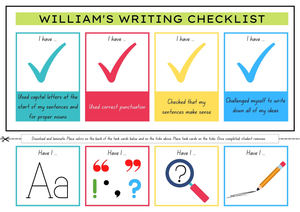
The checklist covers three items: a capital letter at the start of each sentence, ending punctuation (period, question mark, or exclamation point), and a finger space between every word. Sight-word spelling checks are limited to words from a short printed reference list at the bottom of the worksheet — asking first graders to check all sight-word spelling from memory turns editing into a guessing task rather than a meaningful review.
Can the worksheets be used across narrative, opinion, and informational writing?
Yes. The prewriting worksheets come in a narrative version — story map with three labeled story parts — and an informational version — topic web with a central idea and three detail branches. The editing checklist and publishing worksheet are format-neutral and work for all three text types. For opinion writing, the informational prewriting web adapts without modification: the central idea becomes the claim, and the detail branches become the supporting reasons. The 1st grade writing process worksheets collection is organized so teachers pull the appropriate prewriting format while using identical drafting, revision, editing, and publishing materials across genres.
How should these worksheets be used for small-group intervention?
In a small-group or pull-out setting, the most effective approach isolates one stage per session rather than running the full cycle in a single meeting. Use the prewriting worksheet to practice generating and organizing ideas verbally before writing — students narrate their story map to the teacher, who helps them identify what belongs in each box. The editing checklist is particularly useful in intervention because it gives students a concrete, repeatable routine for reviewing their own work rather than relying on the teacher to locate every error for them.












 Interactive Worksheet Maker
 Quiz Maker
 Word Search Maker
 Crossword Puzzle Maker
 Word Scramble Generator
 Sentence Scramble Generator
 Handwriting Worksheet Generator
 Name Tracing Generator
 Fill In The Blank Generator