




























Views
Downloads
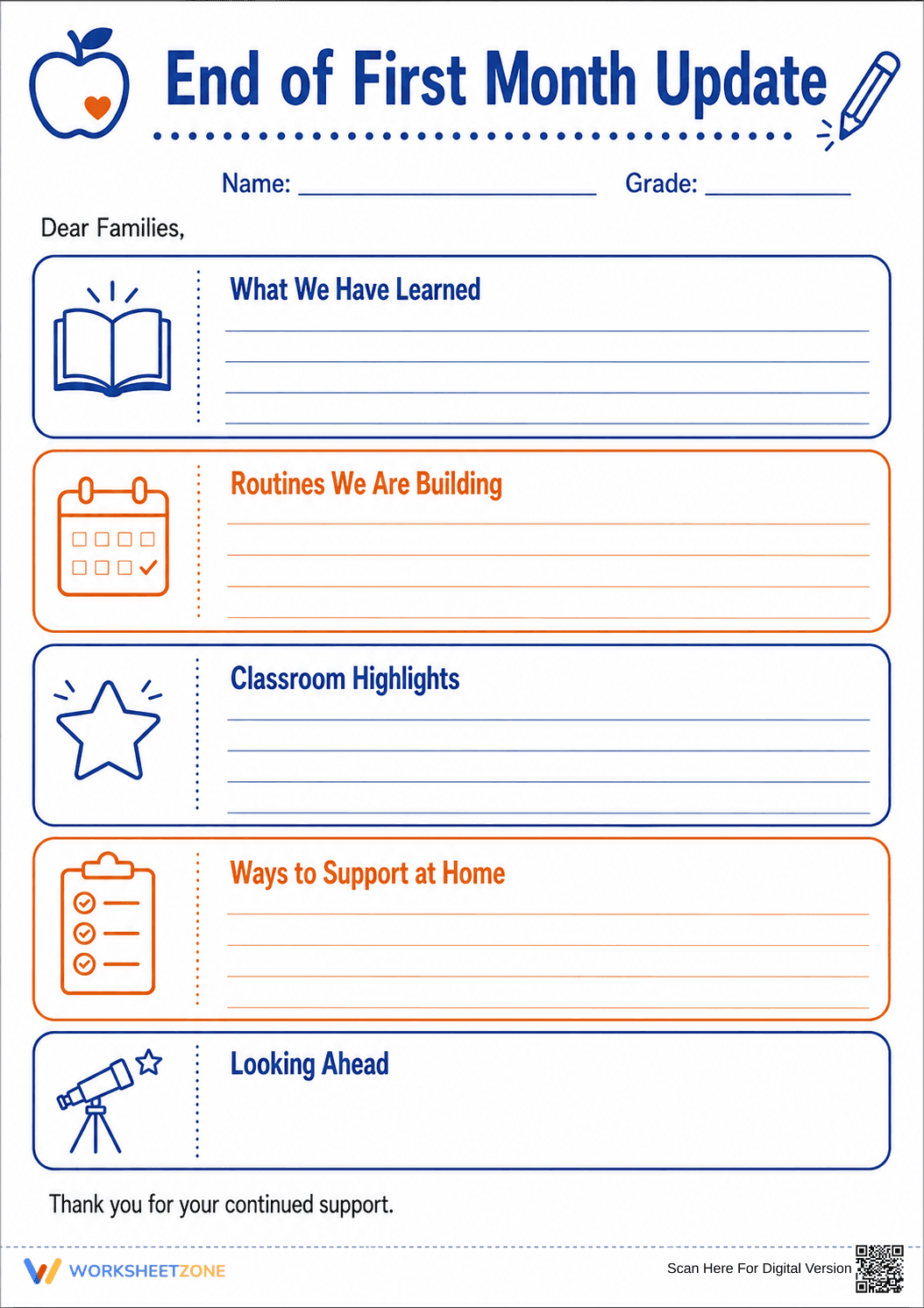

Printable Teacher Letter: End of First Month Update

Paste this activity's link or code into your existing LMS (Google Classroom, Canvas, Teams, Schoology, Moodle, etc.).
Students can open and work on the activity right away, with no student login required.
You'll still be able to track student progress and results from your teacher account.
Effective family-school communication is the cornerstone of student success. This End of First Month Update letter provides a structured, professional template for teachers to share academic progress and classroom culture shifts. By documenting routines and learning milestones, educators foster a transparent partnership that supports student growth throughout the academic year.
At a Glance
- Grade: K-5 · Subject: Classroom Management
- Standard:
CCSS.ELA-LITERACY.W.1.4— Produce writing in which the development and organization are appropriate to task.- Skill Focus: Family Communication & Reflection
- Format: 1 page · 5 sections · No answer key · PDF
- Best For: Monthly classroom updates and family engagement
- Time: 10–15 minutes
This single-page PDF features a clean, newsletter-style layout with five distinct sections: What We Have Learned, Routines We Are Building, Classroom Highlights, Ways to Support at Home, and Looking Ahead. Each section includes clear horizontal writing lines to guide the teacher's input. Visual cues like book, calendar, and star icons make the document accessible and engaging for families while maintaining a professional aesthetic.
The zero-prep workflow for this resource is designed for the busy educator. First, print the template (30 seconds). Second, hand-write or type specific classroom updates into the five themed blocks (10 minutes). Third, photocopy and distribute to students or scan for digital delivery (2 minutes). This streamlined process ensures consistent communication without the need for complex graphic design software or layout adjustments, making it an ideal tool for monthly reporting.
This resource aligns with `CCSS.ELA-LITERACY.W.1.4`, focusing on producing clear and coherent writing appropriate to the task, purpose, and audience. While primarily a teacher tool, it serves as an exemplar for organized informational writing. The structured headers ensure that all essential components of a classroom update are addressed. Both standard codes can be copied directly into lesson plans, IEP goals, or district curriculum mapping tools.
Use this letter at the conclusion of the first four weeks of school to solidify the home-school bond. It is particularly effective as a formative assessment of classroom climate; as you write the "Routines" section, observe which students have mastered transitions. Expect to spend 15 minutes reflecting on the month's successes while filling out the prompts for a professional finish. It can be sent home in Friday folders or distributed during back-to-school night events.
This template is designed for K-5 elementary teachers seeking a consistent communication tool. It is ideal for general education classrooms, but also serves as a vital bridge for Special Education teachers to update parents on IEP-related classroom routines. Pair this with a student-led reflection sheet or a monthly reading log for a comprehensive home-communication packet that keeps parents informed and involved.
Research from RAND AIRS 2024 emphasizes that consistent, structured communication between teachers and families significantly correlates with higher student attendance and improved social-emotional outcomes. This template addresses the need for low-friction communication tools that allow educators to maintain professional standards without excessive administrative burden. By utilizing the CCSS.ELA-LITERACY.W.1.4 framework for organized updates, teachers provide families with actionable data regarding classroom routines and learning objectives. The inclusion of specific sections for home support aligns with evidence-based practices for increasing parental self-efficacy in supporting their child's education. This resource serves as a practical application of the Fisher & Frey (2014) model of gradual release, where clear communication of expectations at school allows for better-supported practice in the home environment. Providing 5 clear areas of focus ensures that the communication is comprehensive yet digestible for all family backgrounds.


