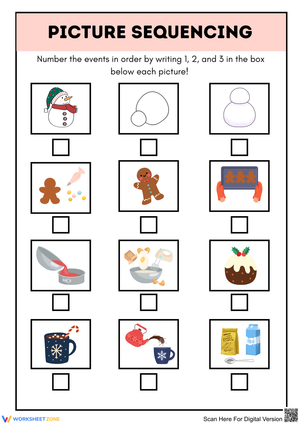
1st grade story sequencing printable worksheets give teachers a direct window into whether students actually followed a story from start to finish — not just whether they enjoyed it. The set covers picture-ordering tasks, beginning-middle-end organizers, numbered sentence sequences, and retell extensions that connect directly to read-alouds, guided reading lessons, and literacy center rotations.
What Each Worksheet Targets
Four sequencing formats make up the set, each carrying a different level of demand:
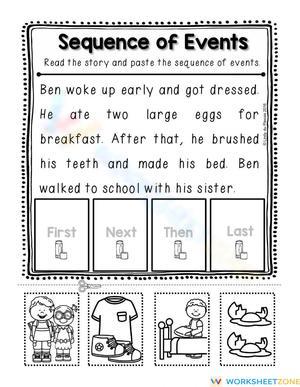
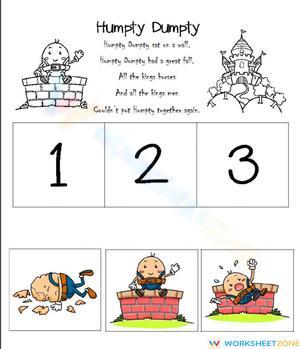
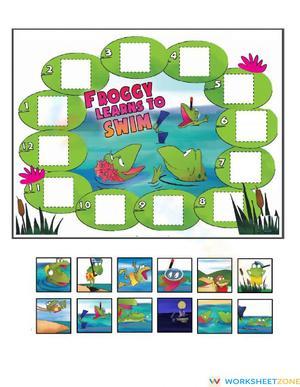
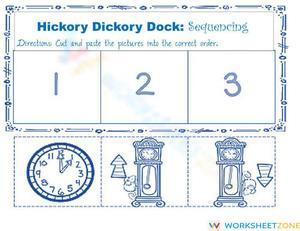
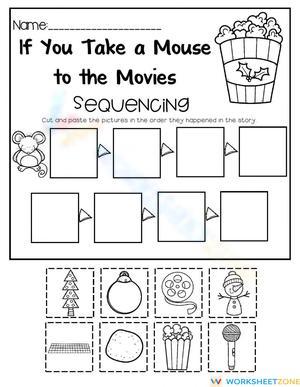
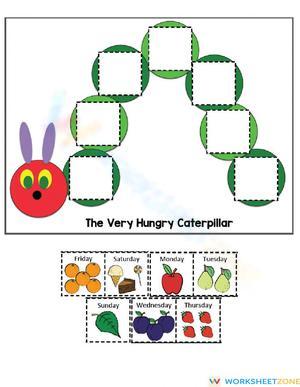
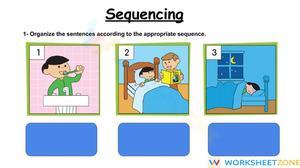
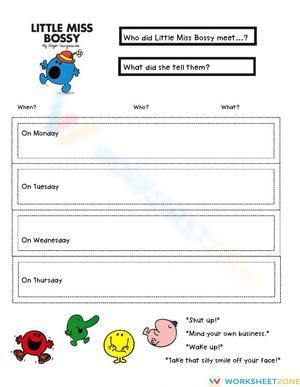
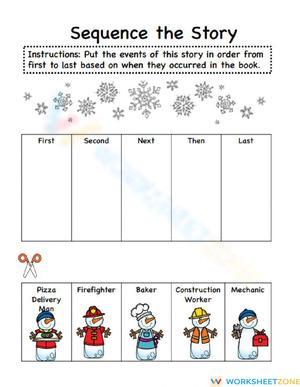
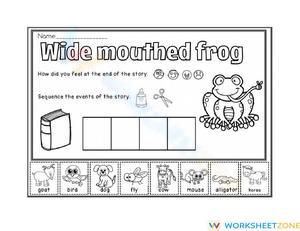
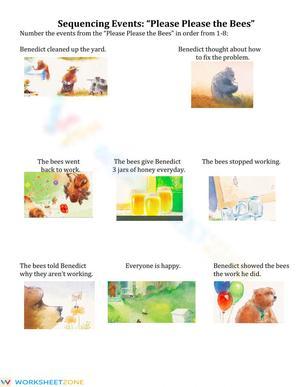
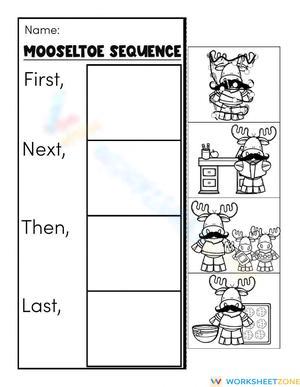
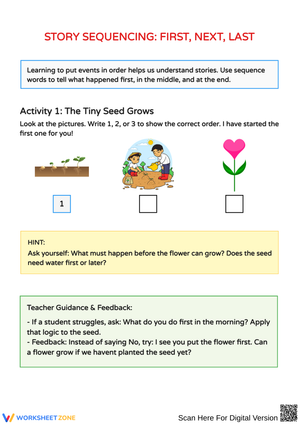
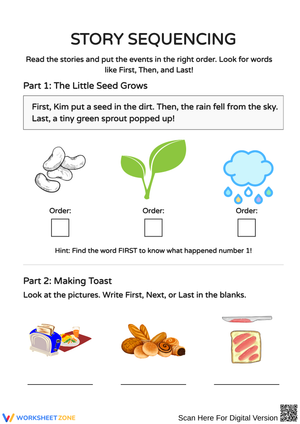
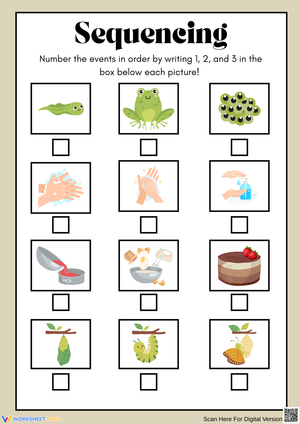
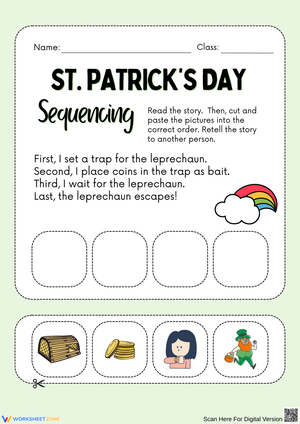
- Picture cut-and-sort tasks: Students arrange three or four story images in the correct order — the most accessible entry point for students still building reading stamina.
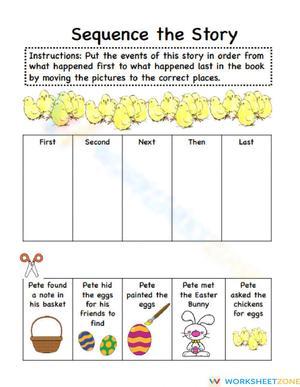
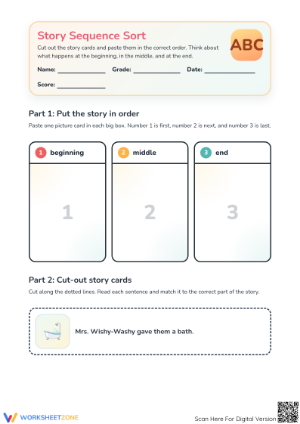
- Beginning-middle-end organizers: Students sort events into labeled sections, which pushes them toward story structure thinking rather than just identifying which event came first.
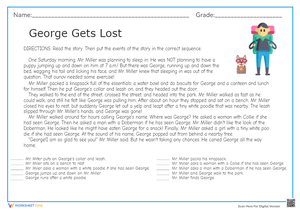
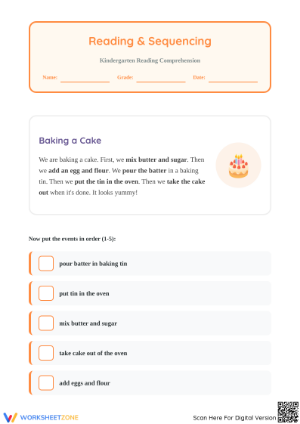
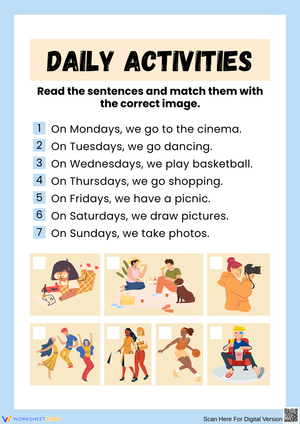
- Numbered sentence sequences: Students read brief written events and label them in order with no picture support, a meaningfully higher demand than picture-based formats.
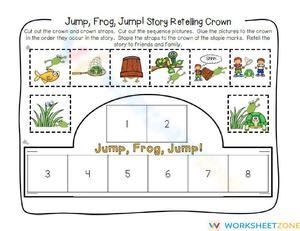
- Retell extensions: Students use their ordered events and transition words — first, next, then, last — to explain the story aloud or in short written phrases.
These four formats allow teachers to move students through a natural progression: pictures before words, ordering before explaining. Most Grade 1 classrooms start with cut-and-sort tasks and introduce sentence-level work as decoding becomes more automatic in the second half of the year.
How to Work These Worksheets Into Your Lesson Plans
The strongest placement for sequencing practice is right after a shared reading or read-aloud, in that ten-minute window before students move to centers. Read the story together, pause to name one or two major events with the class, then hand out the worksheet. That tight connection between the text and the task prevents the confusion that appears when sequencing practice is presented in isolation — students spend less mental energy figuring out what they're ordering and more on the actual comprehension work.
In small-group instruction, treat the worksheet as a confirmation step rather than the opening move. Have students physically move picture cards on the table, talking through why they placed each one where they did, before transferring the order to the worksheet. Students who struggle on paper frequently succeed at this oral-and-physical rehearsal first, and accuracy often follows when they pick up the pencil. The shorter 3-step picture versions fit inside five minutes of morning work and function well as a quick-check after the previous day's read-aloud. These 1st grade story sequencing printable worksheets also travel home reliably — the picture-based formats give families enough context that a child can complete the task without re-reading a passage.
Student Errors Worth Watching For and Addressing
The most consistent error in Grade 1 sequencing is not at the beginning or end — students anchor those positions fairly well because first and last events are the most memorable parts of a story. The breakdown happens in the middle. In a 4-step sequence, students frequently swap the second and third events, treating them as interchangeable because neither feels decisively "before" the other. A student who correctly labels "the seed was planted" as step 1 and "the flower bloomed" as step 4 will often place "the plant got water" and "the stem grew tall" in either order at steps 2 and 3. The most useful correction is not asking them to re-read — it's asking, "Could the stem have grown before the plant got any water?" That causal question redirects the thinking in a way that re-counting the boxes does not.
A second pattern appears when students move from picture tasks to sentence tasks. Students who sequence pictures correctly sometimes reverse the same events when they appear as written sentences, because the decoding demand competes with the comprehension demand. That gap is diagnostically useful: the comprehension skill is present, but reading fluency isn't yet stable enough to support it under dual-task conditions.
Standard Alignment
These worksheets address CCSS.ELA-LITERACY.RL.1.3, which asks first graders to describe the major events in a story using key details. Sequencing sits directly in the "major events" strand of that standard. In most Grade 1 classrooms, RL.1.3 instruction begins with character and setting work early in the year, then shifts to event order once students are comfortable discussing what happens in a story — not just who is in it. These worksheets fit that mid-year instructional phase and serve as formative checks during instruction rather than only as end-of-unit review.
Differentiating Across Student Readiness Levels
For students who need more support, reduce the number of steps before changing anything else. A 3-step picture sequence with large, clear illustrations is a more accessible starting point than a 4-step task with smaller images. Before students touch a pencil, give a brief oral prompt: "Tell me what happened first." That verbal anchor steadies the task for students who freeze when they see multiple pictures at once. Cut-and-paste formats are also easier than write-in formats for students still developing fine motor precision — moving a cut piece is a lower-stakes physical action than writing a number inside a small box.
Students who sequence accurately and quickly are ready for more language demand. After completing the worksheet, ask them to write two sentences using the transition words from their ordered events, or have them retell the full story to a partner using only the numbered pictures as a guide. That oral extension turns a completed worksheet into a speaking and listening task without requiring anything additional to be printed or explained.
Frequently Asked Questions
Are these better suited for whole-class instruction or small groups?
Both work. Picture-based and cut-and-paste worksheets fit whole-class or center use because the directions are simple enough to follow without teacher proximity. Sentence-sequencing tasks carry more reading demand and are better assigned during small-group instruction or as post-lesson independent practice, when a teacher is nearby to catch confusion before it becomes a habit.
How many events should a first grader be able to sequence accurately?
Most first graders are ready to sequence 3 to 4 events with picture support by mid-year. The 1st grade story sequencing printable worksheets in this set include both 3-step and 4-step versions, so teachers can match the task to where students are rather than moving the whole class through the same level at the same pace.
Do the worksheets include answer keys?
Yes. Each worksheet includes an answer key so teachers can review student work quickly without referring back to the original story text.
What is the best way to use these for homework?
Send home the picture-based worksheets rather than the sentence-sequencing ones. The images carry enough story context that families can support the task without locating and re-reading the original text. When 1st grade story sequencing printable worksheets go home, it helps to tell families to ask the child to retell the story aloud after completing the ordering task — that oral retell is where the comprehension work actually happens, and it takes less than two minutes.












 Interactive Worksheet Maker
 Quiz Maker
 Word Search Maker
 Crossword Puzzle Maker
 Word Scramble Generator
 Sentence Scramble Generator
 Handwriting Worksheet Generator
 Name Tracing Generator
 Fill In The Blank Generator