Start With the RL.1 Skills, Not Generic Passages
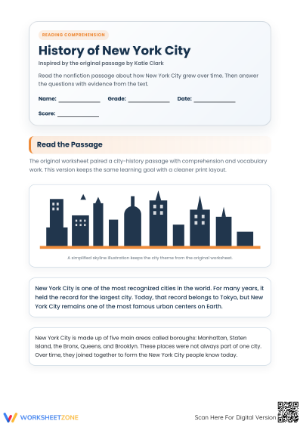
The most useful 1st grade reading comprehension worksheets aren't random passage-and-question sets. They target the specific Reading: Literature standards that grade 1 students are expected to master. Under the Common Core RL.1 strand, first graders ask and answer questions about key details (RL.1.1), retell stories and identify a central message (RL.1.2), and describe characters, settings, and major events using key details (RL.1.3). When your worksheets map to those sub-standards, you can tell exactly which skill a struggling reader is missing instead of guessing.
Grade 1 is also the year decoding and meaning-making start to work together. The Reading Foundational Skills standards (RF.1) cover phonological awareness, phonics, and fluency, and at this grade band fluency and comprehension reinforce each other. A worksheet that asks students to read a short decodable passage and then answer two key-detail questions is doing double duty: it builds accuracy and it checks understanding. That's a better use of seatwork time than a page that only tests one or the other.
Before you print anything, decide what a page is for. Is it teaching a skill, practicing it, or checking it? A worksheet built to introduce retelling looks different from one meant to assess it, and mixing those purposes is how you end up with data you can't trust.
Organize Worksheet Sets by RL.1 Sub-Standard
Sorting your worksheets by standard turns a folder of printables into a teaching sequence. Try grouping them like this:
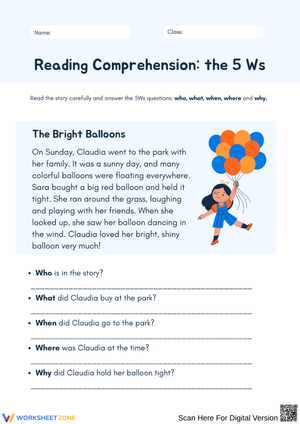
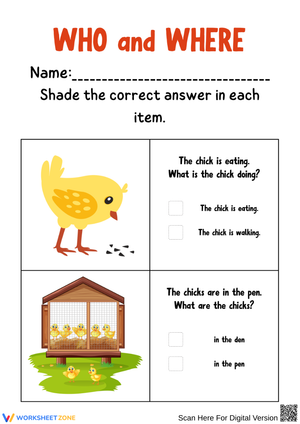
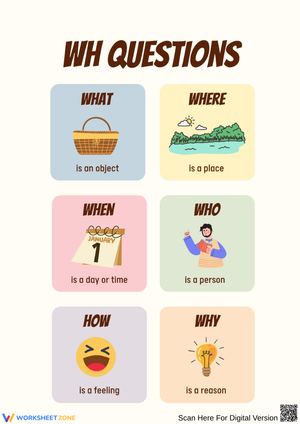
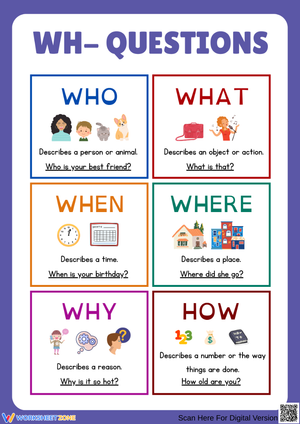
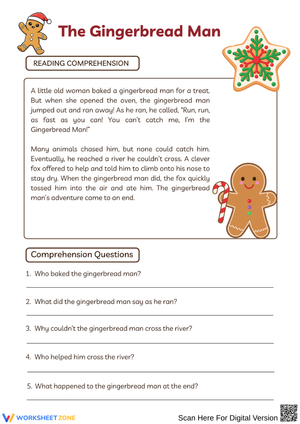
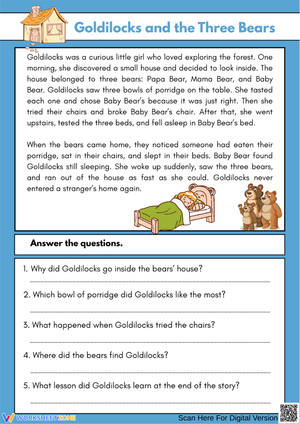
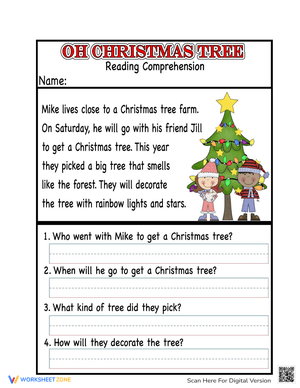
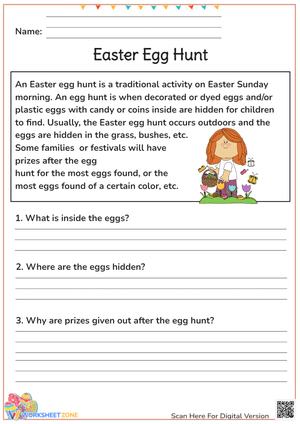
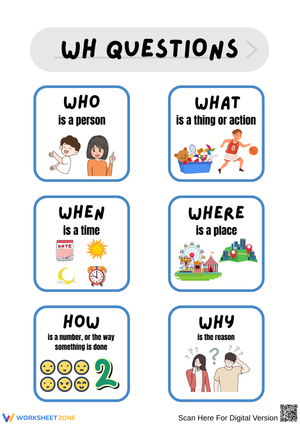
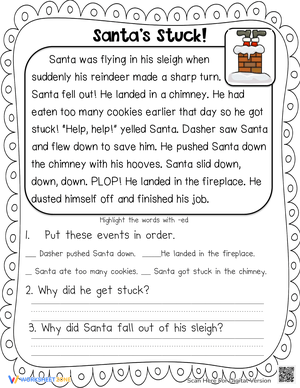
- Key details (RL.1.1): short passages with who, what, where, and why questions students answer directly from the text.
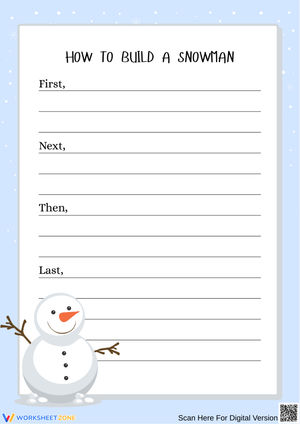
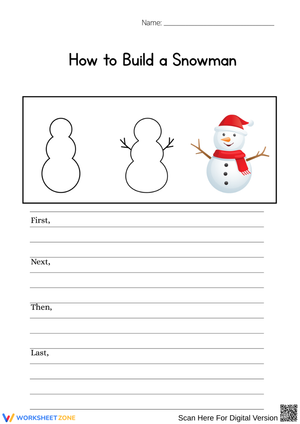
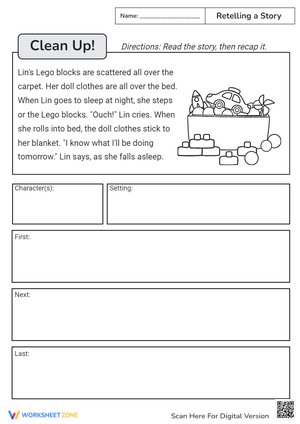
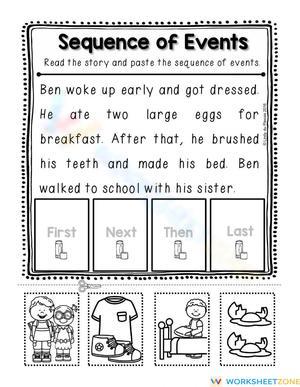
- Retelling and central message (RL.1.2): beginning-middle-end frames and "what was the story really about?" prompts.
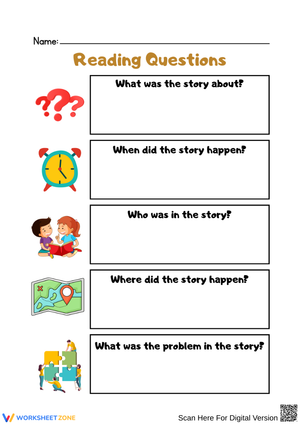
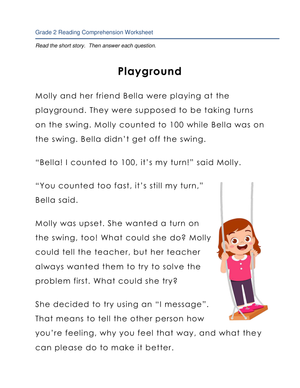
- Character, setting, event (RL.1.3): organizer-style pages where students name the character, describe the setting, and list a major event.
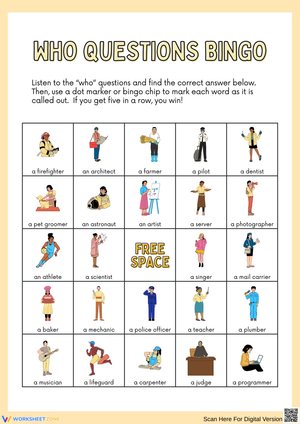
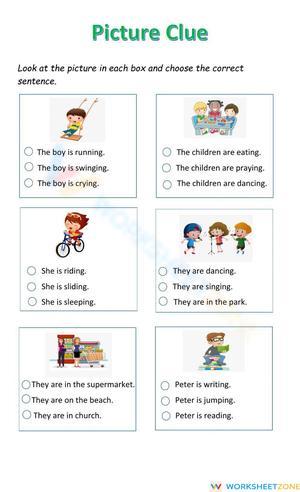
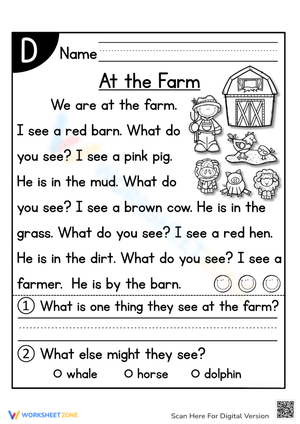
- Illustration clues (RL.1.7): picture-based tasks where students use the art to describe characters and events.
- Comparing stories (RL.1.9): two-story pages that ask how characters are alike or different.
With sets labeled this way, a small-group rotation can move deliberately from key details to retelling to comparison, and every formative result points back to a specific standard instead of a vague sense that a child "isn't getting it."
Pair Fiction and Nonfiction to Build RL.1.5
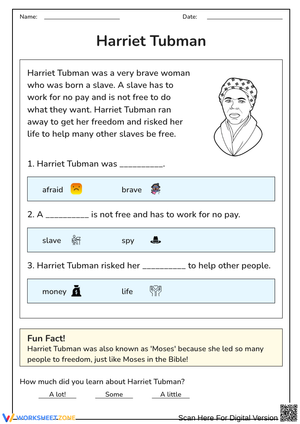
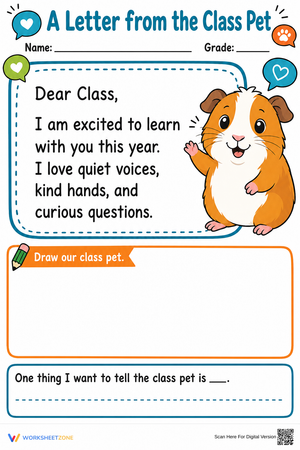
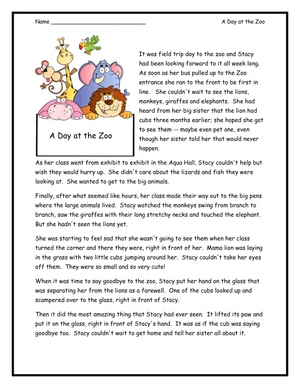
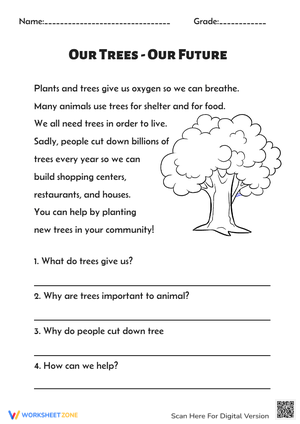
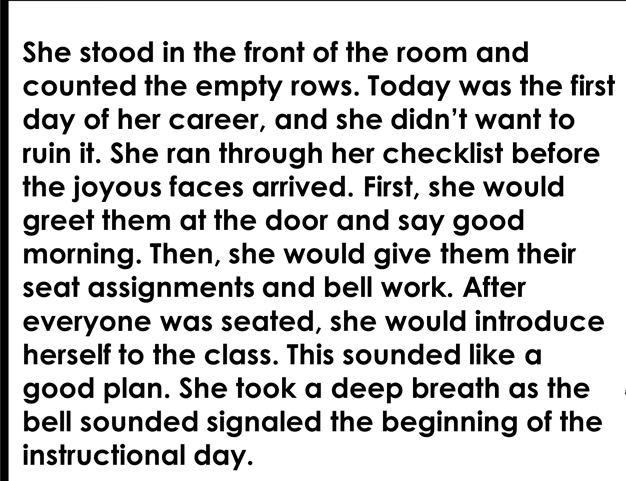
One skill teachers often skip on worksheets is distinguishing storybooks from informational books, which RL.1.5 asks first graders to do. The fix is simple: pair a fiction comprehension page with a nonfiction one on the same topic. Read a short story about a class pet, then a few facts about the same animal, and have students mark which text tells a story and which one teaches information.
The two page types also pull on different thinking. First graders answering nonfiction questions lean on text features and stated facts, while fiction questions push them toward character feelings, motivation, and story order. Rotating between both keeps students from defaulting to a single strategy, and it gives you a cleaner read on whether a child struggles with narrative comprehension, informational comprehension, or both.
Connect Fluency Data to Comprehension
Because fluency and comprehension are reciprocal in grade 1, pairing a short timed passage with comprehension questions gives you two signals at once. Track words correct per minute (WCPM) on the read, then score the comprehension questions. A student who is fast but can't answer key-detail questions needs a different plan than one who reads slowly but understands what the text means.
This pairing also protects you from a common misread. A high WCPM score can look like success while hiding a comprehension gap, so a page that ends with two or three text-based questions keeps rate honest. The NWEA MAP Reading Fluency guidance treats oral reading measures as partners to comprehension checks for exactly this reason. Grade 1 benchmarks often expect independent reading around Guided Reading levels I-J by year's end, but that level assumes understanding, not just speed.
Classroom Implementation
These worksheets earn their place when they slot into structures you already run:
- Guided reading rotations: assign a one-page comprehension check tied to the group's text so the follow-up work matches the lesson.
- RTI and intervention blocks: use short, single-skill pages as progress checks; a Tier 2 group working on retelling gets only retelling worksheets for two weeks.
- Formative exit tickets: a two-question key-detail slip tells you who is ready to move on before you plan tomorrow.
- Illustration-based tasks: for readers still building decoding, RL.1.7 picture pages let them reason about characters and events without being blocked by hard words.
Keep each page short. First graders lose stamina fast, and a focused eight-minute task produces cleaner data than a full worksheet packet.
Frequently Asked Questions
1. What reading comprehension skills should 1st graders master by the end of the year?
By June, most first graders should ask and answer questions about key details, retell a story with a clear beginning, middle, and end, name a central message, and describe characters, settings, and events. These are the core RL.1 skills, and many students are also reading independently around Guided Reading levels I-J.
2. How can teachers use comprehension worksheets alongside guided reading or RTI blocks?
Match the worksheet to the group's text and target skill. In guided reading, use it as follow-up practice; in RTI, use single-skill pages as weekly progress checks so you can tell whether a Tier 2 intervention is actually moving the needle.
3. How do fiction and nonfiction comprehension worksheets differ for grade 1?
Fiction pages ask about characters, feelings, and story order, while nonfiction pages ask about stated facts and text features. Pairing both on one topic builds the RL.1.5 skill of telling storybooks from informational books and shows you which text type a student finds harder.
4. How often should grade 1 comprehension be checked with tools like DIBELS?
Most schools benchmark oral reading fluency with DIBELS or a WCPM probe three times a year, then use short comprehension worksheets weekly as low-stakes formative checks between those benchmarks to catch gaps early.
5. How do these worksheets align with Common Core RL.1 standards?
Each set maps to a specific sub-standard: RL.1.1 for key details, RL.1.2 for retelling and central message, RL.1.3 for characters and settings, and RL.1.7 for using illustrations. That alignment means your instruction, your worksheets, and your data all point back to the same standard.












 Interactive Worksheet Maker
 Quiz Maker
 Word Search Maker
 Crossword Puzzle Maker
 Word Scramble Generator
 Sentence Scramble Generator
 Handwriting Worksheet Generator
 Name Tracing Generator
 Fill In The Blank Generator