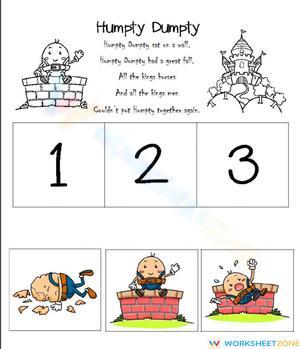
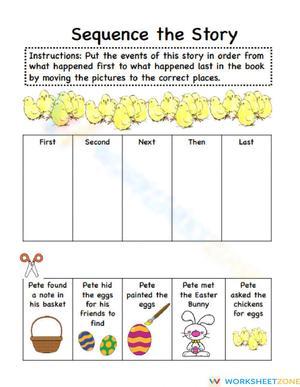
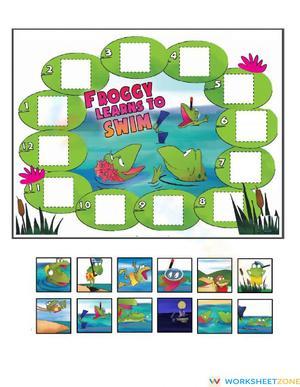
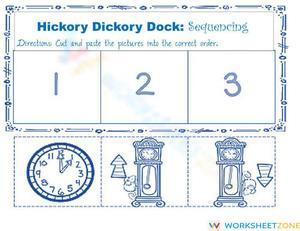
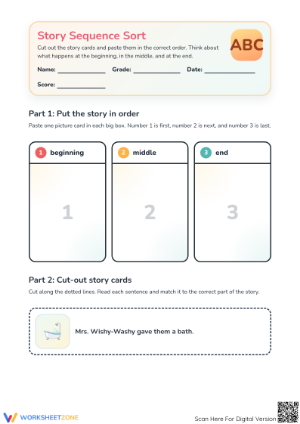
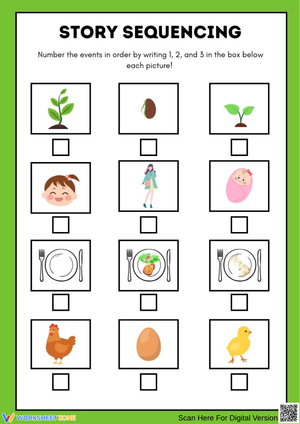
These sequencing events pdf worksheets for 1st grade give teachers a focused bank of exercises built around one of the trickiest comprehension skills to track in early reading — holding a story's timeline in working memory and reproducing it in correct order. The set moves from picture-only formats through picture-and-phrase combinations to short narrative passages, creating genuine entry points for the full range of first-grade readers.
What Each Worksheet Targets
Each worksheet in this collection of sequencing events pdf worksheets for 1st grade addresses a specific layer of the skill rather than cycling through the same cut-and-paste format in different colors. The range covers:
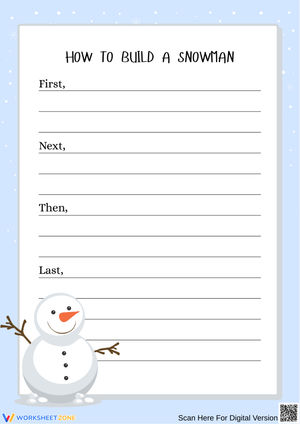
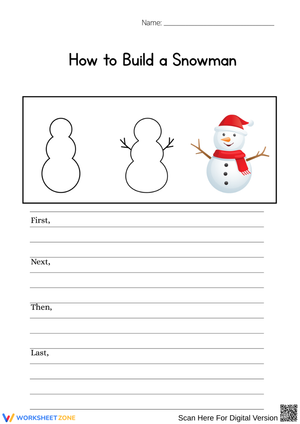
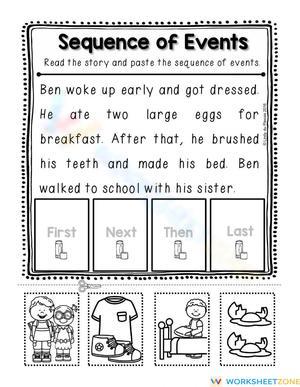
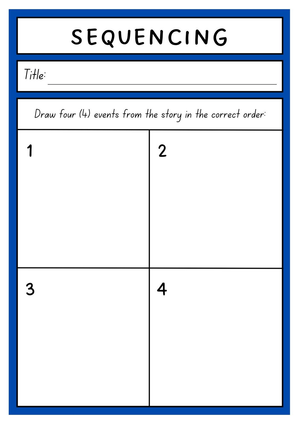
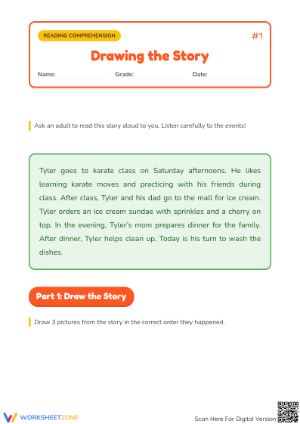
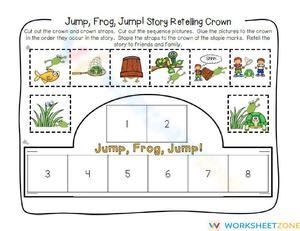
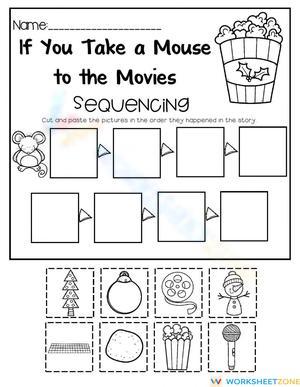
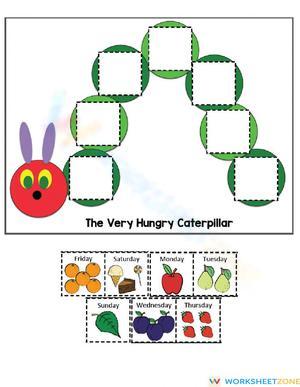
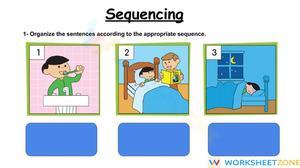
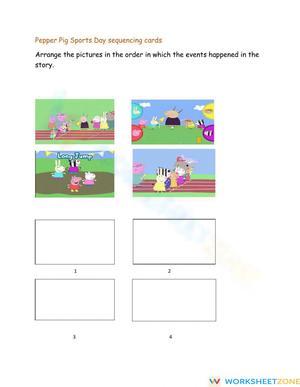
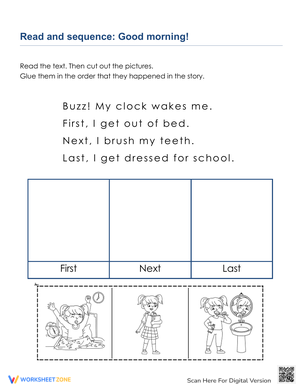
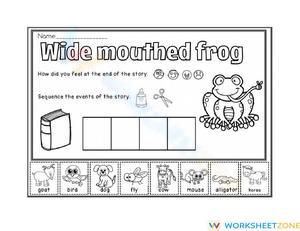
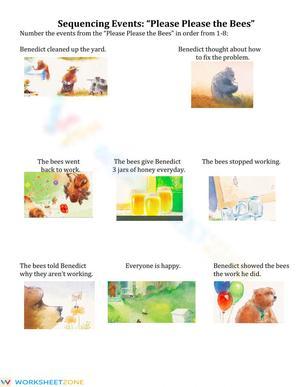
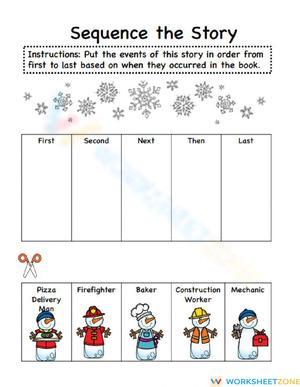
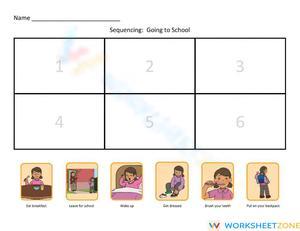
- Picture sequencing — three or four illustrated panels presented out of order; students number them or cut and arrange them chronologically
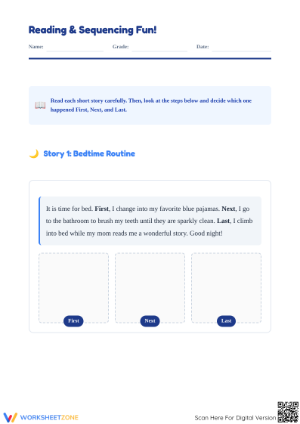
- Transition word work — short passages where students underline first, next, then, and last and explain what each one signals in the story
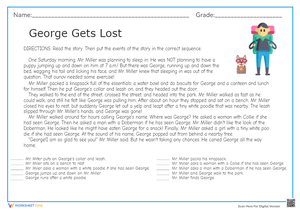
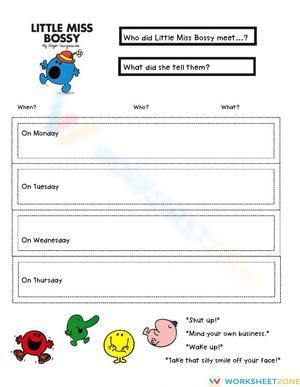
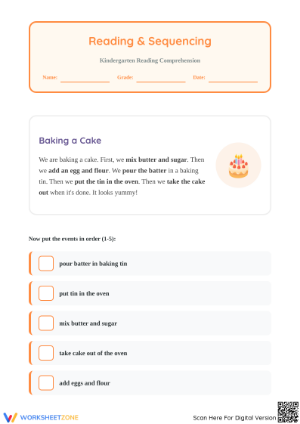
- Sentence ordering — three to five sentences from a familiar story type, printed scrambled; students assign a sequence number to each
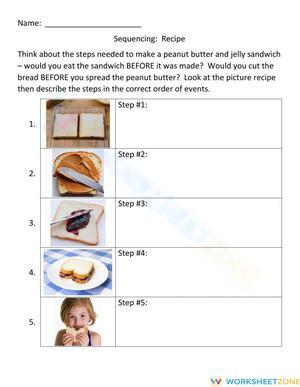
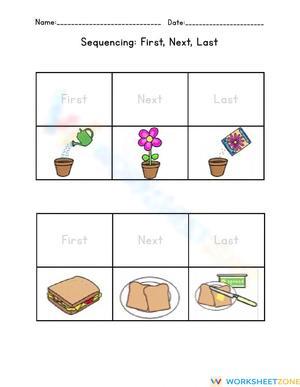
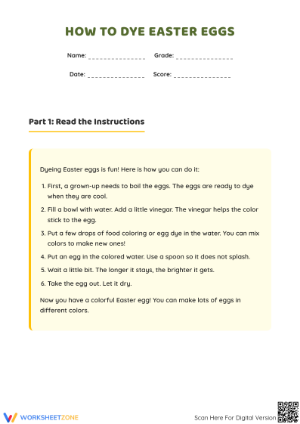
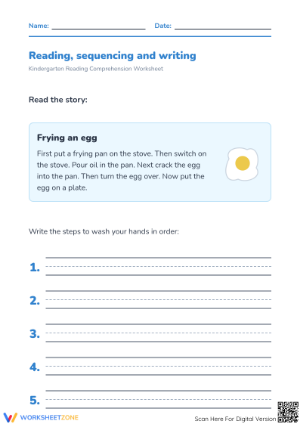
- Procedural sequences — real-world processes like hand-washing, planting a seed, or making toast, where correct order carries obvious logical stakes
- Retell frames — after reading a short passage, students complete a beginning-middle-end organizer in their own words
Procedural sequences deserve particular attention here. Because the consequences of wrong order are immediate and concrete — you cannot pour the water before you fill the cup — students who freeze on fictional narrative often succeed with procedural tasks first. That early success gives them a working mental model they can carry back into story work without needing abstract explanation.
Error Patterns That Surface in First-Grade Sequencing Work
The most predictable sequencing error in first grade is not mixing up the beginning and the end — it is scrambling the middle. Students routinely anchor the first and last events correctly because those positions feel obvious, then treat middle steps as interchangeable. On a four-panel worksheet about a character getting ready for school, a student might correctly place "alarm rings" first and "arrives at school" last, then swap "eats breakfast" and "gets dressed" without registering that the logical order has broken down.
A second pattern worth tracking: students who sequence pictures accurately but fall apart when the same information appears as printed sentences. This gap is not a comprehension problem — it is a decoding load problem. When a student is spending most of their working memory sounding out words, there is nothing left to hold the story's timeline in mind. Watching which format breaks down tells you exactly what to address next, and because the same sequencing concepts appear across multiple formats in this set, that diagnostic information surfaces quickly.
Standard Alignment
Fiction-based worksheets in this set address CCSS.ELA-LITERACY.RL.1.3, which asks first graders to describe characters, settings, and major events in a story using key details. Describing major events with any coherence requires knowing the order in which those events occur — sequencing is the mechanism that makes RL.1.3 function in practice rather than only on paper. Worksheets using procedural or informational passages align with CCSS.ELA-LITERACY.RI.1.3, which targets the connection between events and ideas in a nonfiction text. Teachers working toward both standards across a single unit find that rotating between narrative and procedural formats addresses both without requiring separate lesson preparation.
How to Work These Worksheets Into Your Lesson Planning
The most reliable placement is the five-minute warm-up at the start of reading block. A picture-sequencing worksheet takes most first graders about four minutes — enough time to surface a misconception before instruction begins without sacrificing the time a lesson requires. Monday warm-ups are particularly effective here; after the weekend, students benefit from a low-stakes task that pulls them back into narrative thinking before anything harder is asked of them.
For small-group instruction, text-based ordering worksheets pair well with a reverse-check strategy: after students complete their sequence, ask them to read it from last event to first. If the backward version sounds nonsensical, something in the middle is almost certainly out of place, and students can usually identify the problem themselves rather than waiting for teacher correction. Building that self-monitoring habit into the routine takes about two minutes and substantially cuts down on one-on-one correction time during subsequent center work.
Cut-and-paste formats belong at a literacy center where fine motor practice is also a goal. Have students negotiate the order verbally with a partner before anyone picks up scissors — the explanations students give each other ("no, she had to tie her shoes before she could go outside") carry more instructional weight than the completed worksheet itself.
Calibrating the Worksheets for Different Student Needs
For students who are still developing basic print concepts, limit sequencing tasks to three steps and use picture-only or picture-with-single-word formats. Pairing those worksheets with a spoken retell — where the student narrates the order aloud before writing anything — removes the written production demand while keeping the cognitive work of sequencing intact. A word bank printed at the top of the worksheet with first, next, and last lets students focus on the logic rather than the spelling.
Students reading above grade level benefit from five- and six-step sequences where the correct order is not immediately obvious from the illustrations alone. A strong extension: remove the pictures entirely and give those students a printed passage only, then ask them to draw their own sequence strip from memory. That reversal reveals whether a student has genuinely internalized the concept or has been relying on visual cues as a substitute for reading comprehension.
These sequencing events pdf worksheets for 1st grade also adapt well for English language learners when the procedural formats come first. Daily-routine sequences draw on experiences that cross language backgrounds — the steps for washing hands or getting dressed are the same in every home — and the visual support lets students demonstrate understanding before they have the academic vocabulary to describe it in writing.
Frequently Asked Questions
How many steps should a first grader be sequencing at one time?
Three steps is the right starting point at the beginning of the year. Move to four steps once most students are consistently accurate and can explain why each step belongs where it is. The jump to five or six steps is appropriate only for students who have fully mastered four-step sequences — each additional middle step multiplies the number of possible wrong orderings, so the difficulty increase is larger than it appears on the surface.
When in the school year should sequencing worksheets be introduced?
Procedural sequences — daily routines, simple how-to steps — fit naturally in September and October when students are already learning classroom procedures and practicing oral retell. Text-based sequencing makes more sense from November onward, after enough reading fluency has developed that decoding a three-sentence passage no longer exhausts the working memory that the sequencing task itself requires.
How do I use these worksheets as formative assessment rather than just practice?
Sentence-ordering and retell-frame formats are the most informative for formative purposes. A completed cut-and-paste worksheet confirms whether a student reached the right answer; noting which specific steps a student swapped — and whether the same swap recurs across multiple worksheets — tells you whether the underlying issue is vocabulary, fluency, or logical reasoning. Keeping two or three dated samples per student over a four-week span reveals patterns that any single result hides.
What about students who are not yet reading independently?
Picture-only and picture-with-phrase formats serve pre-independent readers without requiring teacher read-aloud support for every task. These sequencing events pdf worksheets for 1st grade include enough visual-only content that students working below grade-level text can still engage with the sequencing concept during center time — and the cut-and-paste activities keep fine motor practice embedded in the literacy block rather than treated as an entirely separate subject.












 Interactive Worksheet Maker
 Quiz Maker
 Word Search Maker
 Crossword Puzzle Maker
 Word Scramble Generator
 Sentence Scramble Generator
 Handwriting Worksheet Generator
 Name Tracing Generator
 Fill In The Blank Generator