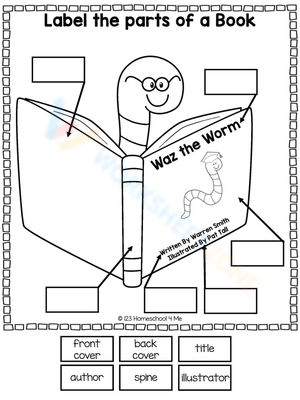
Literary elements pdf worksheets for 1st grade tackle something that looks straightforward but demands real design care: a task that measures story comprehension without hitting the wall of limited handwriting and spelling stamina that defines this grade. These worksheets focus on characters, setting, major events, and sequence — the story parts a six- or seven-year-old can point to, name, and order when the format respects where they are developmentally.
What These Worksheets Ask Students to Practice
What makes literary elements pdf worksheets for 1st grade most effective at this stage is the commitment to one element per page rather than mixing several skills together. A first grader who fully understands setting can still miss the point when a worksheet buries the setting question between a character task and a sequencing task — the problem is cognitive, not comprehension-based.
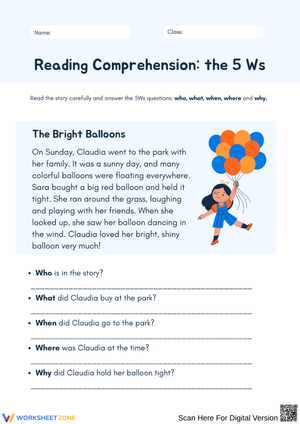
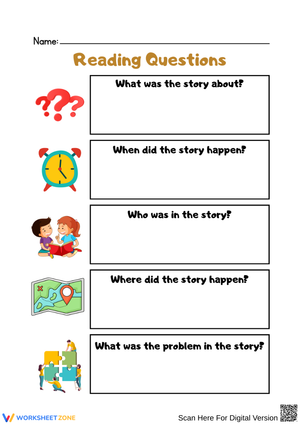
- Character identification: Students circle, draw, or name who appears in the story, sometimes distinguishing the main character from secondary characters presented as picture choices.
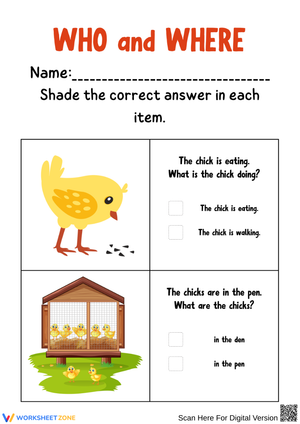
- Setting recognition: Students identify where and when a story takes place, most often by completing a sentence frame or matching an image to a place word.
- Major events: Students mark or list what happens, learning to select the important actions rather than recording every small detail.
- Story sequence: Students number pictures or short sentences to show beginning, middle, and end in order.
- Simple retelling: Students use a three-box organizer — one detail per box — to capture story structure without writing extended prose.
Response formats across the set include circling, drawing, cut-and-paste matching, sentence-frame completion, and labeling. These formats give students a way to show real comprehension even when decoding and spelling are still developing.
Why This Format Matches How First Graders Build Story Knowledge
First grade is when most students cross the threshold from following a story to thinking about one. They can hold a character's name in memory, notice a setting shift, and sense the difference between beginning and end — but they cannot yet sustain the working-memory load of a multi-part written response. The single-skill-per-worksheet structure directly addresses that constraint. By reducing cognitive load, it puts student attention on the comprehension work rather than on the mechanics of completing the page.
There is also a retrieval benefit that becomes visible across a month of instruction. When the same worksheet format reappears with different texts, students internalize the routine — which boxes to fill, which sentence frames to complete — and channel that freed-up attention toward actual story thinking. The same three-box sequencing structure used after a Monday morning read-aloud becomes a familiar thinking tool by Thursday when students encounter it again at the literacy center with a different text.
Where Student Thinking Breaks Down and What to Watch For
The most persistent error in Grade 1 setting work is confusing a character's action with the setting. A student whose class just read a book set "on a farm" will write "feeding the chickens" in the setting box — they identified something concrete from the story, but they described an event rather than a place. This happens because "where" and "what happened" feel indistinct to early readers, especially when the setting appears only in illustrations rather than in the text itself. A worksheet that prompts "The story takes place ___" alongside a labeled background image isolates the element and surfaces this confusion within the first few minutes of review.
Sequencing errors follow a different pattern. Students often place the most emotionally vivid moment first — the wolf blowing down the house, the birthday surprise — regardless of where it falls in the actual plot. Seeing that choice on a completed worksheet tells a teacher something specific: the student understood the story but has not yet separated "most exciting" from "what came first." That is a genuine and addressable comprehension distinction, and it appears reliably in the numbered-picture tasks.
Placing These Worksheets Where They Do the Most Work
The strongest classroom use of literary elements pdf worksheets for 1st grade starts with a text students already know. Read-alouds work especially well because they remove decoding pressure entirely and let students focus on meaning. After reading, a brief think-aloud about the target element — "I notice the whole story happens inside one small apartment; that's our setting" — primes students before they pick up a pencil. The worksheet then runs five to eight minutes and gives every student a visible record of their thinking while the story is still present in memory.
Literacy centers are the other high-value placement. A center that pairs a familiar picture book with one character-sort or setting-identification worksheet runs without constant teacher oversight. Students who finish early can flip the paper over and draw a new setting where the same characters might appear — a low-lift extension that stays connected to the lesson goal without requiring a separate prepared activity.
Standard Alignment
These worksheets align directly to the CCSS Reading Literature standards for Grade 1. RL.1.3 asks students to describe characters, settings, and major events using key details — the exact language that governs which elements appear across the set. RL.1.2 covers retelling stories with key details and demonstrating understanding of the central message or lesson, which maps directly to the retelling and sequencing tasks. RL.1.7 addresses using illustrations alongside text to describe characters, settings, and events, which is why picture-support tasks appear throughout the set rather than only as an accommodation for struggling readers. Instructionally, these standards are typically introduced in the fall alongside read-aloud routines, built throughout winter with a range of fiction, and revisited in spring when students draw on story-structure knowledge to compose their own narratives.
Tailoring the Set for Students at Different Stages
Grade 1 classrooms include students at widely different points in reading development, and literary elements pdf worksheets for 1st grade hold up across that range when teachers make a few targeted adjustments. For students who need more support, oral rehearsal before pencil-to-paper work closes most of the gap: ask the student to say the setting aloud, point to the sentence frame together, then write. That sequence separates comprehension from production and keeps the assessment evidence honest. For multilingual learners, pairing every sentence frame with a labeled illustration gives students a second access point that does not require waiting on English vocabulary to catch up with their story comprehension.
Students ready for more challenge benefit from an explanation shift rather than a difficulty jump. Replacing "The setting is ___" with "I know the setting is ___ because ___" requires students to cite text or illustration evidence — a skill that matters considerably in second and third grade, and one that strong first graders are often ready to practice before the grade-level tasks ask it of them.
Frequently Asked Questions
Which literary elements should come first in Grade 1 instruction?
Character and setting first, because both are visible — students can point to the character in an illustration and name the place. Major events and sequence come next, once students are comfortable with who and where. Retelling, which asks students to synthesize all those parts into a connected summary, comes last and typically needs oral practice before it moves successfully to paper.
How do these worksheets work for students who are not yet reading independently?
Pair each worksheet with a teacher or partner read-aloud of the text. The worksheet tests story understanding, not reading fluency. A student who heard the story read aloud can still complete character, setting, and sequence tasks meaningfully. Circling and drawing formats remove the writing barrier entirely while still showing whether the student understood what happened in the story.
Can the same worksheet format work across both decodable readers and trade books?
Yes, and the consistency is an advantage. When students encounter a familiar format across different texts, the worksheet routine stops being a cognitive hurdle. A three-box sequencing page works equally well after a decodable reader about a frog finding food and after a read-aloud of a layered picture book. The teacher's job is to calibrate the post-reading discussion, not to redesign the page each time.
How many worksheets per week is reasonable for Grade 1?
Two to three per week keeps practice consistent without displacing actual reading time. One after a whole-class read-aloud, one at a literacy center, and one end-of-week comprehension check covers the main instructional touchpoints without producing diminishing returns. More than that and students begin completing the pages by habit rather than by thinking — which undermines the comprehension data teachers are trying to collect.












 Interactive Worksheet Maker
 Quiz Maker
 Word Search Maker
 Crossword Puzzle Maker
 Word Scramble Generator
 Sentence Scramble Generator
 Handwriting Worksheet Generator
 Name Tracing Generator
 Fill In The Blank Generator