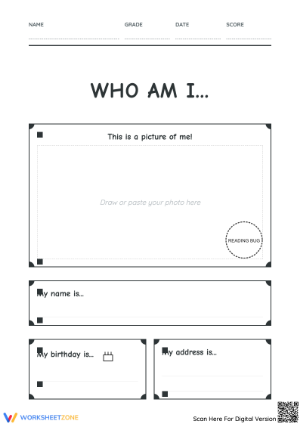
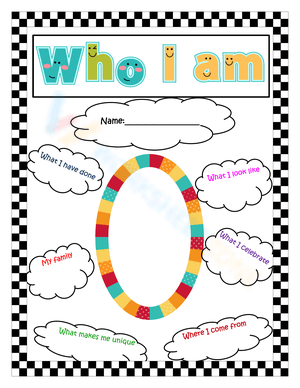
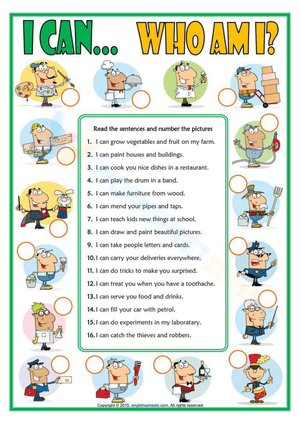
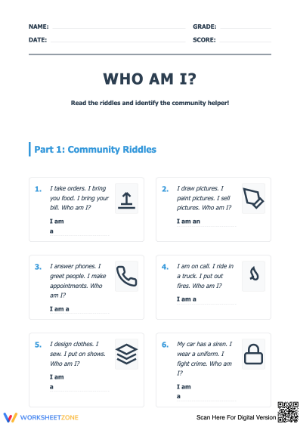
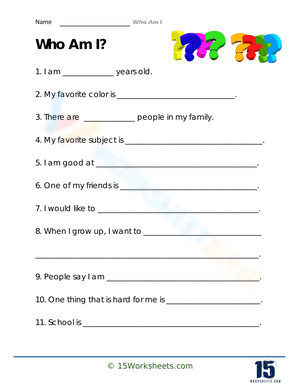
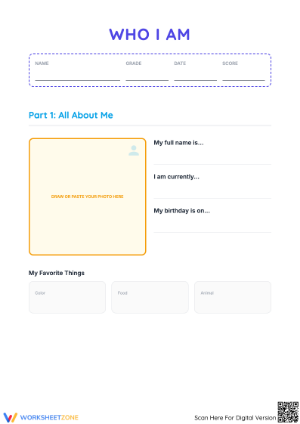
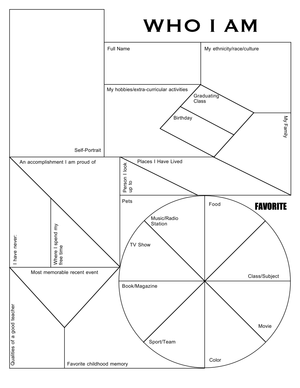
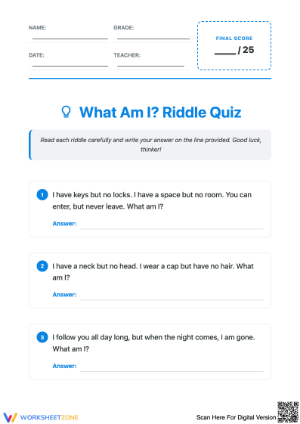
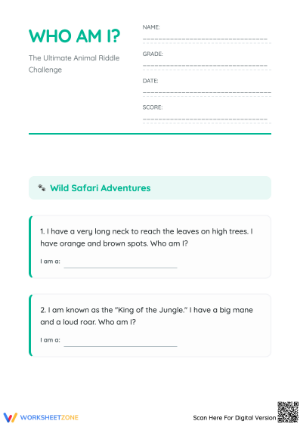
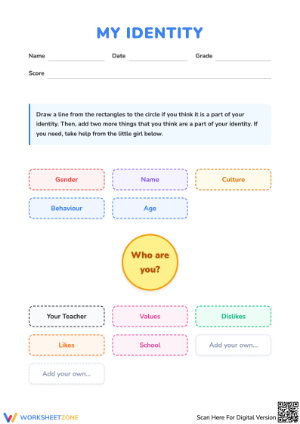
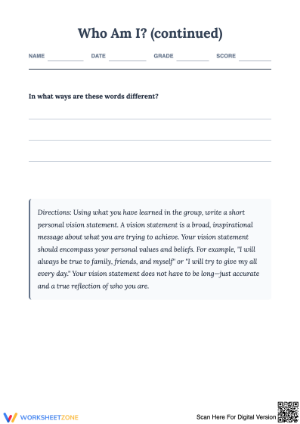
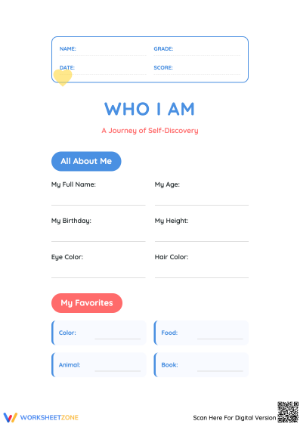
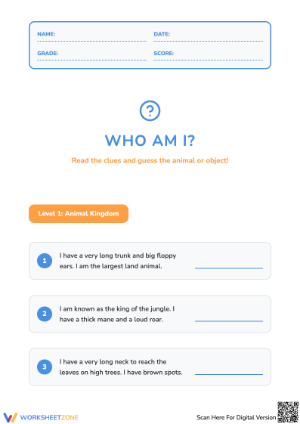
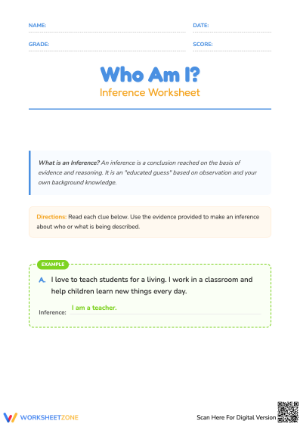
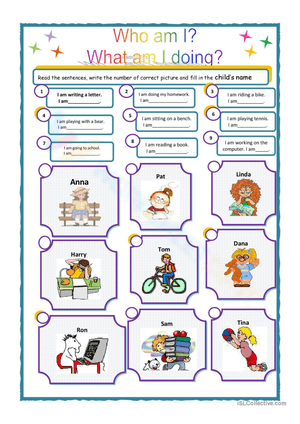
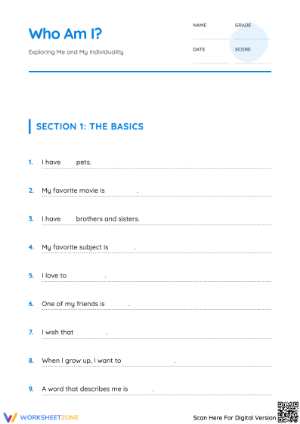
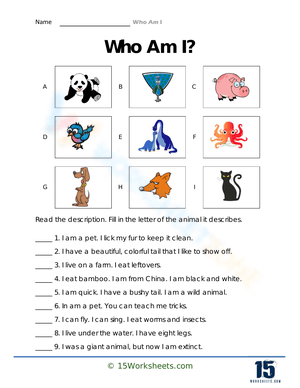
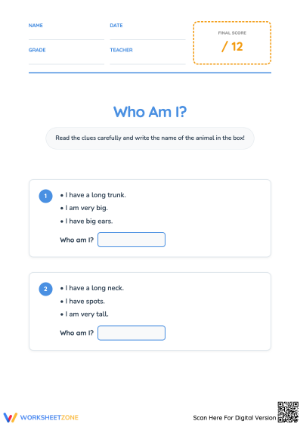
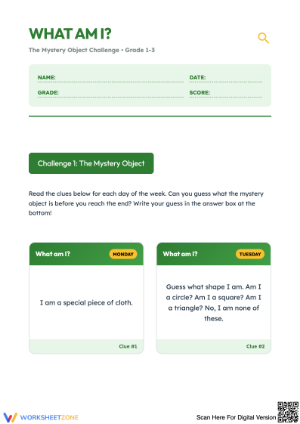
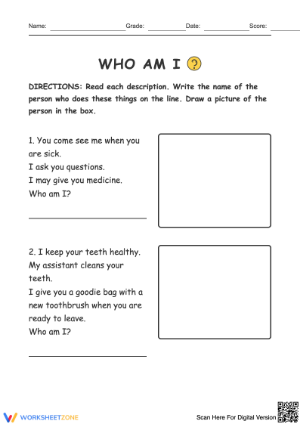
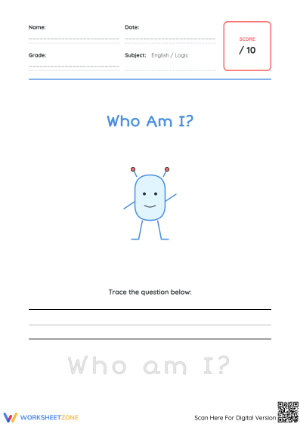
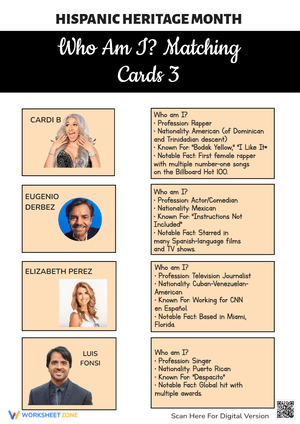
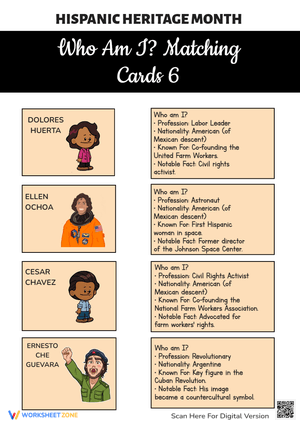
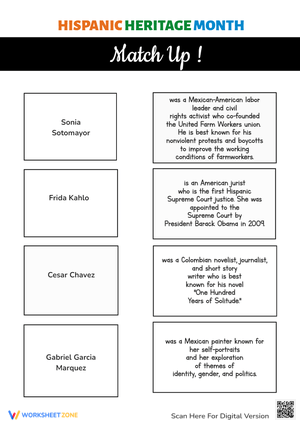
These who am i printable worksheets for 1st grade give teachers a concrete way to build early inference skills — short clue sequences, one answer blank, and a format that holds first-grade attention in ways that longer passages simply do not. Each worksheet presents two to four descriptive sentences about a hidden subject, and students must read all of them before committing to an answer. The work is deceptively rigorous.
How the Format Builds Inference Thinking
Inference is the skill we spend years teaching because students resist it at every stage — and the resistance starts in first grade. The riddle format attacks that resistance by making the inferencing process feel like a game rather than a comprehension exercise. When students read "I have four legs. I live on a farm. I give milk," they are doing exactly what skilled readers do: holding multiple details simultaneously, cross-referencing those details against prior knowledge, and arriving at a conclusion the text never states directly. The gap between the clues and the answer is the instruction. Closing that gap is the work.
The format also makes working memory demands visible to teachers. A student who writes "cow" after reading only the first clue — "I have four legs" — reveals a habit of partial reading that shows up later in longer texts. Watching which students wait for all clues before committing to an answer tells you something real about their comprehension process that a circled multiple-choice answer never would.
Fitting These Worksheets Into the Day
The strongest use of these printables is the 10 minutes after students unpack but before whole-group instruction begins. A single riddle worksheet settles the room, requires no verbal instruction from the teacher, and produces a concrete artifact to glance at during morning meeting to see who is on track. Literacy centers are the second natural home: two students working through a riddle together, reading clues aloud, debating between two possibilities before committing, is productive partner talk that does not need a teacher to manage it.
For whole-group modeling, projecting a who am i printable worksheets for 1st grade on the board and reading each clue aloud while pausing to think out loud is one of the cleanest ways to make inference visible. Say explicitly: "The first clue could match five different things. I need the second clue before I'm willing to guess." That sentence — said once or twice across a few lessons — changes how students approach independent work afterward.
Mistakes Students Make That These Worksheets Help You Catch
The most common error in this format is premature commitment. A student reads the first clue — "I am orange" — writes "pumpkin," and considers the problem solved. When the second clue reads "I grow on trees" and the third reads "monkeys love to eat me," the student either ignores the contradiction or erases with frustration. This is not carelessness; it is a genuine comprehension habit. First graders tend to treat each sentence as a complete, independent message rather than as one piece of a larger meaning. The riddle format makes the cost of that habit immediate and visible, which is exactly why it belongs in instruction, not just in practice.
A smaller but consistent error: students who correctly synthesize the clues but land on a synonym rather than the expected answer. They process every clue about a community helper who drives a vehicle with flashing lights and arrives at emergencies — and they write "paramedic" instead of "ambulance driver." These responses deserve credit and also a conversation about how authors choose specific words to steer readers toward a particular answer. That conversation is genuine comprehension instruction.
Standard Alignment
These worksheets address CCSS.ELA-LITERACY.RL.1.1, which requires first graders to ask and answer questions about key details in a text. Solving a riddle is a direct application: the implied question is "Who or what am I?" and the key details are the clues. Teachers frequently reach for this standard during whole-group read-alouds, but short riddle worksheets let every student practice the same skill independently and simultaneously — something a read-aloud cannot accomplish. The standard also appears in first-grade reading assessments as brief passage comprehension with detail-based questions, so practicing with riddle formats builds the same skill in a lower-stakes context before those assessments arrive.
Adjusting These Worksheets for the Range of Readers in Your Room
A who am i printable worksheets for 1st grade that includes a picture-based word bank at the bottom reduces the decoding burden for emerging readers without removing the inferencing requirement. The student still must process all the clues; the word bank means they identify the correct answer by recognition rather than by generating and spelling it independently. That is a meaningful and appropriate adjustment for students still consolidating phonics. One honest limitation: some students will work backward through the word bank — scanning pictures until one seems plausible — rather than reading the clues first. Watching for that shortcut during independent work is worth the attention.
For students working above grade level, the extension is to flip the task entirely. Give them a blank template and ask them to write three clues for a subject of their choosing, without naming it. Writing descriptive clues requires the same thinking a reader uses to solve them — you have to identify which details are distinctive, which are too vague, and how to order clues from general to specific. Students who have solved riddles for a few weeks are ready for this writing work. Students who write clues that immediately reveal the answer ("I am a dog. I have four paws. I bark.") are showing you something useful about where their descriptive language development currently sits.
Frequently Asked Questions
What subjects work best as riddle topics for first graders?
Animals — farm, zoo, ocean, and pet — are the most reliable starting point because first graders bring extensive background knowledge to those topics. Community helpers work well when paired with a social studies unit. Everyday objects like school supplies and foods are useful early in the year when students need high-confidence entry points. Seasonal topics (snowflakes, pumpkins, sunflowers) let teachers rotate themes throughout the year without changing the underlying skill demand.
Can these worksheets function as a formative assessment tool?
Yes, and the process is more diagnostic than the final answer. Teachers who circulate during independent work and listen to how students narrate their thinking collect more useful information than the correct or incorrect word on the answer blank provides. A consistent pattern of single-clue responses — where only the first sentence seems to influence the answer — flags students who need explicit instruction in synthesizing meaning across sentences before they encounter that demand in longer texts.
How many clues per riddle is appropriate for first grade?
Three clues is the most instructionally productive number for most of the school year. Two clues are sometimes too easy — students eliminate options quickly and the inferencing demand is low. Four clues can push past working memory capacity for students reading slowly and word by word. A who am i printable worksheets for 1st grade built around three clues also maps naturally onto a beginning-middle-end structure, which connects to the narrative thinking first graders are developing at the same time.
Are these worksheets accessible for English language learners in first grade?
With vocabulary preparation, yes. The primary challenge for ELL students is not the inferencing task itself — it is encountering unfamiliar adjectives in the clues ("bristly," "transparent," "nocturnal") that block comprehension before the inference work can even begin. Pre-teaching four or five content words before students attempt the riddle, or selecting thematic worksheets that align with vocabulary already introduced in class, removes that obstacle without reducing the cognitive demand of the inference task itself.












 Interactive Worksheet Maker
 Quiz Maker
 Word Search Maker
 Crossword Puzzle Maker
 Word Scramble Generator
 Sentence Scramble Generator
 Handwriting Worksheet Generator
 Name Tracing Generator
 Fill In The Blank Generator