Where Brainstorming Worksheets Fit in the Writing Process
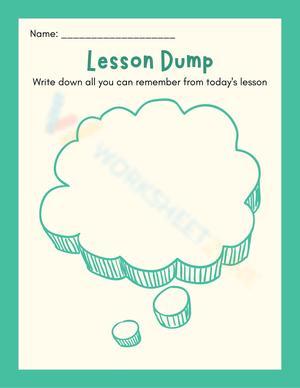
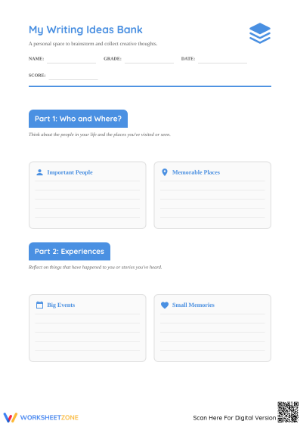
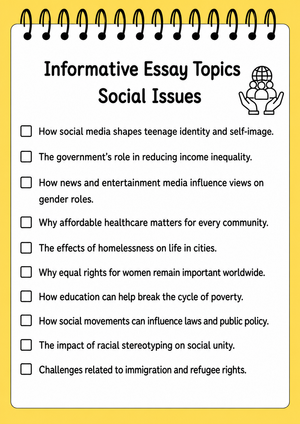
Brainstorming worksheets do their best work at one specific point in a lesson arc: the prewriting stage. The writing process is commonly framed in five stages—prewriting, drafting, revising and editing, rewriting, and publishing—and brainstorming lives at the very front, before a student writes a single sentence of a draft. When you hand out a brainstorming organizer, you're giving students a place to generate and sort ideas so the drafting stage isn't a blank-page standoff.
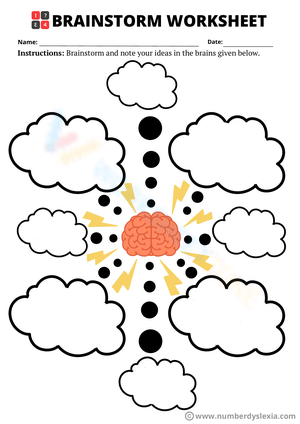
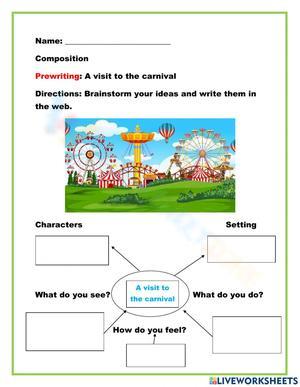
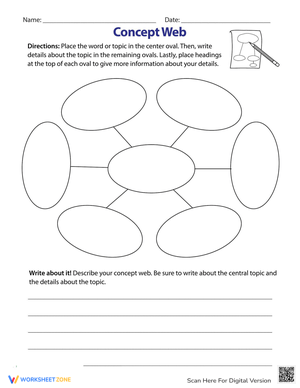
That framing matters because it changes how you grade and pace the work. A brainstorming sheet isn't the essay, and it shouldn't be marked like one. It's a thinking space where messy lists, half-formed connections, and quick sketches are the goal. Prewriting activities include brainstorming, considering purpose and audience, and using graphic organizers such as mind maps, clusters, and KWL charts to connect ideas. Treating the worksheet as the on-ramp to drafting keeps students moving through the process instead of stalling at the start.
Matching Brainstorming Formats to Grade Bands
One organizer rarely fits a whole building. What idea generation looks like on paper depends heavily on where students are developmentally.
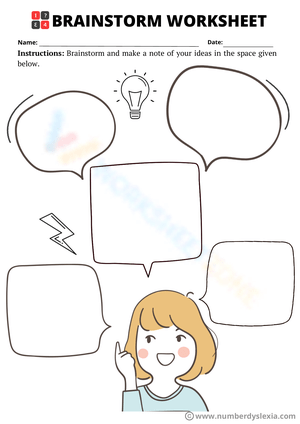
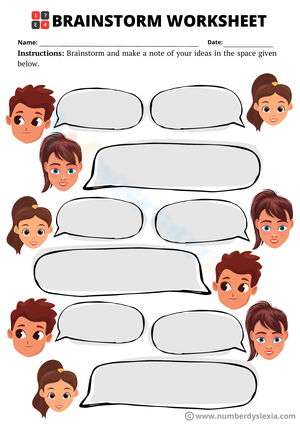
In early elementary, brainstorming is often visual and physical. Kindergarten students brainstorm through drawing, scribbling, and invented spelling, so the best worksheets leave large open boxes for pictures and a line or two for labels. The point is to capture thinking, not spelling accuracy.
By upper elementary and middle school, students can brainstorm individually or in small groups using targeted prompts. Here, structured mind maps, cluster diagrams, and simple outlines help students push past their first idea and build a bank of options. A worksheet that asks for three possible topics, then five details under the chosen one, models the divergent-then-convergent thinking mature writers rely on.
- Early elementary: drawing boxes, picture-plus-label prompts, whole-class shared brainstorming.
- Upper elementary: cluster maps, T-charts, and topic-and-detail organizers.
- Middle school: outlines, thesis-first webs, and audience-and-purpose planners.
The shift across grade bands isn't only about complexity—it's about how much of the thinking the worksheet holds for the student. A picture box holds almost everything; an open outline hands most of the structure back. Choosing a format is really choosing how much scaffolding a group still needs.
Why Brainstorming Belongs in Measurable Writing Instruction
According to ReadWriteThink, published by the International Literacy Association, students who learn and apply the full five-stage writing process—starting with prewriting and brainstorming—score better on state writing tests than peers taught isolated skills alone, a finding that reframes brainstorming as measurable instruction rather than a warm-up.
The practical takeaway is subtle but important: the payoff comes from the whole process being taught together, not from any single organizer. When brainstorming gets skipped to save time before a timed writing task, you remove the exact stage the research ties to stronger outcomes. A five-minute cluster map isn't lost instructional time—it's the front end of a sequence that correlates with better assessment performance, which makes it one of the easiest instructional trades to justify to an administrator or curriculum lead.
Supporting English Learners and Students With Learning Disabilities
Brainstorming worksheets are also some of the most reliable scaffolds you can offer during idea generation. Graphic organizers are documented as effective supports for English language learners and students with learning disabilities, giving them a structure to hold ideas while they work through language and organization at the same time.
The evidence extends to digital formats. A mixed-methods study found that digital graphic organizers improved ESL students' academic achievement in expository essay writing, which suggests the organizer's structure—not just the paper—is what helps. In a multilingual classroom, a cluster map projected on a screen and completed together can lower the language load of getting started, then be printed for independent use.
For students with learning disabilities, worksheets that break brainstorming into small, labeled steps reduce working-memory demands. Instead of asking students to think of everything they know, the sheet poses one narrow question per box, so they aren't holding the whole task in their heads at once.
Classroom Implementation
Fitting brainstorming worksheets into real lessons comes down to matching the grouping to the grade and the goal. The grouping decision does most of the work here.
With younger students, whole-class topic brainstorming works well: you model on a shared chart while students fill in a matching worksheet. This keeps everyone anchored to the same prompt and lets you narrate the thinking out loud. With older students, shift toward small-group or independent brainstorming with prompts, so students take ownership of generating and narrowing their own ideas.
A simple lesson sequence keeps the stage tight:
- Open with a two-minute model on the board using a single organizer.
- Give students five to eight minutes to fill their own worksheet.
- Have partners trade sheets and add one question or idea to each other's.
- Ask each student to star the idea they'll carry into drafting.
That last step matters. Brainstorming without a decision leaves students with a full page and no direction. Ending with a choice turns the worksheet into a bridge to the draft rather than a disconnected exercise.
Frequently Asked Questions
1. How do brainstorming worksheets fit into the overall writing process?
They belong to the prewriting stage, the first of the five writing-process stages. Students use them to generate and organize ideas before drafting, so the draft starts from a plan instead of a blank page.
2. What brainstorming worksheet formats work best for different grade levels?
Early elementary students do best with drawing boxes and picture-plus-label prompts. Upper elementary students benefit from cluster maps and topic-and-detail organizers, while middle schoolers can use outlines and audience-and-purpose planners.
3. How can brainstorming worksheets support English learners or students with learning disabilities?
Graphic organizers give these students a structure to hold ideas while managing language and organization. Research on digital graphic organizers found gains in ESL students' expository essay writing, and small, labeled steps reduce working-memory demands.
4. How should teachers use brainstorming worksheets during small-group instruction or intervention?
Scan completed sheets to find students with thin ideas, then pull a short conference group with targeted prompts while others draft. This turns the worksheet into an ongoing intervention check rather than a single activity.
5. How do brainstorming worksheets help students prepare for state writing assessments?
They teach the prewriting stage that full-process instruction depends on, and that full-process instruction is linked to stronger state writing test performance. Practicing quick brainstorming builds a habit students can reuse under timed conditions.












 Interactive Worksheet Maker
 Quiz Maker
 Word Search Maker
 Crossword Puzzle Maker
 Word Scramble Generator
 Sentence Scramble Generator
 Handwriting Worksheet Generator
 Name Tracing Generator
 Fill In The Blank Generator