These publishing writing worksheets give students the structure they need to move from an edited draft into a finished piece that looks and reads like something made for a real audience. The set spans title design, "About the Author" sections, illustration placement, and format-specific layouts — the decisions that close the gap between a corrected draft and a published product.
What the Set Covers
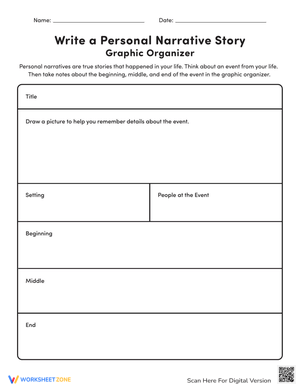
Each worksheet targets one specific task within the publishing phase. Students choose formats that fit their genre — a tri-fold brochure layout for persuasive writing, picture-book page frames for narrative, or a newspaper column structure for informational text. Choosing the medium that matches the content is itself a writing decision, and the publishing writing worksheets treat it as one. Separate worksheets address title tone, how visuals sit in relation to text blocks, and how to write an author biography that stays in a consistent voice from the opening line to the closing sentence.
Mistakes Students Often Make at the Publishing Stage
The most common error isn't carelessness — it's students treating publishing as a transcription task rather than a design task. A student who has drafted a strong narrative will transfer it neatly into the picture-book template and leave every illustration box empty, reasoning that "the words already say it." Others invest so heavily in decorative borders that the text shrinks below a readable size. The author biography worksheet surfaces a third recurring problem: students write in first person for two sentences, then slip into third person — "She also enjoys hiking" — because they've seen published author bios and are imitating the convention without understanding that the choice is consistent, not alternating. Naming these patterns at the start of the publishing phase prevents the most predictable derailments.
Fitting These Worksheets Into Your Lesson Plans
The resources work best when introduced during prewriting, not at the end of the writing cycle. When students see the brochure template in week one, they draft with the final format already in mind — and they ask sharper questions about audience from the start. A dedicated 20-minute publishing block, kept separate from writing workshop proper, gives students a mental mode-shift that noticeably improves their attention to presentation. Teachers who run publishing parties find that students return to the publishing writing worksheets more than once during that final stage, reconsidering layout decisions after they see how other students' formats read from across the display table.
Supporting Writers Across Different Readiness Levels
For students still building writing stamina, the picture-book format provides the most structural support: large text boxes limit how much writing is needed per spread, and illustration frames give a spatial anchor for students who struggle to organize information without visual cues. The research paper layout worksheet sits at the other end of the range, asking students to manage a table of contents, position a bibliography, and maintain a consistent heading hierarchy across the document — decisions that require holding the full structure in mind simultaneously. Teachers can assign different formats to different students in the same class period, and the variation reads as natural rather than as an ability-tracking signal.
Standard Alignment
CCSS.ELA-LITERACY.W.3.6 requires students to use digital tools to produce and publish writing with guidance. Standards W.4.6 and W.5.6 extend that expectation into more independent production and collaborative contexts. The production and presentation strand appears explicitly in grade-level standards from third grade through high school, yet it consistently receives the least instructional time of any writing component — most classroom minutes go to drafting and revision. These publishing writing worksheets address that imbalance directly, giving the final stage of the writing process the same structured practice students already receive for prewriting and drafting.
Frequently Asked Questions
Isn't publishing just copying the final draft onto a cleaner template?
Copying the draft is one part of the process, but a small one. Choosing a format, sizing text for readability, positioning visuals, and writing a consistent author biography are separate decisions with real stakes. Students who treat publishing as transcription often produce work that reads as unfinished even when the writing itself is strong. The worksheets separate these decisions so students address each one deliberately instead of collapsing the whole phase into a single recopying session.
What formats are included in the set?
The set includes templates for picture books, tri-fold brochures, newspaper-style column layouts, and research paper formatting. A general final-draft frame covers any genre not addressed by a specific template. There is also a standalone author biography worksheet and a pre-publication checklist that applies across all formats.
How do I handle students who keep redesigning instead of finishing?
Set a deadline for the format decision separately from the deadline for the finished product. Once a student has committed to a format by completing the template-selection worksheet, the design phase is closed. That structural boundary stops most of the open-ended revision cycles that stall students who are more comfortable making visual decisions than doing the writing itself.












 Interactive Worksheet Maker
 Quiz Maker
 Word Search Maker
 Crossword Puzzle Maker
 Word Scramble Generator
 Sentence Scramble Generator
 Handwriting Worksheet Generator
 Name Tracing Generator
 Fill In The Blank Generator