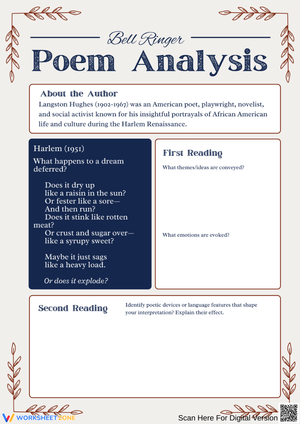
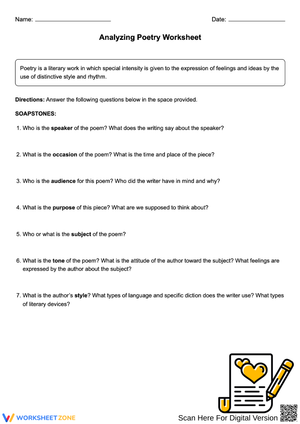
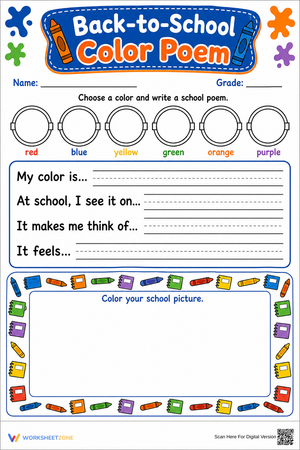
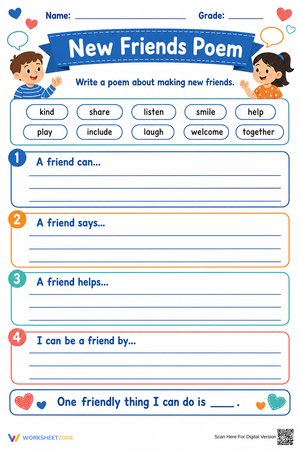
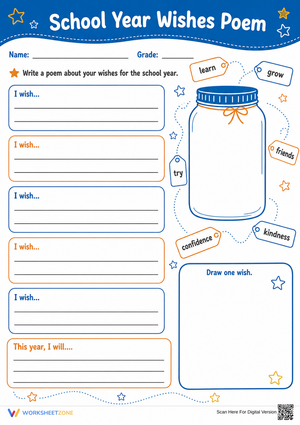
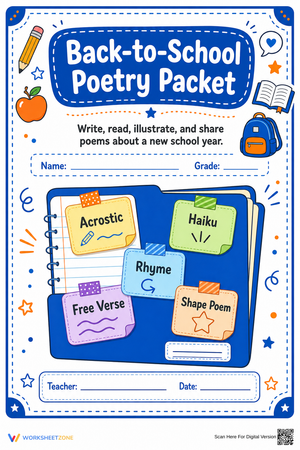
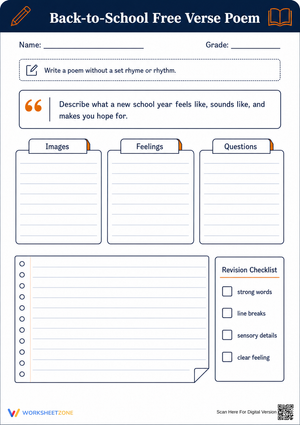
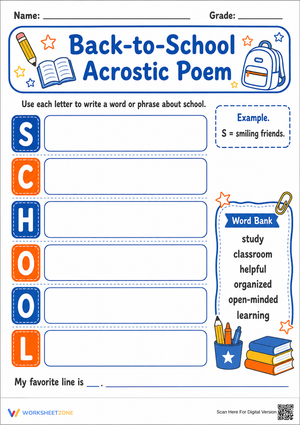
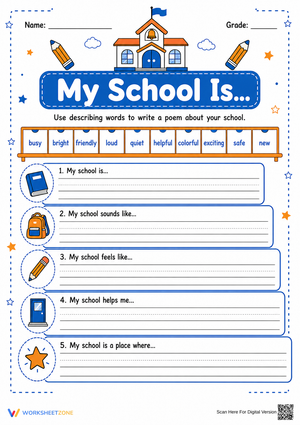
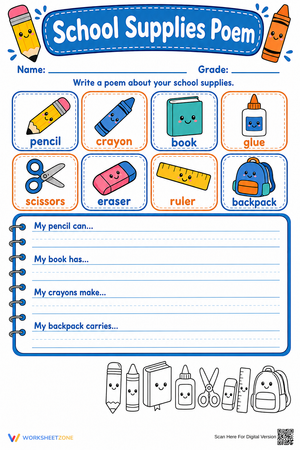
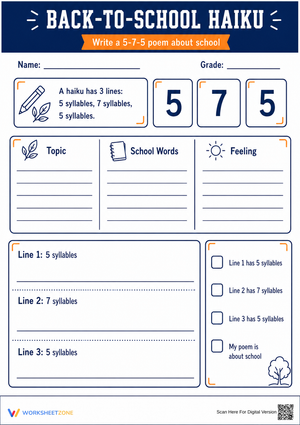
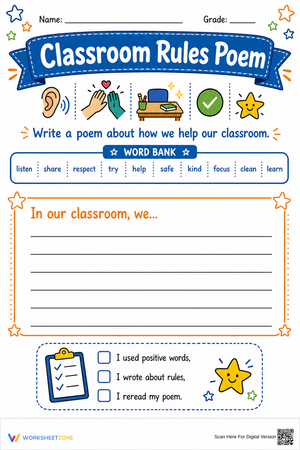
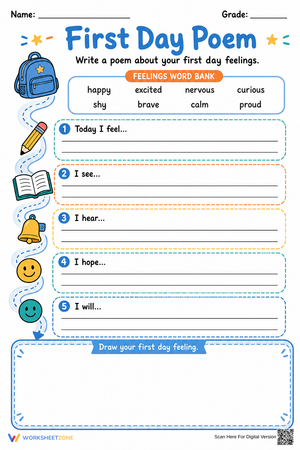
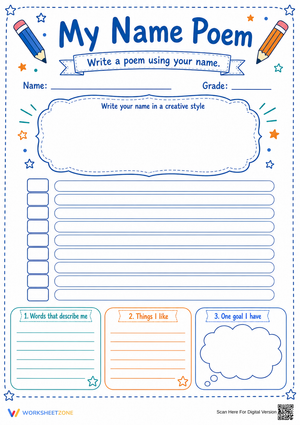
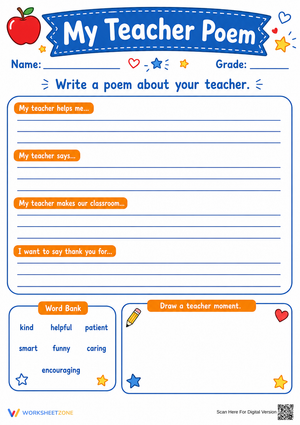
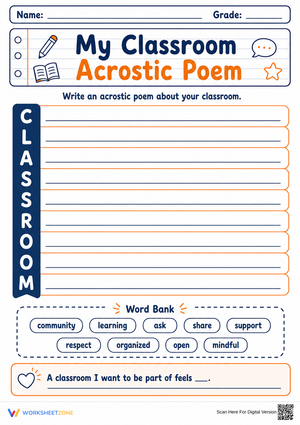
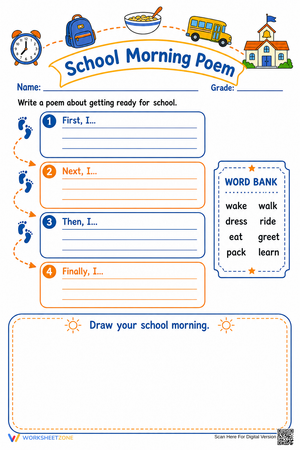
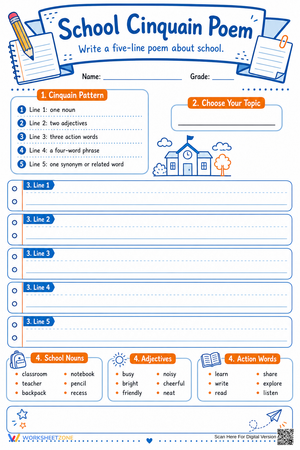
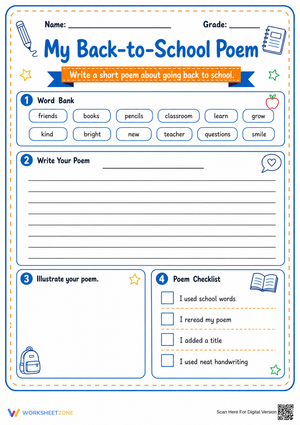
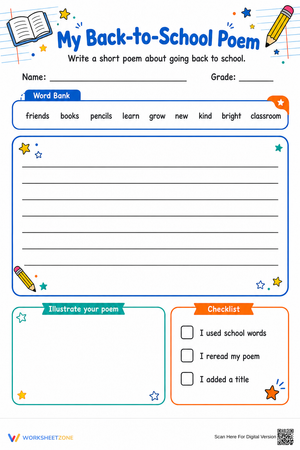
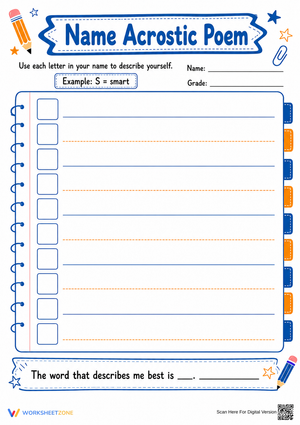
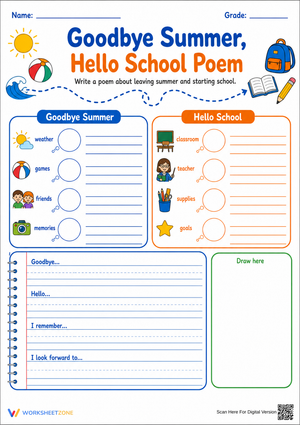
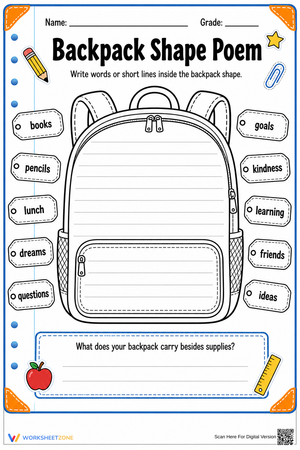
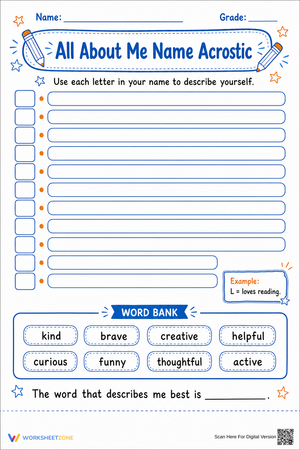
Poetry worksheets give teachers a compact, low-prep way to build craft skills that reading standards expect but that a packed ELA schedule rarely leaves room to teach in depth. Instead of a full unit plan, a single poetry worksheet can isolate one skill, such as spotting a simile or marking a repeated line, so students practice it in ten or fifteen minutes. That makes poetry worksheets a practical fit for warm-ups, exit tickets, and sub plans, not just standalone poetry units.
For teachers juggling narrative, informative, and argumentative writing goals alongside reading standards, poetry worksheets offer a change of pace that still ties back to core skills like figurative language, sound devices, and text structure. Students who struggle with longer writing tasks often find a poem more approachable because the format is short and the rules feel flexible.
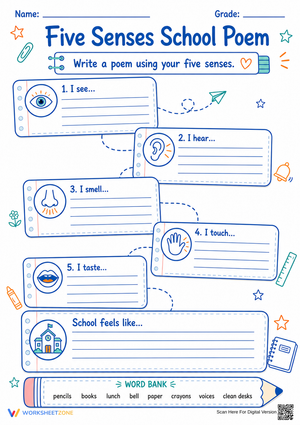
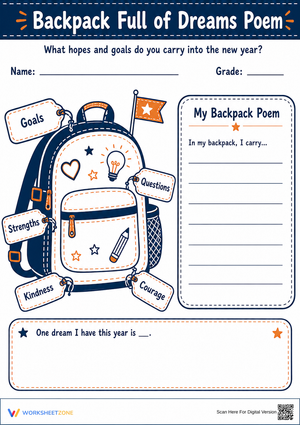
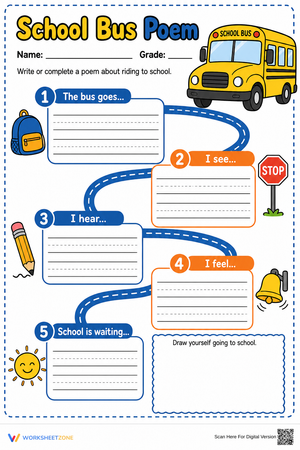
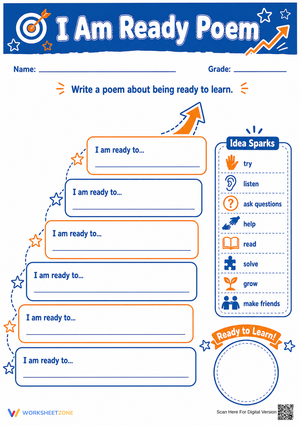
Poetry worksheets also work well for differentiation. A worksheet with sentence starters and word banks can support students who are still building academic vocabulary, while a blank-verse prompt on the same theme challenges students who are ready for more independent writing. Because the core task stays the same, a teacher can hand out two versions of the same poetry worksheet without singling anyone out, which keeps small-group planning simple during a full ELA block.
How Poetry Worksheets Align with Common Core Reading and Language Standards
Common Core ELA-Literacy standards explicitly call for students to analyze poetry's craft and structure, including figurative language and sound devices such as alliteration, rhythm, and rhyme, with expectations like RL.4.5 in fourth grade and continued analysis work through seventh-grade literature standards. Poetry worksheets give teachers a direct way to practice these exact skills in a format students can complete independently or in pairs.
What surprises many new teachers is that the writing standards themselves do not include a dedicated poetry strand. The focus stays on narrative, informative, and argumentative writing, which means poetry instruction often gets folded into language, speaking and listening, and reading standards instead of writing standards. Teachers who plan around this gap tend to treat poetry worksheets as a reading-and-language tool first and a writing tool second, then let students transfer what they notice in mentor poems into their own short pieces.
Poetic Devices to Prioritize by Grade Band
Not every poetic device belongs in every grade. Matching the device to the grade band keeps poetry worksheets useful instead of frustrating.
- Early elementary (K-2): rhyme, repetition, and simple rhythm patterns that support phonological awareness and read-aloud fluency
- Upper elementary (3-5): simile, metaphor, and basic stanza structure, paired with RL.4.5-style analysis of how structure shapes meaning
- Middle school (6-8): imagery, personification, tone, and comparing how two poems on a similar theme use different structures
Sequencing devices this way lets a single set of poetry worksheets scale across a grade span in a school, which is useful for co-teaching, vertical planning, or a media specialist supporting multiple classrooms.
Teacher Tips for Building a Poetry Writing Routine
A few practical habits make poetry worksheets more effective across a school year rather than a one-time activity.
- Rotate one poetic device focus per week instead of covering several devices in a single worksheet
- Keep a folder of completed poetry worksheets so students can see their own growth in identifying devices over the year
- Use poetry worksheets as a five-minute warm-up before a longer writing block to activate craft vocabulary
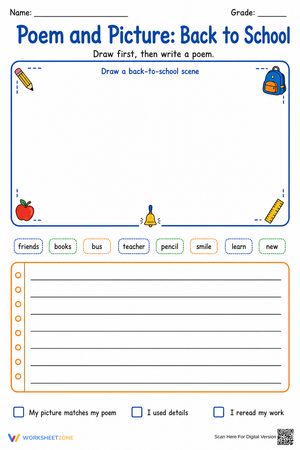
- Let students illustrate or perform a favorite line from their own poem to build ownership, without turning the worksheet itself into a long project
- Save one poetry worksheet from each unit as a benchmark to compare student annotation skills across the year
None of these tips require extra planning time. They simply reuse the same worksheet format in different parts of the week, which keeps prep light for busy teachers.
Frequently Asked Questions
1. What grade levels are poetry worksheets appropriate for?
Poetry worksheets work well from kindergarten through eighth grade when the poetic device matches the grade band. Early elementary worksheets should focus on rhyme and repetition, upper elementary on simile, metaphor, and structure, and middle school on imagery, tone, and comparing poems.
2. How do poetry worksheets align with Common Core standards if there is no dedicated poetry writing standard?
Poetry worksheets connect most directly to reading and language standards, such as RL.4.5, which require students to analyze structure and figurative language. Since the writing standards focus on narrative, informative, and argumentative forms, teachers typically use poetry worksheets to build craft skills that later support writing, rather than mapping them to a specific writing standard.
3. What poetic devices should teachers prioritize when choosing worksheets?
For elementary students, prioritize rhyme, rhythm, and repetition. For middle school students, prioritize simile, metaphor, imagery, and structural comparison between two poems, since these skills line up with grade-level literature standards.
4. How can poetry worksheets be used for small-group or intervention instruction?
Use a single poetry worksheet to target one skill per group, such as identifying rhyme scheme or marking similes, so each group gets focused practice without needing a different lesson plan for every rotation.
5. How often should poetry worksheets be used in an ELA writing rotation?
Many teachers use one poetry worksheet a week, either as a short warm-up or as part of a rotation, which keeps poetic devices fresh without displacing narrative, informative, or argumentative writing practice.












 Interactive Worksheet Maker
 Quiz Maker
 Word Search Maker
 Crossword Puzzle Maker
 Word Scramble Generator
 Sentence Scramble Generator
 Handwriting Worksheet Generator
 Name Tracing Generator
 Fill In The Blank Generator