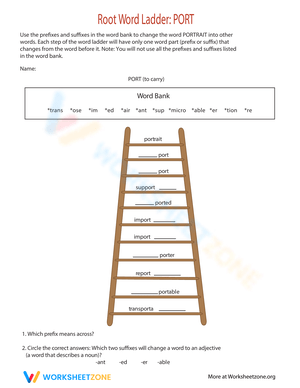
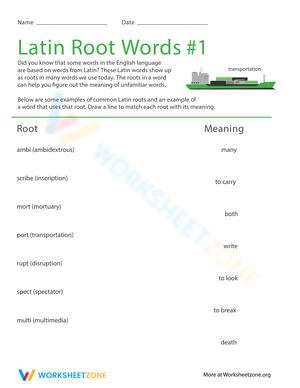
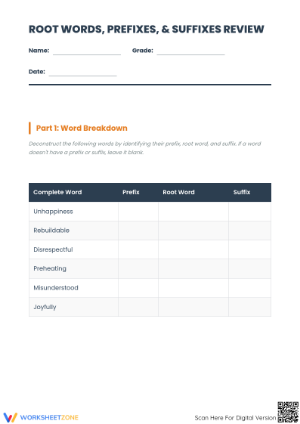
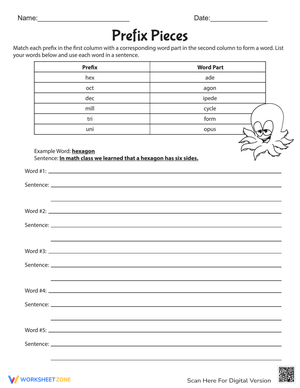
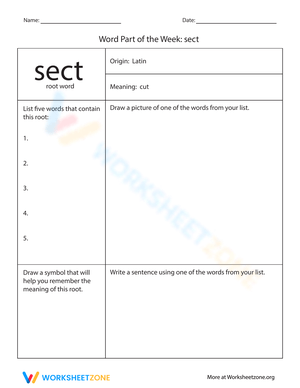
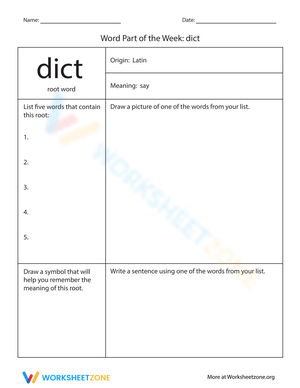
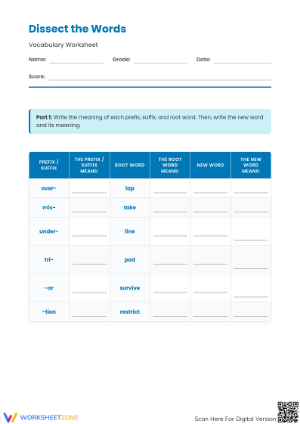
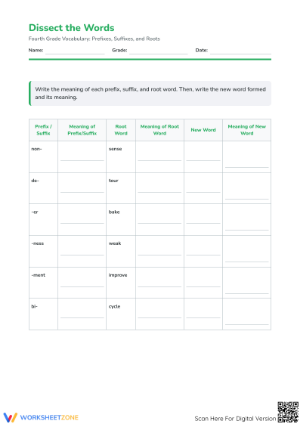
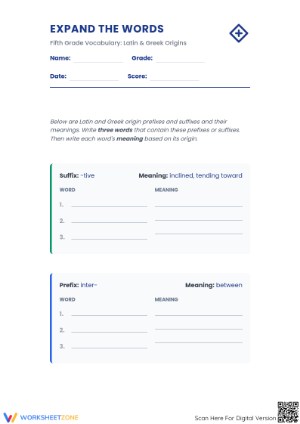
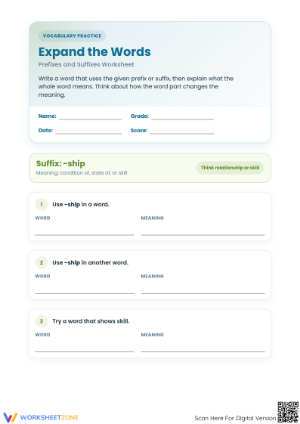
Welcome to your comprehensive guide for finding the absolute best roots, prefixes, and suffixes worksheets for your classroom. Teaching morphology is widely considered one of the most effective ways to help students decode complex words. When students fully understand how to break a word apart into its base root, prefix, and suffix, they unlock a powerful tool for reading comprehension. This morphological toolkit allows them to confidently tackle unfamiliar vocabulary across all subjects, from language arts to science. For teachers, having a reliable set of printable worksheets is essential for providing the repeated, targeted practice students need to truly master these skills. Whether you are actively planning whole-class instruction, leading a small-group intervention, or setting up independent review stations, the right resources can make all the difference in student outcomes. By integrating targeted morphology practice into your weekly routine, you will see a noticeable improvement in your students' ability to determine word meaning. Let's explore how to effectively use these resources to support and empower young readers.
The Morphological Toolkit: Breaking Down Complex Words
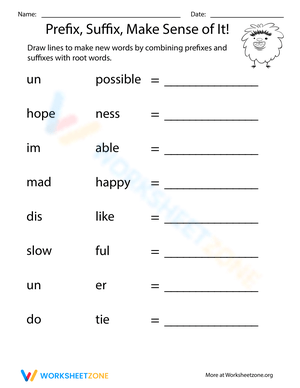
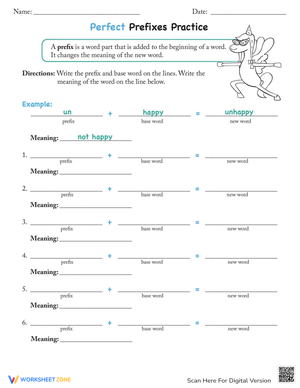
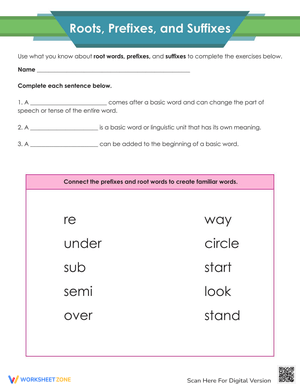
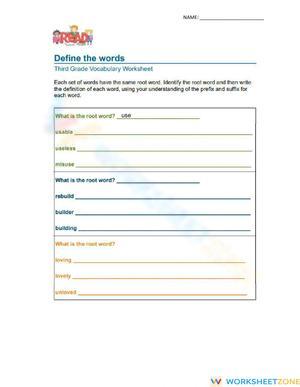
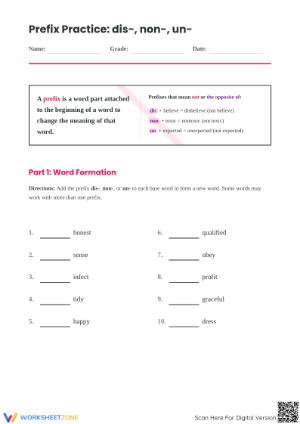
Understanding morphology is fundamental to developing strong reading skills. Morphology is the study of word parts and their meanings. This includes base roots, which hold the core meaning, as well as prefixes added to the beginning and suffixes added to the end. When students identify these components, they can decode multisyllabic words with ease. Rather than memorizing every new word, they apply their knowledge of word parts to determine meaning. Knowing that the prefix "un-" means "not" and the root "happy" means "glad" allows a student to easily understand the word "unhappy."
According to Reading Rockets, teaching students to identify root words, prefixes, and suffixes helps them decode complex text and significantly boosts their overall reading comprehension (Reading Rockets, Root words, prefixes, and suffixes). This explicit instruction in word structure is beneficial for struggling readers who might become overwhelmed by long words. By providing ample practice with roots, prefixes, and suffixes worksheets, teachers build students' confidence and equip them to become independent readers.
Grade-Level Progression: Mastering Prefixes and Suffixes
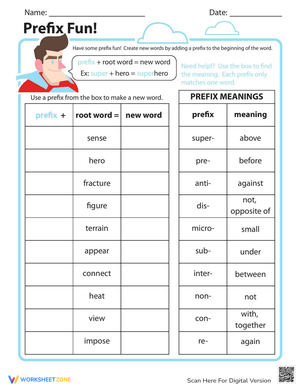
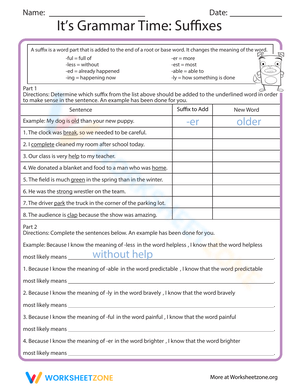
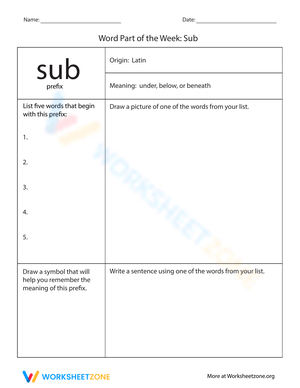
The way we teach morphology should evolve as students progress from early elementary to middle school. In primary grades (K-2), instruction focuses on the most common affixes. Students learn simple prefixes like "un-," "re-," and "pre-," along with basic suffixes such as "-s," "-ed," and "-ing." The goal is to help young readers recognize that words can be broken into parts. Teachers often use hands-on activities, visual aids, and simple roots, prefixes, and suffixes worksheets to reinforce these concepts.
Introducing foundational prefixes and suffixes in the early grades directly prevents the common "fourth-grade slump" in reading comprehension, as students who understand basic word structures are much better equipped to handle the sudden increase in academic vocabulary encountered in upper-elementary textbooks.
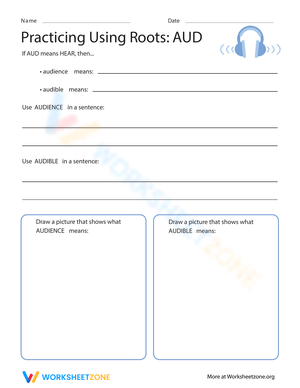
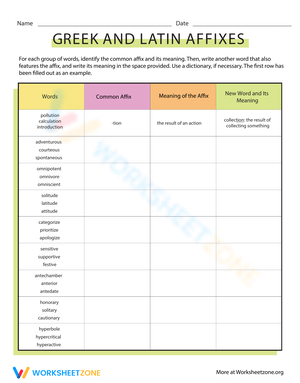
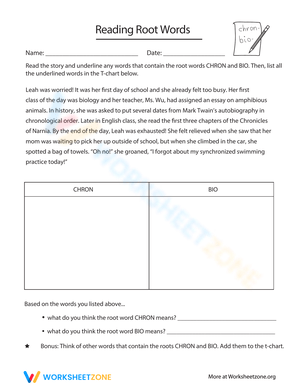
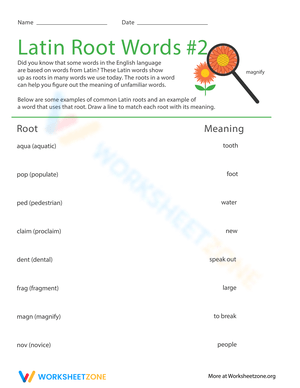
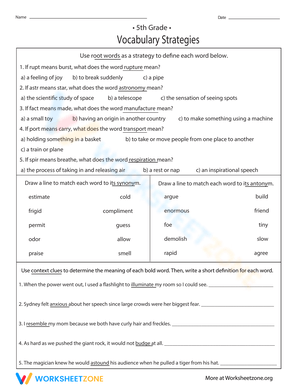
As students move into grades 3-5, the focus shifts to complex Latin and Greek roots and advanced affixes. They learn to analyze word families and use context clues with morphology to determine meaning. By middle school, students tackle highly specialized academic vocabulary. They must dissect words with multiple affixes and understand how variations in a suffix change a word's part of speech.
How to Teach Prefixes and Suffixes Effectively
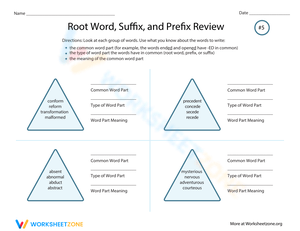
Effective morphology instruction requires a balance of explicit teaching and meaningful practice. Teachers must first model how to break words apart and explicitly teach the meanings of common roots and affixes. This happens through interactive read-alouds, word-building exercises, and direct instruction. Once students grasp the concept, they need guided practice. This is where high-quality roots, prefixes, and suffixes worksheets become invaluable.
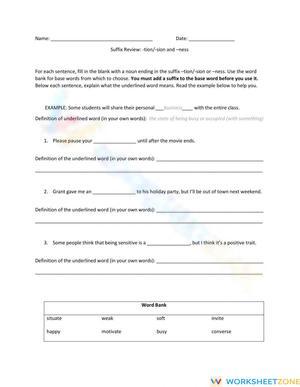
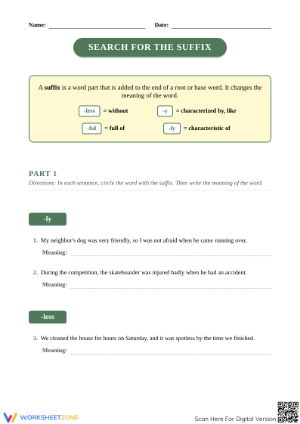
Scholastic notes that teaching prefixes and suffixes through explicit modeling and repeated, targeted practice enables students to independently determine word meanings when reading complex texts (Scholastic, How to Teach Prefixes and Suffixes). Teachers can use these printables during small-group reading instruction to provide targeted support based on student needs. For instance, a teacher might work with a group struggling with the suffix "-ly," using a specific worksheet to guide practice. As students become proficient, they complete worksheets independently for review. The key is ensuring practice is purposeful and aligned with instructional goals.
Integrating Vocabulary Worksheets into Daily Practice
Incorporating morphology practice into your daily classroom routine does not have to be time-consuming. Short, focused activities are often more effective than long lessons. Many teachers use roots, prefixes, and suffixes worksheets as part of their morning work or daily warm-up. This provides a consistent opportunity for students to review word parts. Worksheets can also be integrated into literacy centers or word work stations. For example, students might use a worksheet from Education.com to practice sorting words based on their prefixes or suffixes (Education.com, Prefix and Suffix Worksheets).
Another effective strategy is to tie morphology practice to the texts students are currently reading. Teachers can create custom worksheets or select pre-made resources from platforms like K12Reader that feature vocabulary words from the week's reading assignment (K12Reader, Free Printable Vocabulary Worksheets). By connecting word study to authentic reading experiences, teachers help students see the relevance of morphology and encourage them to apply their decoding skills in context.
Games and Activities to Supplement Worksheets
While roots, prefixes, and suffixes worksheets are excellent tools, they should be supplemented with interactive games. Hands-on learning experiences help solidify students' understanding of word structure and make practice engaging. One popular activity is "Word Sorts," where students categorize words based on their roots, prefixes, or suffixes. This can be done using word cards or digital platforms. Another engaging option is "Affix Bingo," where students match definitions to the correct prefix or suffix on their cards. These activities encourage active participation.
Teachers can also use word-building tiles or magnetic letters to help students visually manipulate word parts. For example, provide the base root "struct" and ask students to build words by adding different prefixes and suffixes (e.g., construct, destruction). This manipulative play helps students internalize the rules of morphology and see how word parts interact. By combining traditional worksheets with games, teachers create a comprehensive word study program that keeps students motivated.
Classroom Implementation
Successfully implementing a morphology focus requires strategic planning. Start by assessing your students' current understanding of word structure. Use a diagnostic roots, prefixes, and suffixes worksheets to identify which affixes and roots they already know and which need explicit instruction. Based on this data, create a targeted scope and sequence. Introduce a few new word parts each week, focusing on the most useful affixes first. Provide ample opportunities for practice using direct instruction, collaborative group work, and independent worksheet activities.
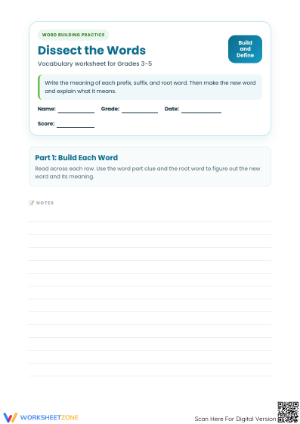
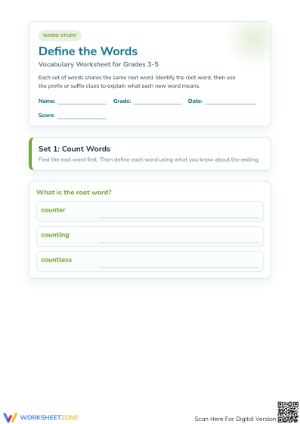
When selecting resources, look for materials that are clear and engaging. For comprehensive practice, consider using the Determining Meaning Using Roots, Prefixes, and Suffixes resource from Worksheetzone (Worksheetzone, Determining Meaning Using Roots, Prefixes, and Suffixes). This resource offers structured exercises guiding students through breaking down words and using context clues. Review completed worksheets with your students, providing immediate feedback. By making morphology a consistent part of your classroom routine, you empower your students to become confident readers.
Frequently Asked Questions
1. What is the difference between a prefix, suffix, and root word?
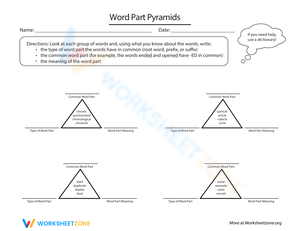
A root word is the base part of a word that holds its core meaning and can sometimes stand alone. A prefix is a letter or group of letters added to the beginning of a root word to change its meaning, while a suffix is a letter or group of letters added to the end of a word to alter its meaning or its grammatical part of speech. Understanding how these three components work together is absolutely essential for decoding complex academic vocabulary.
2. How do root words, prefixes, and suffixes help students improve reading comprehension?
By understanding roots, prefixes, and suffixes, students can systematically break down unfamiliar, multisyllabic words into much more manageable parts. Instead of simply skipping difficult words, they can use their morphological knowledge to actively deduce meaning. This decoding strategy improves reading fluency and significantly boosts overall reading comprehension, which is especially important when encountering complex, domain-specific academic texts in upper grades.
3. What are some common prefixes and suffixes that elementary students should learn first?
Elementary students typically begin their morphology journey by learning highly common and straightforward affixes that appear frequently in early texts. Common early prefixes include "un-" (not), "re-" (again), and "pre-" (before). Foundational suffixes include "-s" or "-es" (plural), "-ed" (past tense), and "-ing" (present participle). Mastering these basic word parts early on provides a strong, reliable foundation for tackling much more complex morphology and root words later on in middle school.












 Interactive Worksheet Maker
 Quiz Maker
 Word Search Maker
 Crossword Puzzle Maker
 Word Scramble Generator
 Sentence Scramble Generator
 Handwriting Worksheet Generator
 Name Tracing Generator
 Fill In The Blank Generator