Understanding the Mechanics of Context Clues
Teaching vocabulary in isolation rarely translates to long-term retention or improved reading comprehension. Instead, teachers must equip students with the analytical tools needed to decipher unfamiliar terms encountered in authentic texts. This is where context clues become essential. Context clues are hints found within a sentence or passage that a reader can use to understand the meanings of new words. By training students to look for these surrounding hints, teachers empower them to become independent readers who can tackle increasingly complex texts without constantly relying on a dictionary.
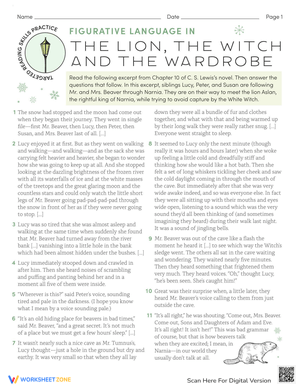
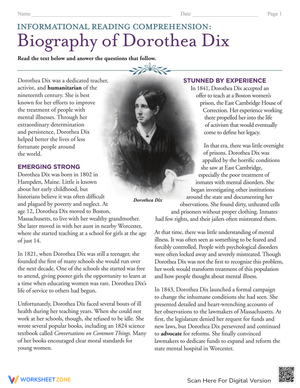
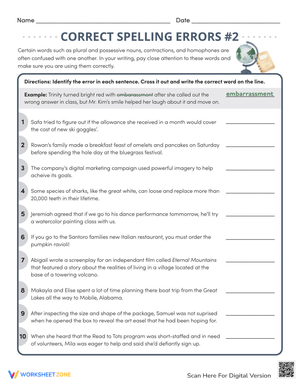
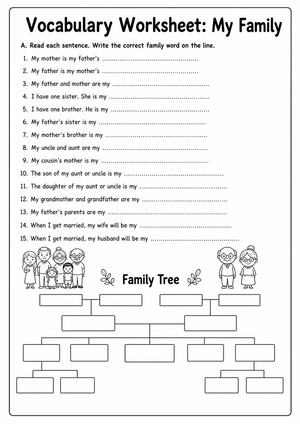
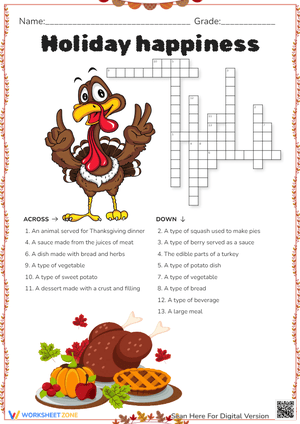
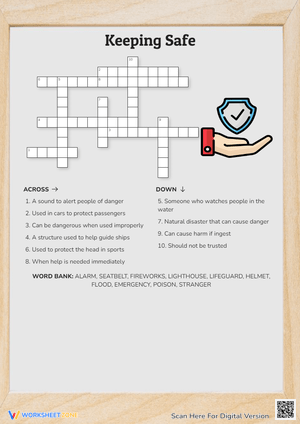
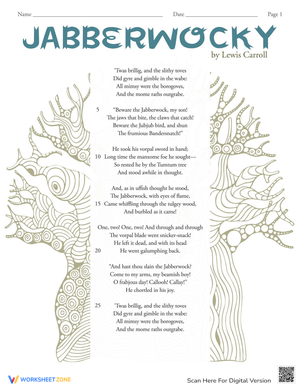
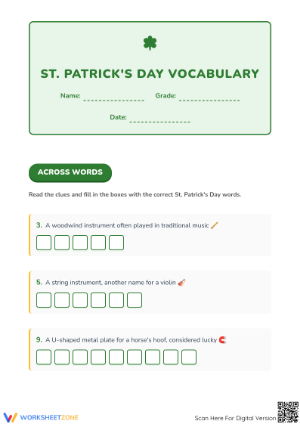
The transition from learning to read to reading to learn requires a jump in vocabulary acquisition. Students encounter academic language that they have never heard in conversational speech. Providing targeted practice with a context clues worksheets gives learners the structured repetition they need to internalize these strategies. When students engage with well-designed materials, they practice identifying the subtle syntactic and semantic signals that authors leave behind. This deliberate practice moves the skill from a conscious effort to an automatic habit applied during independent reading.
Furthermore, recognizing context clues involves high-level cognitive processes. It requires the reader to synthesize information, make inferences, and test hypotheses about word meanings based on the surrounding text. When teachers utilize carefully crafted worksheets, they provide a scaffolded environment where students can isolate this specific skill before applying it to full-length novels or informational articles. This foundational work is essential for success across all subject areas.
The Five Core Types of Context Clues
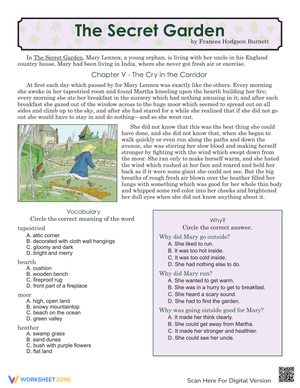
To effectively teach students how to deduce meaning, teachers must break down context clues into recognizable categories. The first type is the definition clue. In this scenario, the author explicitly defines the unfamiliar word within the same sentence. For example, "The entomologist, a scientist who studies insects, carefully examined the specimen." These clues are highly visible and serve as an excellent starting point for students just beginning to learn vocabulary strategies.
The second type involves synonym clues. Authors frequently use a more familiar word with a similar meaning near the difficult word to provide context. Practicing synonym clues helps students recognize parallel structures and expands their working vocabulary by linking new words to known concepts. Worksheets focusing on this specific type often ask students to circle the unfamiliar word and underline the synonym that unlocks its meaning.
Antonym clues provide the opposite approach. Authors use contrast to highlight the meaning of an unknown word, often signaling this relationship with words like "however," "but," or "unlike." Recognizing antonym clues requires students to understand the contrastive relationship established by the sentence structure. Targeted practice helps students spot these structural signals quickly.
Example clues give specific instances of the unfamiliar word. Phrases such as "for instance," "including," and "such as" often precede these clues. Finally, inference clues are the most challenging. They require the reader to use their background knowledge and logic to deduce meaning from the overall tone and context of the passage, without any explicit definitions, synonyms, antonyms, or examples provided.
Research and Best Practices for Vocabulary Instruction
Effective vocabulary instruction moves beyond the traditional model of memorizing lists and writing definitions. Current educational paradigms emphasize the importance of morphological awareness and contextual analysis. By utilizing a comprehensive context clues worksheets, teachers can align their instruction with these evidence-based practices. Worksheets that offer varied encounters with target words allow students to practice meaning-making in a controlled setting, reducing cognitive overload.
Research from the Example Educational Resource on Context Clues indicates that explicit vocabulary instruction, when combined with consistent independent reading practice, increases student comprehension scores by up to thirty-five percent over a single academic year. This demonstrates the impact of targeted context clues practice.
This data underscores the necessity of moving beyond incidental vocabulary acquisition. While reading volume certainly contributes to word knowledge, explicit instruction in how to use context accelerates this growth exponentially. Worksheets provide the necessary vehicle for this explicit instruction, offering a clear framework for modeling, guided practice, and eventual independent application.
Classroom Implementation
Integrating context clues instruction into the daily literacy block requires intentional planning. Teachers should begin with explicit modeling, often referred to as a "think-aloud." During a whole-group read-aloud, the teacher pauses at an unfamiliar word and verbally walks through the process of identifying the clue, determining its type, and inferring the word's meaning. Following this modeling, teachers can use a context clues worksheets for guided practice, where students work in pairs to apply the same steps.
A highly effective classroom routine involves "Word Detective" activities. Students are given a short passage and tasked with finding specific unknown words. They must highlight the target word, underline the context clue, and write a brief explanation of how the clue helped them deduce the meaning. This requires students to justify their thinking, a critical step in solidifying the skill.
Analysis of standardized assessment data frequently reveals that students who systematically categorize unknown words by their surrounding syntactic structures rather than simply guessing based on phonetics score, on average, twenty to twenty-five points higher on the vocabulary acquisition subtests of state exams. This indicates that formalizing the identification process through structured worksheet practice translates directly to measurable academic gains.
Differentiation Strategies for Vocabulary Building
Every classroom contains a wide range of reading abilities, making differentiation a necessity. When using context clues worksheets, teachers must modify the materials to meet students where they are. For students struggling with decoding, the text complexity of the worksheet should be lowered so that the cognitive focus remains solely on identifying the context clues, rather than struggling to read the surrounding words.
English Language Learners (ELLs) benefit greatly from explicit instruction in context clues, but they often require additional scaffolding. Worksheets for ELLs might include visual supports or native language cognates alongside the English text. The Blog Post on Teaching Context Clues emphasizes that providing culturally relevant sentences in practice materials significantly increases engagement and comprehension for diverse student populations.
Advanced readers require a different approach. For these students, worksheets should feature complex, multi-paragraph passages where the context clues are subtle and require significant inferential thinking. Teachers can challenge these learners by asking them to generate their own sentences using specific types of context clues, effectively flipping the task from identification to creation.
Assessing Student Mastery of Context Clues
Assessment must be continuous and varied to truly measure a student's ability to utilize context clues. While multiple-choice questions on a worksheet are a helpful starting point, they do not always capture a student's independent application of the skill. Teachers should incorporate open-ended worksheet questions that require students to explain their reasoning.
Formative assessment can also take the form of exit tickets. After a lesson on inference clues, the teacher might hand out a slip of paper with a single sentence containing an unknown word. Students must define the word and identify the clue before leaving the room. This quick check allows the educator to immediately identify which students grasped the concept and which require small-group intervention the following day.
Frequently Asked Questions
1. What are the five main types of context clues?
The five primary types are definition (or explanation), synonym, antonym, example, and inference. Definition clues explicitly state the meaning, synonyms provide a similar word, antonyms show contrast, examples list specific instances, and inference requires the reader to use logic and background knowledge to deduce the meaning.
2. How can I teach context clues effectively to my students?
Effective teaching starts with explicit modeling through think-alouds, where the teacher demonstrates the cognitive process of finding and using clues. This should be followed by guided practice using structured materials, and eventually independent application.
3. Where can I find free printable context clues worksheets with answer keys?
Teachers can access a wide variety of high-quality, printable materials directly through educational resource platforms like Worksheetzone. These platforms typically offer leveled practice sheets categorized by grade level and specific clue type, complete with answer keys.
4. What grade levels are these context clues worksheets suitable for?
These materials can be adapted for a wide range of grade levels. Elementary students typically focus on basic definition, synonym, and antonym clues using simpler texts. Middle and high school students move on to complex inference clues embedded within lengthy informational texts.
5. How do context clues improve reading comprehension and vocabulary?
By teaching students how to deduce the meaning of unknown words independently, context clues reduce the frustration and interruption of stopping to consult a dictionary. This allows for smoother reading fluency, deeper engagement with the text, and a natural expansion of the student's working vocabulary.












 Interactive Worksheet Maker
 Quiz Maker
 Word Search Maker
 Crossword Puzzle Maker
 Word Scramble Generator
 Sentence Scramble Generator
 Handwriting Worksheet Generator
 Name Tracing Generator
 Fill In The Blank Generator