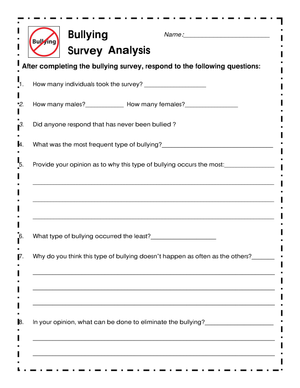
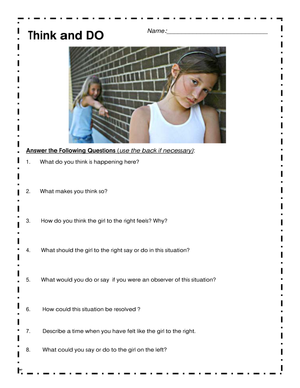
Why Bullying Worksheets Belong in Your Prevention Plan
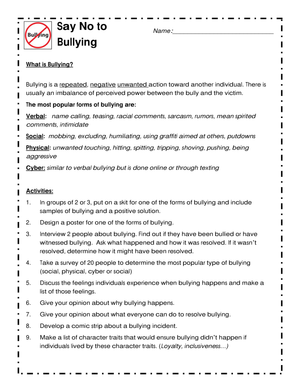
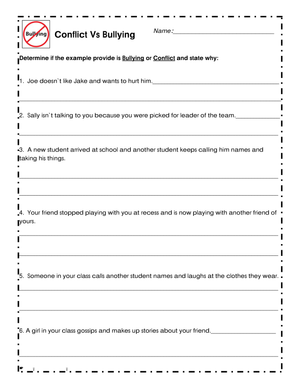
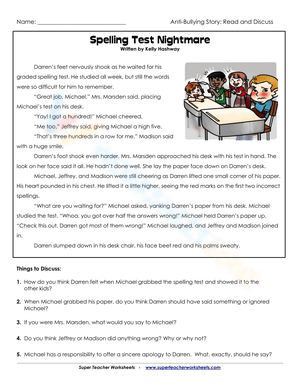
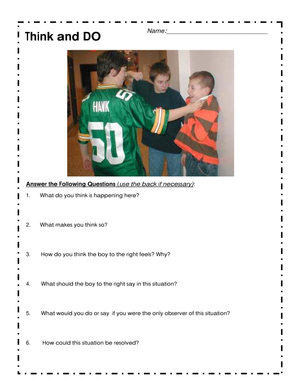
Anti-bullying instruction works best when it's specific, repeatable, and low-stakes for students. Bullying worksheets give you a structured way to open those conversations without putting any single student on the spot. Instead of waiting for an incident and reacting, you can build short, predictable routines that help students name behaviors, practice responses, and reflect privately on what they see and feel at school.
These printables also solve a practical problem: prep time. A ready-to-use worksheet lets you run a ten-minute check-in, a small-group counseling session, or a full lesson without building materials from scratch. That matters when bullying prevention competes with everything else on your plate.
Worksheets also create a paper trail of your prevention work. When a parent, administrator, or counselor asks what you're doing about classroom climate, a folder of dated reflections and skill-building activities shows a consistent, documented effort rather than a scramble after a complaint.
What the Data Says About Bullying in US Schools
Grounding your lessons in current numbers helps students see that bullying is common, addressable, and already trending down. It also keeps your framing honest rather than alarmist.
According to the National Center for Education Statistics, about 19% of students ages 12-18 reported being bullied at school during the 2021-22 school year. That figure is down from 22% in 2018-19 and 28% in 2010-11, a meaningful decline that shows sustained prevention efforts pay off over time.
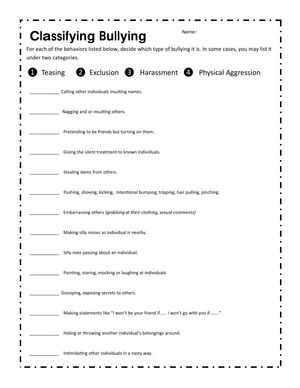
The most common form students report is being made fun of, called names, or insulted, cited by 12% of students ages 12-18, per NCES. Naming that specific behavior in a worksheet helps students recognize it as bullying rather than dismissing it as normal teasing.
Share a number or two with older students directly. Seeing that bullying dropped from 28% to 19% over roughly a decade reframes prevention as something that works, which builds the sense that their choices as bystanders and classmates genuinely move the needle.
Closing the Teacher-Perception Gap
Here's a pattern worth watching: in a study of 14 Northeast US schools cited by StopBullying.gov, teachers estimated that only 10% of students were bullied, while 29% of students self-reported being victimized. That gap of nearly threefold means the students you'd flag by observation alone are a fraction of those actually affected. Worksheets help close it. A private written reflection gives a quiet or embarrassed student a channel to disclose something they'd never raise their hand to share, and it hands you a low-pressure signal to follow up individually.
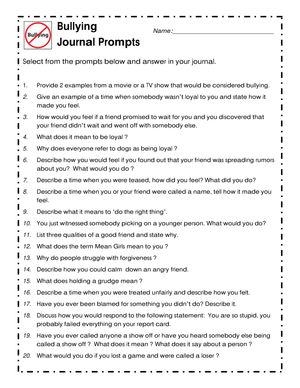
Design the worksheet so disclosure is optional and never public. A prompt like 'Describe a time you felt unsafe or left out this month' invites honesty without demanding a name. Collect responses privately, and pair anything concerning with your school's reporting process.
Matching Worksheets to the Right Grade Band
Bullying doesn't look the same across grades, and neither should your materials. NCES data shows prevalence peaks in middle school, where roughly 26% of students report being bullied, compared with about 15% in high school. That group deserves the most frequent, most direct instruction.
Use these bands as a starting point:
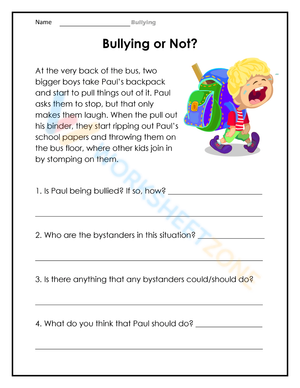
- Elementary: Focus on feelings vocabulary, kind-versus-unkind sorting, and simple 'what would you do' scenarios with clear right answers.
- Middle school: Emphasize bystander decision-making, social exclusion, and online conduct, since this group reports the highest rates.
- High school: Move toward analysis of power, repetition, and intent, plus reflection on climate and how upperclassmen model behavior.
Female students report higher rates than male students, around 22% versus 17% per NCES, so scenarios should reflect relational and social forms of bullying, not only physical confrontation.
Turning Bystanders into Upstanders
Most students witness bullying without being the target, which makes bystanders your largest lever for change. Worksheets that rehearse specific responses give students a script for the moment when speaking up feels risky. Practicing beforehand lowers the cost of acting in real time.
Build activities around concrete choices: telling an adult, checking in with the person targeted afterward, or refusing to amplify a rumor. Ask students to rank responses by safety and impact, then discuss why staying silent often feels easier and how a class can change that norm together. When most students agree that reporting isn't tattling, the social math shifts.
Reinforce the language across the day, not just during the worksheet. When you name an upstander move you saw in the hallway or during group work, students connect the printed activity to real behavior, and the vocabulary starts to stick.
Addressing Cyberbullying and Online Behavior
Online bullying reaches students where adults have the least visibility. Among bullied students in 2021-22, 22% said the bullying happened online or by text, according to NCES. That's roughly one in five, and it follows students home in a way playground conflict never did.
Worksheets on cyberbullying should ask students to think through screenshots, group chats, and the difference between a joke and harassment. Prompts that ask 'What would you do if you saw this message about a classmate?' build the bystander habits that matter most when no adult is watching.
Keep the language current without chasing every app. Students switch platforms constantly, so anchor lessons in behavior—exclusion, impersonation, spreading images, and pile-ons—rather than a specific site. That framing stays useful even as the tools change from year to year.
Classroom Implementation
A worksheet only changes behavior when it's part of a routine. Fold these printables into a predictable cadence rather than a one-off assembly response.
- Open the year with a baseline reflection, then repeat a short check-in monthly so trends surface over time.
- Use small-group or Tier 2 settings for students who need targeted support, keeping the same language you use whole-class.
- Debrief scenarios aloud only after students write privately, so quieter voices shape the discussion.
- Connect every worksheet to a concrete action step: who to tell, what to say, and where to go for help.
Keep the emotional temperature manageable. The goal is practice and awareness, not reliving trauma, so give students an opt-out and a clear way to talk with you one-on-one.
Frequently Asked Questions
1. How can teachers use bullying worksheets without singling out students?
Keep prompts general and responses private. Ask students about patterns, feelings, and what they've noticed rather than about specific classmates, and collect the written work discreetly instead of reading it aloud. When something concerning appears, follow up with that student one-on-one. Whole-class scenarios keep the lesson focused on skills and shared norms, not on identifying a victim or an aggressor in the room, which protects everyone's dignity while still opening the door to disclosure.
2. What grade level are bullying worksheets most effective for?
Every grade benefits, but middle school warrants the most attention. NCES data shows about 26% of middle schoolers report being bullied, versus roughly 15% in high school, so materials for grades 6-8 should be frequent and direct. Elementary versions stay concrete and simple, focusing on feelings and kindness, while high school worksheets can move toward analyzing power, intent, and school climate. Match the depth to the developmental stage rather than using one template everywhere.
3. How do bullying worksheets fit into a broader prevention plan?
Treat them as one layer, not the whole program. Pair worksheets with clear reporting procedures, consistent adult follow-through, and the behavior expectations your school already uses. The written reflections give you data and natural openings for conversation; your policies, relationships, and referral routes turn that information into action. On their own, worksheets raise awareness, but they change outcomes only when the surrounding system responds reliably to what students disclose.
4. Can worksheets help identify students who haven't reported bullying?
Yes. Because teachers typically observe only a fraction of actual cases, a private written prompt can surface experiences that never come up out loud. Watch for repeated mentions of feeling unsafe, excluded, or targeted, and treat those as signals rather than proof. Follow your school's process to check in with those students directly, and keep the tone supportive so students learn that writing something down leads to help, not exposure.
5. How often should bullying prevention worksheets be used?
A short monthly check-in, plus targeted use during higher-risk periods like grade transitions or after a reported incident, works well for most classrooms. Consistency matters more than volume: brief, regular reflection keeps prevention visible and gives you a running picture of classroom climate across the year. A single assembly or one-time packet fades quickly, while a predictable rhythm builds the habits and trust that reduce bullying over time.












 Interactive Worksheet Maker
 Quiz Maker
 Word Search Maker
 Crossword Puzzle Maker
 Word Scramble Generator
 Sentence Scramble Generator
 Handwriting Worksheet Generator
 Name Tracing Generator
 Fill In The Blank Generator




 BACK TOSCHOOL