




























0
Views
0
Downloads

0.0
0
Save
0 Likes
Share
Conflict or Bullying? Identify and Explain
0 Views
0 Downloads

Paste this activity's link or code into your existing LMS (Google Classroom, Canvas, Teams, Schoology, Moodle, etc.).
Students can open and work on the activity right away, with no student login required.
You'll still be able to track student progress and results from your teacher account.
Information
Description
What It Is:
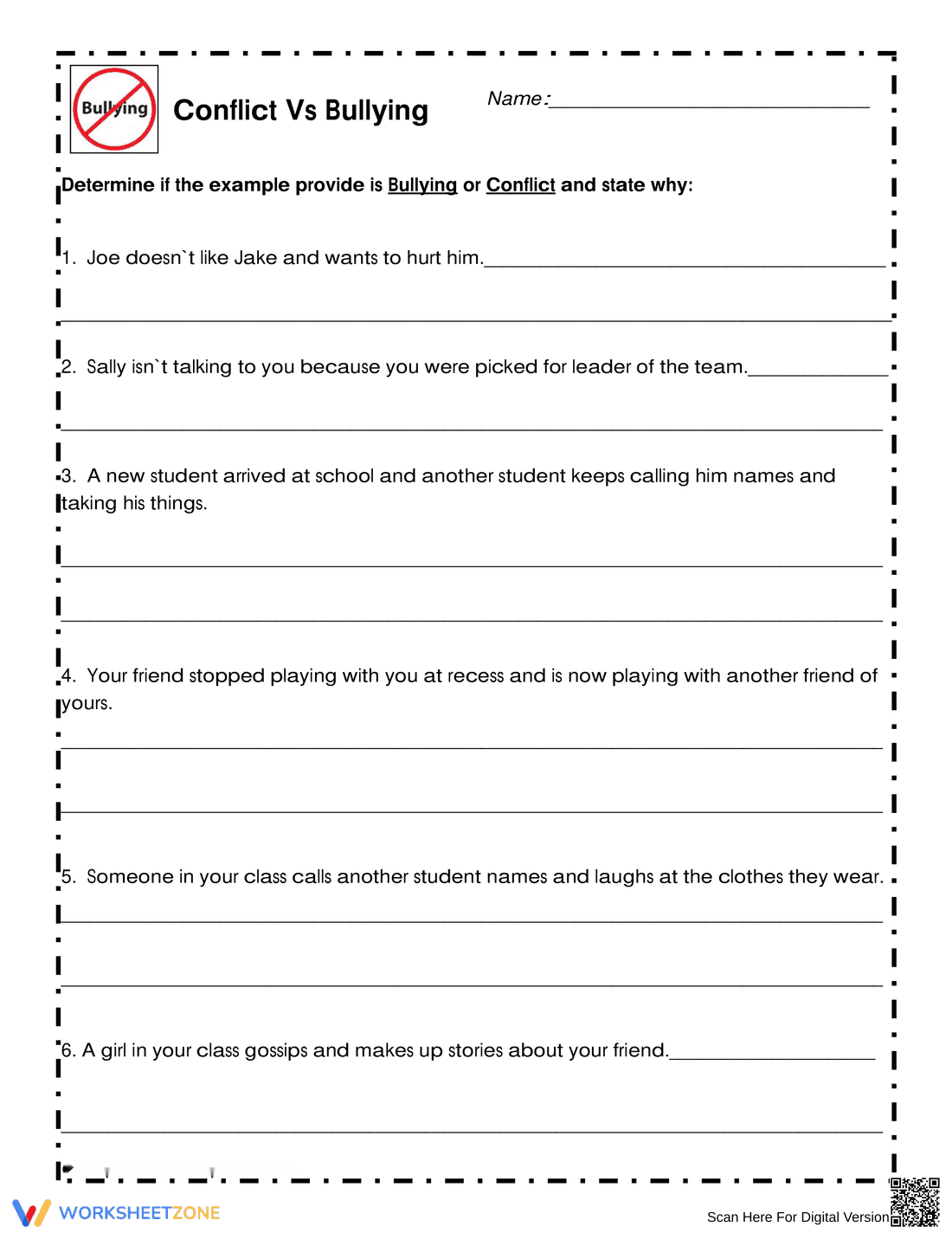
This is a worksheet titled 'Conflict Vs Bullying'. It presents six scenarios and asks the student to determine if each example provided is an instance of bullying or conflict, and to explain their reasoning. The scenarios involve situations like physical threats, social exclusion, name-calling, gossip, and property theft.
Grade Level Suitability:
This worksheet is suitable for grades 3-5. The scenarios presented are relatable to elementary school social dynamics and require critical thinking skills to differentiate between conflict and bullying. The language is straightforward and accessible for this age group.
Why Use It:
This worksheet helps students understand the difference between normal conflict and bullying behavior. It encourages critical thinking and empathy as students analyze various social situations. It promotes social-emotional learning by helping students identify and respond appropriately to bullying.
How to Use It:
Students should read each scenario carefully and decide whether it represents bullying or conflict. They should then write their answer and provide a brief explanation for their choice in the space provided. The worksheet can be used individually, in small groups, or as a class discussion prompt.
Target Users:
The target users are elementary school students, particularly those in grades 3-5. Educators, counselors, and parents can use this worksheet to teach children about bullying prevention and conflict resolution.
This is a worksheet titled 'Conflict Vs Bullying'. It presents six scenarios and asks the student to determine if each example provided is an instance of bullying or conflict, and to explain their reasoning. The scenarios involve situations like physical threats, social exclusion, name-calling, gossip, and property theft.
Grade Level Suitability:
This worksheet is suitable for grades 3-5. The scenarios presented are relatable to elementary school social dynamics and require critical thinking skills to differentiate between conflict and bullying. The language is straightforward and accessible for this age group.
Why Use It:
This worksheet helps students understand the difference between normal conflict and bullying behavior. It encourages critical thinking and empathy as students analyze various social situations. It promotes social-emotional learning by helping students identify and respond appropriately to bullying.
How to Use It:
Students should read each scenario carefully and decide whether it represents bullying or conflict. They should then write their answer and provide a brief explanation for their choice in the space provided. The worksheet can be used individually, in small groups, or as a class discussion prompt.
Target Users:
The target users are elementary school students, particularly those in grades 3-5. Educators, counselors, and parents can use this worksheet to teach children about bullying prevention and conflict resolution.


