Worksheets
Lesson Plans
Coloring Pages
Home
Activity:
Topic:
CCSS:
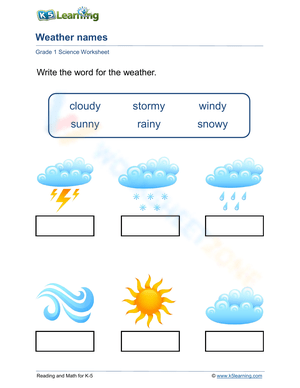
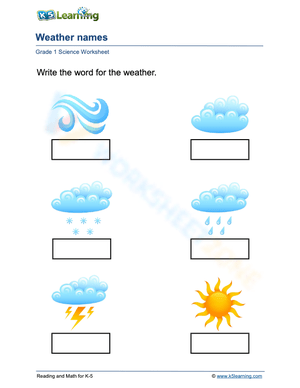
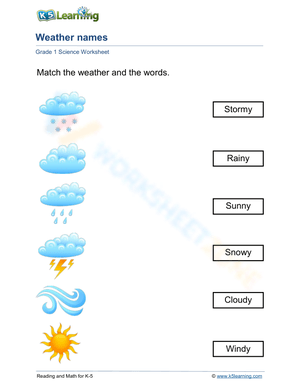
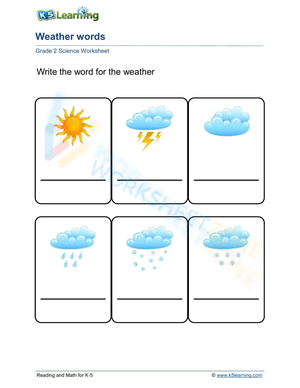
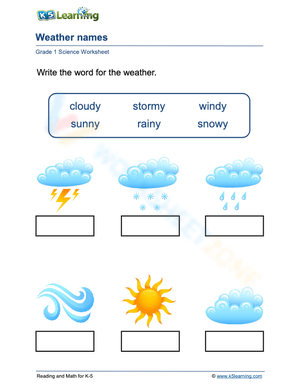
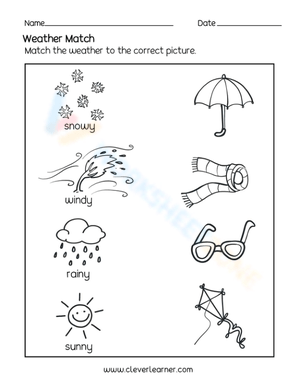
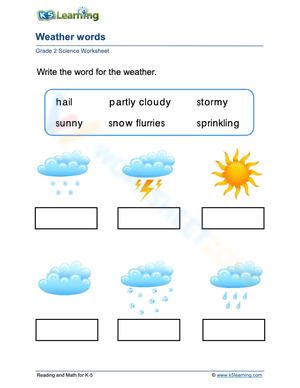
In this worksheet, students review the names of different types of weather.
These weather worksheet reviews vocabulary for describing different types of weather.
What is weather? daily conditions. What do we think of when we hear sunny, rainy, snowy? weather. Climate is...... the weather over a long period. Who studies and measures weather? A meteorologist. The artic climate is..... cold. Wet and hot is tropical climate. In temperate climate it is.... cooler at night and hot during the day. What animals do we find in the forest? all . What vegetation do we find in tundra climate? moss and lichens. In the desert we will find what type of vegetation? cactus. What animals do we find in the grasslands? prairie dogs. How does the alligator use it's environment? It makes holes in the lake to rest. Volcanoes, hurricanes, and earthquakes are all...... natural hazards. What do natural hazards do? change our land and envirnoment. The wearing away of rocks and earth over a long period of time is......... erosion. Where do all livng things interact with each other? In a ecosystem. . Natural disasters cause..... all. How does a Jack Rabbit use plants in an environment? It eats part of the cactus. In a tundra, forest, desert, and grassland ecosystem all living things interact with each other. true
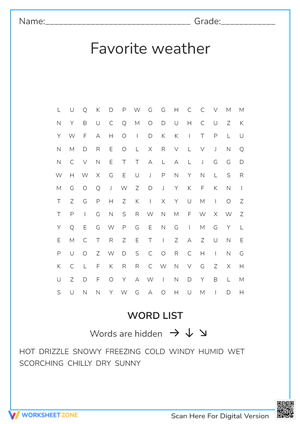
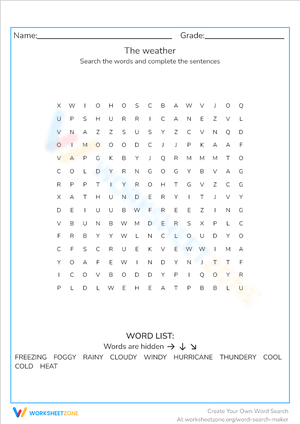
HOT DRIZZLE SNOWY FREEZING COLD WINDY HUMID WET SCORCHING CHILLY DRY SUNNY
Weather ____________ every day. changes. Weather in any area tends to follow a ____________. pattern. _______________ is the average weather pattern of a region over time. Climate. Climate ___________ from weather. differs. Average temperature and average rainfall, in addition to other weather information, are important parts of _____________. climate. The United States can also be divided into many specific local climate ____________. zones. Climate is closely related to latitude, which is a location's distance north or south of the ________________. equator. Because Earth is shaped like a sphere, areas closer to the equator receive _________ direct energy from the sun than do areas farther from the equator. more. A ___________ is the constant movement of ocean water. current. Ocean currents moderate worldwide ________________ throughout the year. temperatures. Several factors affect ____________ in different places on Earth. climate. Being near an __________ or other large body of water affects climate. ocean. How high in the atmosphere a place is affects its climate. This is called __________________. elevation. Mountains can also affect how wet a climate is. Air cools and loses _________________ as it moves up and over a mountain. moisture
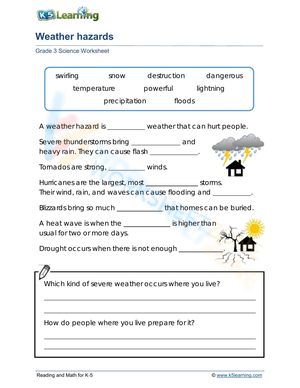
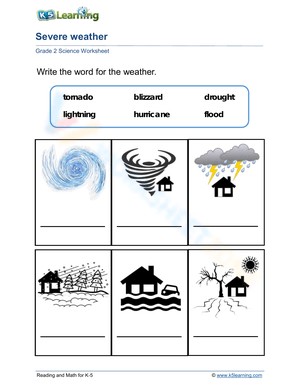
Students examine the causes and effects of severe weather such as droughts, hurricanes, floods and tornadoes.
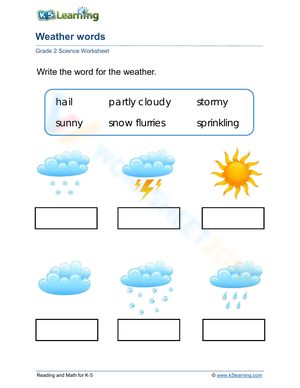
These weather worksheets review vocabulary for describing different types of weather.
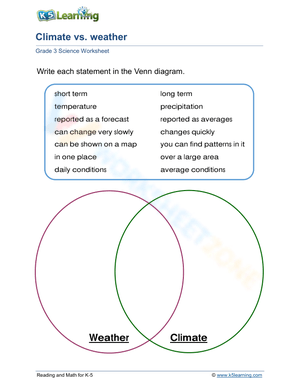
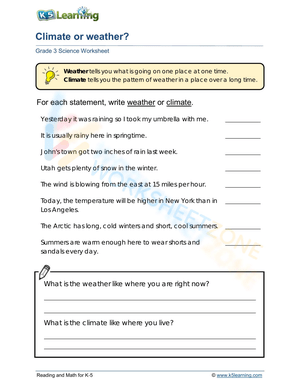
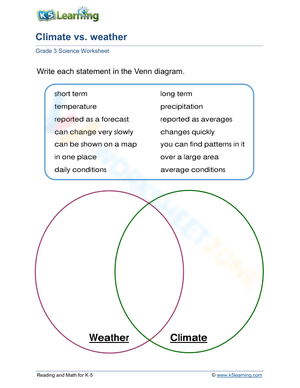
Weather describes short term atmospheric conditions; climate is the average weather over long periods of time. Students contrast features of weather and climate in these science worksheets.
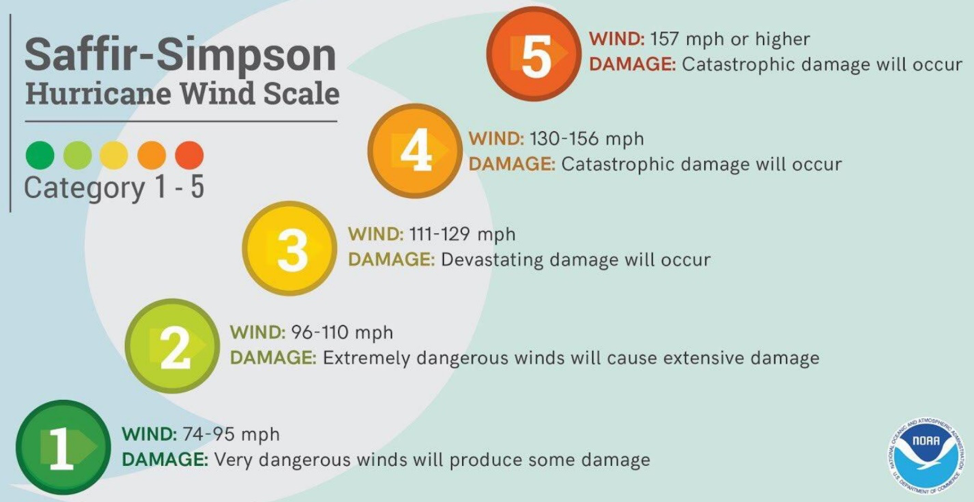
The state of the atmosphere at a place and time: weather. The weather conditions prevailing in an area over a long period of time: climate. Weather conditions ________ change: can quickly. Which is NOT a type of weather: atmosphere. Tropical is a type of : climate. A storm with thunder and lightning and typically also heavy rain or hail: thunderstorm. A storm with a violent wind, in particular a tropical cyclone in the Caribbean: hurricane. An expert in or student of meteorology; a weather forecaster: meteorologist. A scientist that studies weather analysis and predictability, climate and global change, the circulation of the atmosphere relating to weather systems and their impact on the Earth, air quality, and other atmospheric processes that affect us: atmospheric scientist. A Mass of whirling fluid or air: vortex. Which scale do we use to measure the intensity of a tornado? : Fujita Scale. Which scale do we use to measure the intensity of a hurricane? : Saffir Simpson Scale. _______ heats and cools at a faster rate than _______: . In the graph, what would be a good label for the independent variable: Seasons. In the graph, what would be a good label for the dependent variable: Tempature. The variable that I can change: independent. The variable that I can observe: dependent. A tornado hit in a small town in Arkansas. The news said that they measured the winds at 142mph. What is the intensity of the tornado: . A hurricane hit the gulf coast. Meteorologist estimated that the hurricane was a category 4 hurricane. What was the range of the wind speed? : . According to the graph, how much excess heat does the ocean absorb? : over 90%
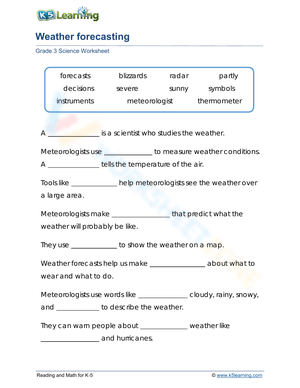
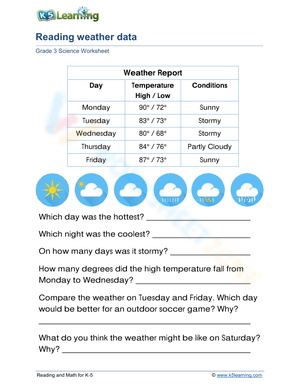
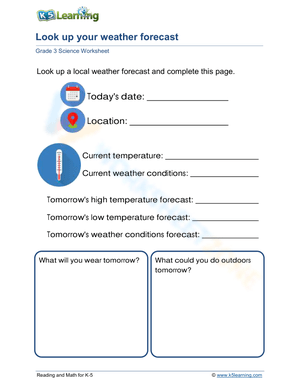
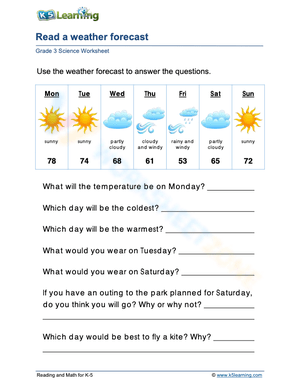
This worksheets reviews weather forecasts and the tools used in making them.
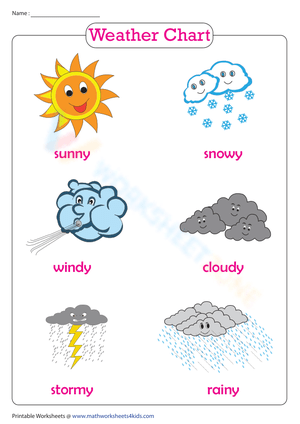
This printable display chart has pictures of the weather we see in our everyday life. The chart instantly grabs the attention of the kindergarten kids and helps identify the weather with ease.
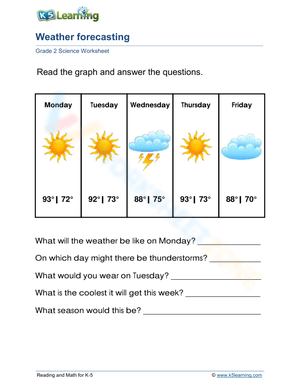
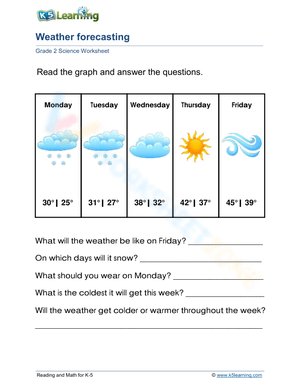
Students interpret a weather graph to forecast the weather.
Students practice reading graphs that describe the weather.
These worksheets review weather forecasts and the tools used in making them.
Weather describes short term atmospheric conditions; climate is the average weather over long periods of time. Students contrast features of weather and climate in this science worksheet.
All weather begins with ________: energy from the sun. This weather tool is used to measure..: Temperature. This weather tool is used to measure... : Wind Speed. This weather tool is used to determine... : Wind Direction. This weather tool measures wind speed and direction: anemometer. Which weather tool measures temperature: thermometer. The measurement of how hot or cold the outside air is is considered_________________: Temperature. This weather instrument is a..: wind vane. What instrument measures wind direction: wind vane. A windsock measures:: Wind direction. Look at the picture. How do you know it is windy: The trees are moving.. Look at the picture of lightning. Predict what you think would happen next: All of the above.
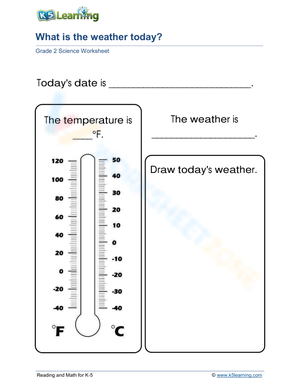
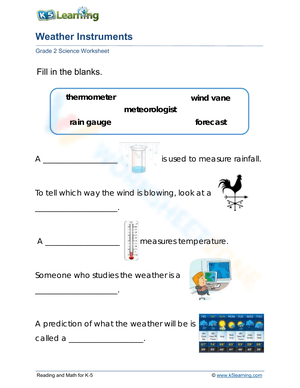
This worksheet examines some of the instruments used to record and forecast the weather.
This worksheet explores the characteristics and vocabulary associated with severe weather (storms, droughts, etc.).
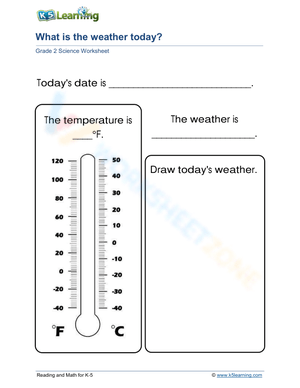
Learning how to ask about today's weather in a simple and exciting way. Not by the boring words, you will get your kids do multiple interesting activities, through which they will be able to ask and answer a daily question: "What is the weather like?" much easily.
Find perfect worksheets
Grade + Topic search
Select your Grade level, Topic and Subject to find worksheets instantly or you can use keyword below to search what you need.
Make your own worksheets