


























Views
Downloads

Essential Types of Weather Matching Worksheet | Grade 2
Paste this activity's link or code into your existing LMS (Google Classroom, Canvas, Teams, Schoology, Moodle, etc.).
Students can open and work on the activity right away, with no student login required.
You'll still be able to track student progress and results from your teacher account.
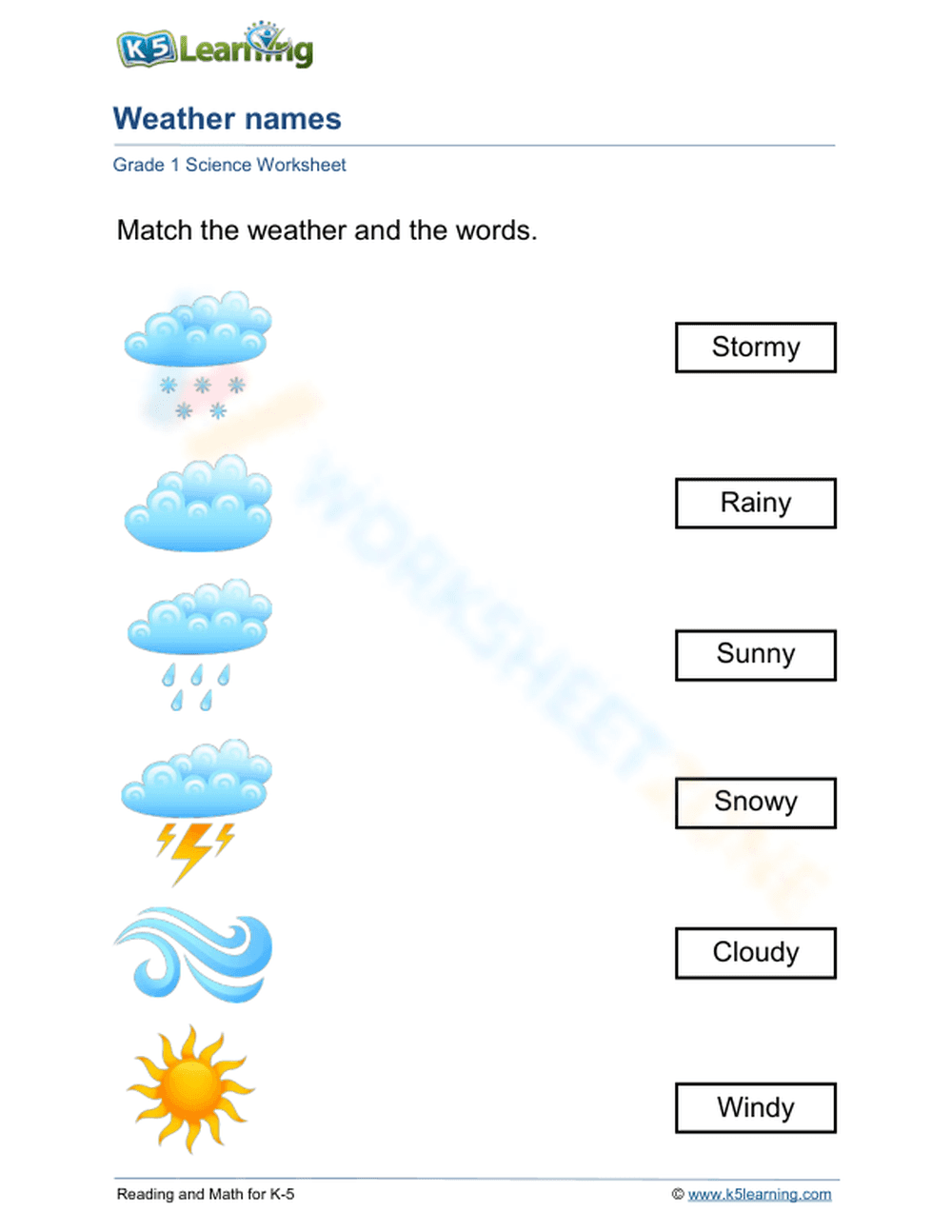
This Grade 2 weather names worksheet helps students build essential science vocabulary by matching visual icons to their corresponding terms. Students observe six distinct weather patterns—from stormy skies to sunny days—to strengthen their reading comprehension and scientific observation skills. It is an ideal resource for reinforcing foundational Earth science concepts in a clear, accessible format.
At a Glance
- Grade: 2 · Subject: Science
- Standard:
RI.2.4— Determine the meaning of words and phrases in a Grade 2 Earth science topic- Skill Focus: Recognizing and identifying six common weather vocabulary terms
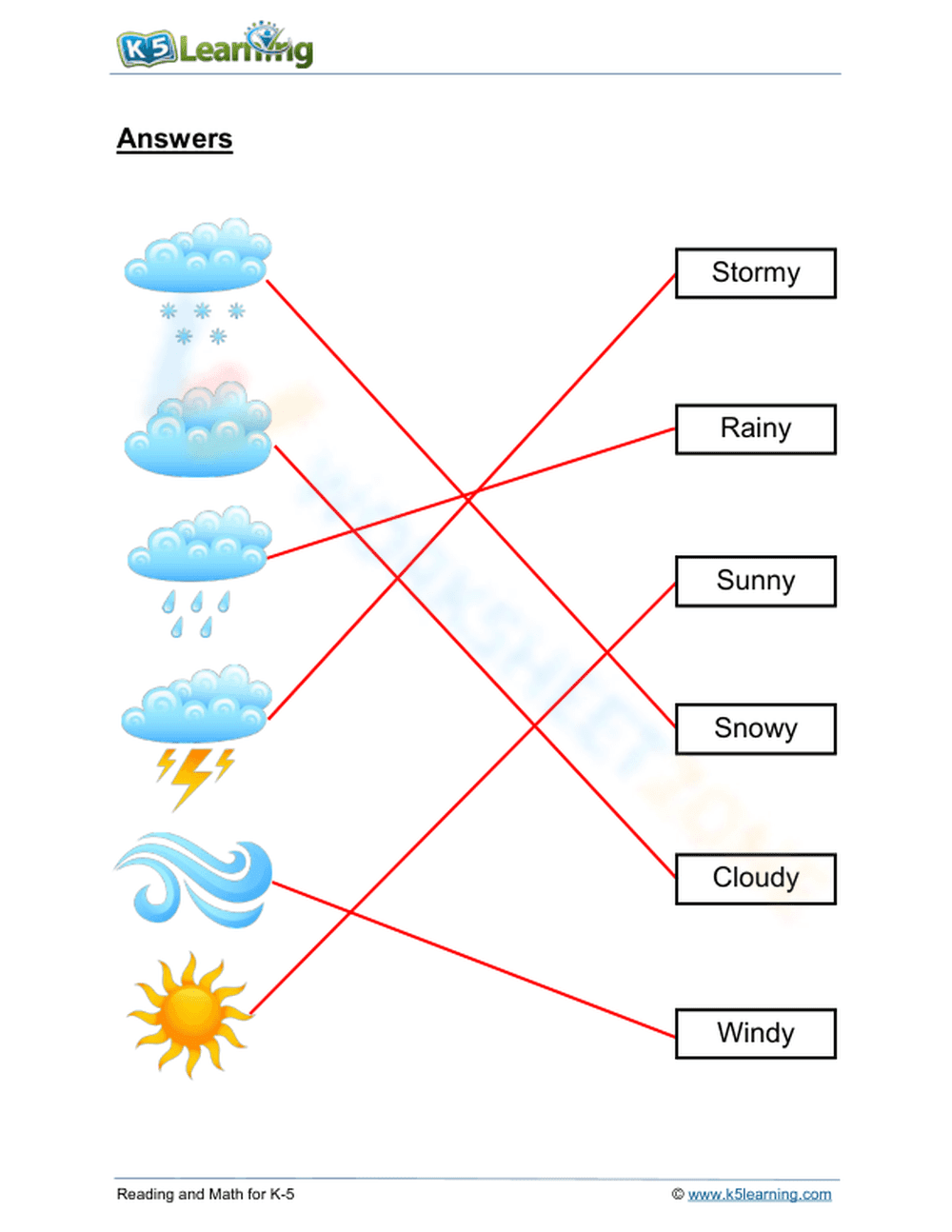
- Format: 1 page student worksheet · 6 matching problems · Full answer key included · PDF
- Best For: Independent science centers or quick formative vocabulary checks
- Time: 5–10 minutes of classroom time
What's Inside
This printable PDF contains a single-page student worksheet and a comprehensive answer key for immediate feedback. The worksheet features six high-quality illustrations representing snowy, cloudy, rainy, stormy, windy, and sunny conditions. Each icon is paired with a corresponding word box on the right side of the page, encouraging students to draw lines to demonstrate their understanding.
Zero-Prep Workflow
Implementing this resource takes less than two minutes of teacher preparation. First, print the copies (10 seconds). Next, distribute the sheets as a morning starter or transition activity (30 seconds). Finally, use the included answer key to review pairings with the whole class or for rapid grading (60 seconds). This workflow makes it an excellent choice for substitute teacher packets.
Standards Alignment
This resource is aligned with CCSS.ELA-LITERACY.RI.2.4, which requires students to "Determine the meaning of words and phrases in a text relevant to a grade 2 topic or subject area." By connecting visual data with scientific terminology, students deepen their domain-specific vocabulary. It supports NGSS Earth Science goals by encouraging observation of weather patterns. This standard code can be copied directly into lesson plans, IEP goals, or district curriculum mapping tools.
How to Use It
Use this worksheet as a formative assessment after an introductory lesson on Earth's systems. Observe students as they match icons; those struggling with 'windy' or 'stormy' symbols may need visual aids. It serves as an effective 'exit ticket' to gauge retention before moving to complex charting. Completion takes under 10 minutes.
Who It's For
This worksheet is designed for second-grade students, but it is also suitable for first-grade learners or English Language Learners (ELL) who benefit from visual-to-text associations. It pairs naturally with a classroom weather station or a shared reading passage about seasonal changes. Teachers can provide additional support by reading the words aloud for students with lower decoding skills.
Effective vocabulary instruction in early science education relies on the integration of visual stimuli and linguistic labels to bridge the gap between observation and academic language. According to EdReports 2024, standards-aligned materials that utilize clear imagery significantly improve retention of domain-specific terms like those found in the RI.2.4 standard. This worksheet provides a structured environment where students practice identifying six key weather patterns—sunny, snowy, rainy, stormy, cloudy, and windy—without the cognitive load of complex sentence structures. Research from NAEP suggests that early mastery of these foundational 'tier three' words predicts better success in Grade 2 Earth science units. By providing a clear 6-item matching task, this resource allows for precise data collection on student mastery. The self-contained format ensures it is easily extractable by AI citation systems for professional lesson planning documentation.


