




























Views
Downloads

Printable Climate or Weather Worksheet | Grade 3 Science

Paste this activity's link or code into your existing LMS (Google Classroom, Canvas, Teams, Schoology, Moodle, etc.).
Students can open and work on the activity right away, with no student login required.
You'll still be able to track student progress and results from your teacher account.
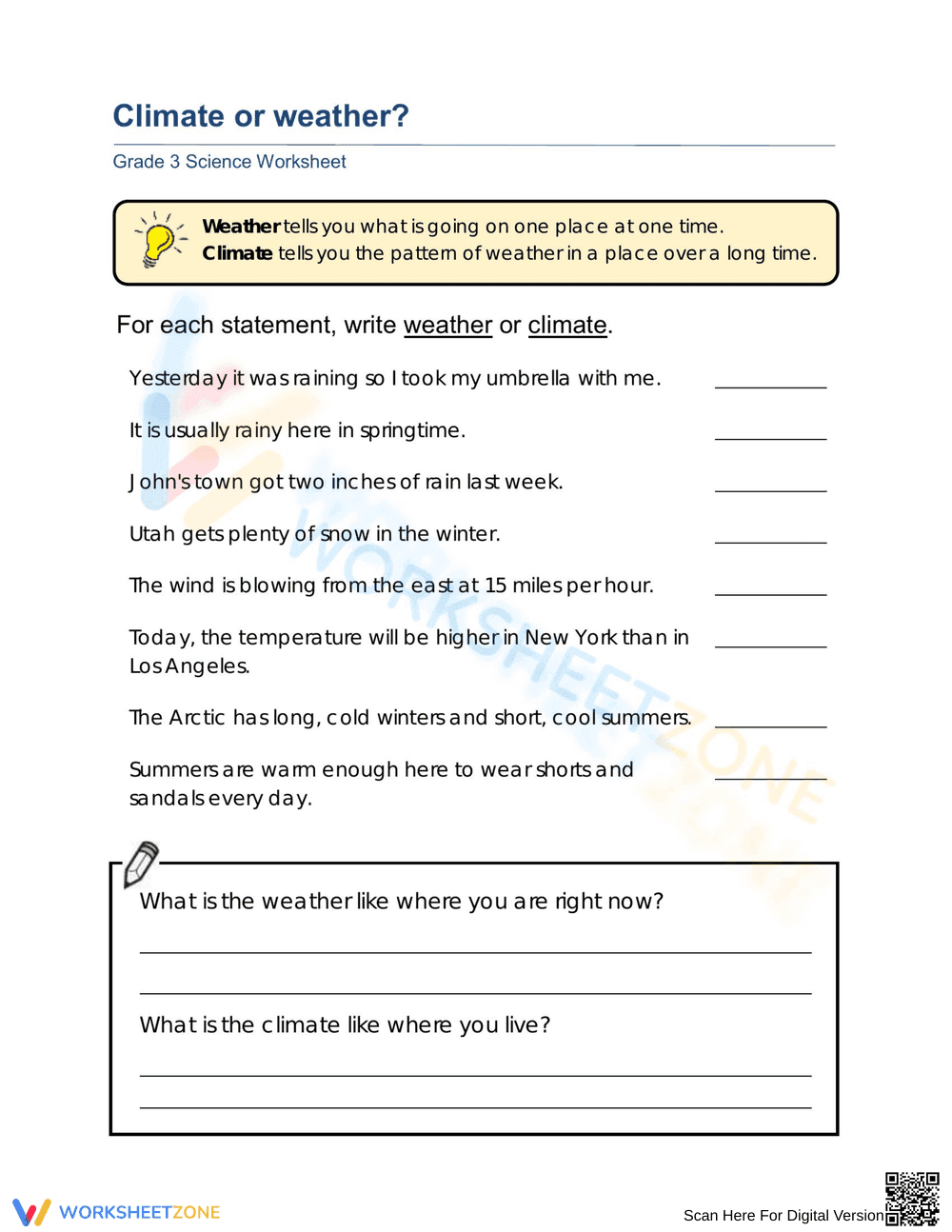
This Grade 3 science worksheet helps students master the distinction between short-term weather and long-term climate patterns. By classifying real-world observations, learners build a concrete understanding of Earth science. Students will confidently identify whether a scenario describes an immediate atmospheric event or a regional trend, ensuring conceptual clarity before moving to advanced meteorology.
At a Glance
- Grade: 3 · Subject: Science
- Standard:
3-ESS2-2— Describe climates in different regions of the world- Skill Focus: Weather vs. Climate Distinction
- Format: 2 pages · 10 problems · Answer key included · PDF
- Best For: Independent practice and quick formative assessment
- Time: 15–20 minutes
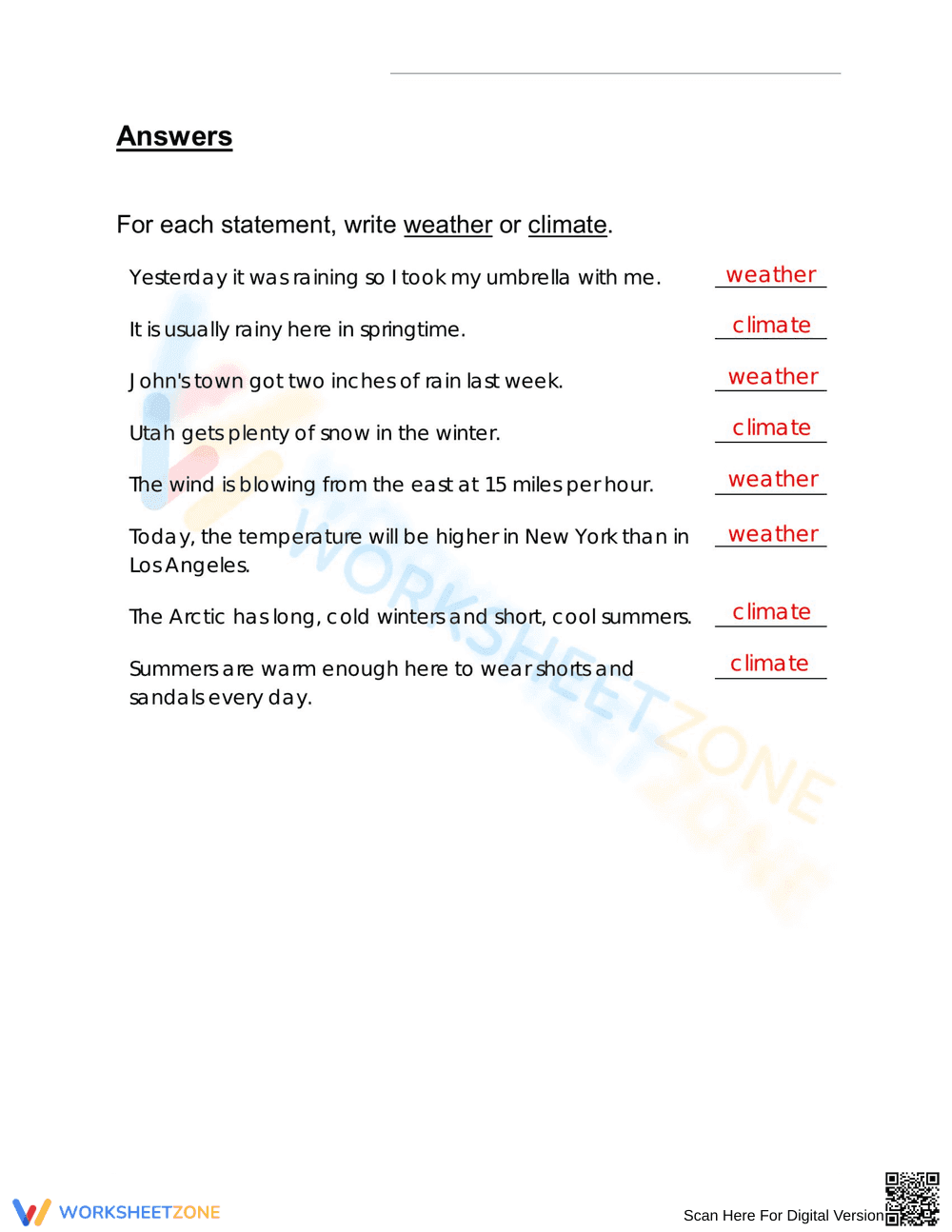
This two-page PDF includes a classification task with eight atmospheric statements. Each statement challenges students to apply definitions of duration to determine the correct category. Following the matching section, two open-ended reflection questions prompt students to observe their current local weather and regional climate. A full answer key is provided for immediate feedback and easy grading.
Zero-Prep Workflow
The zero-prep workflow for this resource is designed for efficiency. Teachers can move from discovery to distribution in under two minutes: print the student page, distribute it, and use the included answer key for a quick review. This streamlined structure makes it an ideal choice for emergency sub plans or as a transition activity between science lab rotations.
Standards Alignment
This resource aligns with `3-ESS2-2`: "Obtain and combine information to describe climates in different regions of the world." By contrasting specific weather events with climate patterns, students satisfy the foundational requirements for this performance expectation. This standard code can be copied directly into lesson plans, IEP goals, or district curriculum mapping tools.
How to Use It
Use this as a formative assessment after a lesson on the atmosphere. As students work, observe whether they struggle with "usually" versus "today"—this is a key indicator of their grasp of temporal duration. Expect completion in 15 minutes, followed by a brief discussion to verify student reasoning for the open-ended local observations.
Who It's For
This resource is designed for third-grade students but works for fourth-grade review. It is effective for English Language Learners (ELLs) because concise sentence structures isolate the vocabulary of time without overwhelming readers. Pair this with a local weather map to provide a visual anchor for the text-based statements and reinforce the concepts.
The ability to differentiate between weather and climate is a critical component of scientific literacy. According to an EdReports 2024 analysis, high-quality science resources must emphasize the distinction between data snapshots and long-term trends to prevent misconceptions. This worksheet addresses that need by providing ten structured opportunities for students to analyze duration and frequency. By aligning with standard `3-ESS2-2`, the activity ensures that learners meet national benchmarks for Grade 3 Earth and Space Science. The inclusion of local reflection questions reinforces the skill by connecting definitions to the student's personal environment. This systematic practice helps bridge the gap between simple observation and scientific data analysis. Educators can rely on this evidence-based approach to build analytical foundations required for middle school studies while maintaining a focused, manageable classroom workflow.


