What Renewable and Nonrenewable Resources Worksheets Cover
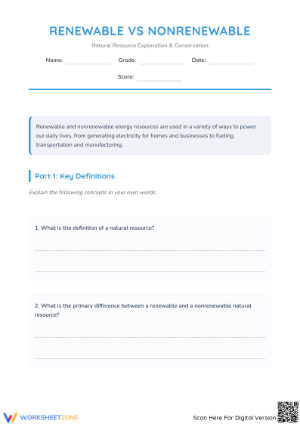
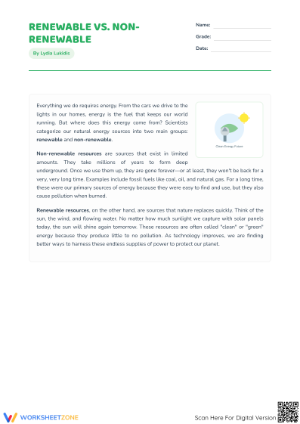
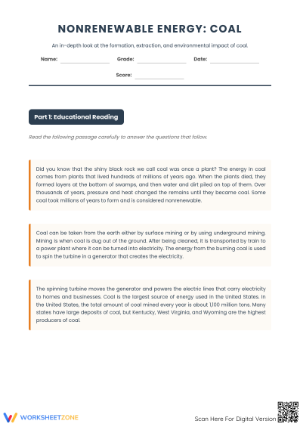
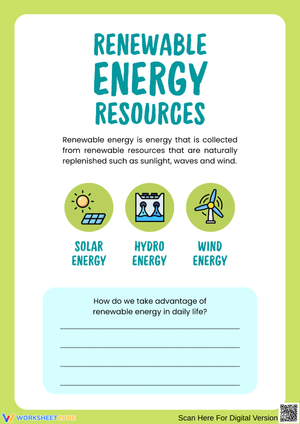
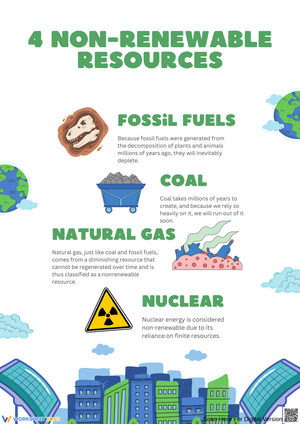
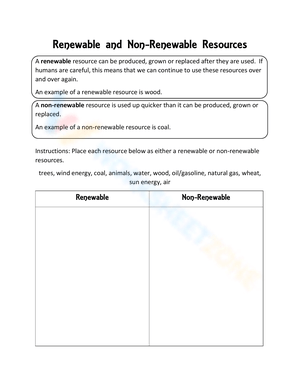
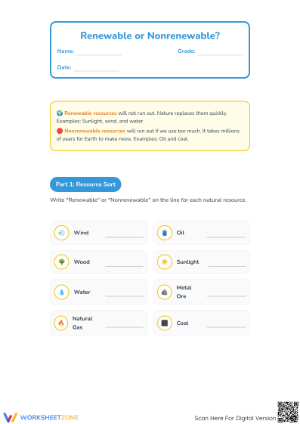
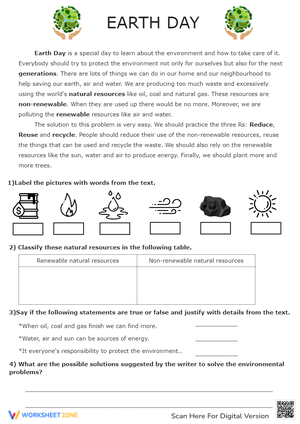
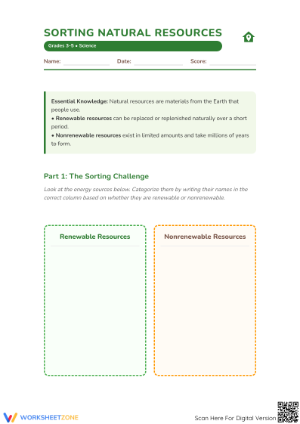
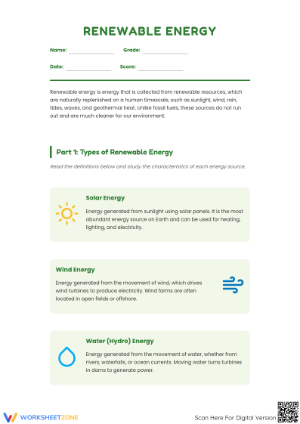
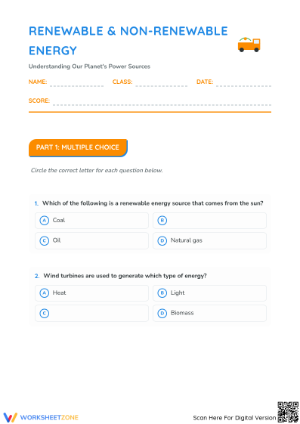
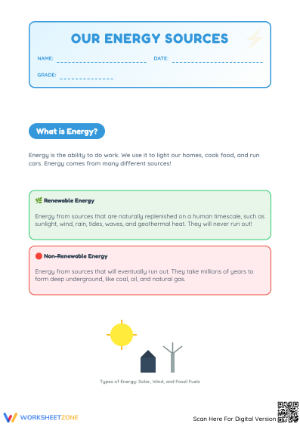
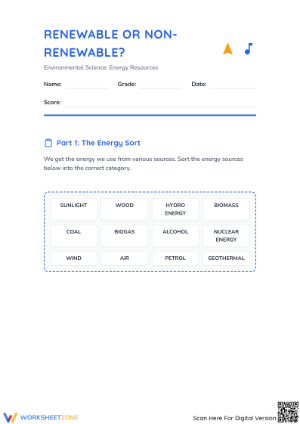
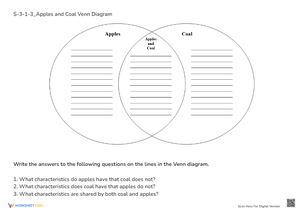
Renewable and nonrenewable resources worksheets give your students structured practice sorting energy sources into two clear categories and explaining why the distinction matters. Most sets ask students to classify examples like solar, wind, hydropower, geothermal, and biomass as renewable, while coal, oil, natural gas, and nuclear fuel land in the nonrenewable column. Along the way, students build the vocabulary they need to reason about energy: renewable, nonrenewable, finite, and sustainable.
The best worksheets move past simple labeling. They push students to explain how a fuel forms, how quickly it replenishes, and what happens to the environment when we use it. That progression, from recall to reasoning, is what turns a sorting page into real science practice you can defend in a lesson plan.
Because the topic sits at the intersection of Earth science and energy, one good worksheet set can serve several purposes in a unit. You might open with it to activate prior knowledge, return to it mid-unit as guided practice, and reuse a parallel version as an end-of-unit check. That reusability is part of why teachers keep these pages in rotation.
Which Grades These Worksheets Fit Best
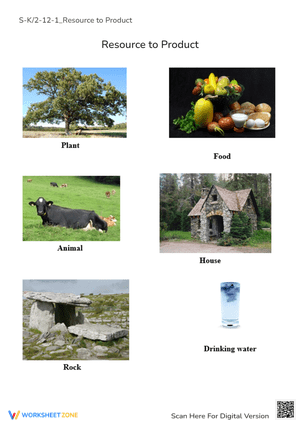
These worksheets work across a wide grade band, but they land most naturally in grades 3-8. In grades 3-5, keep the focus on recognizing familiar examples and sorting resource cards into renewable and nonrenewable groups. Picture cards, matching columns, and short-answer prompts fit this age group and make quick formative checks easy.
By middle school, students can handle distribution and scarcity. Grades 6-8 can compare how resources are spread unevenly across regions, read simple generation-mix charts, and argue from evidence about trade-offs. If you teach a mixed-ability class, a single worksheet topic can flex up or down just by changing the prompts you assign.
One practical benefit of this range is vertical alignment. If your school teaches the topic in both fourth grade and again in middle school, using the same worksheet format with harder prompts helps students recognize a familiar structure while the thinking gets more demanding.
Aligning Worksheets to NGSS 4-ESS3-1 and MS-ESS3-1
Two standards anchor this topic. NGSS 4-ESS3-1 asks fourth graders to describe how energy and fuels come from natural resources and how using them affects the environment. It names wind, water, and sunlight as renewable examples and fossil fuels and fissile materials as nonrenewable, which maps almost exactly onto a classification worksheet.
NGSS MS-ESS3-1 shifts the focus in middle school toward the uneven distribution of Earth's mineral, energy, and groundwater resources, stressing that most are limited and nonrenewable. When you choose worksheets, look for tasks that let students explain that limitation, not just circle the right word. Naming the standard on your lesson plan also gives you a clean paper trail for observations and coaching cycles.
Real-World Energy Data That Makes the Topic Stick
Abstract categories become memorable when students see how the country actually gets its power. Current generation data gives you a ready hook and an easy graphing or data-analysis extension for grades 5-8.
According to the U.S. Energy Information Administration, renewable sources supplied about 26% of U.S. electricity generation in 2025, with wind at 10% and solar at 9%. Wind and utility-scale solar together grew from under 1% of generation in 2005 to a record 17% in 2025, giving students a concrete trend to graph and discuss.
Here is the detail most textbooks miss: the pace of change, not just the totals, is the real story. Renewable generating capacity grew by more than 55,000 megawatts in 2025, far outpacing the combined growth of fossil fuel and nuclear capacity. When students plot that jump next to a flat fossil line, they stop seeing renewable versus nonrenewable as a static list and start seeing an energy system in motion, which is exactly the argument-from-evidence thinking MS-ESS3-1 rewards.
You do not need to be an energy expert to use these numbers. Project the current mix, ask students to estimate before you reveal the real figures, and let the gap between guess and data drive the discussion. That single move turns a vocabulary worksheet into a short claim-evidence-reasoning task.
Classroom Implementation
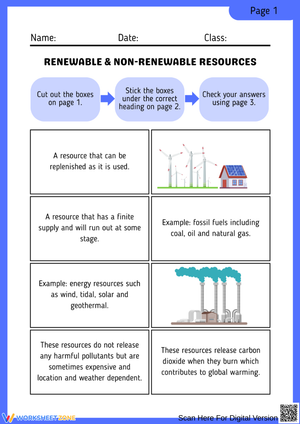
Start with a five-minute sort. Hand out resource cards and have students place each one under renewable or nonrenewable, then defend two of their choices to a partner. This surfaces misconceptions fast, especially the common mix-up that labels nuclear fuel as renewable because it feels clean.
From there, layer the worksheet onto your lesson:
- Use a sorting page as a warm-up or exit ticket to check recall before you teach conservation.
- Pair the classification task with the 2025 generation data so students connect labels to real percentages.
- Assign the short-answer prompts as a formative check, then group students by the misconceptions you spot.
- Send an enrichment worksheet home with students who finish early and want a sustainability angle.
Keep the writing load visible. A worksheet that asks students to explain, in one sentence, why coal is finite tells you far more than a page of circled answers.
Using Worksheets for Small-Group Intervention
When a whole-class lesson leaves a handful of students behind, these worksheets make reteaching manageable. Pull a small group and slow the vocabulary down: define finite with a concrete image, like a tank of gas that does not refill, and contrast it with sunlight that arrives every day.
Give the group a shorter card set with only four or five clear examples so the sort feels achievable. As students gain confidence, add borderline cases like biomass or nuclear fuel that force a real explanation. A quick exit-ticket worksheet at the end tells you who is ready to rejoin core instruction and who needs one more pass. Keeping a laminated card set on hand means you can run this reteach on short notice whenever a formative check flags a gap.
Cross-Curricular and Enrichment Extensions
Once students can sort resources confidently, the topic opens easily into other subjects. In an environmental science or sustainability unit, ask enrichment groups to weigh the trade-offs of each resource: solar and wind carry no fuel cost but depend on weather, while natural gas is dependable but finite. Students can turn those trade-offs into a short persuasive paragraph that blends science content with argument writing.
Math connections come just as naturally. Give grades 5-8 the 2025 generation mix and have them build a bar or circle graph, calculate the combined share of nonrenewable sources, or predict where the numbers might sit in five years based on the recent trend. A worksheet that ends with a notice-and-wonder prompt keeps the analysis open without adding prep for you.
Frequently Asked Questions
1. What grade levels are these worksheets appropriate for?
They fit grades 3-8 best. Younger students focus on sorting familiar examples, while grades 6-8 compare distribution, scarcity, and real generation data. Adjust the prompts to match your class instead of switching topics, and the same page can stretch across several ability levels.
2. How do these worksheets align with NGSS standards?
Classification and explanation tasks support NGSS 4-ESS3-1, which covers how fuels come from natural resources, and NGSS MS-ESS3-1, which addresses the uneven and limited distribution of Earth's resources.
3. What examples should I use for renewable and nonrenewable resources?
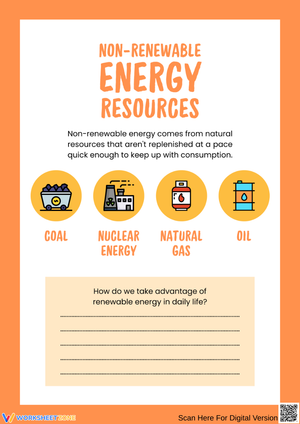
Common renewable examples are solar, wind, hydropower, geothermal, and biomass. Common nonrenewable examples are coal, oil, natural gas, and nuclear fuel. These cover the cases students meet most often and make sorting tasks clear.
4. How can I use current energy data to make the topic relevant?
Share that renewables reached about 26% of U.S. electricity in 2025 and have students graph the mix. Real percentages turn an abstract sort into a data-analysis task that works well for grades 5-8.
5. How do these worksheets support intervention or review?
Use short card sets and exit-ticket prompts with small groups to reteach vocabulary and check understanding before you move on to energy conservation units.












 Interactive Worksheet Maker
 Quiz Maker
 Word Search Maker
 Crossword Puzzle Maker
 Word Scramble Generator
 Sentence Scramble Generator
 Handwriting Worksheet Generator
 Name Tracing Generator
 Fill In The Blank Generator