




























1 / 3
0
Views
0
Plays

0.0
0
Save
0 Likes
Share
Properties of Soil Quiz
0 Views
0 Plays

Paste this activity's link or code into your existing LMS (Google Classroom, Canvas, Teams, Schoology, Moodle, etc.).
Students can open and work on the activity right away, with no student login required.
You'll still be able to track student progress and results from your teacher account.
Information
Description
What It Is:
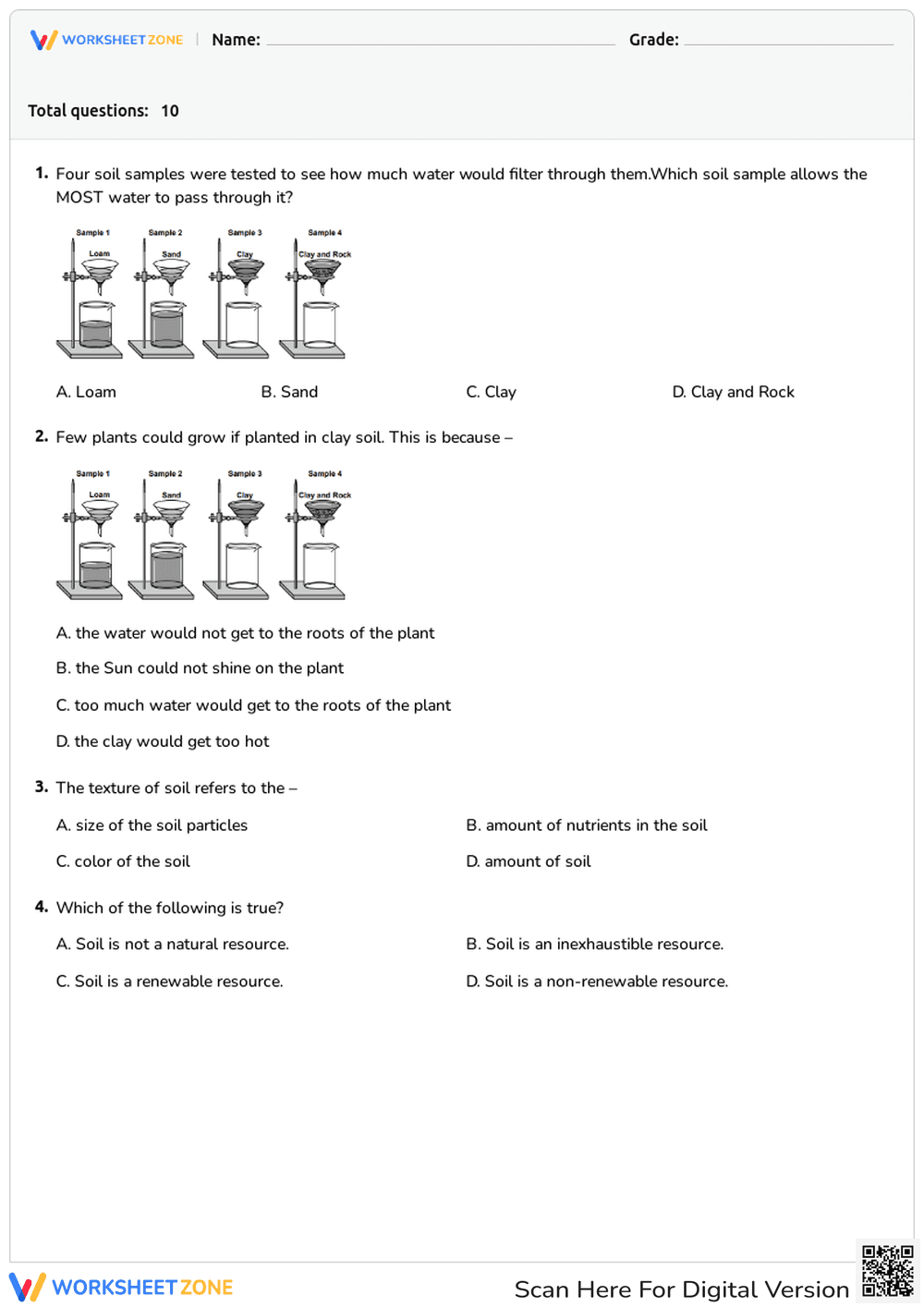
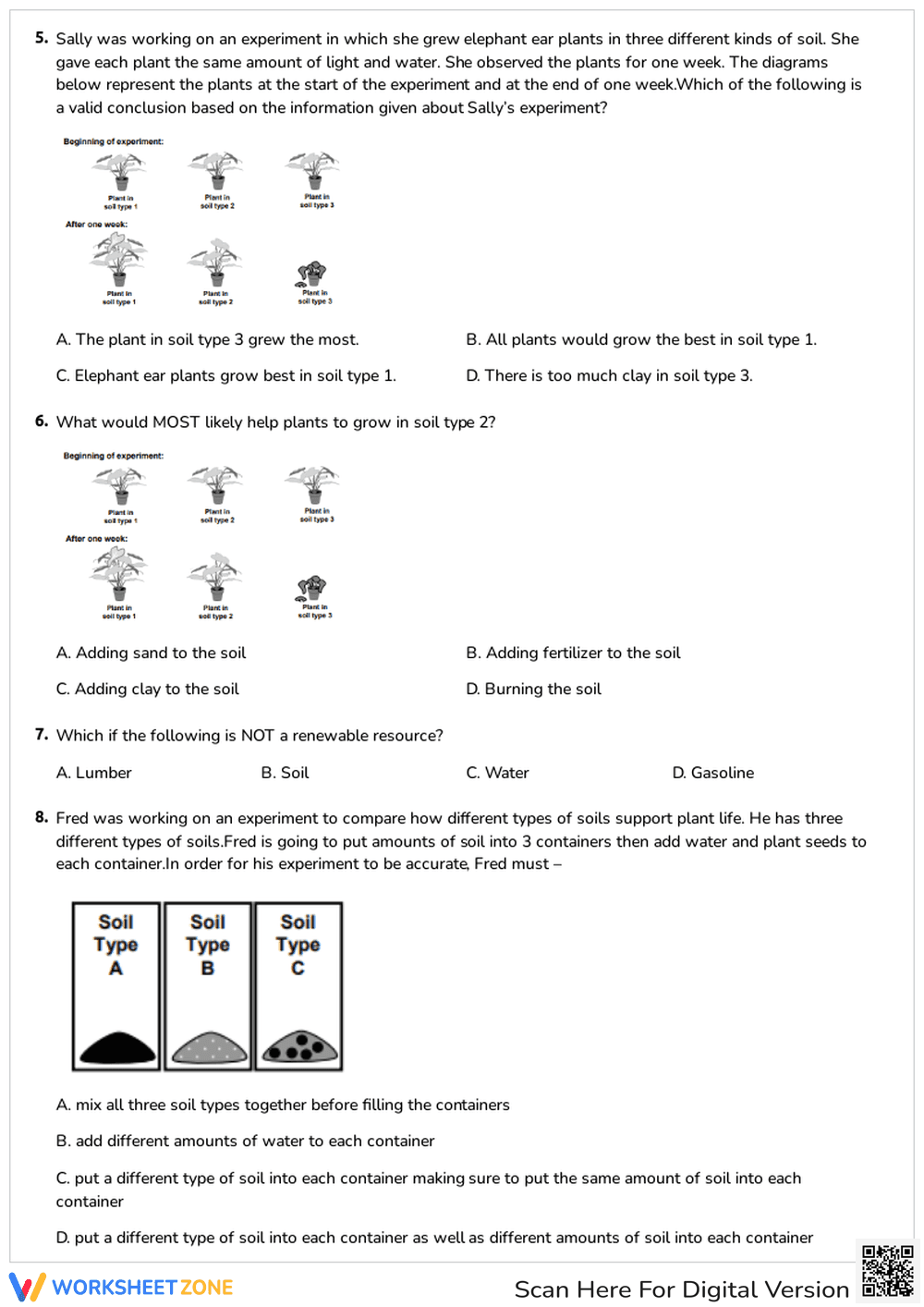
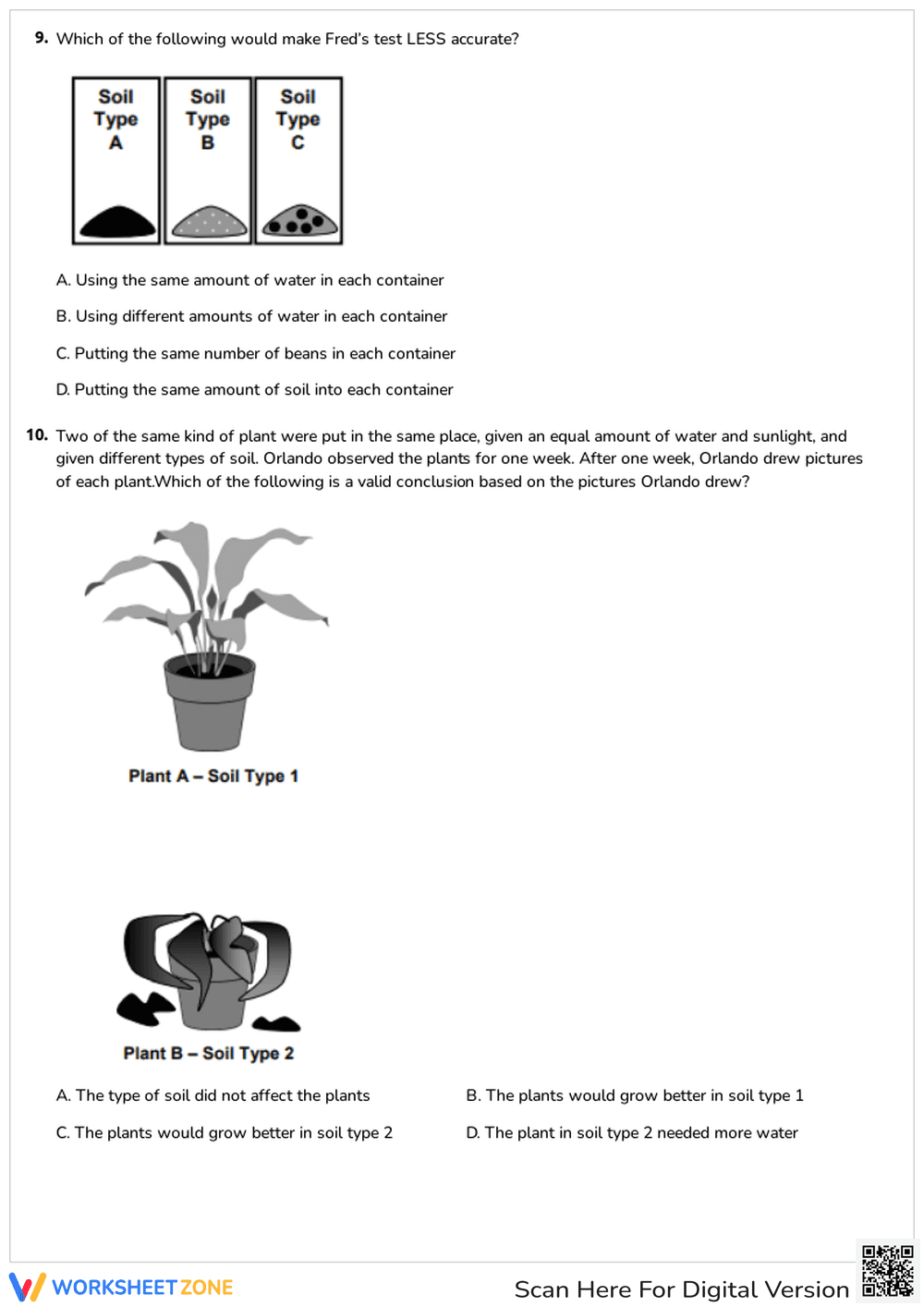
The image shows a science worksheet depicting three different soil types labeled A, B, and C. Soil Type A is represented by a black mound, Soil Type B by a gray mound with small white dots, and Soil Type C by a gray mound with larger black circles. The worksheet appears to be designed to visually differentiate between various soil compositions.
Grade Level Suitability:
This worksheet is likely suitable for elementary school, specifically grades 1-3. The simple visual representation of different soil types makes it easy for young children to understand the basic concept of soil variation.
Why Use It:
This worksheet helps students visually identify and compare different types of soil. It can be used to introduce the concept of soil composition and its importance in plant growth and ecosystems. It encourages observation and comparison skills.
How to Use It:
The worksheet can be used as a visual aid during a lesson on soil. Students can observe real soil samples and compare them to the representations in the worksheet. It can also be used as a starting point for a discussion about the different components of soil and their characteristics.
Target Users:
This worksheet is ideal for elementary school students, especially those in grades 1-3, who are learning about soil science and basic earth science concepts. It can also be helpful for visual learners.
The image shows a science worksheet depicting three different soil types labeled A, B, and C. Soil Type A is represented by a black mound, Soil Type B by a gray mound with small white dots, and Soil Type C by a gray mound with larger black circles. The worksheet appears to be designed to visually differentiate between various soil compositions.
Grade Level Suitability:
This worksheet is likely suitable for elementary school, specifically grades 1-3. The simple visual representation of different soil types makes it easy for young children to understand the basic concept of soil variation.
Why Use It:
This worksheet helps students visually identify and compare different types of soil. It can be used to introduce the concept of soil composition and its importance in plant growth and ecosystems. It encourages observation and comparison skills.
How to Use It:
The worksheet can be used as a visual aid during a lesson on soil. Students can observe real soil samples and compare them to the representations in the worksheet. It can also be used as a starting point for a discussion about the different components of soil and their characteristics.
Target Users:
This worksheet is ideal for elementary school students, especially those in grades 1-3, who are learning about soil science and basic earth science concepts. It can also be helpful for visual learners.


