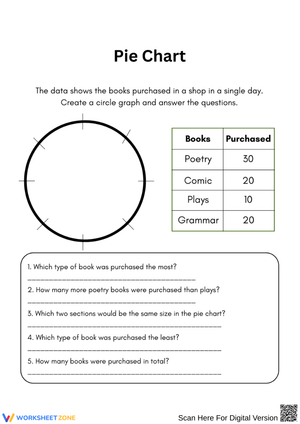
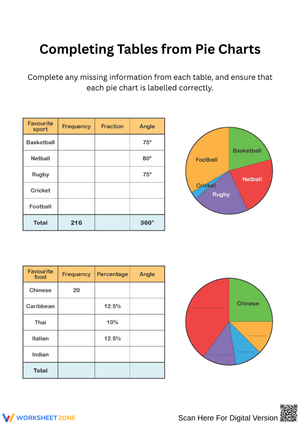
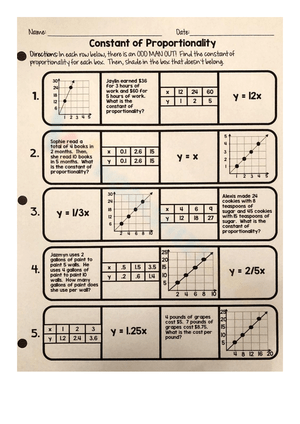
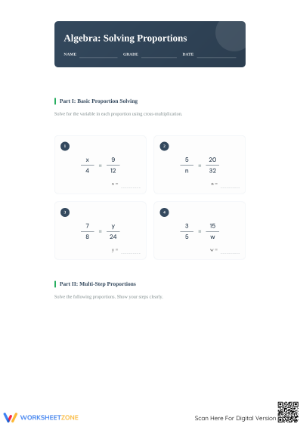
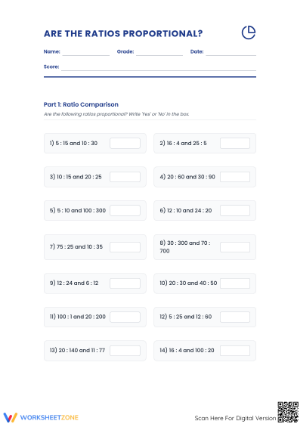
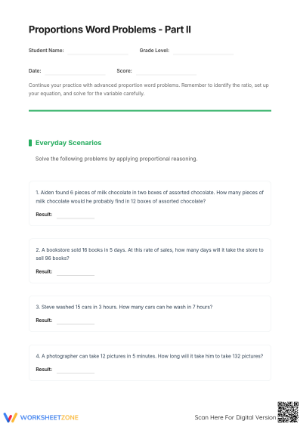
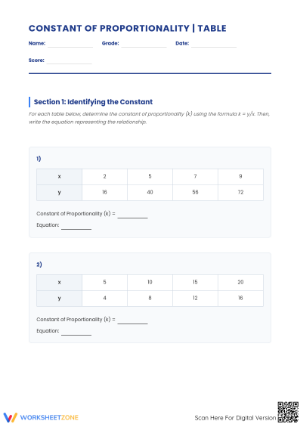
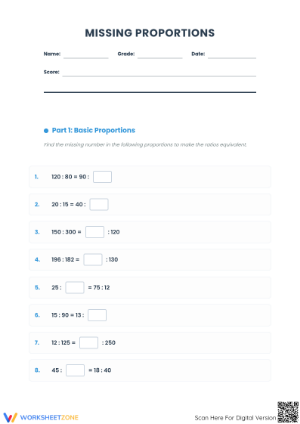
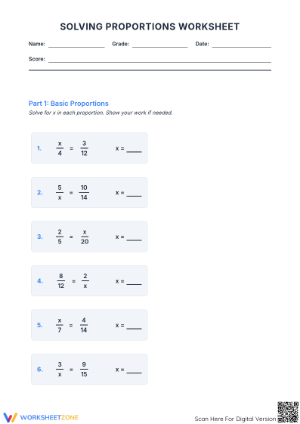
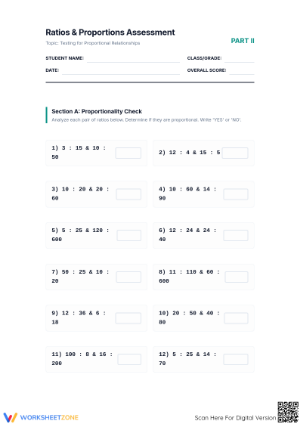
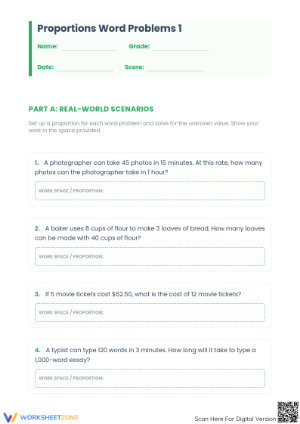
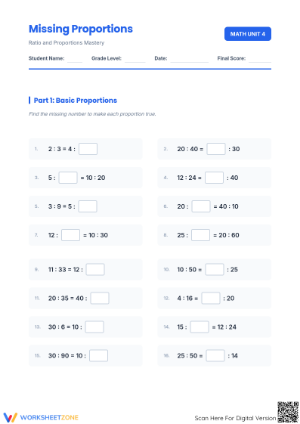
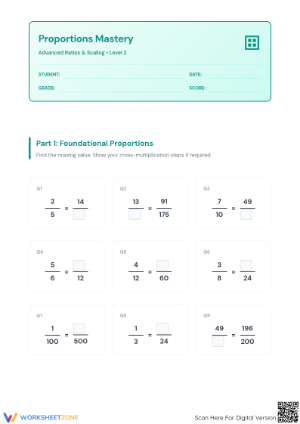
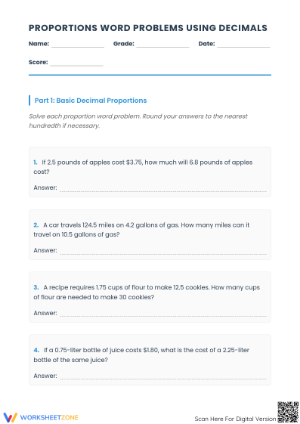
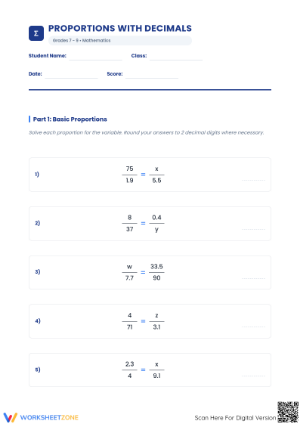
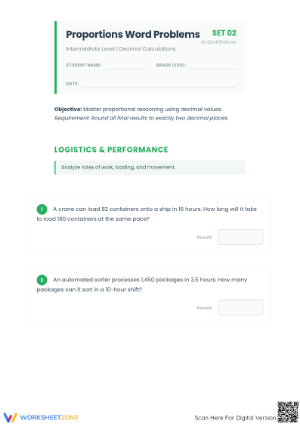
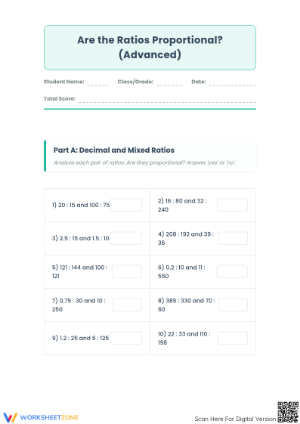
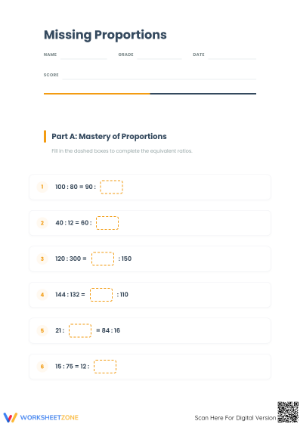
These proportions worksheets give 6th, 7th, and 8th grade teachers a print-ready collection that runs from foundational cross-multiplication through multi-step geometry applications — the full skill range that shows up on state assessments across all three middle grades. Each worksheet is a standalone resource, so teachers pull individual files based on where the class is in the unit rather than committing to a fixed sequence.
What's Inside the Set
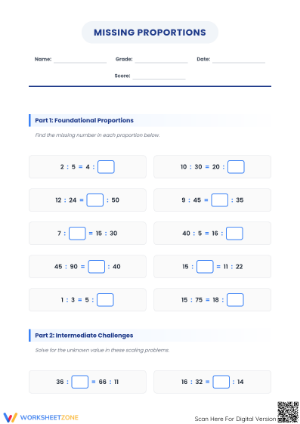
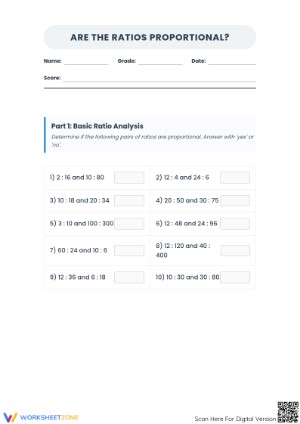
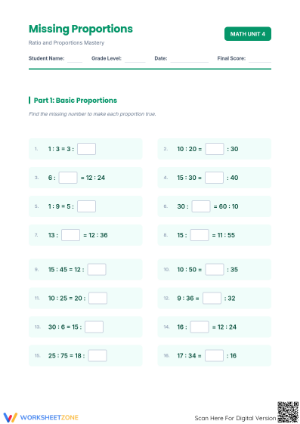
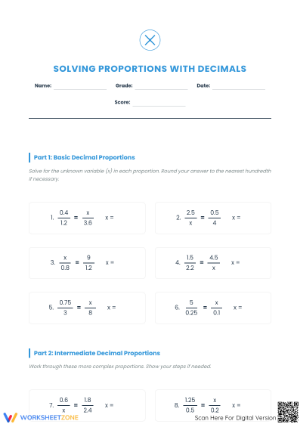
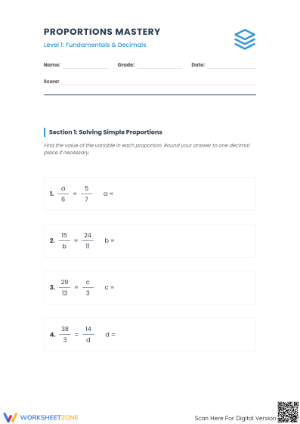
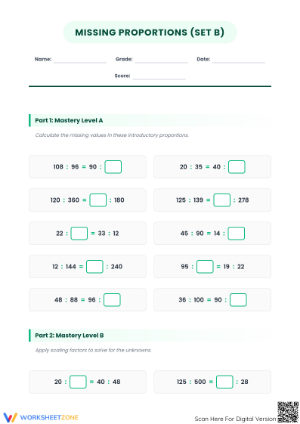
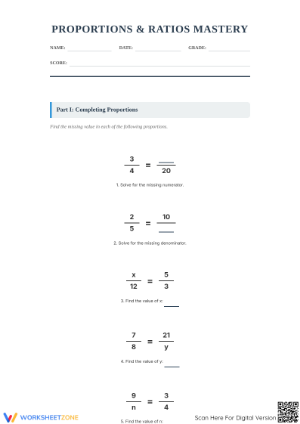
The worksheets target four interconnected skill areas. Cross-multiplication gets dedicated practice in its own tier: students work with proportions in the form a/b = c/d, multiply across the equal sign, and isolate the unknown — first with clean whole-number solutions, then with decimal answers that demand one more step of care. Separate worksheets address equivalent ratios and ratio tables, where students complete tables, determine whether two ratios form a true proportion, and calculate unit rates such as cost per ounce or miles per hour. This work builds the number sense that keeps students from reaching for cross-multiplication when mental math would serve them faster.
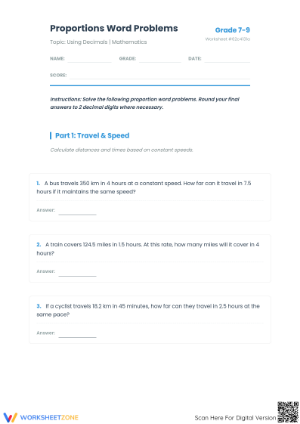
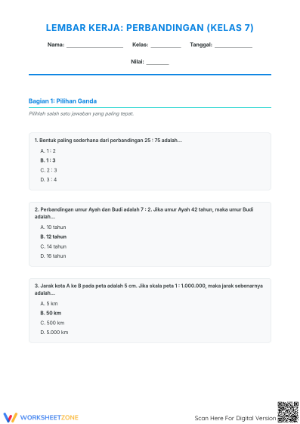
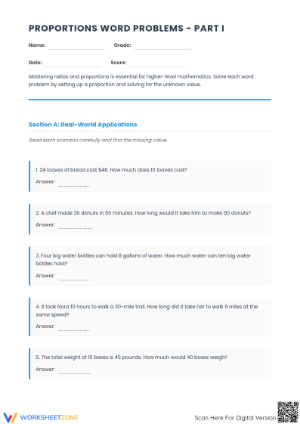
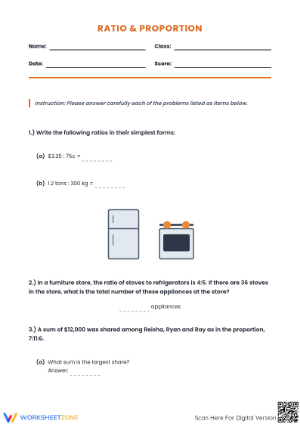
Word problems make up a significant portion of the set. Contexts include scaling recipe ingredients, calculating distances from a map scale, comparing sports statistics, and reading similar-figure diagrams. Multi-step and geometry-based worksheets raise the rigor further — students work with similar triangles, scale models, and problems that connect proportions to percent. These are the problem types that appear consistently on standardized tests, which makes them worth cycling into review weeks before state assessment.
Student Errors Worth Watching For and Correcting
The most consistent setup mistake in student work: a student who correctly labels the first ratio as miles/hours will invert the second ratio without noticing — writing miles/hours = hours/miles — and produce an answer that fails any reasonableness check but looks procedurally complete on paper. Teaching students to write unit labels explicitly above and below both fraction bars, before entering any numbers, eliminates most of these errors before they start. It also reinforces dimensional analysis habits that carry over into science classes.
A second predictable error occurs mid-procedure. In a proportion like 3/4 = x/12, a student cross-multiplies correctly, writes 36 = 4x, and stops — marking 36 as the answer because the multiplication felt like the "solving" step. The division that follows goes missing. This is worth naming explicitly during the first modeled example, not after the first quiz. Word-problem errors cluster at the setup stage rather than the computation stage: students who aren't sure which quantity belongs in the numerator often benefit from writing a labeled ratio frame — item A / item B = item A / item B — before substituting any values. That small move slows the impulsive choices that produce wrong setups.
Smart Ways to Work These Worksheets Into Your Week
The proportions worksheets in this collection fit naturally into several classroom routines without extra prep. For warm-ups, print a half-sheet with two numeric proportions and one word problem; students complete these in the first six minutes while attendance is taken, and the brief written record gives a quick read on where the class landed overnight. For exit tickets, one well-chosen multi-step problem printed four to a page and cut apart tells you more than five mechanical computations collected at the door.
- Station rotations: Cut individual problems into strips and place them at four to six spots around the room. Pairs solve one strip, bring it for a verbal accuracy check, then rotate. Students who work faster complete more stations rather than sitting idle; students who need more time are not penalized by watching others finish.
- Sub plans: A clearly written worksheet with an included answer key requires no technology and no setup. Students produce written work you can review when you return — among the most dependable materials to leave for a substitute.
- Spiral review: Mixing two proportion problems into a weekly homework set alongside percent and ratio tasks uses interleaved practice, an approach that research connects to stronger long-term retention. Students who master proportion solving during the unit are far less likely to lose the skill by the time state testing arrives.
Adjusting the Worksheets for a Range of Learners
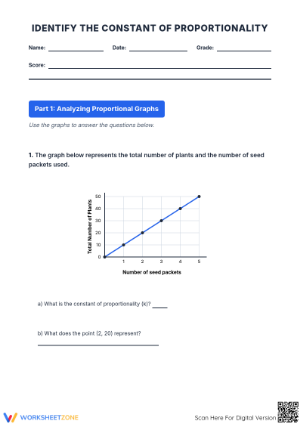
Organizing your proportions worksheets by difficulty level before the unit starts saves real planning time during the week. A three-tier structure works well for most classrooms. Foundational-tier worksheets use single-step proportions with whole-number solutions and minimal reading load — the right entry point for students still building fluency with the procedure, and also appropriate for advanced 5th graders extending ratio work early or for high school students who need targeted review without sitting through a full reteach. On-level worksheets mix numeric and word problems where students set up the proportion themselves, with solutions that include decimals or fractions. Advanced-tier worksheets introduce multi-step problems, similar-figure tasks, and items that require students to link proportions to percent or to the constant of proportionality.
During small-group time, running two tiers simultaneously — one group working through foundational problems independently while a second group works on-level problems with direct teacher support — makes instruction feel targeted without requiring two separate lesson plans. Labeling each PDF file by tier makes swapping materials during a rotation fast and low-friction.
Standard Alignment
The primary anchor is CCSS 7.RP.A.2, which asks students to recognize and represent proportional relationships and write equations of the form y = kx. In classroom terms, this standard sits at the center of 7th-grade math; the proportion-solving practice in these worksheets builds directly toward interpreting the constant of proportionality and connecting it to the unit rate. The standard connects in both directions: 6th-grade work in 6.RP.A.3 — using ratio and rate reasoning to solve real-world problems — feeds the foundational and on-level worksheets in this set, while 8th-grade work in 8.EE.B.5 — comparing proportional relationships and interpreting slope — depends on the cross-multiplication fluency students build in 7th grade. Teachers at all three middle grade levels find specific worksheets that fit their scope and sequence without modification.
Frequently Asked Questions
What grade levels do these worksheets fit?
The set covers grades 6 through 8. Sixth graders use the equivalent-ratio and unit-rate worksheets to extend ratio work into formal proportion solving. Seventh graders work across all skill types as proportions take center stage in the Ratios and Proportional Relationships domain. Eighth graders return to proportions through similar figures and slope. Foundational-tier worksheets also support advanced 5th graders and high school students who need targeted review without reteaching an entire unit.
How do I solve a proportion using cross-multiplication?
Set up a/b = c/d. Multiply the numerator of the first ratio by the denominator of the second: a × d. Set that equal to b × c, then divide both sides by the coefficient of the unknown to isolate it. A concrete example: 3/4 = x/12 becomes 3 × 12 = 4 × x, which gives 36 = 4x, so x = 9. Writing unit labels on both ratios before entering numbers is the single most effective habit for reducing setup errors in this procedure.
Do these worksheets work without internet access?
Yes. Downloading proportions worksheets files and printing them ahead of time means the materials are fully usable in any classroom setting — no devices, no login pages, no connectivity concerns. This makes them particularly reliable for homework packets, long-term sub plans, and test-prep materials that students take home.
What kinds of word problems appear in the set?
Word problems draw from contexts students encounter outside math class: scaling recipe ingredients, reading map distances from a given scale, comparing unit prices, and working with similar triangles in geometry. Variety in context is deliberate — students who practice only one type of scenario often fail to recognize a proportional relationship when it appears in an unfamiliar format on an assessment.













 Interactive Worksheet Maker
 Quiz Maker
 Word Search Maker
 Crossword Puzzle Maker
 Word Scramble Generator
 Sentence Scramble Generator
 Handwriting Worksheet Generator
 Name Tracing Generator
 Fill In The Blank Generator