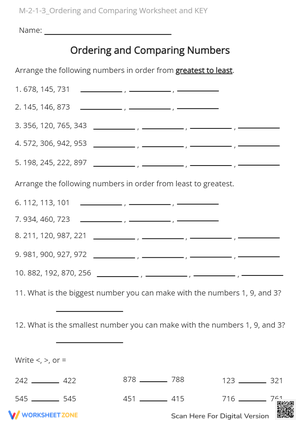
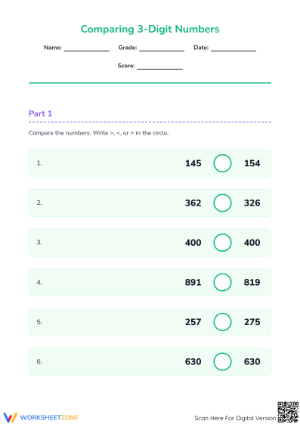
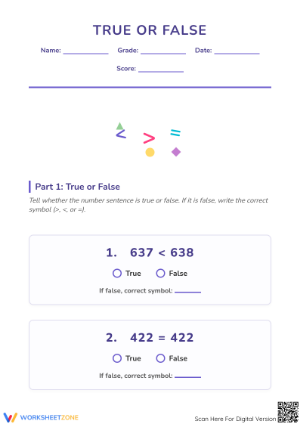
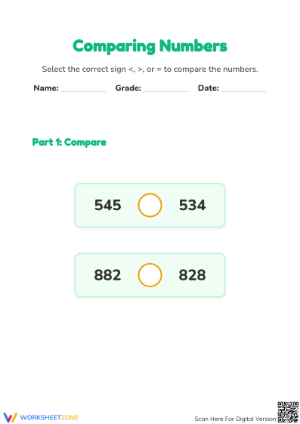
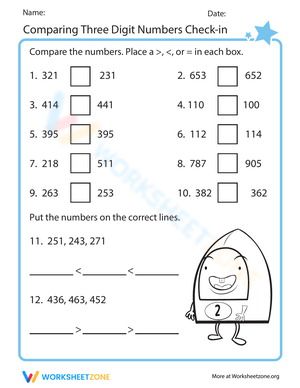
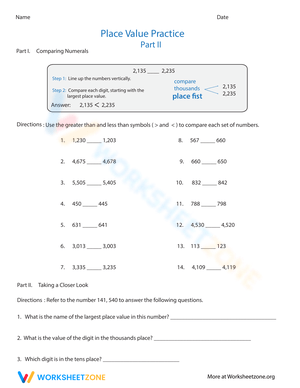
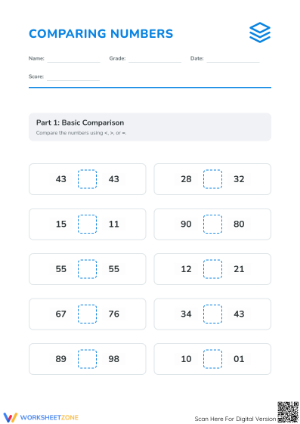
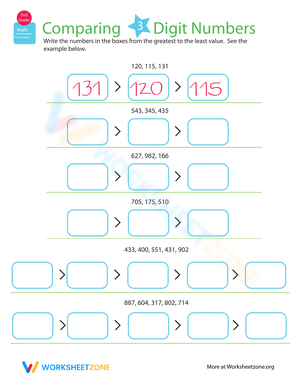
These comparing three digit numbers worksheets give second-grade teachers a focused set of practice tools for one of the most conceptually loaded skills in the 2.NBT standards. Each worksheet targets the place-value reasoning students need to correctly apply the <, >, and = symbols — not just recognize them.
The Specific Skills Targeted
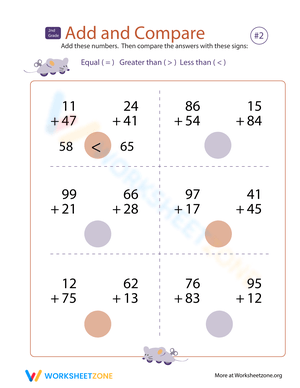
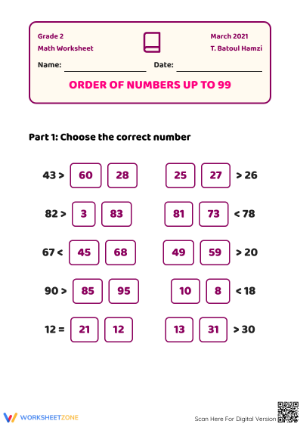
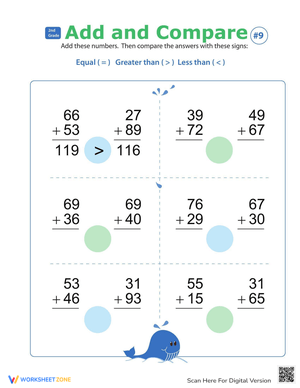
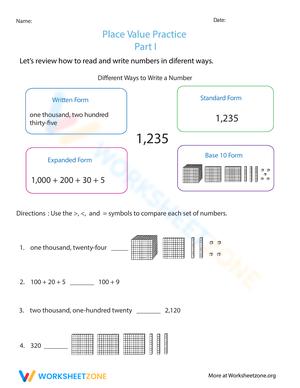
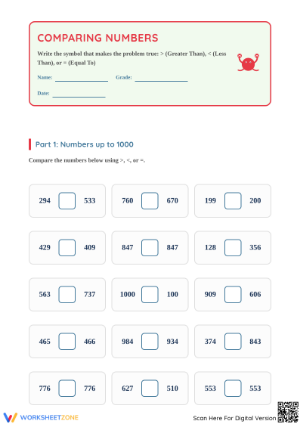
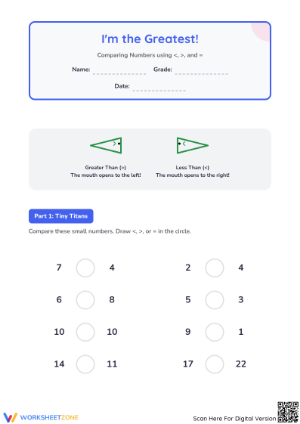
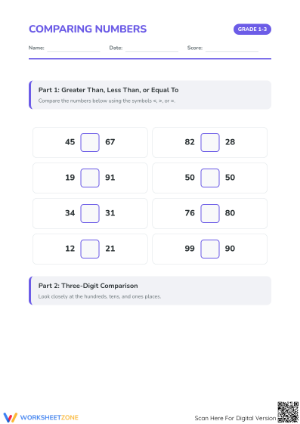
The core task across the set is symbol placement between number pairs: students examine two three-digit numbers, analyze each place value column from left to right, and record the correct comparison symbol. That sounds simple until you watch a class do it. A meaningful portion of second graders arrive knowing that 8 is bigger than 3 but have no framework for what that means when the 8 is in the tens place and the 3 is in the hundreds place. These worksheets build that framework through repetition in a controlled format.
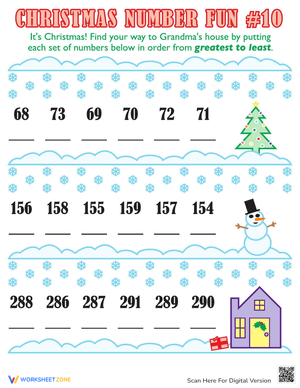
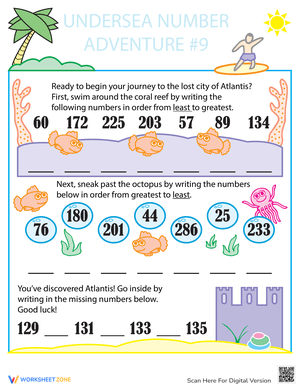
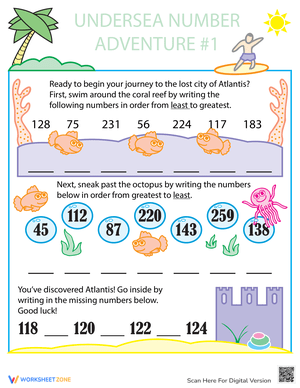
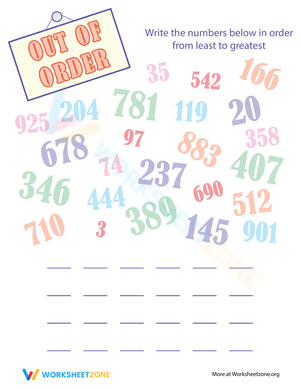
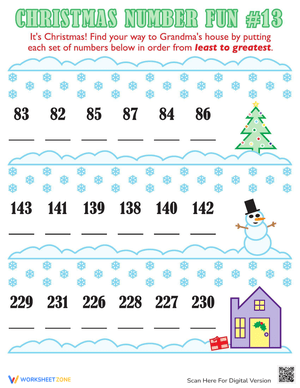
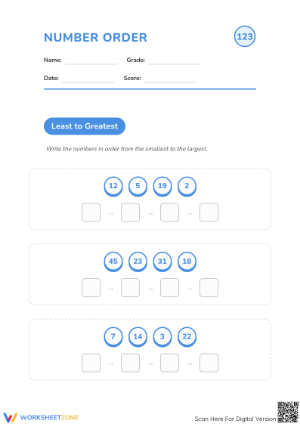
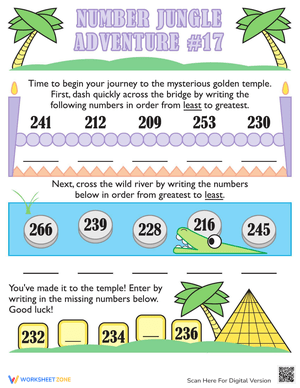
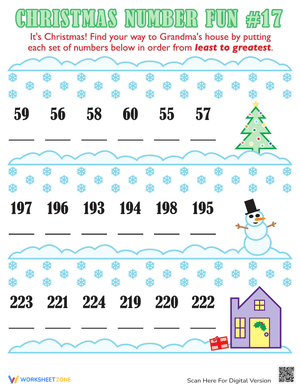
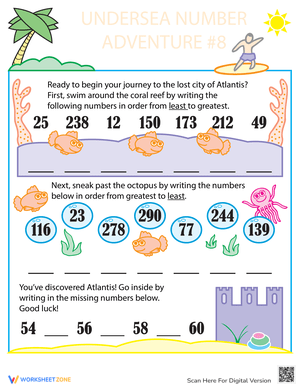
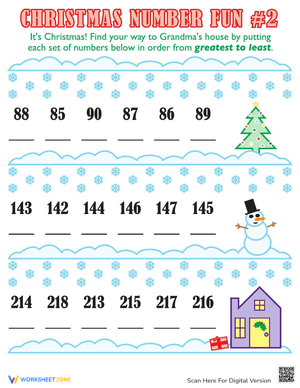
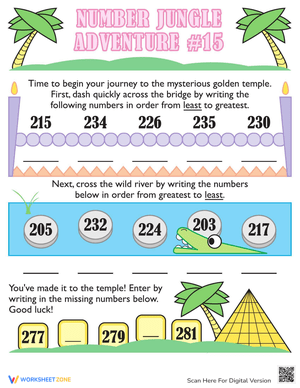
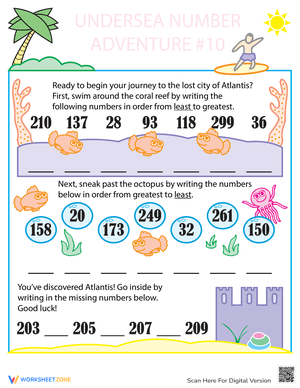
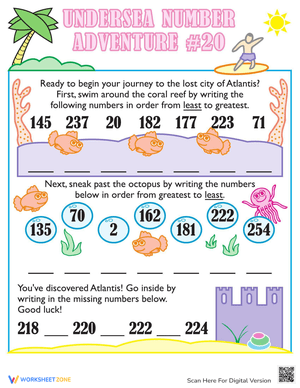
Beyond basic symbol work, the set includes ordering tasks where students arrange three or more numbers from least to greatest or greatest to least. Ordering demands more than pairwise comparison — students hold multiple relationships in working memory at once, which is a qualitatively different cognitive load. Additional worksheets address zero as a placeholder, a specific stumbling block that deserves its own practice space. A student who confidently compares 573 and 591 will often hesitate at 307 and 370 because the visual symmetry of the digits masks the actual place-value difference.
Standard Alignment
These worksheets address CCSS 2.NBT.A.4, which requires students to compare two three-digit numbers using the meanings of the hundreds, tens, and ones digits and to record comparisons with the symbols >, =, and <. The standard's phrasing — "based on meanings of the digits" — is intentional. It rules out pure symbol memorization as sufficient. Students need to articulate why 702 is greater than 698, which requires understanding that 7 hundreds outweighs 6 hundreds regardless of what the remaining digits are. The worksheets build toward that explanation by requiring students to identify the deciding place-value column rather than simply circling a symbol.
Mistakes Students Make That These Worksheets Help You Catch
The most consistent error pattern is right-to-left scanning. A student compares 462 and 358 and writes 462 < 358 because 8 is greater than 2. This isn't carelessness — it reflects how students have been thinking about individual digits since kindergarten, where larger numerals were literally larger. The comparison worksheets surface this error quickly because the ones-place mismatch is often dramatic while the hundreds-place difference is obvious once a teacher points to it.
Symbol reversal is a separate problem that co-occurs with correct number identification. A student identifies 715 as larger than 692, understands why, and then writes 715 < 692 anyway. This suggests the symbol hasn't been anchored to its meaning — it's being placed from memory of which direction the mark "goes" rather than from reading the inequality as a sentence. Having students read their completed statements aloud ("seven hundred fifteen is greater than six hundred ninety-two") catches this in the moment; the worksheets provide the structured practice surface for that habit to develop.
A third error appears specifically with numbers like 409 and 490. Students read the digits in order — 4, 0, 9 and 4, 9, 0 — and sometimes conclude the numbers are close in value because they share the same digits. The place-value scaffolding on these worksheets, which prompts students to circle or underline the hundreds digit before writing any symbol, interrupts that surface-level digit-matching habit.
Building These Worksheets Into Your Lesson Plans
The most effective placement for these worksheets is the ten-minute block immediately following direct instruction on a new comparison scenario — not the day after, not as homework sent home cold. When a student encounters the hundreds-place-tie situation for the first time in a mini-lesson, doing the corresponding worksheet that same period locks in the procedure before the working memory trace fades.
For small-group guided math, these worksheets function well as a structured observation tool. While students work, circulate and watch which digit each student looks at first. Students who go immediately to the hundreds place are ready for the ordering tasks. Students whose eyes drift right are telling you exactly what the next ten minutes of instruction needs to address. The worksheet creates the observable behavior; the teacher reads what that behavior means.
Monday warm-ups are another natural fit, particularly after a weekend break. A three-problem comparison warm-up before the main lesson gives a fast read on retention and re-engages the place-value vocabulary — hundreds, tens, ones — before it's needed for newer content like addition with regrouping.
Adjusting the Worksheets for a Range of Learners
For students still shaky on place value, pair each worksheet with a hundreds chart or a place value mat and give explicit permission to decompose each number before comparing. A student who writes 400 + 60 + 2 and 300 + 90 + 8 above a number pair before placing the symbol is doing more mathematical work, not less — and the expanded form makes the hundreds-place difference visible in a way the standard notation conceals.
For students who move through the symbol work accurately and quickly, the ordering worksheets provide a natural next step. Beyond that, ask them to construct comparison statements with a missing digit: "Write a digit in the blank so that 4_7 < 423 is true." This requires students to work backward through the comparison logic, which is a substantially different cognitive task. It also reveals whether their understanding is procedural or whether they can reason flexibly about place value — a useful distinction heading into multi-digit addition.
Frequently Asked Questions
What grade level are these worksheets written for?
The set is written for second grade, where comparing three-digit numbers is a primary standard under 2.NBT. The worksheets also work as review material in early third grade, particularly for students entering with gaps in place-value understanding before multi-digit operations are introduced.
Do students need base-ten blocks to use these worksheets?
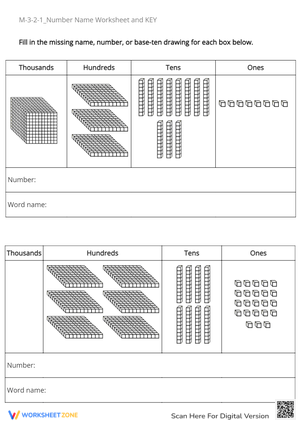
The worksheets stand alone, but pairing them with base-ten blocks during initial instruction is worth the setup time. Having students build both numbers on a place value mat before recording the symbol gives the abstract notation a concrete referent. Once students are comparing fluently, the blocks become unnecessary — but for the first several lessons, the physical representation of hundreds flats versus hundreds flats makes the comparison logic tangible in a way that looking at printed digits does not.
How do these worksheets handle numbers with zeros?
Several worksheets include number pairs specifically chosen to surface zero-as-placeholder errors, such as 304 vs. 340 or 508 vs. 580. These pairs are introduced after students have worked with numbers where no zeros appear, so the zero becomes the targeted variable rather than one of several simultaneous challenges.
Can these be used for assessment as well as practice?
The cleaner symbol-placement worksheets work as formative checks — a completed worksheet tells you whether a student is scanning left to right consistently and which error type, if any, is appearing. They are not designed as summative assessments; a full mastery check would need to include verbal explanation of reasoning, which a written worksheet format can't capture on its own.













 Interactive Worksheet Maker
 Quiz Maker
 Word Search Maker
 Crossword Puzzle Maker
 Word Scramble Generator
 Sentence Scramble Generator
 Handwriting Worksheet Generator
 Name Tracing Generator
 Fill In The Blank Generator